We are currently upgrading our shopping cart; in the interim all orders are being diverted to Waterstones. If you would like to redeem a promotional code, or are an author wanting to place an order, please email us.

Contact us

Panopticon versus New South Wales and other writings on Australia

The present edition of Panopticon versus New South Wales and other writings on Australia consists of fragmentary comments headed ‘New Wales’, dating from 1791; a compilation of material sent to William Wilberforce in August 1802; three ‘Letters to Lord Pelham’ and ‘A Plea for the Constitution’, written in 1802–3; and ‘Colonization Company Proposal’, written in August 1831, the majority of which is published here for the first time. These writings, with the exception of ‘Colonization Company Proposal’, are intimately linked with Bentham’s panopticon penitentiary scheme, which he regarded as an immeasurably superior alternative to criminal transportation, the prison hulks, and English gaols in terms of its effectiveness in achieving the ends of punishment. He argued, moreover, that there was no adequate legal basis for the authority exercised by the Governor of New South Wales. In contrast to his opposition to New South Wales, Bentham later composed ‘Colonization Company Proposal’ in support of a scheme proposed by the National Colonization Society to establish a colony of free settlers in southern Australia. He advocated the ‘vicinity-maximizing principle’, whereby plots of land would be sold in an orderly fashion radiating from the main settlement, and suggested that, within a few years, the government of the colony should be transformed into a representative democracy.
Jeremy Bentham on Police

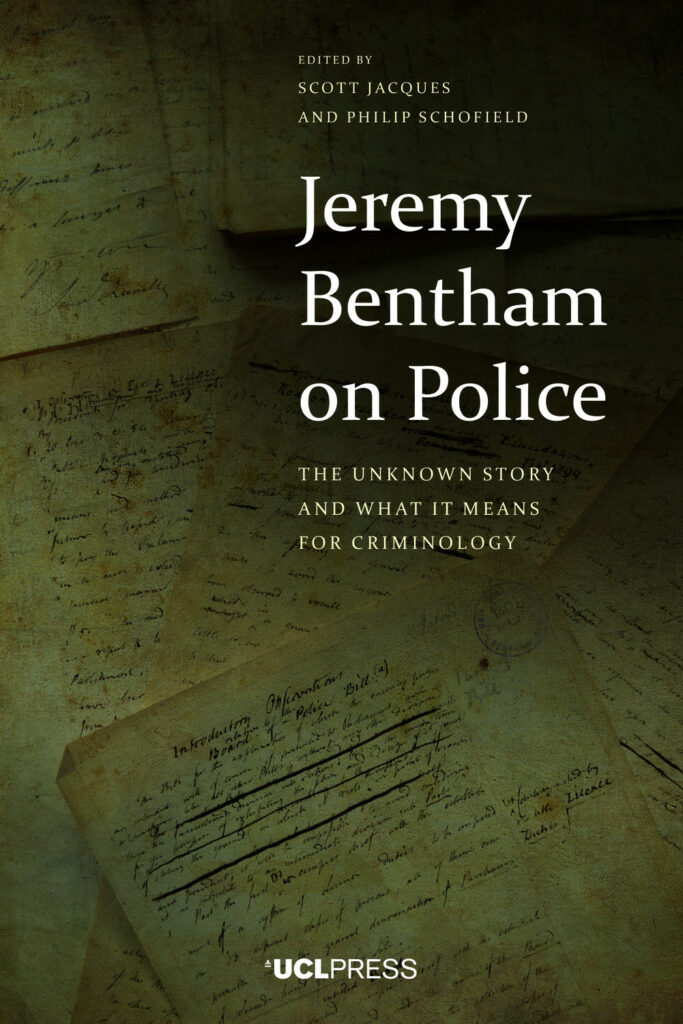
Jeremy Bentham’s ideas on punishment are famous. Every criminology student learns about Bentham, and every criminologist contends with him, as advocate or opponent. This discourse concerns his ideas about punishment, namely with respect to legislation and the panopticon. Yet, scholars and students are generally ignorant of Bentham’s ideas on police. Hitherto, these ideas have been largely unknowable. Now, thanks to UCL’s Bentham Project, these ideas are public.

Jeremy Bentham on Police celebrates this achievement by exploring the story of Bentham’s writings on police and considering their relevance to the past, present and future of criminology. After Scott Jacques introduces the book, the Director of the Bentham Project, Philip Schofield, describes and explains how it works. Then Michael Quinn, who brought together Bentham’s writings on police, delves into the personal and socio-historical background in which they were created. An extract follows, representing the most (criminologically-)relevant passages from Bentham’s police writings. Finally, a rich variety of scholars offer their thoughts on what those writings mean for criminology. These contributions come from Anthony A. Braga, Ronald Clarke, David J. Cox, Stephen Douglas, Stephen Engelmann, G. Geltner, Joel F. Harrington, Jonathan Jacobs, Paul Knepper, Gloria Laycock, Gary T. Marx, Daniel S. Nagin, Graeme R. Newman, Pat O’Malley, Eric L. Piza, Kim Rossmo, Lucia Summers and Dean Wilson.

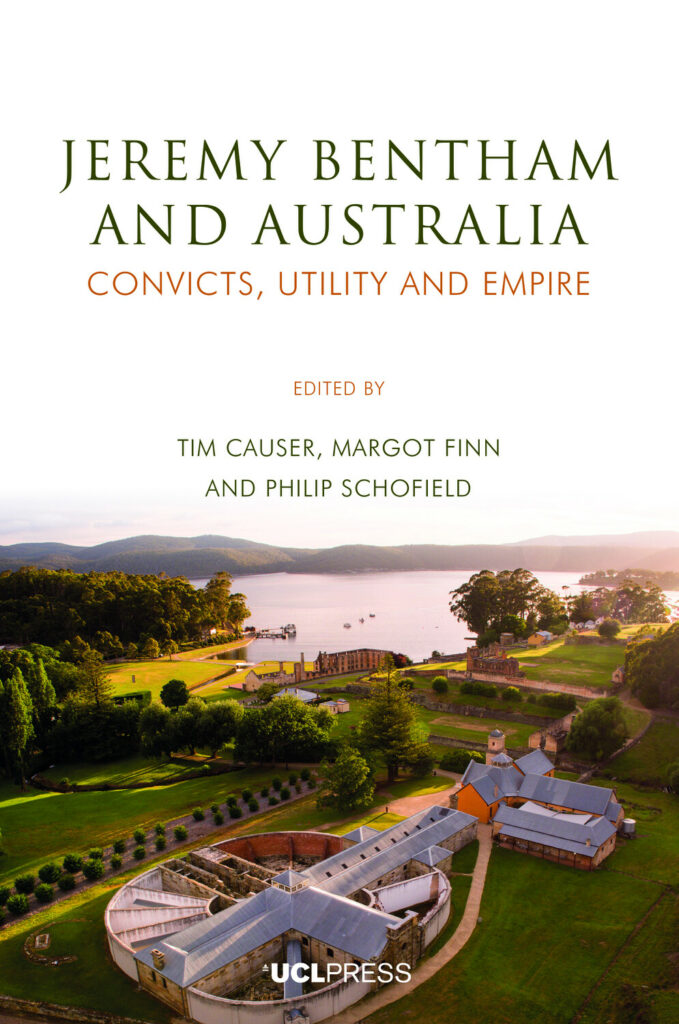
Jeremy Bentham and Australia

Jeremy Bentham and Australia is a collection of scholarship inspired by Bentham’s writings on Australia. These writings are available for the first time in authoritative form in Panopticon versus New South Wales and other writings on Australia, a volume in The Collected Works of Jeremy Bentham published by UCL Press.

In the present collection, a distinguished group of authors reflect on Bentham’s Australian writings, making original contributions to existing debates and setting agendas for future ones. In the first part of the collection, the works are placed in their historical contexts, while the second part provides a critical assessment of the historical accuracy and plausibility of Bentham’s arguments against transportation from the British Isles. In the third part, attention turns to Bentham’s claim that New South Wales had been illegally founded and to the imperial and colonial constitutional ramifications of that claim. Here, authors also discuss Bentham’s work of 1831 in which he supports the establishment of a free colony on the southern coast of Australia. In the final part, authors shed light on the history of Bentham’s panopticon penitentiary scheme, his views on the punishment and reform of criminals and what role, if any, religion had to play in that regard, and discuss apparently panopticon-inspired institutions built in the Australian colonies.

This collection will appeal to readers interested in Bentham’s life and thought, the history of transportation from the British Isles, and of British penal policy more generally, colonial and imperial history, Indigenous history, legal and constitutional history, and religious history.

Essays on Logic, Ethics, and Universal Grammar

This new volume of Bentham’s philosophical writings deals with his most fundamental ideas concerning logic, language, ethics, and grammar. It includes four major essays written between 1814 and 1816, namely ‘Essay on Logic’, ‘Essay on Ethics’, ‘Didacologia’, and ‘Universal Grammar’, all of them closely related to Chrestomathia, Bentham’s major work on education.

In ‘Essay on Logic’, Bentham contrasts the præcognita of Aristotle with his own ‘characteristics’ of logic and deals with methodization, ontology, and the relationship between logic and language. In ‘Essay on Ethics’, he offers a critique of the Aristotelian virtues and outlines his own division of ethics into prudence, probity, and benevolence. In ‘Didacologia’, he presents an outline of a comprehensive plan for the division of the arts and sciences based on the method of exhaustive bifurcation and a new nomenclature. In ‘Universal Grammar’, Bentham deals with language as the basis for thought and communication and investigates the nature of the different parts of speech. The volume is completed with an Appendix containing fragmentary material, written in August and September 1813, with a focus on language. All the texts are based on Bentham’s original manuscripts and have never before been published in authentic form.

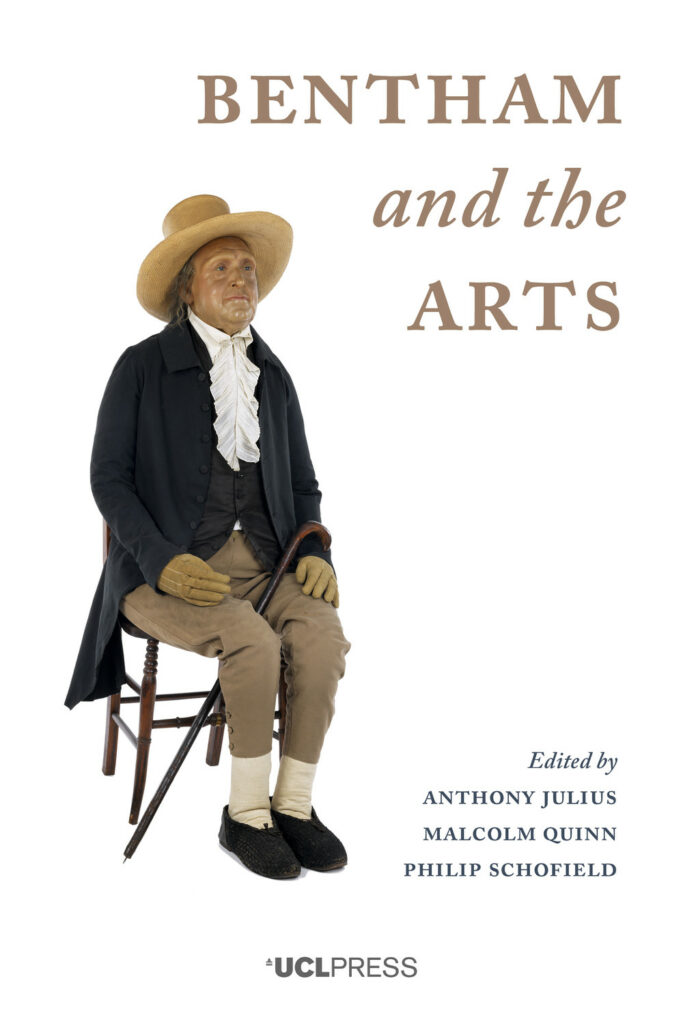
Bentham and the Arts

Bentham and the Arts considers the sceptical challenge presented by Bentham’s hedonistic utilitarianism to the existence of the aesthetic, as represented in the oft-quoted statement that, ‘Prejudice apart, the game of push-pin is of equal value with the arts and sciences of music and poetry. If the game of push-pin furnish more pleasure, it is more valuable than either.’ This statement is one part of a complex set of arguments on culture, taste, and utility that Bentham pursued over his lifetime, in which sensations of pleasure and pain were opposed to aesthetic sensibility. Leading scholars from a variety of disciplines reflect on the implications of Bentham’s radical utilitarian approach for our understanding of the history and contemporary nature of art, literature, and aesthetics more generally.

Each contributor takes into account, from the perspective of their own discipline and expertise, the implications for their research area of the views contained in Bentham’s Of Sexual Irregularities, and other writings on Sexual Morality (published in the authoritative edition of The Collected Works of Jeremy Bentham in 2014) and ‘Not Paul, but Jesus: Volume III’ (published online by the Bentham Project in 2014). In these essays, Bentham puts forward the first philosophical defence of sexual liberty. In doing so, he questions the meaning of ‘taste’ and hence the received understanding of aesthetics more generally.

The contributors, moreover, challenge two of the major commonplaces in literary and historical studies of the nineteenth century: first that literature and utilitarianism represented alternative and incompatible views of the world; and second that Bentham’s utilitarianism was somehow emaciated in comparison with that of John Stuart Mill. The volume also includes new reflections on the auto-icon and the panopticon, the latter showing the utilitarian genealogy of a collaborative art and architecture project on the site of the Millbank Penitentiary.

The title ‘Bentham and the Arts’ itself challenges the commonly held notion that Bentham had nothing relevant to say on the subject of the Arts – the essays in this volume show that Bentham remains extraordinarily relevant, both in historical and philosophical terms.

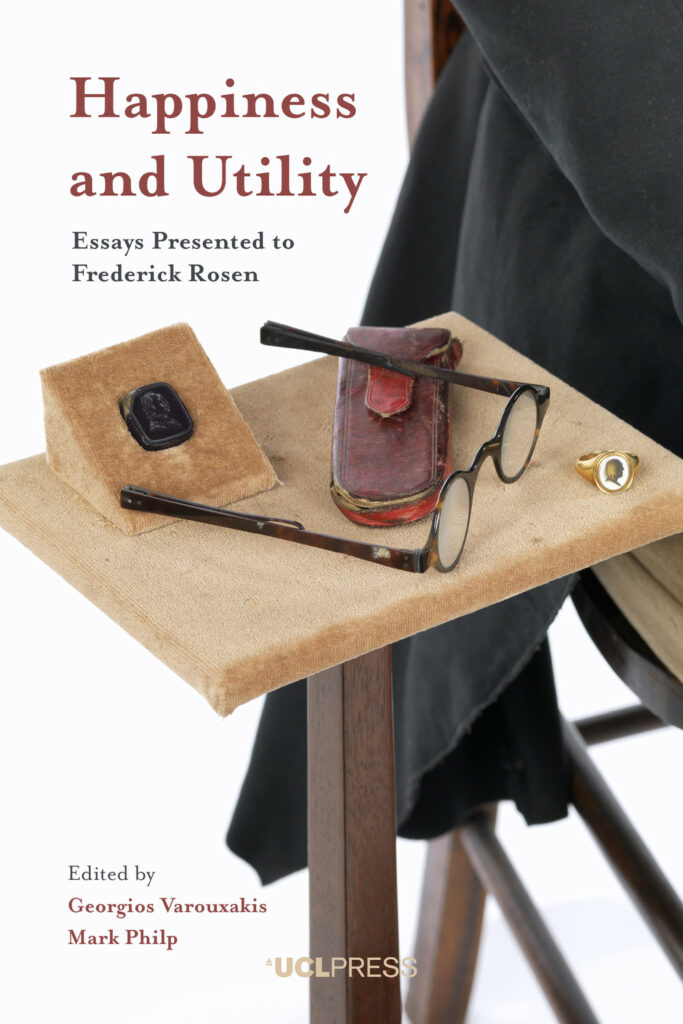
Happiness and Utility

Happiness and Utility brings together experts on utilitarianism to explore the concept of happiness within the utilitarian tradition, situating it in earlier eighteenth-century thinkers and working through some of its developments at the end of the nineteenth and beginning of the twentieth centuries. Drawing on a range of philosophical and historical approaches to the study of the central idea of utilitarianism, the chapters provide a rich set of insights into a founding component of ethics and modern political and economic thought, as well as political and economic practice. In doing so, the chapters examine the multiple dimensions of utilitarianism and the contested interpretations of this standard for judgement in morality and public policy.

The chapters are written in celebration of the career of Professor Frederick Rosen. They follow his work by concentrating on Bentham and the two Mills, and by the subtleties and sophistication of their understanding of one of the most alluring but elusive ideas of modern times. The volume will be of interest not only to admirers of Rosen but to academics and postgraduate students in disciplines such as Philosophy, Political Theory, History of Political Thought, Legal Theory and Legal History.

The Bentham Brothers and Russia

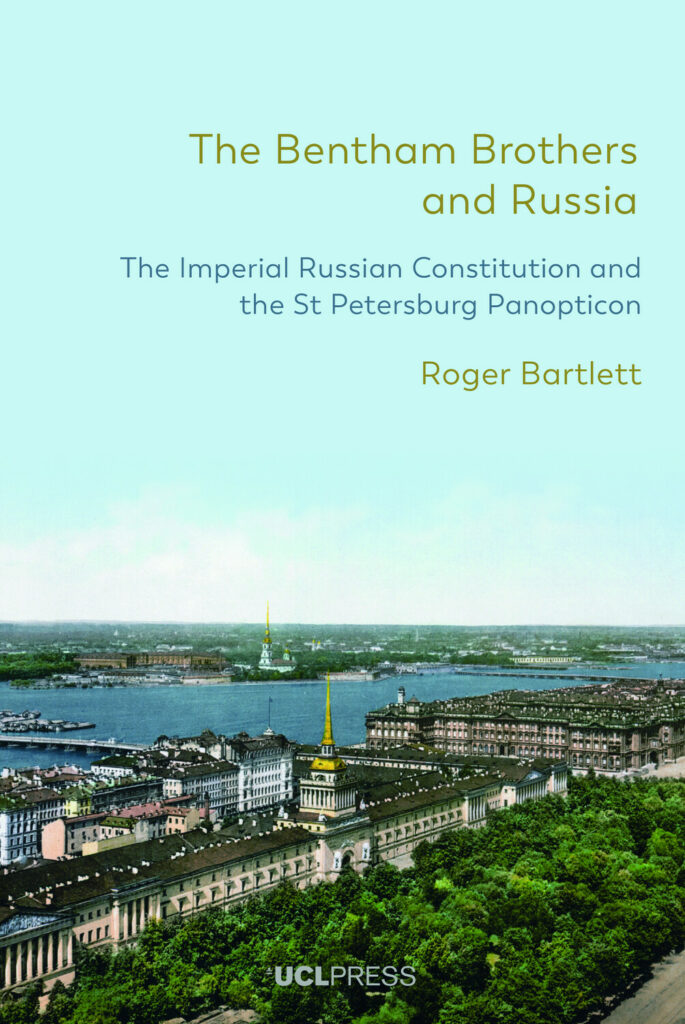
The jurist and philosopher, Jeremy Bentham, and his lesser-known brother, Samuel, equally talented but as a naval architect, engineer and inventor, had a long love affair with Russia. Jeremy hoped to assist Empress Catherine II with her legislative projects. Samuel went to St Petersburg to seek his fortune in 1780 and came back with the rank of Brigadier-General and the idea, famously publicised by Jeremy, of the Inspection-House or Panopticon. The Bentham Brothers and Russia chronicles the brothers’ later involvement with the Russian Empire, when Jeremy focused his legislative hopes on Catherine’s grandson Emperor Alexander I (ruled 1801-25) and Samuel found a unique opportunity in 1806 to build a Panopticon in St Petersburg – the only panoptical building ever built by the Benthams themselves.

Setting the Benthams’ projects within an in-depth portrayal of the Russian context, Roger Bartlett illuminates an important facet of their later careers and offers insight into their world view and way of thought. He also contributes towards the history of legal codification in Russia, which reached a significant peak in 1830, and towards the demythologising of the Panopticon, made notorious by Michel Foucault: the St Petersburg building, still relatively unknown, is described here in detail on the basis of archival sources. The Benthams’ interactions with Russia under Alexander I constituted a remarkable episode in Anglo-Russian relations; this book fills a significant gap in their history.

Sign up to our newsletter

Don't miss out!
Subscribe to the UCL Press newsletter for the latest open access books,
journal CfPs, news and views from our authors and much more!