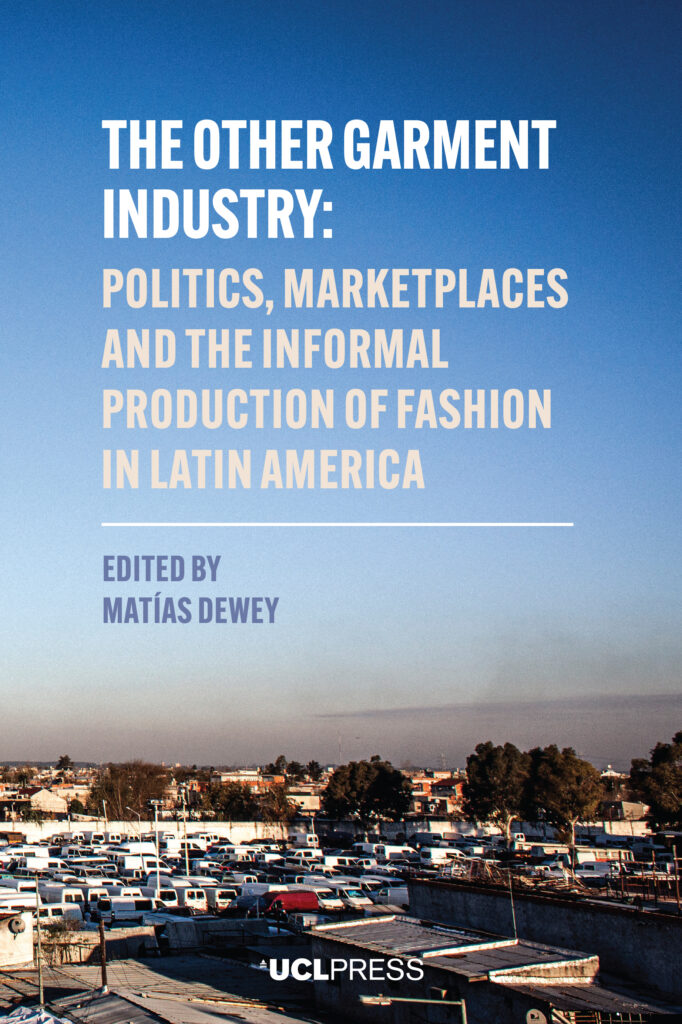
The Other Garment Industry

The Other Garment Industry sheds light on an economic, social and political phenomenon in Latin America, which is well known in the region, yet largely overlooked in social sciences literature. The volume analyses a regional configuration of informal garment production, distribution and consumption which cannot be explained by the dominant paradigm of global chains. This volume is pioneering in providing a holistic account of a specific industrial configuration in Latin America, showcasing this type of economy in Argentina, Brazil and Peru, and brings examples of trade in neighbouring countries such as Uruguay, Chile, Bolivia and Paraguay.

The volume focuses on three pillars of this economy: downstream entrepreneurs, bustling garment marketplaces and far-reaching national and regional trade routes. Far from the conventional image of sweatshops as monotonous spaces where creativity is reserved for big brands, the volume reveals workshops where design, trend-sensing and production are tightly woven together around consumer desires and imaginaries. Within these productive units, a differentiated division of labour makes room for experimentation, style innovation and rapid responses to shifting tastes. The garments travel through large, informal marketplaces expressly devoted to low-cost fashion, where traders and buyers meet in dense, dynamic circuits of exchange. These garment-oriented marketplaces, linked to extended informal trade routes, become crucial connectors that compress distribution chains, lower costs and expand access to affordable fashion for broad segments of the population.
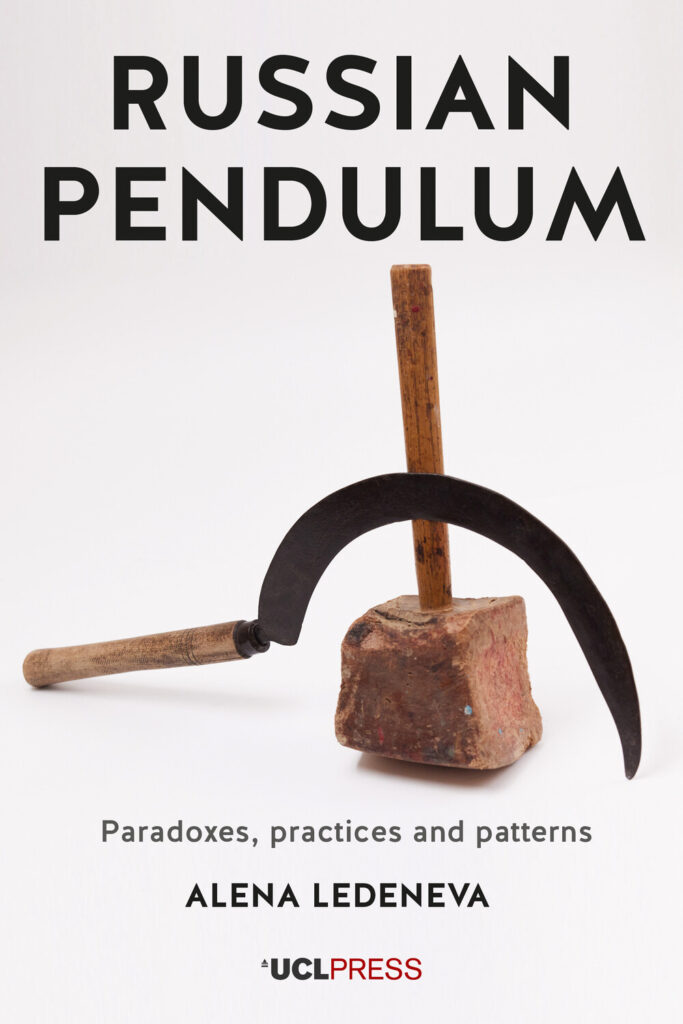

Russian Pendulum

In Russian Pendulum, Alena Ledeneva takes readers on a compelling journey to Russia, where tradition, modernity, power and people collide. Through the prism of ambivalence, the author unveils patterns that have shaped Russia’s politics and society for centuries, pointing to an intricate system of informal networks that are held together by practices of cooptation, control and camouflage.

For readers seeking to look beyond stereotypes, this book provides a brief yet nuanced exploration of Russia’s complexity and unpredictability. The ever-moving Russian pendulum dwells on paradoxes and the hidden practices that resolve them. Patterns such as doublethink, double standards, zigzags, cascades, waves and tides are captured in the author’s own artworks that introduce each chapter.

Nine musical compositions by Benjamin Woodgates add a further dimension, exploring these paradoxes, practices and patterns, and realising them in sound.

Drawing on the Global Informality Project (www.in-formality.com), the artwork and the music, Russian Pendulum establishes connections between Russia’s distinctive paradoxes and broader patterns of informality found worldwide. It is ideal for students, scholars and anyone seeking to understand hidden yet increasingly powerful forces.

The Wild East

The Wild East bridges political economy and anthropology to examine a variety of il/legal economic sectors and businesses such as red sanders, coal, fire, oil, sand, air spectrum, land, water, real estate, procurement and industrial labour. The eleven case studies, based across India, Pakistan and Bangladesh, explore how state regulative law is often ignored and/or selectively manipulated. The emerging collective narrative shows the workings of regulated criminal economic systems where criminal formations, politicians, police, judges and bureaucrats are deeply intertwined.

By pioneering the field-study of the politicisation of economic crime, and disrupting the wider literature on South Asia’s informal economy, The Wild East aims to influence future research agendas through its case for the study of mafia-enterprises and their engagement with governance in South Asia and outside. Its empirical and theoretical contribution to debates about economic crimes in democratic regimes will be of critical value to researchers in Economics, Anthropology, Sociology, Comparative Politics, Political Science and International Relations, Criminologists and Development Studies, as well as to those inside and outside academia interested in current affairs and the relationship between crime, politics and mafia enterprises.

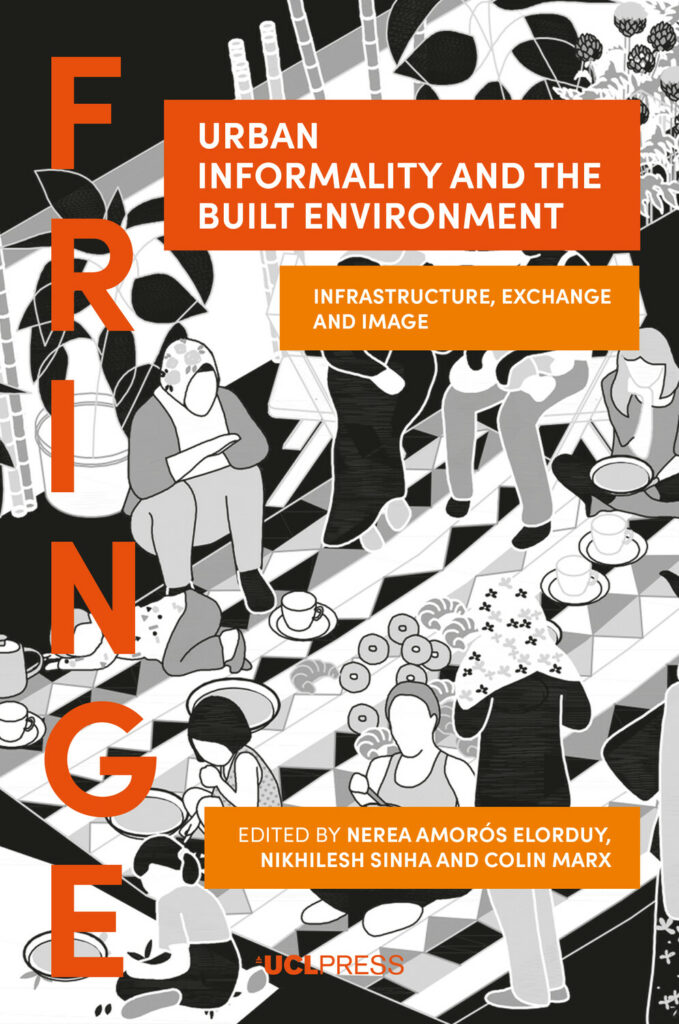
Urban Informality and the Built Environment

Urban Informality and the Built Environment demonstrates the value of greater and more diverse forms of engagement of built environment disciplines in what constitutes urban informality and its politics. It brings a multi-disciplinary approach to the study of informality and the built environment in diverse contexts, drawing on recent research by architects, planners, political scientists, geographers and urban theorists.

The book presents different case studies from multiple geographies, drawing attention to the need for studying urban informality in the Global North and Global South. The cases promote a cross-fertilization between disciplines, lenses, geographies and methodologies. They range from the creative place-making of street artists in Accra, to the morphological evolution of urban Tirana, urban agriculture in la Habana and social reproduction in Greece. Additional contributions highlight the cross-cutting themes of infrastructure, exchange and image.

Urban Informality and the Built Environment introduces built environment disciplines to its constitutive roles in producing urban informality. It also tests a range of new methodologies to the study of urban informality, demonstrating the possibilities for new insights when building on the relational understanding of urban informality.

The Global Encyclopaedia of Informality, Volume 3

For a post-human hitchhiker, human life – with its anxiety, ageing, illness and constant need for problem-solving – may look unviable. Yet, for humans, the life struggle is softened by human touch, human emotion and human cooperation.

The Global Encyclopaedia of Informality, Volume 3 continues the journey of the two previous volumes into the world’s open secrets, unwritten rules and hidden practices. It focuses on issues of emotional ambivalence and pressures of the digital age. The informal practices presented in this volume demonstrate the urgency of alleviating tensions between continuity and all-too-rapid change and the need to tackle the central problem of modern societies – uncertainty.

The volume takes a reader on a ‘biographical’ journey through elusive, taken-for-granted or banal ways of getting things done from over 70 countries and world regions. It offers innovative understanding of the significance of fringes, and challenges the assumption that informality is associated exclusively with poverty, underdevelopment, the Global South, oppressive regimes or the former socialist countries of Eastern Europe and Central Asia. It also maps the patterns of informality around the globe; identifies specific informal practices in a context-sensitive way; and documents their ambivalent impact on people engaged in problem-solving, on societies in which these problems arise, and on humanity overall.

The Global Encyclopaedia of Informality, Volume 2

Alena Ledeneva invites you on a voyage of discovery to explore society’s open secrets, unwritten rules and know-how practices. Broadly defined as ‘ways of getting things done’, these invisible yet powerful informal practices tend to escape articulation in official discourse. They include emotion-driven exchanges of gifts or favours and tributes for services, interest-driven know-how (from informal welfare to informal employment and entrepreneurship), identity-driven practices of solidarity, and power-driven forms of co-optation and control. The paradox, or not, of the invisibility of these informal practices is their ubiquity. Expertly practised by insiders but often hidden from outsiders, informal practices are, as this book shows, deeply rooted all over the world, yet underestimated in policy. Entries from the five continents presented in this volume are samples of the truly global and ever-growing collection, made possible by a remarkable collaboration of over 200 scholars across disciplines and area studies.

By mapping the grey zones, blurred boundaries, types of ambivalence and contexts of complexity, this book creates the first Global Map of Informality. The accompanying database ([www.in-formality.com][1]) is searchable by region, keyword or type of practice, so do explore what works, how, where and why!

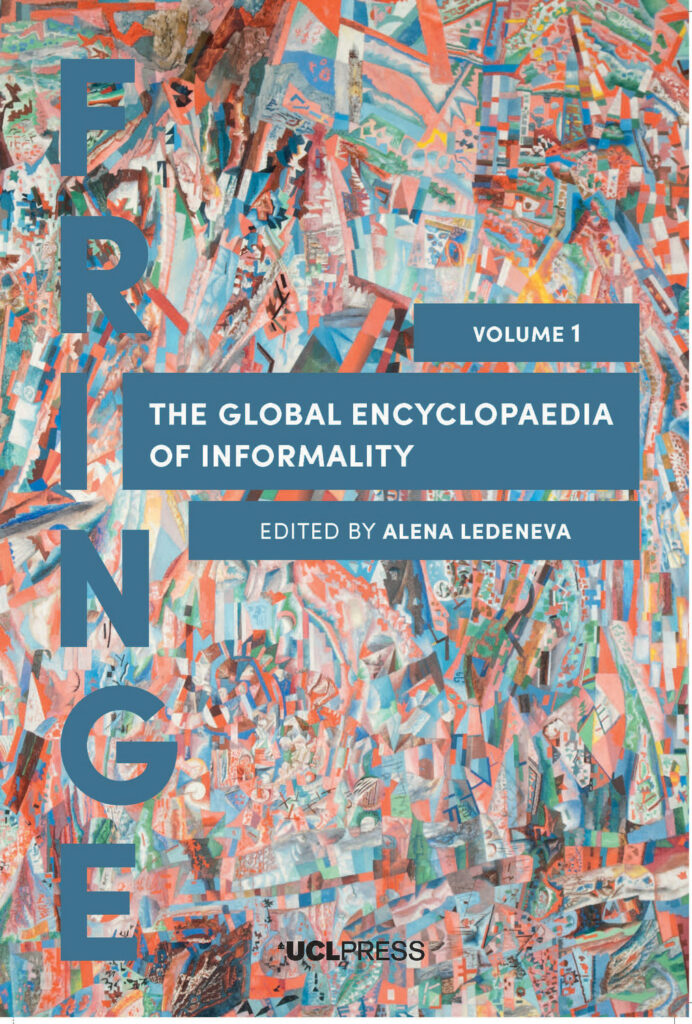
The Global Encyclopaedia of Informality, Volume 1

Alena Ledeneva invites you on a voyage of discovery, to explore society’s open secrets, unwritten rules and know-how practices. Broadly defined as ‘ways of getting things done’, these invisible yet powerful informal practices tend to escape articulation in official discourse. They include emotion-driven exchanges of gifts or favours and tributes for services, interest-driven know-how (from informal welfare to informal employment and entrepreneurship), identity-driven practices of solidarity, and power-driven forms of co-optation and control. The paradox, or not, of the invisibility of these informal practices is their ubiquity. Expertly practised by insiders but often hidden from outsiders, informal practices are, as this book shows, deeply rooted all over the world, yet underestimated in policy. Entries from the five continents featured in this volume are samples of the truly global and ever-growing collection, made possible by a remarkable collaboration of over 200 scholars across disciplines and area studies.

By mapping the grey zones, blurred boundaries, types of ambivalence and contexts of complexity, this book creates the first Global Map of Informality. The accompanying database is searchable by region, keyword or type of practice, so do explore what works, how, where and why!

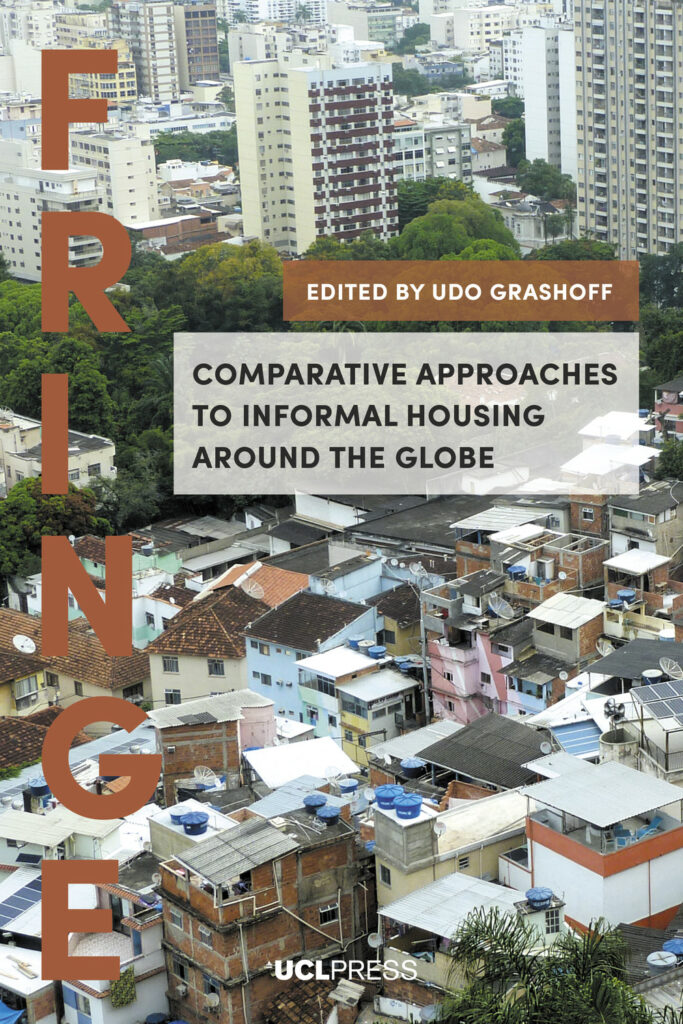
Comparative Approaches to Informal Housing Around the Globe

Comparative Approaches to Informal Housing Around the Globe brings together historians, anthropologists, political scientists, sociologists, urban planners and political activists to break new ground in the globalisation of knowledge about informal housing. Providing both methodological reflections and practical examples, they compare informal settlements, unauthorised occupation of flats, illegal housing construction and political squatting in different regions of the world. Subjects covered include squatter settlements in Kyrgyzstan and Kazakhstan, squatting activism in Brazil and Spain, planning laws and informality across countries in the Global North, and squatting in post-Second World War UK and Australia.

The volume’s global approach is found not only in the variety of topics but in the origins of its authors, who between them contribute specialist knowledge from Africa, Asia, Australia, the Middle East, North and South America, and Eastern and Western Europe. Bringing together such a wide range of authors and subjects demonstrates the power of comparative research to open up new perspectives. By comparing, for example, toleration of informal housing in Hong Kong and Paris, squatting in the Netherlands and communist East Germany, or slums in nineteenth-century Europe and twentieth-century Africa, the chapters connect different contexts in path-breaking fashion.

Sign up to our newsletter

Don't miss out!
Subscribe to the UCL Press newsletter for the latest open access books,
journal CfPs, news and views from our authors and much more!