Mapping Society

From a rare map of yellow fever in eighteenth-century New York, to Charles Booth’s famous maps of poverty in nineteenth-century London, an Italian racial zoning map of early twentieth-century Asmara, to a map of wealth disparities in the banlieues of twenty-first-century Paris, Mapping Society traces the evolution of social cartography over the past two centuries. In this richly illustrated book, Laura Vaughan examines maps of ethnic or religious difference, poverty, and health inequalities, demonstrating how they not only serve as historical records of social enquiry, but also constitute inscriptions of social patterns that have been etched deeply on the surface of cities.

The book covers themes such as the use of visual rhetoric to change public opinion, the evolution of sociology as an academic practice, changing attitudes to physical disorder, and the complexity of segregation as an urban phenomenon. While the focus is on historical maps, the narrative carries the discussion of the spatial dimensions of social cartography forward to the present day, showing how disciplines such as public health, crime science, and urban planning, chart spatial data in their current practice. Containing examples of space syntax analysis alongside full colour maps and photographs, this volume will appeal to all those interested in the long-term forces that shape how people live in cities.
Lahore in Motion

Lahore in Motion provides a portrait of the Pakistani metropolis by tracing the path of the city’s first metro rail corridor. Construction for this major piece of public infrastructure began in 2015 and, over subsequent years, the nascent ‘Orange Line’ rapidly reconfigured Lahore’s urban landscape – displacing residents and slicing through existing structures along its route, all while offering Lahoris the promise of ‘world-class’ public transportation. The volume collects stories from a series of walks along the metro’s 27-kilometre path, bringing together a wide variety of authors – including academics and activists, architects and artists – to reflect on the relationship between urban change and belonging in a historic city.

Each chapter is organised around a particular station on the metro, but the volume moves far beyond the neighbourhoods shadowed by the train’s elevated track. Contributors navigate the friction generated by the Orange Line’s construction and reflect on how this project of connection both responds to and produces fragmentation in the urban environment. The book brings together critical insights on the politics of infrastructure in South Asia and the desires and dispossessions fuelling projects of development in the Global South, assessing how they unevenly inflect the intimate rhythms of everyday life in one of the world’s most populous cities.

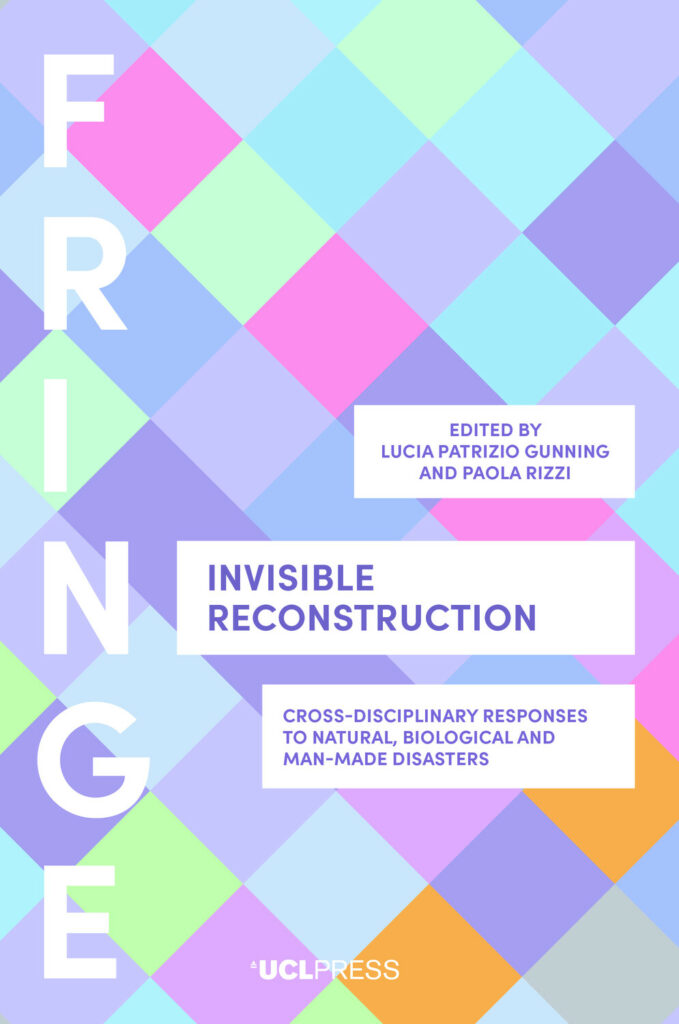
Invisible Reconstruction

What does it really mean to reconstruct a city after a natural, biological or man-made disaster? Is the repair and reinstatement of buildings and infrastructure sufficient without the mending of social fabric? The authors of this volume believe that the true measure of success should be societal. After all, a city without people is no city at all.
Invisible Reconstruction takes the view that effective disaster mitigation and recovery require interdisciplinary tactics. Historian Lucia Patrizio Gunning and urbanist Paola Rizzi expand beyond the confines of individual disciplines or disaster studies to bring together academics and practitioners from a wide variety of disciplines, comparing strategies and outcomes in different scenarios and cultures from South America, Europe and Asia.

From cultural heritage and public space to education and participation, contributors reflect on the interconnection of people, culture and environment and on constructive approaches to strengthening the intangible ties to increase resilience and reduce vulnerability.

By bringing practical examples of how communities and individuals have reacted to or prepared for disaster, the publication proposes a shift in public policy to ensure that essential physical reinforcement and rebuilding are matched by attention to societal needs. Invisible Reconstruction is essential reading for policymakers, academics and practitioners working to reduce the impact of natural, biological and man-made disaster or to improve post-disaster recovery.

The Intimate Life of Dissent

The Intimate Life of Dissent examines the meanings and implications of public acts of dissent, drawing on examples from ethnography and history. Acts of dissent are never simply just about abstract principles, but also come at great personal risk to both the dissidents and to those close to them. Dissent is, therefore, embedded in deep, complex and sometimes contradictory intimate relations. This book puts acts of high principle back into the personal relations out of which they emerge and take effect, raising new questions about the relationship between intimacy and political commitment. It does so through an introduction and eight individual chapters, drawing on examples including Sri Lankan leftists, Soviet dissidents, Tibetan exiles, Kurdish prisoners, British pacifists, Indonesian student activists and Jewish peace activists.

The Intimate Life of Dissent will be of interest to postgraduate students and researchers of anthropology, history, political theory and sociology. Written in a clear and accessible style, it is also suitable for teaching introductory undergraduate courses on political anthropology.

Histories of Technology, the Environment and Modern Britain

Histories of Technology, the Environment, and Modern Britain brings together historians with a wide range of interests to take a uniquely wide-lens view of how technology and the environment have been intimately and irreversibly entangled in Britain over the last 300 years. It combines, for the first time, two perspectives with much to say about Britain since the industrial revolution: the history of technology and environmental history. Technologies are modified environments, just as nature is to varying extents engineered. Furthermore, technologies and our living and non-living environment are both predominant material forms of organisation – and self-organisation – that surround and make us. Both have changed over time, in intersecting ways.

Technologies discussed in the collection include bulldozers, submarine cables, automobiles, flood barriers, medical devices, museum displays and biotechnologies. Environments investigated include bogs, cities, farms, places of natural beauty and pollution, land and sea. The book explores this diversity but also offers an integrated framework for understanding these intersections.

Heritage and Nationalism

How was the Roman Empire invoked in Brexit Britain and in Donald Trump’s United States of America, and to what purpose? And why is it critical to answer these kinds of questions? Heritage and Nationalism explores how people’s perceptions and experiences of the ancient past shape political identities in the digital age. It particularly examines the multiple ways in which politicians, parties and private citizens mobilise aspects of the Iron Age, Roman and Medieval past of Britain and Europe to include or exclude ‘others’ based on culture, religion, class, race, ethnicity, etc.

Chiara Bonacchi draws on the results of an extensive programme of research involving both data-intensive and qualitative methods to investigate how pre-modern periods are leveraged to support or oppose populist nationalist arguments as part of social media discussions concerning Brexit, the Italian Election of 2018 and the US-Mexican border debate in the US. Analysing millions of tweets and Facebook posts, comments and replies, this book is the first to use big data to answer questions about public engagement with the past and identity politics. The findings and conclusions revise and reframe the meaning of populist nationalism today and help to build a shared basis for the democratic engagement of citizens in public life in the future. The book offers a fascinating and unmissable read for anyone interested in how the past and its contemporary legacy, or ‘heritage’, influence our ‘political’ thinking and feeling in a time of hyper-interconnectivity.

Four Histories about Early Dutch Football, 1910-1920

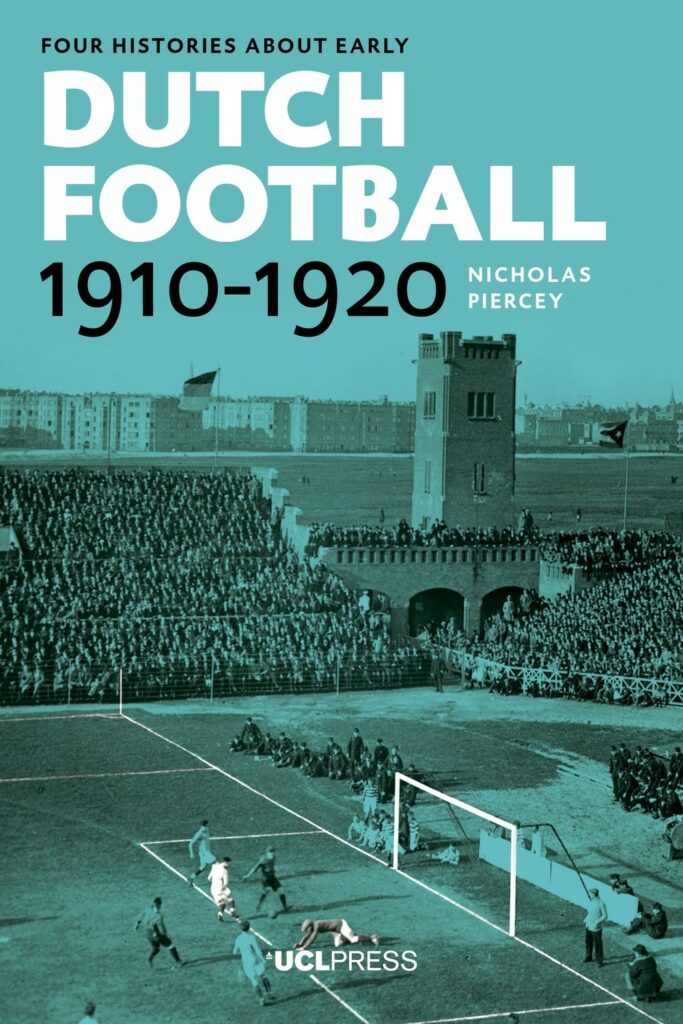
What is the purpose of history today, and how can sporting research help us understand the world around us? In this stimulating book, Nicholas Piercey constructs four new histories of early Dutch football, exploring urban change, club members, the media, and the diaries of Cornelis Johannes Karel van Aalst, a stadium director, to propose practical examples of how history can become an important democratic tool for the 21st century.

Using early Dutch football as a field for experimental thinking about the past, the four histories offer new insights into the lives, interests and passions of those connected to the sport in the 1910s and the cities they lived in. How did the First World War impact on Dutch football? Were new stadia a form of social control? Is the spread of the beautiful game really a good thing? And why was one of the sport’s most prominent figures more concerned with potatoes? These stories of early Dutch football suggest how vital sport and history can be in shaping our lives, perceptions and actions, and why we need to challenge the influence they have today.

This book also includes a downloadable appendix. [Download it here]1.

[1]: http://discovery.ucl.ac.uk/1517998/11/Appendix.xlsx

Fonthill Recovered

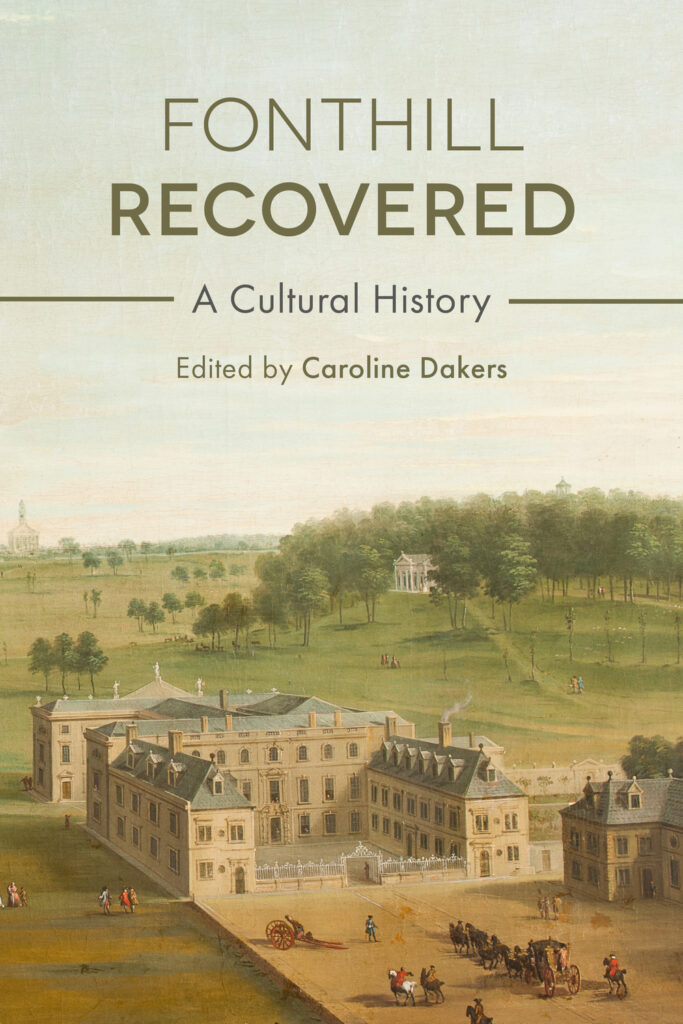
Fonthill, in Wiltshire, is traditionally associated with the writer and collector William Beckford who built his Gothic fantasy house called Fonthill Abbey at the end of the eighteenth century. The collapse of the Abbey’s tower in 1825 transformed the name Fonthill into a symbol for overarching ambition and folly, a sublime ruin. Fonthill is, however, much more than the story of one man’s excesses. Beckford’s Abbey is only one of several important houses to be built on the estate since the early sixteenth century, all of them eventually consumed by fire or deliberately demolished, and all of them oddly forgotten by historians. Little now remains: a tower, a stable block, a kitchen range, some dressed stone, an indentation in a field.

Fonthill Recovered draws on histories of art and architecture, politics and economics to explore the rich cultural history of this famous Wiltshire estate. The first half of the book traces the occupation of Fonthill from the Bronze Age to the twenty-first century. Some of the owners surpassed Beckford in terms of their wealth, their collections, their political power and even, in one case, their sexual misdemeanours. They include Charles I’s Chancellor of the Exchequer, and the richest commoner in the nineteenth century. The second half of the book consists of essays on specific topics, filling out such crucial areas as the complex history of the designed landscape, the sources of the Beckfords’ wealth and their collections, and one essay that features the most recent appearance of the Abbey in a video game.

Fake Gods and False History

In an age where history is a global battleground and fake news proliferates, culture wars are being waged across India over its future – majoritarian or inclusive, neoliberal or socialist, religious or secular?

Fake Gods and False History takes us to the BDD Chawls, a central Mumbai neighbourhood of tenement blocks (chawls) on the brink of a controversial redevelopment. It reveals how contested narratives of Indian history play out in the daily life of this divided neighbourhood and how the legacies of certain godlike but very human historical figures, such as Dr Babasaheb Ambedkar and Chhatrapati Shivaji, are invoked by different communities. Jonathan Galton draws on research conducted among the formerly untouchable Dalit Buddhist community, who are staunchly opposed to the redevelopment plans and deeply critical of the religious nationalism they perceive in their Hindu neighbours. We also meet young male migrants living in village-linked dormitory rooms called Gramastha Mandals, trapped in a liminal space between urban and rural.

Throughout the book, which is woven through with candid reflections on methodology and research ethics, readers are challenged into drawing connections with their own experiences of history impinging on their lives. A story that might initially seem parochial will thus resonate with a diverse global audience.

Environment and Post-Soviet Transformation in Kazakhstan’s Aral Sea Region

The Aral Sea is well known for its devastating regression over the second half of the twentieth century, and for its recent partial restoration. Environment and Post-Soviet Transformation in Kazakhstan’s Aral Sea Region is the first book to explore what these monumental changes have meant to those living on the sea’s shores.
Following the fluctuating fortunes of the pre-Soviet, Soviet and post-Soviet fisheries, the book shows how the vast environmental changes the region has undergone cannot be disentangled from the transformations of Soviet socialism and postsocialism. This ethnographic perspective prompts a critical rethinking of the category of environmental disaster through which the region is predominantly known. Tracing how the sea’s retreat and partial return have been apprehended by diverse local actors in the former port of Aral’sk and surrounding fishing villages, as well as by scientists, bureaucrats and international development workers, William Wheeler draws out the multiple meanings environmental change acquires within different contexts. This study of how people make their lives amidst overlapping ecological and political-economic upheavals is rich in ethnographic detail that is both rooted in Soviet legacies and alive to the new transnational connections that are reshaping the region.
Offering a rigorous political ecology of Soviet socialism and after, the book is a major contribution to the nascent environmental anthropology of Central Asia. It will be of interest to environmental anthropologists, environmental historians, and scholars of all disciplines working on Central Asia and the former USSR.

Sign up to our newsletter

Don't miss out!
Subscribe to the UCL Press newsletter for the latest open access books,
journal CfPs, news and views from our authors and much more!