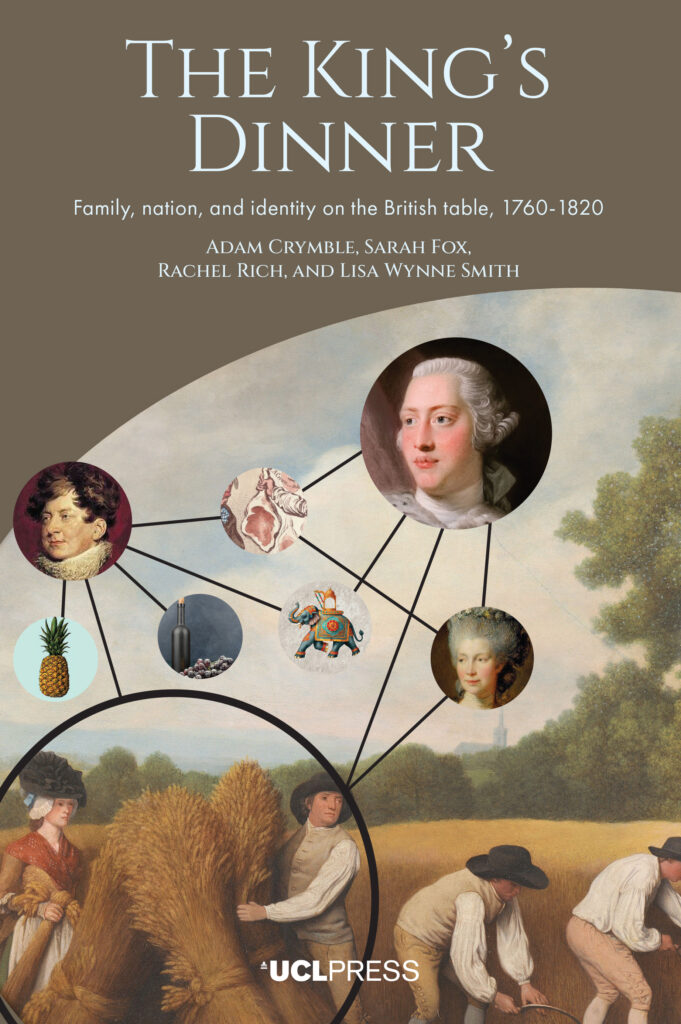
The King’s Dinner is about what it meant to be British at the end of the eighteenth century. Drawing on the vast kitchen ledgers of two royal households made newly available to research through digitisation, the authors study the role and influence of food in understanding British identity. Analysing trade routes, migration, agricultural changes, recipes, and flavours they argue that Britishness was more complex and more multicultural than previously recognised.
Starting at George III’s Kew Palace and the Prince Regent’s Carlton House, then moving in ever wider circles, the book considers the significance of food for understanding the royal family, the wider British population, their European neighbours, and the British and colonised people in the Atlantic world and the Indian subcontinent. With a growing overseas empire, Britain was an increasingly powerful nation, and the ability to choose was one of the ways this power was exercised. The cuisine that emerged was complex, with wealthy Britons adopting, adapting, or rejecting the foods of European enemies and allies or colonised peoples and places. ‘Britishness’ was an ever-shifting balance of European multiculturalism, imperial ambition, tradition and experimentation, a messy mix that reveals the entanglement of cultures and cuisines, continually changed by the people who cook and eat the food.