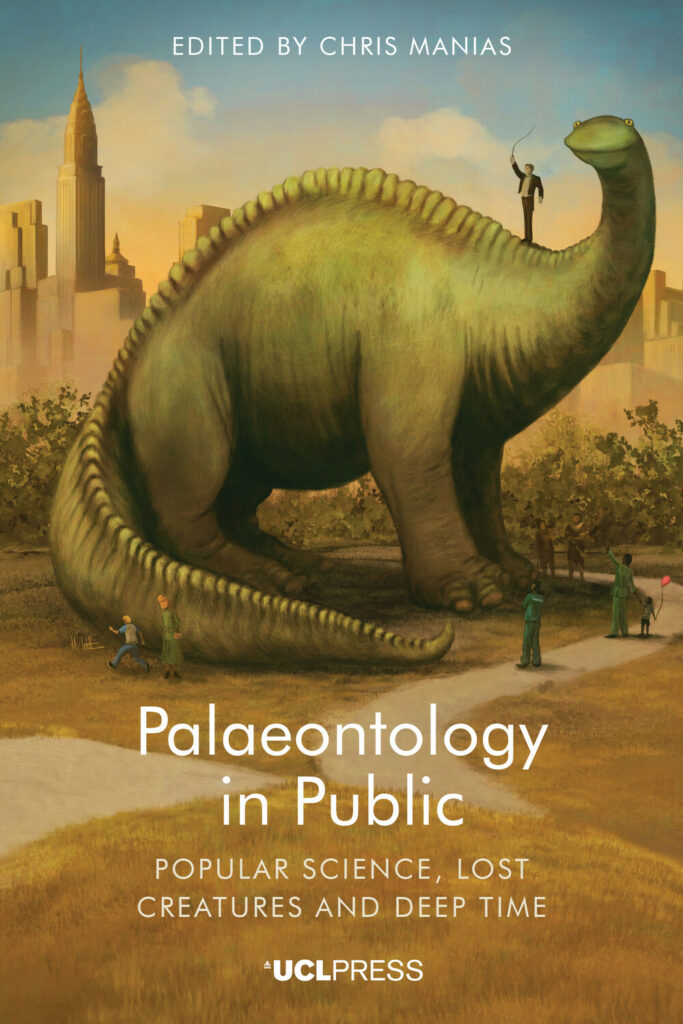
Since the establishment of concepts of deep time in the late eighteenth and early nineteenth centuries, palaeontology has been one of the most high-profile sciences. Dinosaurs, mammoths, human ancestors and other lost creatures from Earth’s history are some of the most prominent icons of science, and are essential for our understanding of nature and time. Palaeontology and its practitioners have had a huge impact on public understandings of science, despite their often precarious and unsteady position within scientific institutions and networks.
Palaeontology in Public considers the connections between palaeontology and public culture across the past two centuries. In so doing, it explores how these public dimensions have been crucial to the development of palaeontology, and indeed how they conditioned wider views of science, nature, the environment, time and the world. The book provides a history of vertebrate palaeontology through a series of compelling case studies. Dinosaurs feature, of course, including Spinosaurus, Winsor McCay’s ‘Gertie the Dinosaur’ and the creatures of Jurassic Park and The Lost World. But there are also the small mammals of the Mesozoic, South American Glyptodons, and human ancestors like Neanderthals and Australopithecines. This book shows how palaeontology is defined by its relationship with public audiences and how this connection is central to our vision of the past and future of the Earth and its inhabitants.