Peer review week Q&A with the editor of Radical Americas Journal

To mark Peer Review Week 2024, Sunbul Akhtar caught up with Bill Booth, co-editor of the journal Radical Americas (RA). In this Q&A, which originally appeared on the Radical Americas blog, Bill provides an insight to the processes involved in securing reviewer comments, and offers advice to early career researchers on how to get involved in the scholarly publishing community. This Q&A is an insightful read about a function of academic publishing that has become a cornerstone of research integrity.

Sunbul (SA): How do you select reviewers for each paper?

Bill Booth (BB): The assigned editor for any given submission will use a combination of their subject knowledge and networks to identify suitable reviewers. This can be challenging in some circumstances, such as where the submission is of an interdisciplinary nature, or covers an area with a limited existing literature.

SA: Are there any other challenges you’ve found in getting a good review?

BB: On the whole, I would say it’s harder getting people to commit to review in the current climate than it is to then get a good review from them; most of our reviewers are extremely constructive, engaged and enthusiastic. It is getting harder, though, for various reasons, to secure reviewers.

SA: If you could give three key points for reviewers to consider when they are writing what would you say?

BB: Think about context – the journal, the field, the topic – and not solely about content, though of course that is very important!

Empathise – we expect and welcome critique, and good scholarship depends on it, but it is best framed in a constructive and actionable manner.

Contribute – bring your own suggestions and use your expertise to help shape the process of scholarly publication!

SA: How would you encourage early career researchers to get involved in the peer review process?

BB: Make yourself known! We positively welcome early career researchers, sometimes paired with a well established senior scholar, to our review process. It’s one of academia’s unspoken truths, but early career often means that much more enmeshed with the newest scholarship.

SA: This year’s theme for peer review week is Innovation and Technology in Peer Review. With the advent of AI tools to assist writing up research, do you imagine A.I. could be used to provide a good review?

BB: Nothing I’ve read about A.I. makes me think so.

SA: This year’s theme for peer review week is Innovation and Technology in Peer Review. With the advent of AI tools to assist writing up research, do you imagine A.I. could be used to provide a good review?

BB: A huge thank you! I review for several journals so I know how much effort it entails; as an editor, I also know how vitally important it is to the production of new, innovative and challenging scholarship!


About the authors

Sunbul Akhtar is Journals Development Editor at UCL Press. Her portfolio is wide-ranging and includes UCL Open: Environment, History Education Journal, Radical Americas and Architecture_MPS.

Bill Booth is Lecturer in Latin American History at UCL, London, in addition to being co Editor-in-Chief of Radical Americas.
Rebuilding the Ecuadorian left in the rubble of neoliberal austerity

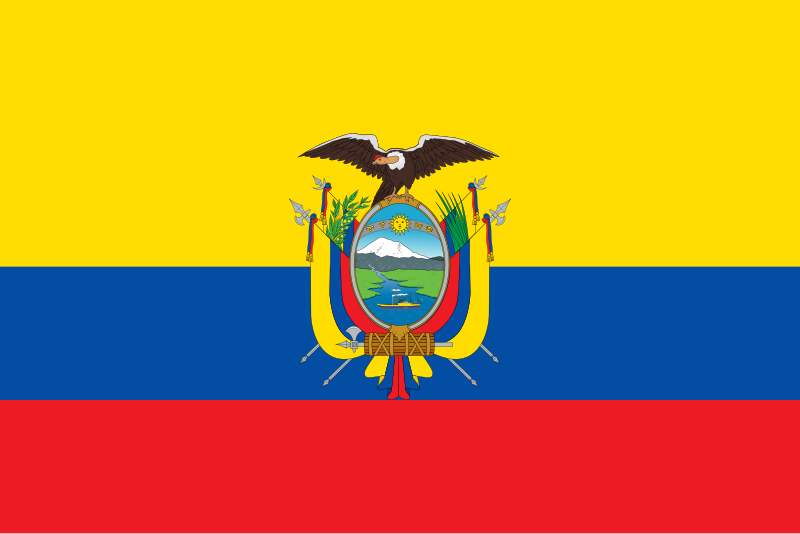
The national flag of Ecuador, which consists of horizontal bands of yellow (double width), blue and red, with a coat of arms in the centre.

Daniel Noboa’s victory in the second round of the presidential elections on 15 October 2023 was perplexing for supporters of the former president, Rafael Correa. How did a right-wing candidate with a similar neoliberal agenda to the deeply unpopular outgoing president, Guillermo Lasso (2021-23) defeat Luisa González, the left-leaning candidate of the correísta party, Revolución Ciudadana? Understanding why Ecuadorians opted for Noboa, a member of one of Ecuador’s wealthiest families, over González, a loyal correísta, requires looking back at Correa’s decade-long presidency (2007-2017) and delving into the nature of correísmo, the political movement that he leads from Belgium.

I argue in my article – ‘Dilemmas for the Ecuadorian Left in the Shadow of Correa’ – that while Correa made important advances, including reducing poverty and violence, the progressive potential of his presidency was limited by three interrelated factors – extractivism, centralism, and authoritarianism. A fourth factor – the idolisation of Correa – has trapped correísmo in the past and closed down space for reflection and renewal. Meanwhile, its decision to support Noboa’s right-wing neoliberal agenda in the opening months of his presidency has further undermined its progressive credentials. Nonetheless, correísmo continues to position itself as a left project and remains a powerful electoral force. Thus, the non-correísta left has to engage with it in some way or other. Ignoring it or wishing it away are not realistic strategies.

The challenge is to construct a broad and plural left movement that respects diversity and autonomy and leverages a strengthening environmental consciousness to build a progressive and democratic vision of the future. I argue that this can be achieved working through, alongside, and against correísmo. The best hope of effecting progressive change through correísmo lies at the local and regional levels, where progressive correísta politicians, bureaucrats and advisers have the potential to support struggles around everyday issues like labour, housing, water, transport, and the environment. The potential of working alongside correísmo rests on the capacity of left movements and parties to protect their collective autonomy while seizing opportunities to work strategically with correístas to advance progressive agendas. Resisting and expelling the International Monetary Fund (IMF), one of the chief architects and enforcers of neoliberal austerity in Ecuador, could become a common cause that unites the left and provides a platform for future collaboration. The failure of correísmo to reject extractivism is a major obstacle for left movements to work alongside it, especially indigenous and environmental movements. Yet there are some indications, however tentative, that correísmo is willing to support anti-extractive struggles and consider post-extractive alternatives. Working against correísmo to check its extractive impulses while selectively working through and alongside it might push the movement further in this direction.

The catastrophic decline that Ecuador has suffered during seven years of neoliberal austerity has created opportunities to rebuild the left and construct a plural and progressive alternative. The obstacles are huge but light shines amid the darkness.

About the author

Geoff Goodwin is a Lecturer in Global Political Economy at the University of Leeds, UK. Geoff’s article, Dilemmas for the Ecuadorian left in the shadow of Correa is published in Radical Americas, volume 9. This blog post originally appeared on the Radical Americas blog

Sign up to our newsletter

Don't miss out!
Subscribe to the UCL Press newsletter for the latest open access books,
journal CfPs, news and views from our authors and much more!