Reading Today

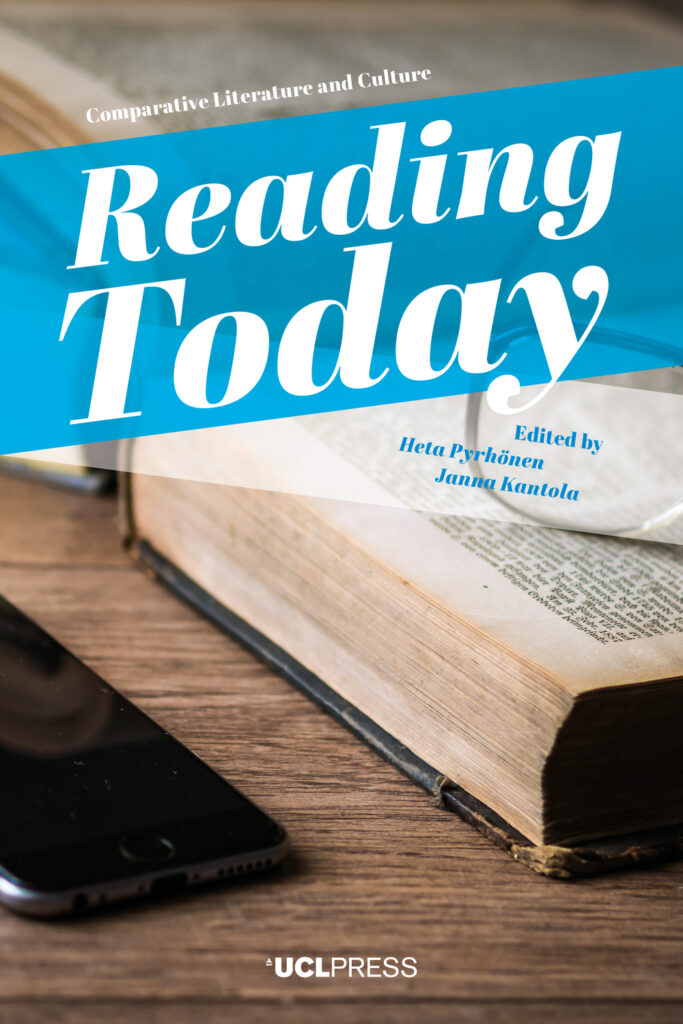
New technologies are changing our reading habits. Laptops, e-readers, tablets and other handheld devices supply new platforms for reading, and we must learn to manage them by scrolling, clicking or tapping. Reading Today places reading in current literary and cultural contexts in order to analyse how these contexts challenge our conceptions of who reads, what reading is, how we read, where we read, and for what purposes – and then responds to the questions this analysis raises. Is our reading experience becoming a ‘flat’ one? And does reading in a media environment favour quick reading?

Alongside these questions, the contributors unpack emerging strategies of reading.They consider, for example, how paying attention to readers’ emotional reactions as an indispensable component of reading affects our conception of the reading process. Other chapters consider how reading can be explored through such topics as experimental literature, the contemporary encyclopedic novel and the healing power of books.
Gabriel Harvey and the History of Reading

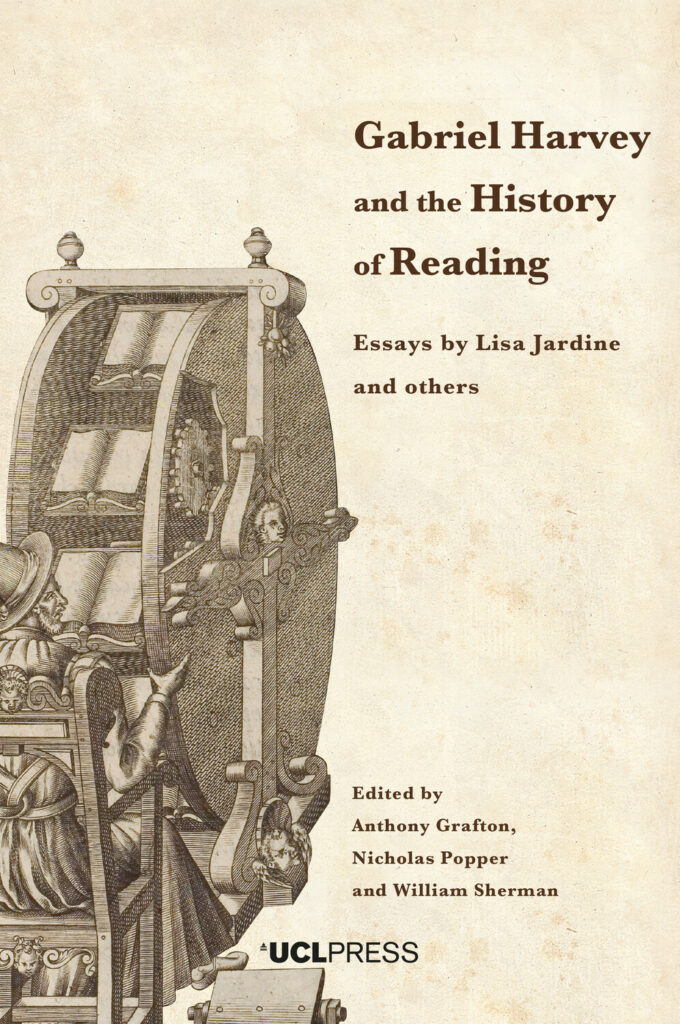
Few articles in the humanities have had the impact of Lisa Jardine and Anthony Grafton’s seminal ‘Studied for Action’ (1990), a study of the reading practices of Elizabethan polymath and prolific annotator Gabriel Harvey. Their excavation of the setting, methods and ambitions of Harvey’s encounters with his books ignited the History of Reading, an interdisciplinary field which quickly became one of the most exciting corners of the scholarly cosmos. A generation inspired by the model of Harvey fanned out across the world’s libraries and archives, seeking to reveal the many creative, unexpected and curious ways that individuals throughout history responded to texts, and how these interpretations in turn illuminate past worlds.

Three decades on, Harvey’s example and Jardine’s work remain central to cutting-edge scholarship in the History of Reading. By uniting ‘Studied for Action’ with published and unpublished studies on Harvey by Jardine, Grafton and the scholars they have influenced, this collection provides a unique lens on the place of marginalia in textual, intellectual and cultural history. The chapters capture subsequent work on Harvey and map the fields opened by Jardine and Grafton’s original article, collectively offering a posthumous tribute to Lisa Jardine and an authoritative overview of the History of Reading.

Archaeologists in Print

Archaeologists in Print is a history of popular publishing in archaeology in the nineteenth and twentieth centuries, a pivotal period of expansion and development in both archaeology and publishing. It examines how British archaeologists produced books and popular periodical articles for a non-scholarly audience, and explores the rise in archaeologists’ public visibility. Notably, it analyses women’s experiences in archaeology alongside better known male contemporaries as shown in their books and archives. In the background of this narrative is the history of Britain’s imperial expansion and contraction, and the evolution of modern tourism in the Eastern Mediterranean and Middle East. Archaeologists exploited these factors to gain public and financial support and interest, and build and maintain a reading public for their work, supported by the seasonal nature of excavation and tourism. Reinforcing these publishing activities through personal appearances in the lecture hall, exhibition space and site tour, and in new media – film, radio and television – archaeologists shaped public understanding of archaeology. It was spadework, scripted.

The image of the archaeologist as adventurous explorer of foreign lands, part spy, part foreigner, eternally alluring, solidified during this period. That legacy continues, undimmed, today.

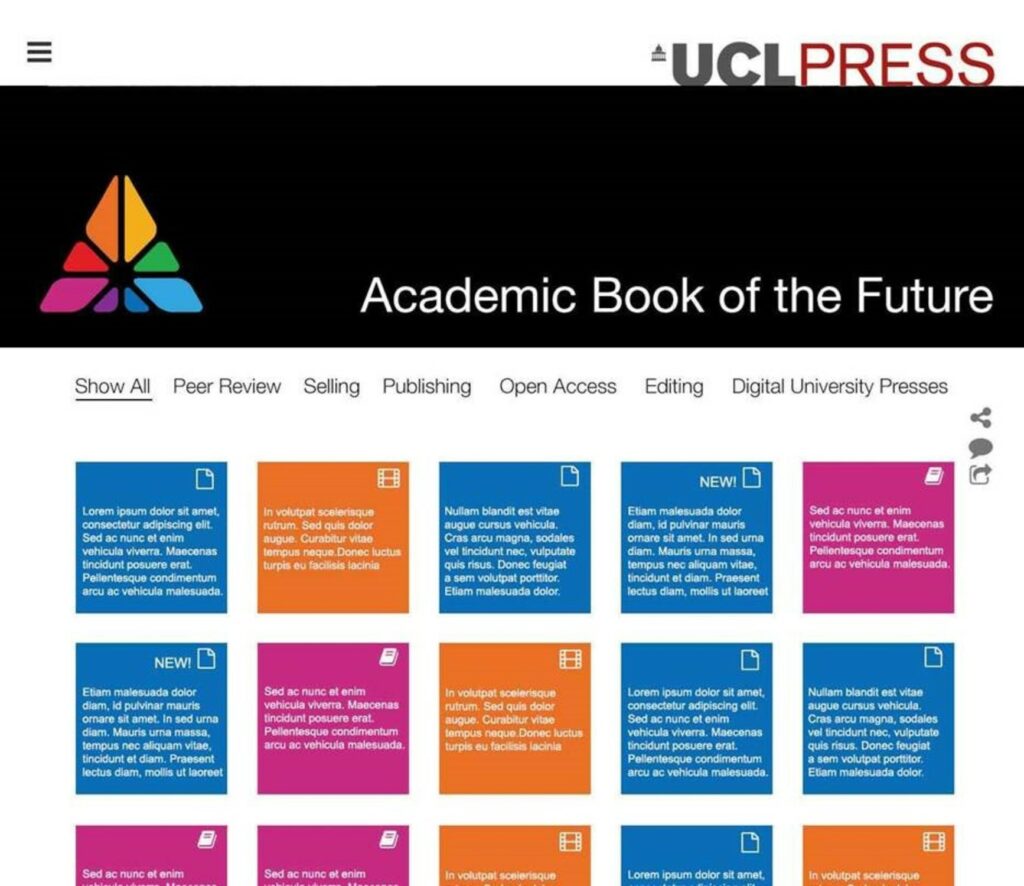
Academic Book of the Future

This dynamic, innovative, evolving and open platform will publish contributions connected to the AHRC/British Library project, The Academic Book of the Future, which has been investigating key aspects of scholarly publishing for the last two years, led by a team of academics from UCL and Kings College London. The platform, which presents the content in the form of a BOOC (Books as Open Online Content), will grow during 2016 as more content is created, and will allow different ways to explore and share the ideas and discussions.

Authors from all areas of the academic, publishing, bookselling and library communities discuss aspects of scholarly books and their possible futures: for example, the role of the editor, peer review, academic bookshops and libraries, open access, digital publishing and technology. The content – in a range of peer-reviewed formats including videos, blogs, chapters and reports – presents a fascinating variety of insights into the constantly evolving contexts of the academic book and will be of interest to anyone working in the HE sector and the publishing industry, and, indeed, to anyone interested in how ideas are disseminated to a wider general audience.

Sign up to our newsletter

Don't miss out!
Subscribe to the UCL Press newsletter for the latest open access books,
journal CfPs, news and views from our authors and much more!