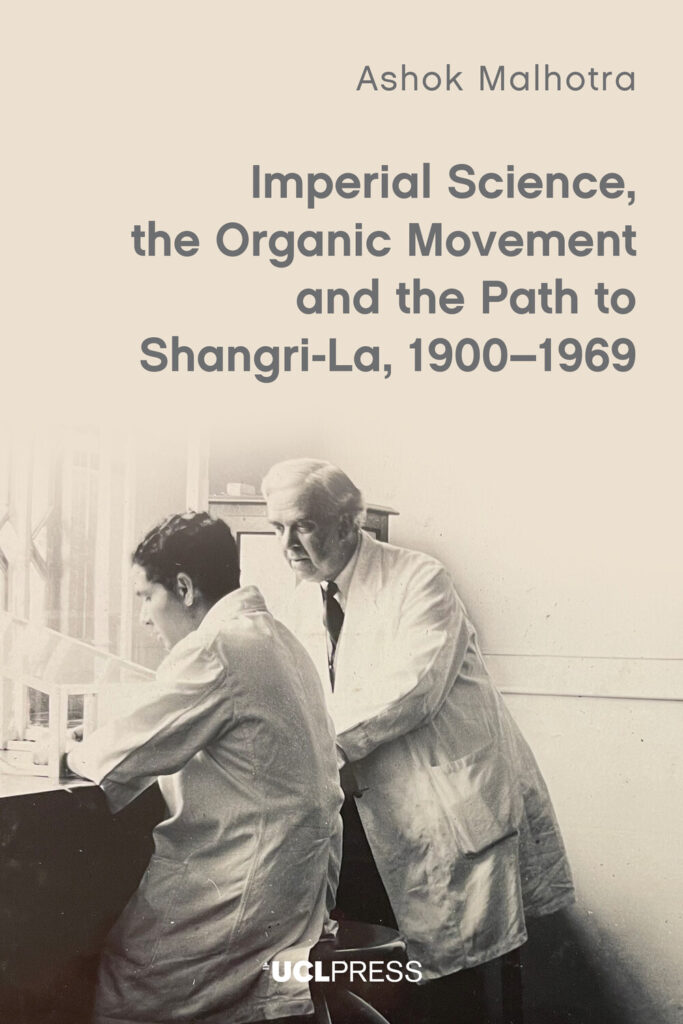
Imperial Science, the Organic Movement and the Path to Shangri-La, 1900-1969

Imperial Science, the Organic Movement and the Path to Shangri-La, 1900-1969 investigates scientific studies undertaken in British India by Robert McCarrison and Albert Howard in the 1920s, and how this research was later adapted in Britain and the USA. It examines how imperial agendas and colonial stereotyping shaped McCarrison’s dietary laboratory experiments and Howard’s development of the Indore Composting Process. Ashok Malhotra reveals how Indian scientists and Indian Princes contributed to the research culture in the institutes that were founded by these two British scientists, and in so doing, he draws attention to figures whose contributions have previously been overlooked by scholars. Malhotra demonstrates how McCarrison’s and Howard’s research was interpreted by British and US-based organic farming advocates to advocate for agricultural methods which returned organic matter to the soil and rejected chemical fertilisers.

It discusses how organic advocates on both sides of the Atlantic deployed the Hunzas, a community in British India (later Pakistan), as an example of a ‘tribe’ whose vigour could be ascribed to their farming techniques and diets. The narrative concludes by demonstrating how US travel writers in the 1950s and 1960s represented Hunza as a Shangri-La – a paradise whose inhabitants lived prolonged lives in blissful contentment.
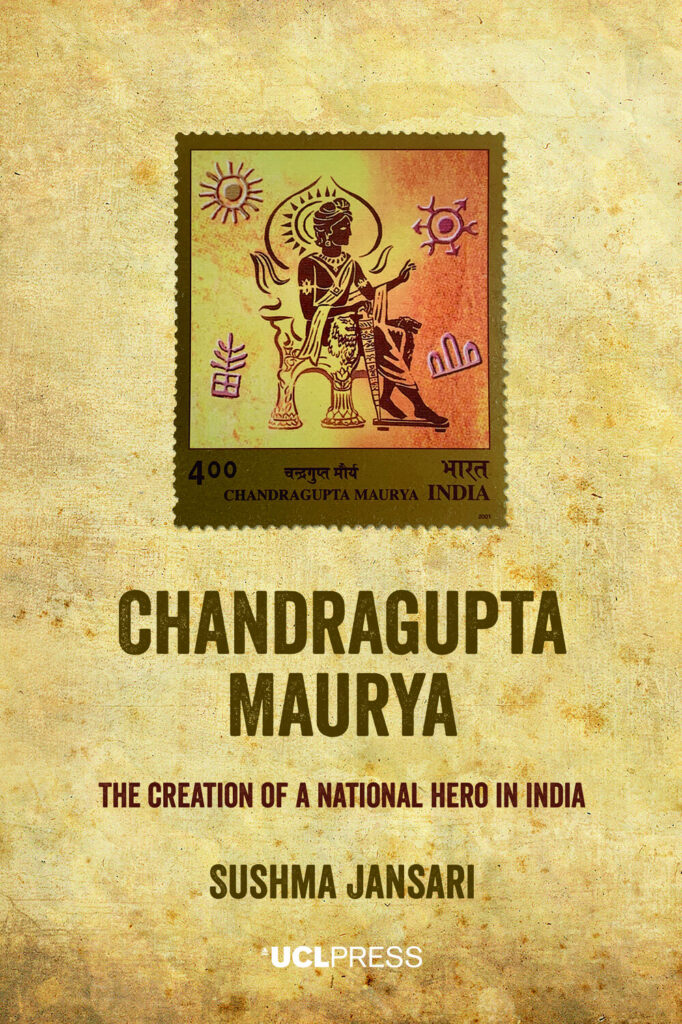
Chandragupta Maurya

We take it for granted that some historical figures become heroes, and others do not. Chandragupta Maurya evolved from obscure ruler to contemporary national icon. The key moment in the making of this Indian hero was a meeting by the banks of the River Indus between Chandragupta and Seleucus, founder of the Seleucid empire and one of Alexander the Great’s generals, in c.305-3 BC. This significant event was a moment of peace-making at the end of conflict. But no reliable account exists in early sources, and it is not even clear which ruler was victorious in battle. This uncertainty enabled British and Indian historians of the nineteenth and twentieth centuries to interpret the sources in radically different ways. With Chandragupta representing India and Seleucus standing in for Britain, British scholars argued that Seleucus defeated Chandragupta, while Indian academics contended the opposite.

The writing and reception of history fundamentally influences how we engage with the past, and the evolving colonial and post-colonial relationship between Britain and India is crucial here. In India, the image of Chandragupta as an idealised hero who vanquished the foreign invader has prevailed and found expression in contemporary popular culture. In plays, films, television series, comic books and historical novels, Chandragupta is the powerful and virtuous Hindu ruler par excellence. The path to this elevated standing is charted in this book.

Sign up to our newsletter

Don't miss out!
Subscribe to the UCL Press newsletter for the latest open access books,
journal CfPs, news and views from our authors and much more!