We are currently upgrading our shopping cart; in the interim all orders are being diverted to Waterstones. If you would like to redeem a promotional code, or are an author wanting to place an order, please email us.

Contact us

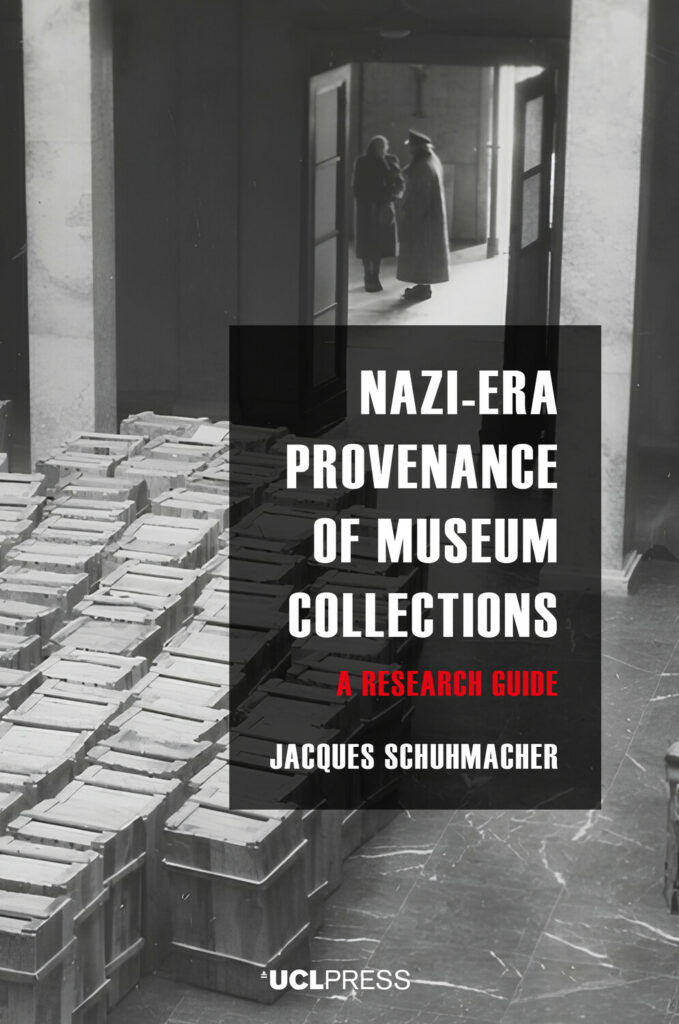
Nazi-Era Provenance of Museum Collections

When we look at the artworks on display in museums, there is always a real possibility that some of these objects once belonged to victims of the Nazis – a possibility that has remained unacknowledged for far too long. Countless artworks were seized or forcibly sold, with many ending up in museum collections around the world, even in countries which actively fought to defeat Nazi Germany.

Nazi-Era Provenance of Museum Collections equips readers with the knowledge and strategies essential for confronting the shadow of the Nazi past in museum collections. Jacques Schuhmacher provides the vital historical orientation required to understand the Nazis’ complex campaign of systematic dispossession and extermination, and highlights the current environment in which museum-based Nazi-era provenance research takes place.

This book introduces readers to the research methods and resources that can be used to reveal the moving stories behind the objects, highlighting the absorbing work of provenance researchers as it plays out in practice.

Provenance research not only seeks to recover erased names and experiences and to reinsert them into a historical record, but also to ensure that the Nazis’ actions and worldview do not remain unchallenged in the galleries and storerooms of our museums today.
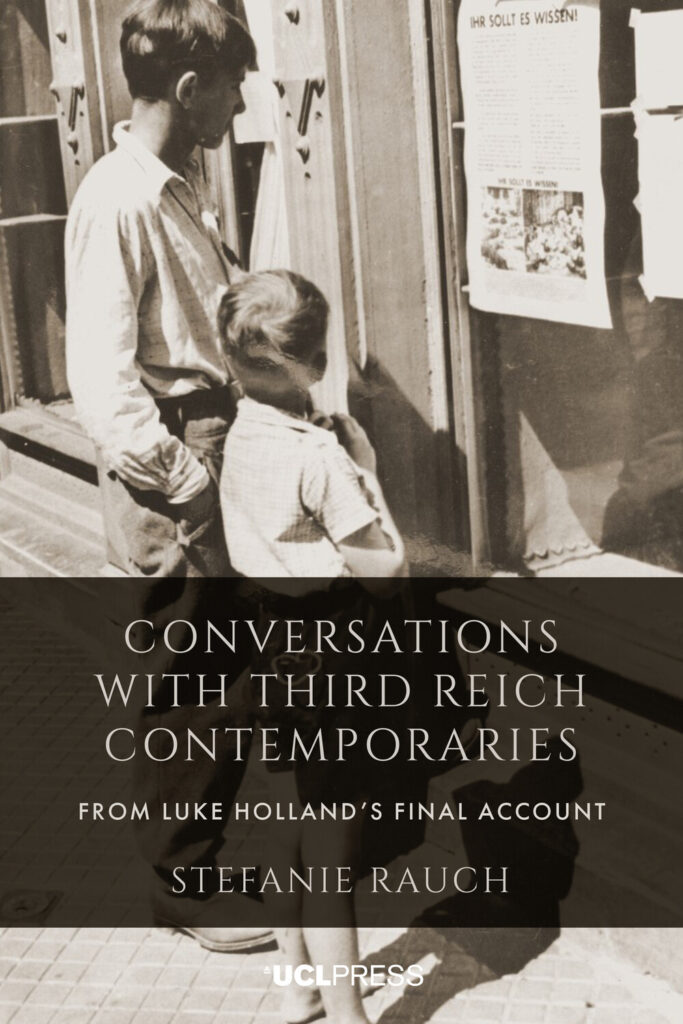
Conversations with Third Reich Contemporaries

Conversations with Third Reich Contemporaries presents a selection of excerpts from a recently opened collection of filmed interviews conducted by British documentary filmmaker Luke Holland (1948-2020). Most of the interviewees were young adults when the war ended. Some of them, or their families, had benefited materially through ‘Aryanisation’, Party-facilitated careers or exploiting forced labour. Others had enabled and enacted persecution or perpetrated violence, perhaps in anti-partisan warfare. They all built new lives in the three successor states of West Germany (FRG), East Germany (GDR), and Austria, and dealt with the Nazi past in different ways, including Holocaust denial, attempts at separating their lives from Nazi crimes, and reform.

The role played by ‘ordinary Germans’ in the ‘Third Reich’ and the Holocaust continues to stir debate. In the wider context of mass public engagement with the Holocaust and in light of new forms of racism, antisemitism and prejudice, this compelling sourcebook raises critical awareness of important issues around representation, authenticity, and the co-production of narratives. It attends to the issues of how and by whom knowledge is produced, the contingency of life narratives, performativity, and pedagogy. By suggesting critical questions and providing a reading list, it is an urgent and effective tool for thinking and teaching.

Sign up to our newsletter

Don't miss out!
Subscribe to the UCL Press newsletter for the latest open access books,
journal CfPs, news and views from our authors and much more!