We are currently upgrading our shopping cart; in the interim all orders are being diverted to Waterstones. If you would like to redeem a promotional code, or are an author wanting to place an order, please email us.

Contact us

Self-Build Homes

Self-Build Homes connects the burgeoning interdisciplinary research on self-build with commentary from leading international figures in the self-build and wider housing sector. Through their focus on community, dwelling, home and identity, the chapters explore the various meanings of self-build housing, encouraging new directions for discussions about self-building and calling for the recognition of the social dimensions of this process, from consideration of the structures, policies and practices that shape it, through to the lived experience of individuals and households.

Divided into four parts – Discourse, Rationale, Meaning; Values, Lifestyles, Imaginaries; Community and Identity; and Perspectives from Practice – the volume comes at a time of renewed focus from policy managers and practitioners, as well as prospective builders themselves, on self-build as a means for producing homes that are more stylised, affordable and appropriate for the specific needs of households. It responds to recent advances in housing and planning policy, while also bringing this into conversation with interdisciplinary perspectives from across the social sciences on housing, home and homemaking. In this way, the book seeks to update understandings of self-build and to account for housing as a distinctly social process.
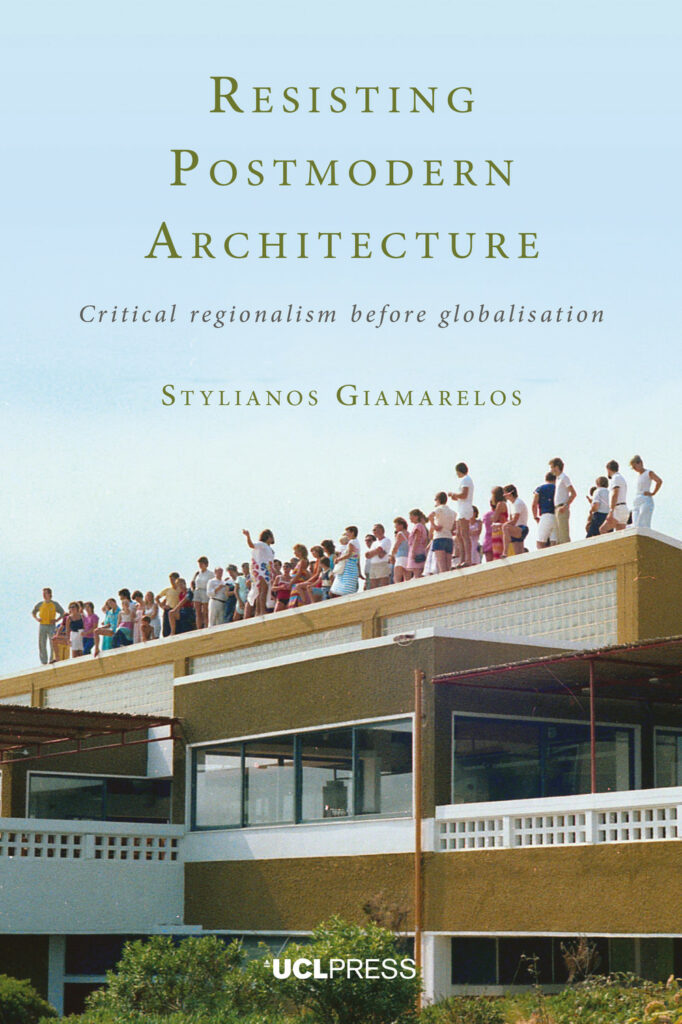
Resisting Postmodern Architecture

Since its first appearance in 1981, critical regionalism has enjoyed a celebrated worldwide reception. The 1990s increased its pertinence as an architectural theory that defends the cultural identity of a place resisting the homogenising onslaught of globalisation. Today, its main principles (such as acknowledging the climate, history, materials, culture and topography of a specific place) are integrated in architects’ education across the globe. But at the same time, the richer cross-cultural history of critical regionalism has been reduced to schematic juxtapositions of ‘the global’ with ‘the local’.

Retrieving both the globalising branches and the overlooked cross-cultural roots of critical regionalism, Resisting Postmodern Architecture resituates critical regionalism within the wider framework of debates around postmodern architecture, the diverse contexts from which it emerged, and the cultural media complex that conditioned its reception. In so doing, it explores the intersection of three areas of growing historical and theoretical interest: postmodernism, critical regionalism and globalisation.

Based on more than 50 interviews and previously unpublished archival material from six countries, the book transgresses existing barriers to integrate sources in other languages into anglophone architectural scholarship. In so doing, it shows how the ‘periphery’ was not just a passive recipient, but also an active generator of architectural theory and practice. Stylianos Giamarelos challenges long-held ‘central’ notions of supposedly ‘international’ discourses of the recent past, and outlines critical regionalism as an unfinished project apposite for the 21st century on the fronts of architectural theory, history and historiography.

Fabricate 2011

FABRICATE is an international peer reviewed conference that takes place every three years with a supporting publication on the theme of Digital Fabrication. Discussing the progressive integration of digital design with manufacturing processes, and its impact on design and making in the 21st century, FABRICATE brings together pioneers in design and making within architecture, construction, engineering, manufacturing, materials technology and computation. Discussion on key themes includes: how digital fabrication technologies are enabling new creative and construction opportunities from component to building scales, the difficult gap that exists between digital modelling and its realisation, material performance and manipulation, off-site and on-site construction, interdisciplinary education, economic and sustainable contexts. FABRICATE features cutting-edge built work from both academia and practice, making it a unique event that attracts delegates from all over the world. FABRICATE 2011, 2014 and 2017 are now all available to download free from UCL Press.

Fabricate 2014

FABRICATE is an international peer reviewed conference that takes place every three years with a supporting publication on the theme of Digital Fabrication. Discussing the progressive integration of digital design with manufacturing processes, and its impact on design and making in the 21st century, FABRICATE brings together pioneers in design and making within architecture, construction, engineering, manufacturing, materials technology and computation. Discussion on key themes includes: how digital fabrication technologies are enabling new creative and construction opportunities from component to building scales, the difficult gap that exists between digital modelling and its realisation, material performance and manipulation, off-site and on-site construction, interdisciplinary education, economic and sustainable contexts. FABRICATE features cutting-edge built work from both academia and practice, making it a unique event that attracts delegates from all over the world. FABRICATE 2011, 2014 and 2017 are now all available to download free from UCL Press.

Design Transactions

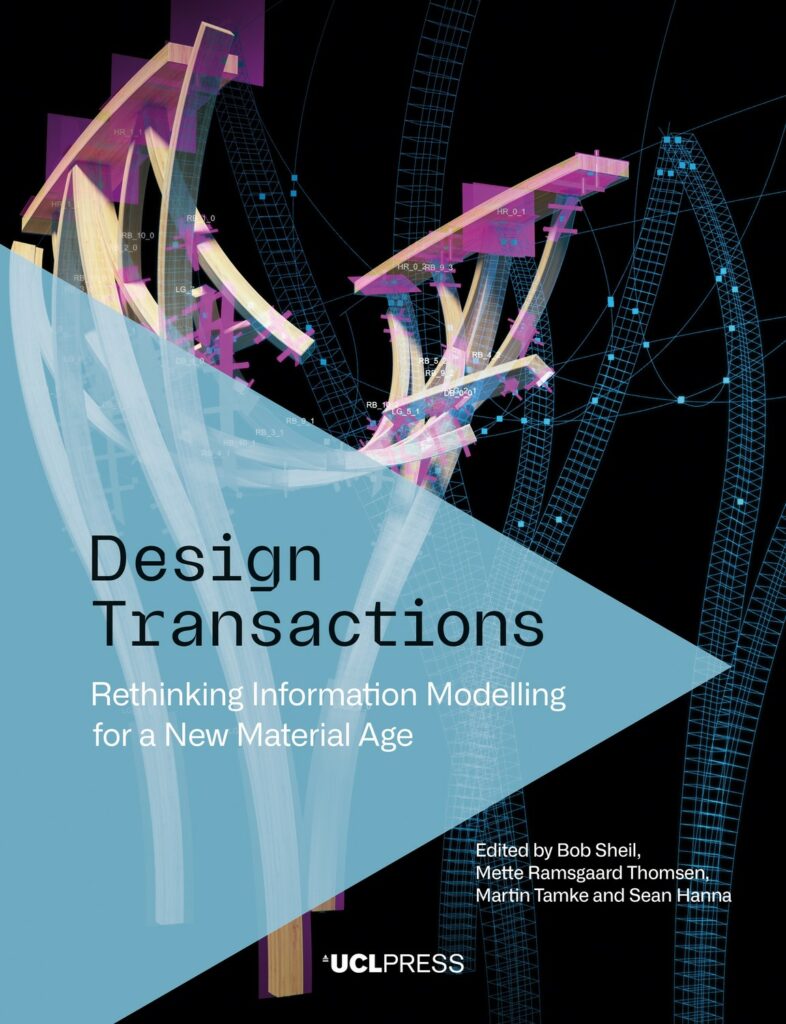
Design Transactions presents the outcome of new research to emerge from ‘Innochain’, a consortium of six leading European architectural and engineering-focused institutions and their industry partners. The book presents new advances in digital design tooling that challenge established building cultures and systems. It offers new sustainable and materially smart design solutions with a strong focus on changing the way the industry thinks, designs, and builds our physical environment.

Divided into sections exploring communication, simulation and materialisation, Design Transactions explores digital and physical prototyping and testing that challenges the traditional linear construction methods of incremental refinement. This novel research investigates ‘the digital chain’ between phases as an opportunity for extended interdisciplinary design collaboration. The highly illustrated book features work from 15 early-stage researchers alongside chapters from world-leading industry collaborators and academics.

The Covert Life of Hospital Architecture

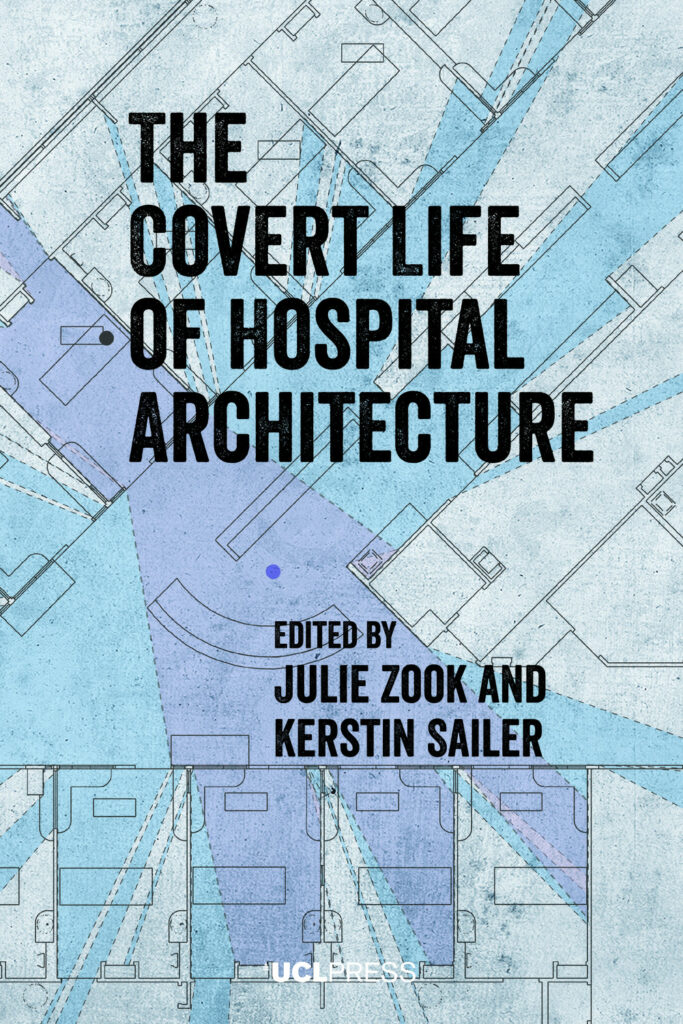
The Covert Life of Hospital Architecture addresses hospital architecture as a set of interlocked, overlapping spatial and social conditions. It identifies ways that planned-for and latent functions of hospital spaces work jointly to produce desired outcomes such as greater patient safety, increased scope for care provider communication and more intelligible corridors.

By advancing space syntax theory and methods, the volume brings together emerging research on hospital environments. Opening with a description of hospital architecture that emphasizes everyday relations, the sequence of chapters takes an unusually comprehensive view that pairs spaces and occupants in hospitals: the patient room and its intervisibility with adjacent spaces, care teams and on-ward support for their work and the intelligibility of public circulation spaces for visitors. The final chapter moves outside the hospital to describe the current healthcare crisis of the global pandemic as it reveals how healthcare institutions must evolve to be adaptable in entirely new ways. Reflective essays by practicing designers follow each chapter, bringing perspectives from professional practice into the discussion.

The Covert Life of Hospital Architecture makes the case that latent dimensions of space as experienced have a surprisingly strong link to measurable outcomes, providing new insights into how to better design hospitals through principles that have been tested empirically. It will become a reference for healthcare planners, designers, architects and administrators, as well as for readers from sociology, psychology and other areas of the social sciences.

Cities Made of Boundaries

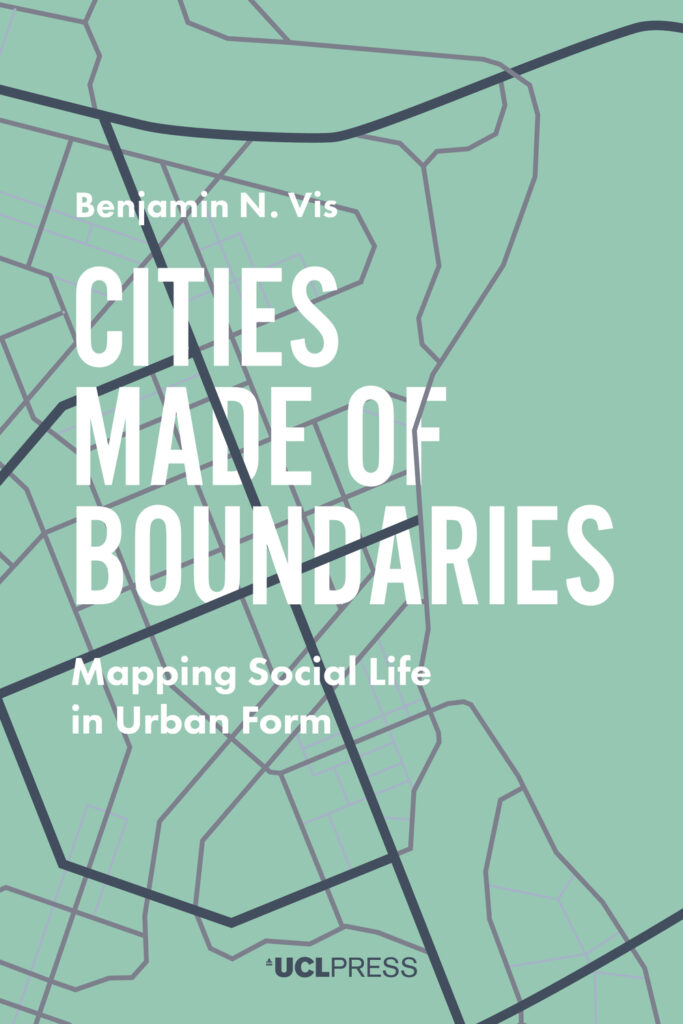
Cities Made of Boundaries presents the theoretical foundation and concepts for a new social scientific urban morphological mapping method, Boundary Line Type (BLT) Mapping. Its vantage is a plea to establish a frame of reference for radically comparative urban studies positioned between geography and archaeology. Based in multidisciplinary social and spatial theory, a critical realist understanding of the boundaries that compose built space is operationalised by a mapping practice utilising Geographical Information Systems (GIS).

Benjamin N. Vis gives a precise account of how BLT Mapping can be applied to detailed historical, reconstructed, contemporary, and archaeological urban plans, exemplified by sixteenth- to twenty-first century Winchester (UK) and Classic Maya Chunchucmil (Mexico). This account demonstrates how the functional and experiential difference between compact western and tropical dispersed cities can be explored.

The methodological development of Cities Made of Boundaries will appeal to readers interested in the comparative social analysis of built environments, and those seeking to expand the evidence-base of design options to structure urban life and development.

Supplementary materials for this book are available to download from [http://discovery.ucl.ac.uk/10055955/6/Supplement-BLT-table.pdf][1]

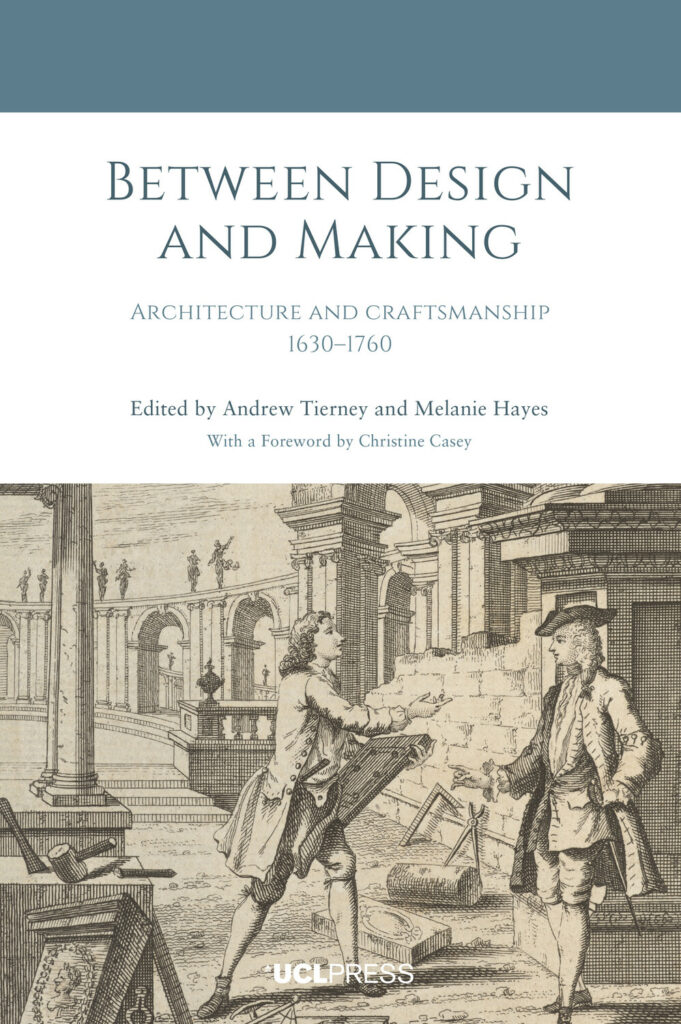
Between Design and Making

The seventeenth and eighteenth centuries represent a high point in the intersection between design and workmanship. Skilled artisans, creative and technically competent agents within their own field, worked across a wide spectrum of practice that encompassed design, supervision and execution, and architects relied heavily on the experience they brought to the building site. Despite this, the bridge between design and tacit artisanal knowledge has been an underarticulated factor in the architectural achievement of the early modern era.

Building on the shift towards a collaborative and qualitative analysis of architectural production, Between Design and Making re-evaluates the social and professional fabric that binds design to making, and reflects on the asymmetry that has emerged between architecture and craft. Combining analysis of buildings, archival material and eighteenth-century writings, the authors draw out the professional, pedagogical and social links between architectural practice and workmanship. They argue for a process-oriented understanding of architectural production, exploring the obscure centre ground of the creative process: the scribbled, sketched, hatched and annotated beginnings of design on the page; the discussions, arguments and revisions in the forging of details; and the grappling with stone, wood and plaster on the building site that pushed projects from conception to completion.

Sign up to our newsletter

Don't miss out!
Subscribe to the UCL Press newsletter for the latest open access books,
journal CfPs, news and views from our authors and much more!