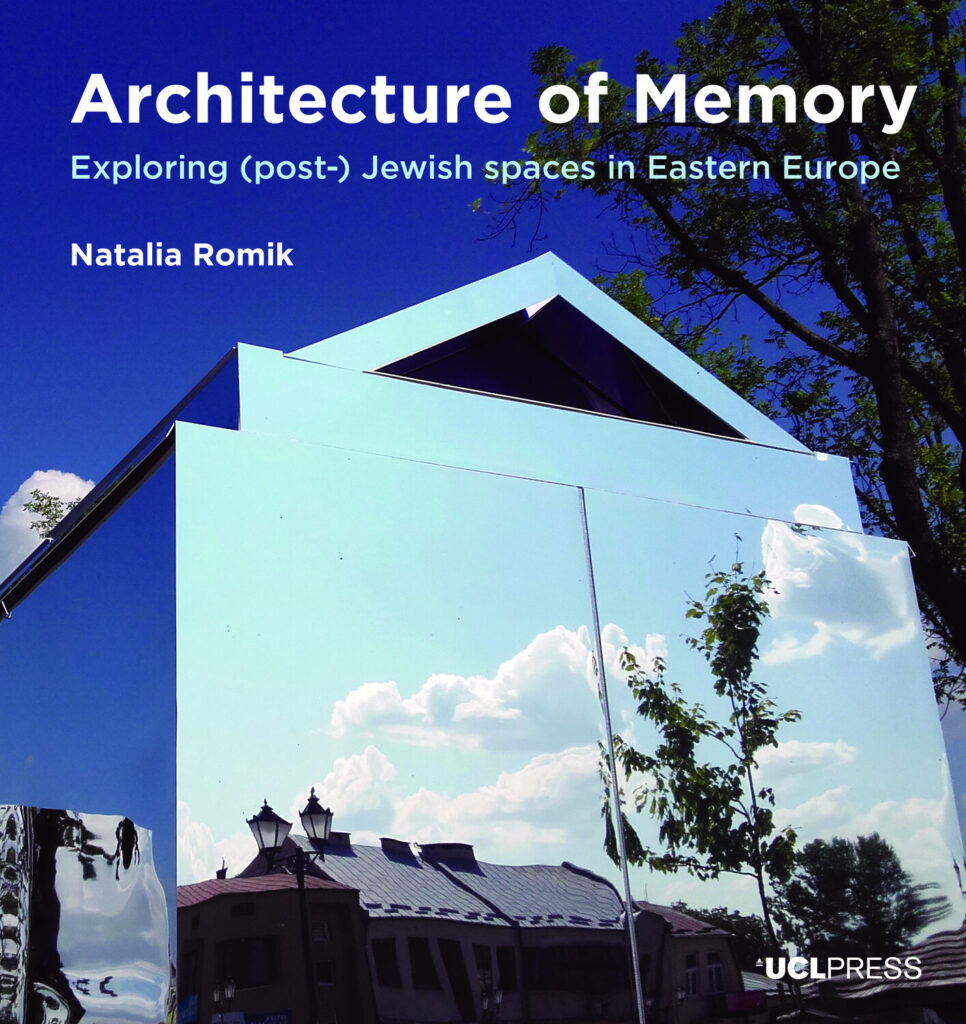
Architecture of Memory

Architecture of Memory explores architectural disappearance, urban remembrance and functional change amid social upheaval. Using archival, architectural and artistic methods, Natalia Romik investigates the spectral architecture of former shtetls – predominantly Jewish towns in Central and Eastern Europe before the Second World War. After the war, these towns were repopulated by people of other nationalities, who reused former Jewish properties. Today, traces of the Jewish populations have nearly vanished from urban reality and public discourse. Romik’s work seeks to discover new ways to develop abandoned shtetl architecture, focusing on Jewish heritage sites like synagogue ruins and ritual baths.

Through an interdisciplinary approach that merges architectural design, contemporary art and Jewish studies, Romik’s experimental research addresses the complex social issues of former shtetls by combining theoretical discussions with artistic performances and architectural interventions. The book documents projects ranging from subtle, mirror-clad interventions – such as the Nomadic Shtetl Archive, JAD, and Hurdy-Gurdy – to practical renovations that transform derelict synagogues and Jewish pre-burial houses into historical museums and cultural centres. These efforts confront the ‘present absence’ of these towns by merging theoretical discourse with archival research, artistic performances and architectural interventions, aimed at investigating the lost Jewish communities’ spectral architecture.
Practising Ethics

Grappling with ethics can disorientate and disturb your peace of mind in the small hours of the night. Practising Ethics transforms ethics from an obstacle to an opportunity by offering a poethic infrastructure to guide the development of ethical practice in architectural and urban research.

Practising Ethics bridges the gap between research volume and textbook. The book’s two-part structure creates a dialogue between ethical concepts derived from decolonial, ecological, feminist and queer theory, and lived ethical experiences that are explored through specific situations. A series of opening essays present hotspots, touchstones, keystones, blindspots, moonshots and milestones as different ethical orientations in a six-point methodology. This is followed by six case studies in which practitioners and researchers navigate these orientations through narrative figurations that describe ethical deliberations arising from social science, humanities, practice-led and participatory art and architectural design research in El Salvador, India, Nigeria, Peru and the United Kingdom.

The book acts as a companion to an award-winning online toolkit and is illustrated by Judit Ferencz who offers creative exercises for readers to develop their own poethic infrastructures.

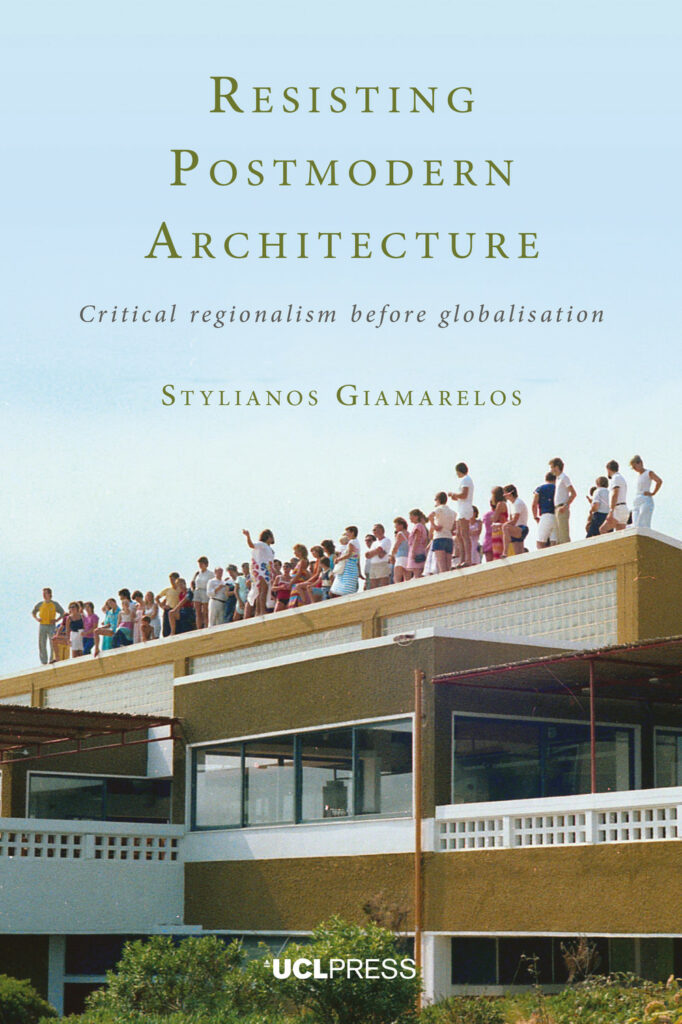
Resisting Postmodern Architecture

Since its first appearance in 1981, critical regionalism has enjoyed a celebrated worldwide reception. The 1990s increased its pertinence as an architectural theory that defends the cultural identity of a place resisting the homogenising onslaught of globalisation. Today, its main principles (such as acknowledging the climate, history, materials, culture and topography of a specific place) are integrated in architects’ education across the globe. But at the same time, the richer cross-cultural history of critical regionalism has been reduced to schematic juxtapositions of ‘the global’ with ‘the local’.

Retrieving both the globalising branches and the overlooked cross-cultural roots of critical regionalism, Resisting Postmodern Architecture resituates critical regionalism within the wider framework of debates around postmodern architecture, the diverse contexts from which it emerged, and the cultural media complex that conditioned its reception. In so doing, it explores the intersection of three areas of growing historical and theoretical interest: postmodernism, critical regionalism and globalisation.

Based on more than 50 interviews and previously unpublished archival material from six countries, the book transgresses existing barriers to integrate sources in other languages into anglophone architectural scholarship. In so doing, it shows how the ‘periphery’ was not just a passive recipient, but also an active generator of architectural theory and practice. Stylianos Giamarelos challenges long-held ‘central’ notions of supposedly ‘international’ discourses of the recent past, and outlines critical regionalism as an unfinished project apposite for the 21st century on the fronts of architectural theory, history and historiography.

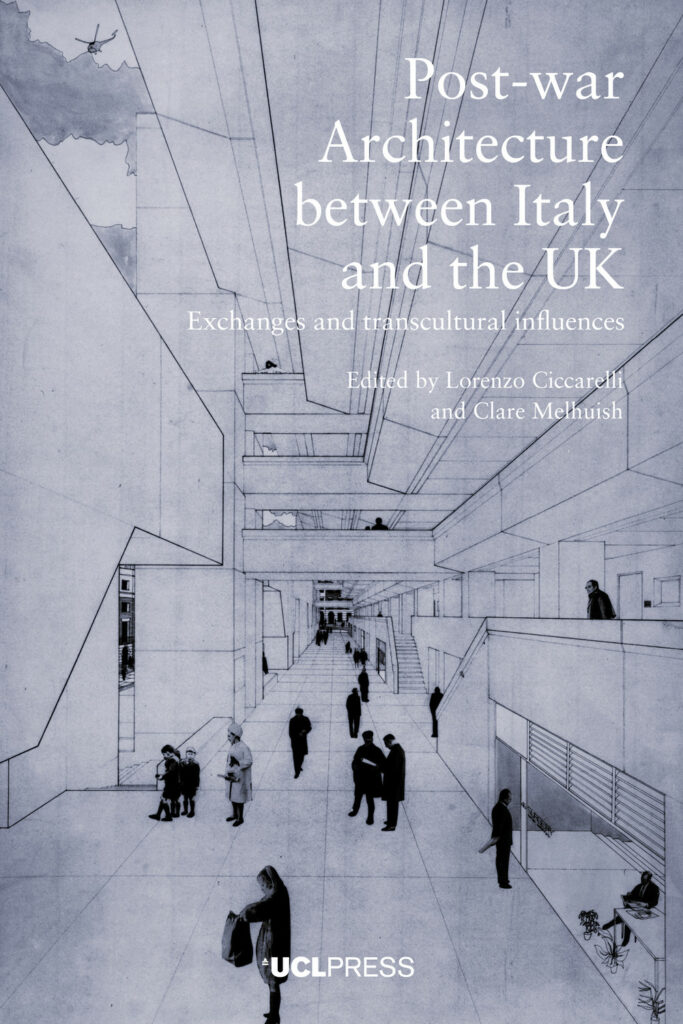
Post-war Architecture between Italy and the UK

Italy and the UK experienced a radical re-organisation of urban space following the devastation of many towns and cities in the Second World War. The need to rebuild led to an intellectual and cultural exchange between a wave of talented architects, urbanists and architectural historians in the two countries. Post-war Architecture between Italy and the UK studies this exchange, exploring how the connections and mutual influences contributed to the formation of a distinctive stance towards Internationalism, notwithstanding the countries’ contrasting geographic and climatic conditions, levels of economic and industrial development, and social structures.

Topics discussed in the volume include the influence of Italian historic town centres on British modernist and Brutalist architectural approaches to the design of housing and university campuses as public spaces; post-war planning concepts such as the precinct; the tensions between British critics and Italian architects that paved the way for British postmodernism; and the role of architectural education as a melting pot of mutual influence. It draws on a wealth of archival and original materials to present insights into the personal relationships, publications, exhibitions and events that provided the crucible for the dissemination of ideas and typologies across cultural borders.

Offering new insights into the transcultural aspects of European architectural history in the post-war years, and its legacy, this volume is vital reading for architectural and urban historians, planners and students, as well as social historians of the European post-war period.

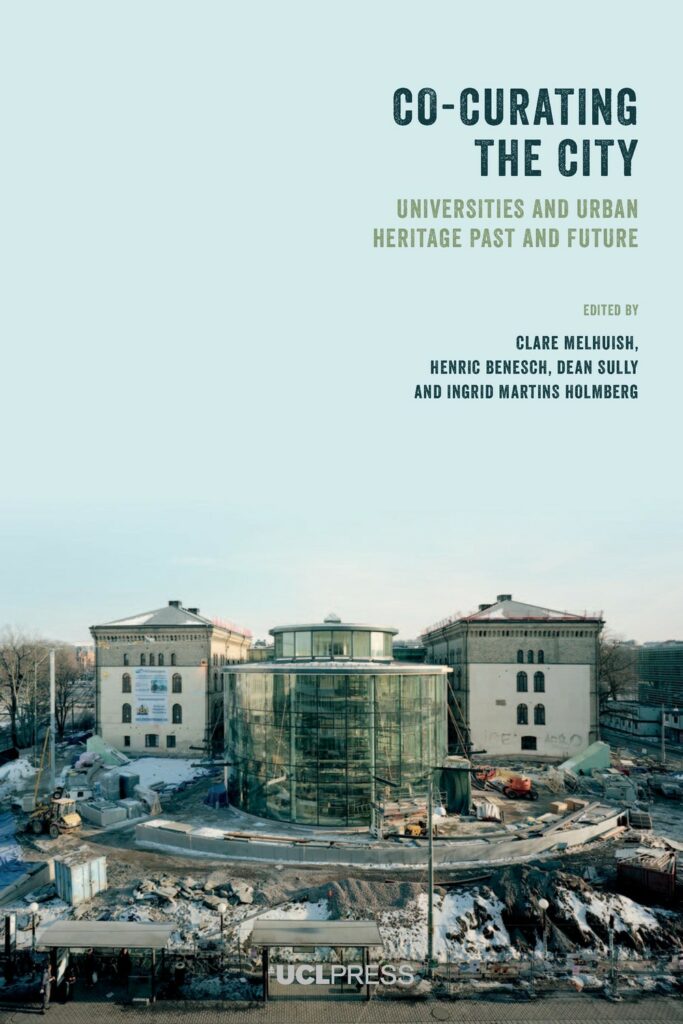
Co-curating the City

Co-curating the City explores the role of universities in the construction and mobilisation of heritage discourses in urban development and regeneration processes, with a focus on six case study sites: University of Gothenburg (Sweden), UCL East (London), University of Lund (Sweden). Roma Tre university (Rome), American University of Beirut, and Federal University of São Paulo, Brazil.

The aim of the book is to expand the field of critical heritage studies in the urban domain, by examining the role of institutional actors both in the construction of urban heritage discourses and in how those discourses influence urban planning decisions or become instrumentalised as mechanisms for urban regeneration. It proposes that universities engage in these processes in a number of ways: as producers of urban knowledge that is mobilised to intervene in planning processes; as producers of heritage practices that are implemented in development contexts in the urban realm; and as developers engaged in campus construction projects that both reference heritage discourses as a mechanism for promoting support and approval by planners and the public, and capitalise on heritage assets as a resource.

The book highlights the participatory processes through which universities are positioning themselves as significant institutions in the development of urban heritage narratives. The case studies investigate how universities, as mixed communities of interest dispersed across buildings and urban sites, engage in strategies of engagement with local people and neighbourhoods, and ask how this may be contributing to a re-shaping of ideas, narratives, and lived experience of urban heritage in which universities have a distinctive agency. The authors cross disciplinary and cultural boundaries, and bridge academia and practice.

Sign up to our newsletter

Don't miss out!
Subscribe to the UCL Press newsletter for the latest open access books,
journal CfPs, news and views from our authors and much more!