We are currently upgrading our shopping cart; in the interim all orders are being diverted to Waterstones. If you would like to redeem a promotional code, or are an author wanting to place an order, please email us.

Contact us

Expanding Fields of Architectural Discourse and Practice

Expanding Fields of Architectural Discourse and Practice presents a selection of essays, architectural experiments and works that explore the diversity within the fields of contemporary architectural practice and discourse. Specific in this selection is the question of how and why architecture can and should manifest in a critical and reflective capacity, as well as to examine how the discipline currently resonates with contemporary art practice. It does so by reflecting on the first 10 years of the architectural journal, P.E.A.R. (2009 to 2019). The volume argues that the initial aims of the journal – to explore and celebrate the myriad forms through which architecture can exist – are now more relevant than ever to contemporary architectural discourse and practice.

Included in the volume are architectural practitioners, design researchers, artists, architectural theorists, historians, journalists, curators and a paleobiologist, all of whom contributed to the first seven issues of the journal. Here, they provide a unique presentation of architectural discourse and practice that seeks to test new ground while forming distinct relationships to recent, and more longstanding, historical legacies.
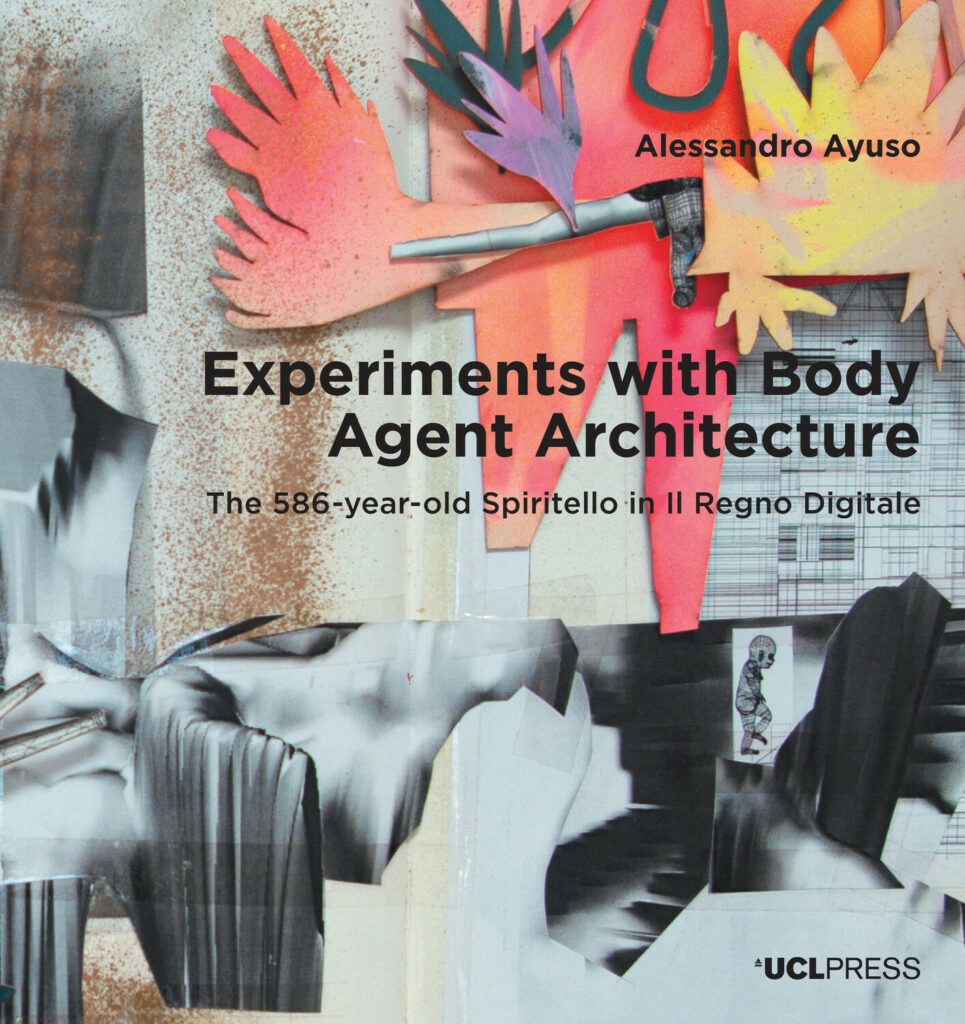
Experiments with Body Agent Architecture

Experiments with Body Agent Architecture puts forward the notion of body agents: non-ideal, animate and highly specific figures integrated with design to enact particular notions of embodied subjectivity in architecture. Body agents present opportunities for architects to increase imaginative and empathic qualities in their designs, particularly amidst a posthuman condition.

Beginning with narrative writing from the viewpoint of a body agent, an estranged ‘quattrocento spiritello’ who finds himself uncomfortably inhabiting a digital milieu (or, as the spiritello calls it, ‘Il Regno Digitale’), the book combines speculative historical fiction and original design experiments. It focuses on the process of creating the multi-media design experiments, moving from the design of the body itself as an original prosthetic to architectural proposals emanating from the body.

A fragmented history of the figure in architecture is charted and woven into the designs, with chapters examining Michelangelo’s enigmatic figures in his drawings for the New Sacristy in the early sixteenth century, Gian Lorenzo Bernini’s physically ephemeral ‘putti’ adorning chapels and churches in the seventeenth century, and Austrian artist-architect Walter Pichler’s personal and prescient figures of the twentieth century.

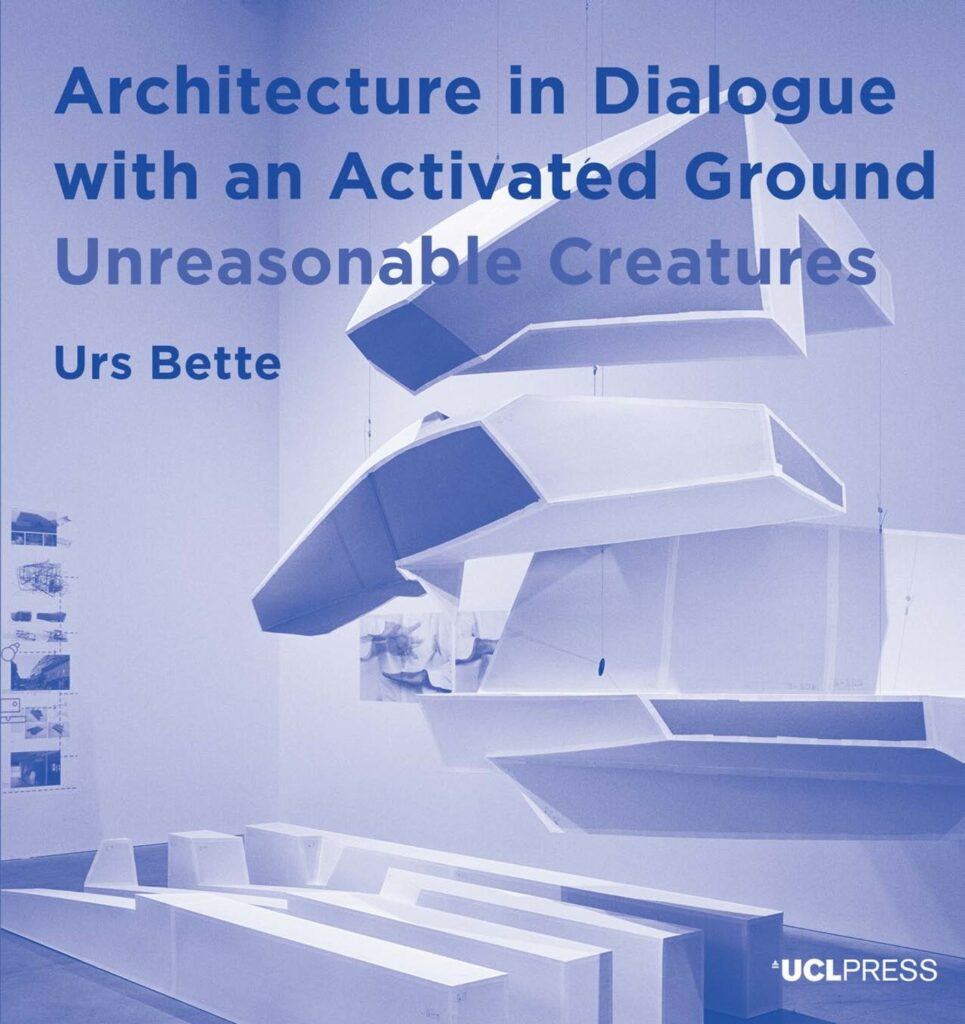
Architecture in Dialogue with an Activated Ground

Architecture in Dialogue with an Activated Ground sets out to validate the role of the unreasonable in the design process.

Using case study projects, architect Urs Bette gives an insight into the epistemological processes of his creative practice, and unveils the strategies he deploys in order to facilitate the poetic aspects of architecture within a discourse whose evaluation parameters predominantly involve reason. Themes discussed include the emergence of space from the staged opposition between the architectural object and the site, and the relationship between emotive cognition and analytic synthesis in the design act. In both cases, there is a necessary engagement with forms of ‘unreasonable’ thought, action or behaviours.

By arguing for the usefulness and validity of the unreasonable in architecture, and by investigating the performative relationship between object and ground, Bette contributes to the discourse on extensions, growth and urban densification that tap into local histories and voices, including those of the seemingly inanimate – the architecture itself and the ground it sits upon – to inform the site-related production of architectural character and space. In doing so, he raises debates about the values pursued in design approval processes, and the ways in which site-relatedness is both produced and judged.

Space Syntax

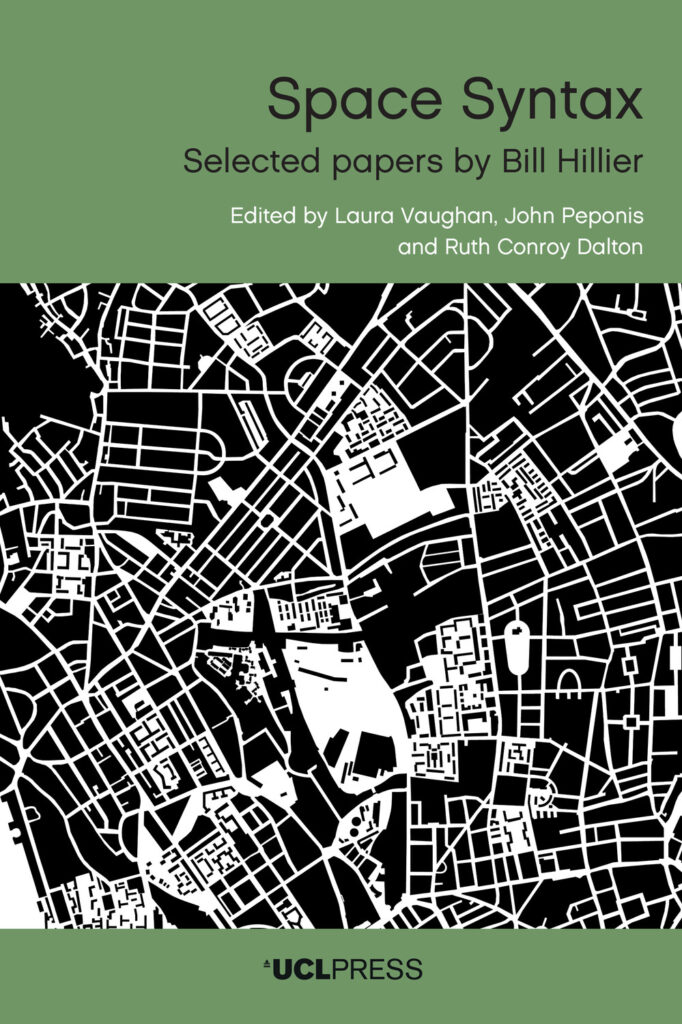
Professor Bill Hillier spent most of his career at The Bartlett, University College London, where he founded and developed, with a team of colleagues, an original research programme that set the study of architecture on a firm scientific basis. His transformational way of thinking about buildings and cities influenced generations of scholars, researchers and practitioners within the built environment disciplines and way beyond – in fields ranging from archaeology and biology to physics and zoology.

Space Syntax: Selected papers by Bill Hillier provides a canon of works that reflects the progression of Hillier’s ideas from the early publications of the 1970s to his most recent work, published before his death in 2019. This selection of influential works ranges from his papers on architecture as a professional and research discipline, through to his later papers that present a theory of the spatial structure of the city and its social functions. By bringing together writing from across his career-span of half a century, with specially commissioned introductions by a wide range of international experts in the field, we are able to contextualise and show the range and evolution of Hillier’s key ideas.

Resisting Postmodern Architecture

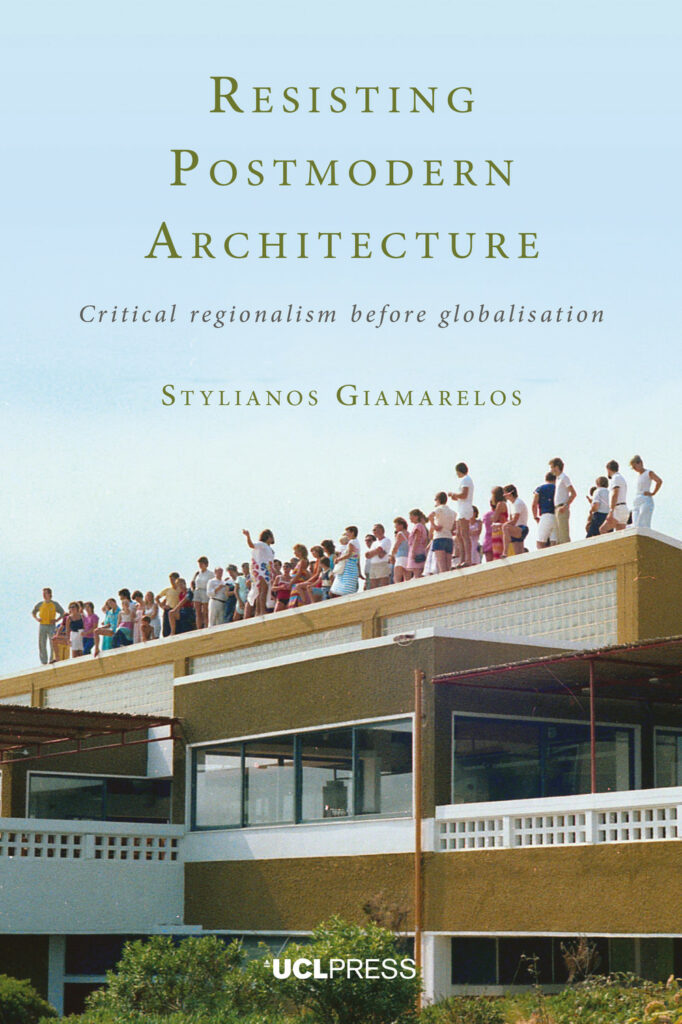
Since its first appearance in 1981, critical regionalism has enjoyed a celebrated worldwide reception. The 1990s increased its pertinence as an architectural theory that defends the cultural identity of a place resisting the homogenising onslaught of globalisation. Today, its main principles (such as acknowledging the climate, history, materials, culture and topography of a specific place) are integrated in architects’ education across the globe. But at the same time, the richer cross-cultural history of critical regionalism has been reduced to schematic juxtapositions of ‘the global’ with ‘the local’.

Retrieving both the globalising branches and the overlooked cross-cultural roots of critical regionalism, Resisting Postmodern Architecture resituates critical regionalism within the wider framework of debates around postmodern architecture, the diverse contexts from which it emerged, and the cultural media complex that conditioned its reception. In so doing, it explores the intersection of three areas of growing historical and theoretical interest: postmodernism, critical regionalism and globalisation.

Based on more than 50 interviews and previously unpublished archival material from six countries, the book transgresses existing barriers to integrate sources in other languages into anglophone architectural scholarship. In so doing, it shows how the ‘periphery’ was not just a passive recipient, but also an active generator of architectural theory and practice. Stylianos Giamarelos challenges long-held ‘central’ notions of supposedly ‘international’ discourses of the recent past, and outlines critical regionalism as an unfinished project apposite for the 21st century on the fronts of architectural theory, history and historiography.

Fabricate 2011

FABRICATE is an international peer reviewed conference that takes place every three years with a supporting publication on the theme of Digital Fabrication. Discussing the progressive integration of digital design with manufacturing processes, and its impact on design and making in the 21st century, FABRICATE brings together pioneers in design and making within architecture, construction, engineering, manufacturing, materials technology and computation. Discussion on key themes includes: how digital fabrication technologies are enabling new creative and construction opportunities from component to building scales, the difficult gap that exists between digital modelling and its realisation, material performance and manipulation, off-site and on-site construction, interdisciplinary education, economic and sustainable contexts. FABRICATE features cutting-edge built work from both academia and practice, making it a unique event that attracts delegates from all over the world. FABRICATE 2011, 2014 and 2017 are now all available to download free from UCL Press.

Fabricate 2014

FABRICATE is an international peer reviewed conference that takes place every three years with a supporting publication on the theme of Digital Fabrication. Discussing the progressive integration of digital design with manufacturing processes, and its impact on design and making in the 21st century, FABRICATE brings together pioneers in design and making within architecture, construction, engineering, manufacturing, materials technology and computation. Discussion on key themes includes: how digital fabrication technologies are enabling new creative and construction opportunities from component to building scales, the difficult gap that exists between digital modelling and its realisation, material performance and manipulation, off-site and on-site construction, interdisciplinary education, economic and sustainable contexts. FABRICATE features cutting-edge built work from both academia and practice, making it a unique event that attracts delegates from all over the world. FABRICATE 2011, 2014 and 2017 are now all available to download free from UCL Press.

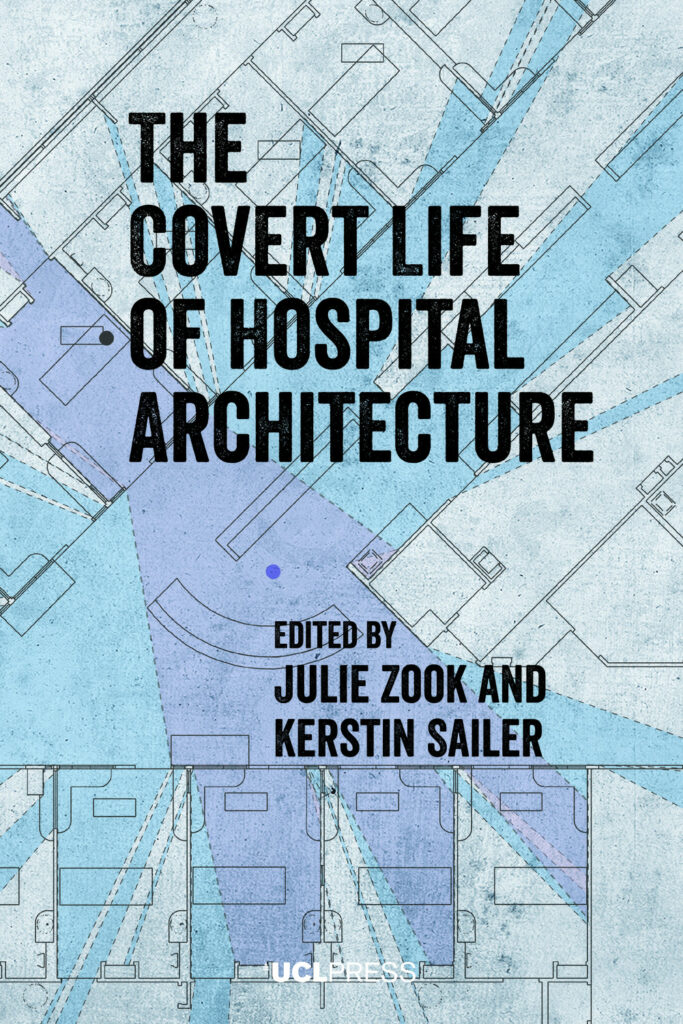
The Covert Life of Hospital Architecture

The Covert Life of Hospital Architecture addresses hospital architecture as a set of interlocked, overlapping spatial and social conditions. It identifies ways that planned-for and latent functions of hospital spaces work jointly to produce desired outcomes such as greater patient safety, increased scope for care provider communication and more intelligible corridors.

By advancing space syntax theory and methods, the volume brings together emerging research on hospital environments. Opening with a description of hospital architecture that emphasizes everyday relations, the sequence of chapters takes an unusually comprehensive view that pairs spaces and occupants in hospitals: the patient room and its intervisibility with adjacent spaces, care teams and on-ward support for their work and the intelligibility of public circulation spaces for visitors. The final chapter moves outside the hospital to describe the current healthcare crisis of the global pandemic as it reveals how healthcare institutions must evolve to be adaptable in entirely new ways. Reflective essays by practicing designers follow each chapter, bringing perspectives from professional practice into the discussion.

The Covert Life of Hospital Architecture makes the case that latent dimensions of space as experienced have a surprisingly strong link to measurable outcomes, providing new insights into how to better design hospitals through principles that have been tested empirically. It will become a reference for healthcare planners, designers, architects and administrators, as well as for readers from sociology, psychology and other areas of the social sciences.

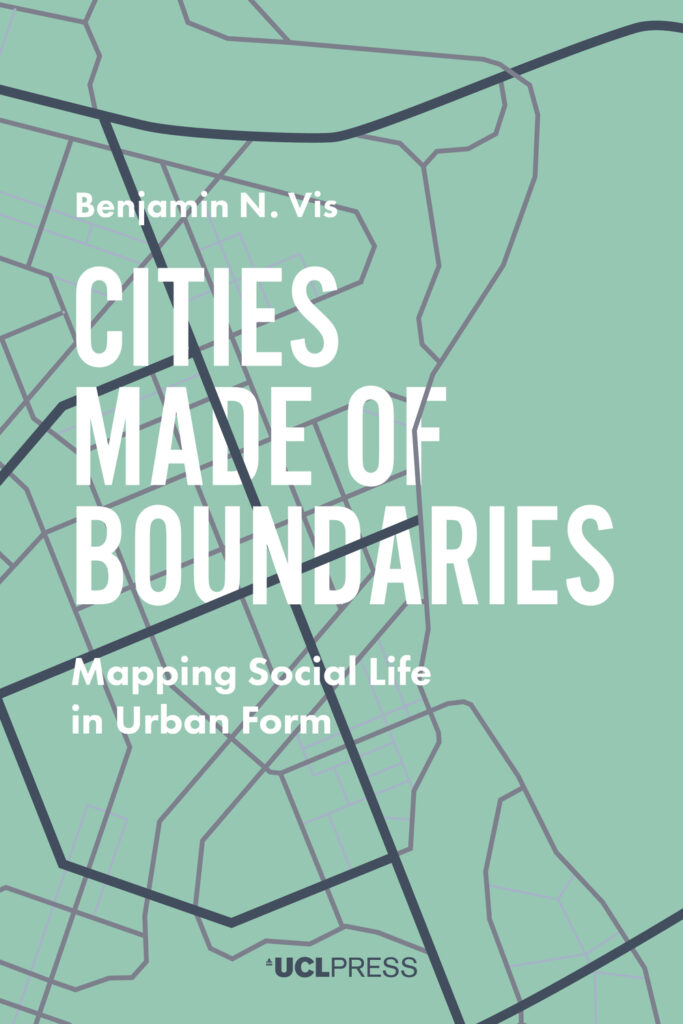
Cities Made of Boundaries

Cities Made of Boundaries presents the theoretical foundation and concepts for a new social scientific urban morphological mapping method, Boundary Line Type (BLT) Mapping. Its vantage is a plea to establish a frame of reference for radically comparative urban studies positioned between geography and archaeology. Based in multidisciplinary social and spatial theory, a critical realist understanding of the boundaries that compose built space is operationalised by a mapping practice utilising Geographical Information Systems (GIS).

Benjamin N. Vis gives a precise account of how BLT Mapping can be applied to detailed historical, reconstructed, contemporary, and archaeological urban plans, exemplified by sixteenth- to twenty-first century Winchester (UK) and Classic Maya Chunchucmil (Mexico). This account demonstrates how the functional and experiential difference between compact western and tropical dispersed cities can be explored.

The methodological development of Cities Made of Boundaries will appeal to readers interested in the comparative social analysis of built environments, and those seeking to expand the evidence-base of design options to structure urban life and development.

Supplementary materials for this book are available to download from [http://discovery.ucl.ac.uk/10055955/6/Supplement-BLT-table.pdf][1]

Architecture and Fire

Architecture and Fire develops a conceptual reassessment of architectural conservation through the study of the intimate relationship between architecture and fire. Stamatis Zografos expands on the general agreement among many theorists that the primitive hut was erected around fire – locating fire as the first memory of architecture, at the very beginning of architectural evolution.

Following the introduction, Zografos analyses the archive and the renewed interest in the study of archives through the psychoanalysis of Jacques Derrida. He moves on to explore the ambivalent nature of fire, employing the conflicting philosophies of Gaston Bachelard and Henri Bergson to do so, before discussing architectural conservation and the relationship between listed buildings, the function of archives, and the preservation of memories from the past. The following chapter investigates how architecture evolves by absorbing and accommodating fire, while the penultimate chapter examines the critical moment of architectural evolution: the destruction of buildings by fire, with a focus on the tragic disaster at London’s Grenfell Tower in 2017. Zografos concludes with thoughts on Freud’s drive theory. He argues the practice of architectural conservation is an expression of the life drive and a simultaneous repression of the death drive, which suggests controlled destruction should be an integral part of the conservation agenda.

Architecture and Fire is founded in new interdisciplinary research navigating across the boundaries of architecture, conservation, archival theory, classical mythology, evolutionary theory, thermodynamics, philosophy and psychoanalysis. It will be of interest to readers working in and around these disciplines.

Sign up to our newsletter

Don't miss out!
Subscribe to the UCL Press newsletter for the latest open access books,
journal CfPs, news and views from our authors and much more!