We are currently upgrading our shopping cart; in the interim all orders are being diverted to Waterstones. If you would like to redeem a promotional code, or are an author wanting to place an order, please email us.

Contact us

Baghdadi Judeo-Arabic: meet the author

Purple textured background with white text saying TEXTBOOKS OF WORLD AND MINORITY LANGUAGES in the top left corner.

To celebrate the publication of Baghdadi Judeo-Arabic: An Introductory Text, we are delighted to publish an interview with the author, Dr Assaf Bar-Moshe.

Baghdadi Judeo-Arabic was the native tongue spoken by the Jews of Baghdad and other towns of Southern Iraq, historically one of the oldest and biggest Jewish communities. This textbook is dedicated to spoken Baghdadi Judeo-Arabic and is designed to guide beginners to an advanced level, with the goal of enabling basic conversations. It focuses on common expressions of this unique dialect and opens a window to Baghdad’s historic Jewish culture. The 10 lessons guide readers through topics such as greetings, family, shopping or cuisine, and consist of sample texts, key vocabulary, grammar points and exercises.

In this interview, Dr Bar-Moshe explains his connection to Baghdadi Judeo-Arabic, gives insights into his approach to language research and describes how the academic study of rare languages is evolving.

What motivated you to write and publish this book?

The textbook focuses on teaching my mother tongue, Baghdadi Judeo-Arabic, a distinct dialect of Arabic once spoken by the Jewish community in Baghdad, which differed significantly from the dialect spoken by Muslims in the city. With the dialect on the verge of extinction, documenting it and compiling a grammar became one of my top priorities as a linguist. When I began teaching at the Oxford School of Rare Jewish Languages (OSRJL), I discovered a strong interest in learning this dialect. Given the lack of available learning materials, I developed my own. As they grew, I realised they could form the foundation of a textbook.

Tell us more about your background and experience.

I am a linguist who initially focused on researching Mandarin Chinese. However, when my MA supervisor learned that my family speaks the Jewish dialect of Baghdad, he encouraged me to pursue my PhD on the subject – and I did. I earned my PhD from the Hebrew University in Jerusalem, while also spending two years at Heidelberg University, where I honed my skills in Arabic dialectology. Since completing my PhD, I have expanded my research to other Judeo-Arabic dialects across Mesopotamia, such as the Jewish dialect of ˁĀna. My current research project at Freie Universität in Berlin is dedicated to documenting as many Jewish dialects of Arabic in Mesopotamia as possible before they disappear, and to writing a comparative grammar of these dialects. This work aims to help reconstruct the history of some of these Jewish communities through their linguistic remnants.

How and why did you get into this subject area?

I have always been fascinated by languages, which led me to pursue academic degrees in Linguistics. As mentioned earlier, I initially focused on researching Mandarin Chinese. I never considered that Baghdadi Judeo-Arabic, the language I grew up hearing and speaking, was a subject worthy of research. Fortunately, my PhD supervisor, Eran Cohen, opened my eyes to this incredible field of study.

Why did you choose to publish your work Open Access?

I believe that knowledge should not be limited to academic circles, especially when so many people are eager to learn about their mother tongue and heritage. OSRJL has done an excellent job of making this knowledge accessible online, free of charge, and available globally through teaching. I want to contribute by offering this open-access textbook, ensuring that anyone, anywhere, can freely access this valuable information.

What do you see as the most exciting future directions and potential breakthroughs in your field, and how do you envision your research contributing to a deeper understanding of the world?

My research is focused on documenting and analysing the Jewish Arabic dialects of Mesopotamia before they disappear, with the goal of creating a comprehensive comparative grammar that can help trace a common linguistic ancestor, or ancestors, for these dialects. By preserving and studying these linguistic remnants, I hope to contribute valuable insights into the history of Jewish communities in Mesopotamia, offering historians linguistic evidence as a kind of archaeological relics to better understand the cultural and historical journey of these communities.

What do you think sets your approach apart from others in your field, and how do you stay innovative?

I follow the methodology established by German dialectologists decades ago in the field of Arabic dialectology. While the field has evolved, the core principle remains: any statement or conclusion must be based on real data, and real data is gathered through fieldwork with native speakers of the dialect. However, when it comes to Jewish Arabic dialects, the work becomes more complex. Few native speakers remain, and those who do have often been separated from their Judeo-Arabic mother tongue for decades. As a result, my work focuses not just on documenting these dialects but on attempting to reconstruct them. This approach is more challenging but also far more fascinating – much like detective work.

Surprise us with something unexpected you encountered in your research for this book.

As a textbook, it’s fairly straightforward academically, and the content didn’t present any major surprises. However, I was pleasantly surprised by the overwhelming positive feedback and support I received from students, colleagues and staff at OSRJL, UCL Press and other organisations dedicated to Jewish languages and heritage worldwide. It’s truly heartwarming to know that this dialect holds such importance for so many people across the globe.

What advice would you give to students who are interested in pursuing a career in your field, and what skills or qualities do you think are most important for success?

The field is evolving, as in a few decades there will no longer be any informants available for interviews. Therefore, students in the coming decade must prioritise field research before time runs out. This work demands patience and strong interpersonal skills. In two decades, however, students will need to shift their focus to other research resources, primarily written ones. Reconstructing dialects through written sources is an area that has only been marginally explored, yet it holds significant potential.

What do you do to stay motivated and inspired in your work, and how do you maintain a positive attitude even in challenging situations?

I am deeply inspired by my students and their passion for learning and speaking this language, even though it may not be particularly useful in a practical sense. Hearing them speak this dialect is truly a pleasure. For those learning it for heritage reasons, I admire their determination to embrace a language that was marginalised in their childhood. It helps them heal from that experience and take pride in their heritage. In my research, I am driven by the knowledge that I am preserving the Jewish dialects of Mesopotamia for future generations, who will not have the opportunity to hear it from native speakers. On a personal level, every small discovery in the reconstruction of these dialects brings me immense happiness.

What is something you are never asked, but wish you were?

I don’t have a clear answer to this question, but it reminds me of something I’m often asked, especially by those close to me: why is this research important? I think when people imagine academic work, they picture breakthroughs in medicine or astrophysics, where the benefits seem more obvious (although, if they saw the level of detail these fields delve into, they might ask the same question). I wish people would place more value on their own history, culture and language. Without textbooks like this, a vital piece of our identity could disappear within a few decades.


About the author

Dr Assaf Bar-Moshe gained his PhD from the Department of Linguistics and the Department of Arabic Language and Literature at the Hebrew University. His main area of interest is Jewish Arabic dialects in Mesopotamia. Having dedicated years to the research of the Jewish dialects of Baghdad and ˁĀna, Dr Bar-Moshe is currently working in Freie Universität, Berlin on documenting additional dialects towards a comparative analysis of Jewish Arabic dialects in the region. Dr Bar-Moshe is also teaching courses in Iraqi Judeo-Arabic at the Oxford School of Rare Jewish Languages. 

OA Textbooks: UCL Press Perspective 

Person typing on a laptop in a classroom setting.

In celebration of open access week, Dhara Snowden, UCL Press Textbook Programme Manager, shares her insights on the growing significance of open access textbooks, their role in the broader landscape of open access publishing and the future of the UCL Press textbook programme.

UCL Press is the UK’s first, and largest, fully open access university press. We have been publishing books and journals for almost 10-years, across a variety of subjects and formats. In 2021, the press established a new programme of publishing, focusing on OA textbooks. I joined the press at this time and over the past 3 years, I’ve been responsible for managing our progress in this endeavour. For this year’s OA week, I wanted to share some of our thinking and planning around this activity and offer some musings about OA textbook publishing in general and what the future holds. 

What are open access textbooks?

Firstly, it’s useful to clarify what we mean by ‘textbooks’. During my conversations with academics across faculties, I’ve come to realise that this term has a different meaning in different contexts and across different levels of study. In the broadest sense, a textbook is a book that contains the materials to support the delivery of a course or module. Textbooks can provide a wide-view survey of a field or subject to be “adopted” as the main guide for study, or be part of a reading list of texts, often with a mixture of chapters, and other sources (articles etc).  Although traditionally published in print, there has been increasing demand for digital versions of commercial textbooks, which can be purchased by individuals and licenced to institutions for use by multiple users.

Open access publishing refers to the practice of making scholarly content and materials freely available online, removing subscription or purchase barriers. In the context of textbooks, this means that students and educators can access high-quality educational resources without incurring significant costs. OA textbooks are typically published under a creative commons (CC) licence which allows for redistribution, adaptation, and modification, promoting a collaborative and inclusive educational environment.

The creation and uptake of OA textbooks has seen a sharp increase in recent years, particularly in the USA and UK, with mature non-profit-funded publishers like OpenStax, collaboratively funded one-off projects like CORE Econ, and the development of platforms like Pressbooks. The Open Textbook Library, supported by Open Education Network, indexes published open textbooks and currently reports a total of 1,542 entries.

Why do we create them?

The UCL Press textbook programme was set up in direct response to issues around pricing for institutional access to essential e-textbooks, which were exacerbated during the covid-19 pandemic. The current ecosystem presents an unfavourable and often unstable and unsustainable financial model for institutional libraries, which has been well documented by the eBooks SOS campaign, can calls attention to the lack of regulation in pricing by commercial publishers.

An article entitled, Perspectives on e-books and digital textbooks and the way ahead published by Insights in 2022, claims that ‘combined spend on book across nationally negotiated library purchasing frameworks increased from £55 million in 2019/20 to £73 million in 202/21, with e-textbook provision increasing by 281% to £25.1 million during that time’.

In addition to issues around affordability and sustained access, the Insights article outlines that post-pandemic, “shifts in teaching practice are accelerating demand for features that enhance blended learning”, with more flexibility and adaptability in resources being required, which isn’t being delivered by traditional academic publishing.  

UCL Press’s aims to disrupt the current academic publishing ecosystem, offering authors and readers an alternative to the commercial model. This connects the theme for OA Week 2024, which calls for community over commercialisation. Bringing publishing back to the hands of academy, we can provide sustainable and high-quality textbooks to facilitate hybrid teaching and remove barriers to access for our content thereby reaching the widest possible audience and increasing chances to impact in scholarly communities.

How do we create them?

The UCL Press textbook programme commissions and publishes textbooks for undergraduate and postgraduate levels of study, across a wide range of subjects and topics. Each new proposal (and final manuscript) undergoes a rigorous peer-review process to ensure our texts include high-quality and relevant content.

Our approach is to collaborate with lecturers to create resources that provide high-quality guidance for students through their studies. We take a personal and bespoke approach to each new textbook. As our main output is digital and open access, we assess the needs of the student and subject matter and offer greater flexibility for our authors to create textbooks that correspond to those factors, without rigid templates or a one-size-fits-all mentality.  

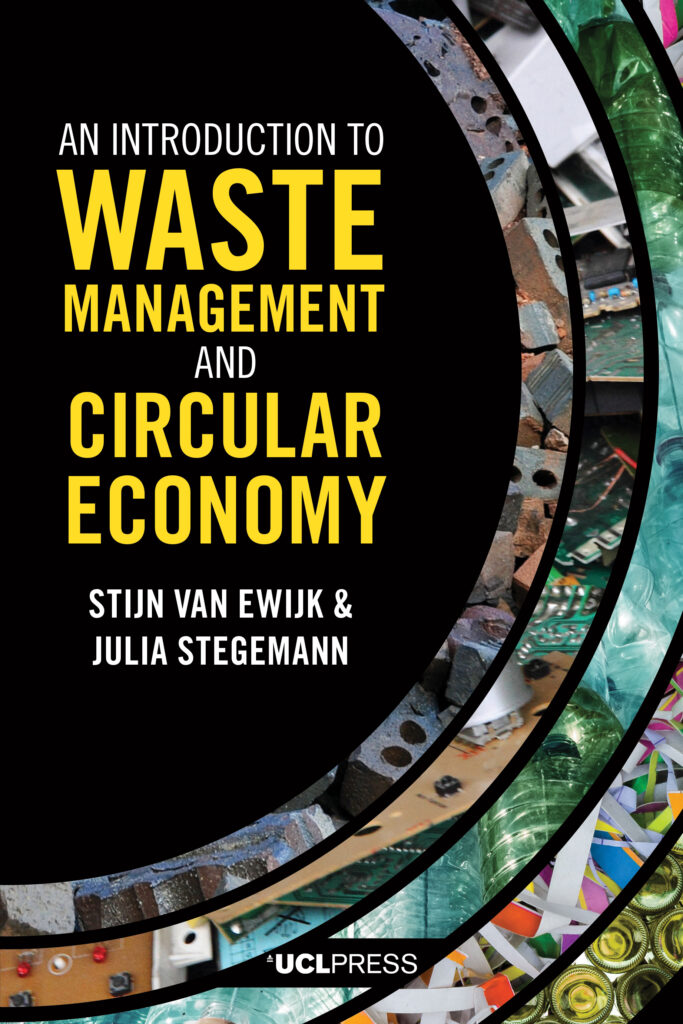
We have published 2 new textbooks to date, the first entitled, An Introduction to Waste Management and Circular Economy, published in December 2023. This textbook is based on a module taught at UCL but also has relevance for global courses on environmental engineering, resource efficiency, bioenergy and waste-to-energy technologies.

Cover of Waste Management and the Circular Economy

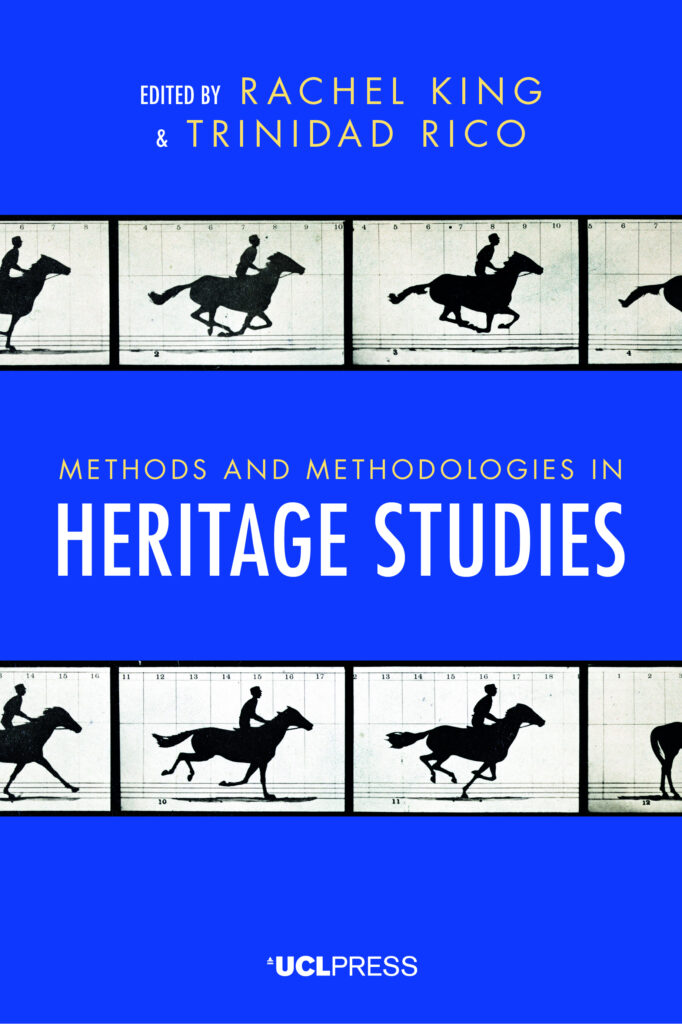
More recently, we published Methods and Methodologies in Heritage Studies, an edited collection that provides disciplinary debates, intellectual legacies and practical innovations that have led to understandings of heritage value today.

Cover of Methods and Methodologies in Heritage Studies

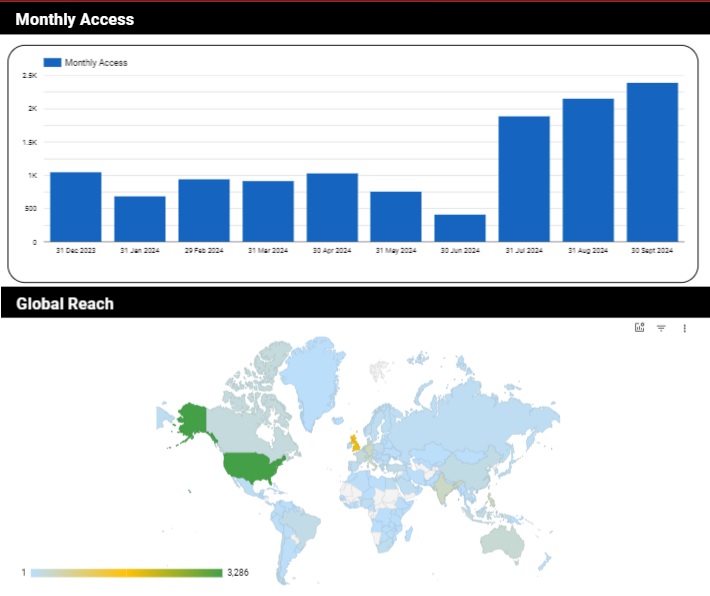
Combined, these 2 titles have received over 12,000 downloads, from 152 countries and territories since publication.

Bar Chart showing monthly access figures for An Introduction to Waste Management and Circular Economy and Methods and Methodologies in Heritage Studies between December 2023 and 30 September 2024.
Bar Chart showing monthly access figures for An Introduction to Waste Management and Circular Economy and Methods and Methodologies in Heritage Studies between December 2023 and 30 September 2024

Our forthcoming titles include, A Guide to Performing Systematic Reviews of Health and Disease and Fundamentals of Dark Matter, both due to publish early next year.

What are the benefits of writing or using OA textbooks? Where’s the value?

There are many benefits to writing and using OA textbooks and the European Network of Open Education Librarians have created a toolkit to encourage use of OA materials and open education resources (OER). Some of the key points are listed below.

  • Reaching a Global Audience: downloads and views from readers across the globe, particularly the global south.
  • Cost-Effectiveness: One of the most significant advantages of OA textbooks is their cost-saving potential for both library and student. OA resources can alleviate this burden, allow to redistribution of saved funds and make education more accessible for all.
  • Adaptability: open and CC licences enable reuse, modification and adaptation to make the content work best for teaching in aligned subjects.
  • Showcase Teaching Excellence: Ability to platform a new approach or area of study and celebrate examples of teaching excellence.
  • Encourage lifelong learning: Provide students with resources they can use and reference after their studies and into their careers.
  • Accessibility and Inclusivity: Open access textbooks are available to anyone with an internet connection, supporting a diverse range of learners, including those in remote or under-resourced areas or not part of academic institutions, i.e. professionals and policy makers.
  • Up-to-Date Content: Traditional textbooks can quickly become outdated. OA textbooks can be updated and revised more readily, ensuring that students have access to the most current information.
  • Enhanced Collaboration: The open nature of these resources encourages collaboration among educators, fostering a community of shared knowledge and innovation.

To measure impact, we’re trying use both qualitative and quantitative measures. Our metrics help show the readership and reach of our books, all displayed on our Statistics dashboard, which includes a map of access. In addition, we are collecting testimonials and feedback from academics and students and trying to engage with the societal impact of our books (as discussed in a recent article in The Scholarly Kitchen) and interrogating our user analytics to understanding which communities are engaging with our content and how they are using it in their own work.

Value in this context is calculated both as cost-saving on commercial provision, but also, as value added to student experience, or showcasing teaching excellence to encourage enrolment in a particular course or providing a teaching and learning resource for a module that is underrepresented in commercial provision (i.e. with a smaller cohort/interdisciplinary topic/offers a less mainstream perspective).  

What is the future?

The future of open access textbook publishing in the UK looks promising, with increasing institutional support and growing awareness among educators. As the demand for affordable and accessible educational resources continues to rise, the potential for OA textbooks to reshape higher education is significant.

Open access textbook publishing represents a vital shift in the academic landscape, providing a sustainable, equitable, and collaborative approach to education. As more institutions and publishers embrace this model, the hope is to create a future where quality educational resources are accessible to all, empowering students and educators alike.

Significant sea change in the status quo requires a long-term outlook and significant investment and commitment. If educators, students, and policymakers encourage discovery of the available open access resources and advocate for their adoption within institutions, there is potential to foster an educational environment that fully supports and values accessibility, collaboration, and innovation.

UCL Press will continue to develop its programme of OA textbooks and to keep up to date with our publications, please do sign up to our mailing list or take a look at our website.

Are you interested in adopting open access textbooks?

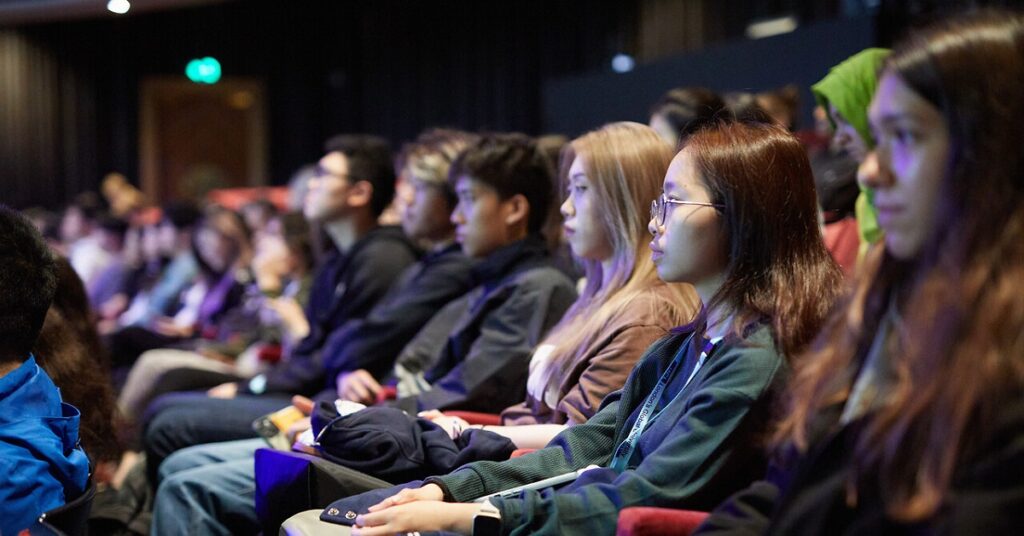
A line of seated students listening intently in a lecture theatre. All Rights © Digby Oldridge/PR Eye


UCL Press is currently building a programme of high-quality, open access textbooks, free to download digitally, anywhere in the world.

If you are teaching on under- or postgraduate courses, we want to hear about the information you require to make a decision, and the best time to receive it, for an open access textbook where the barriers of cost, subscription and access are removed.

You can access the eTextbook Marketing Survey here

It should take no more than 5 minutes to complete. The survey will close at 5pm (BST) on Tuesday 8th October.

The anonymised results will be used to develop our communications to help academics access the right information at the right time.

Thank you to those who are able to take part!


About the author

Dhara Snowden leads the UCL Press open access Textbook Programme. She previously held editorial roles at Rowman & Littlefield, Edinburgh University Press and Bloomsbury Publishing.

Sign up to our newsletter

Don't miss out!
Subscribe to the UCL Press newsletter for the latest open access books,
journal CfPs, news and views from our authors and much more!