Two new launch events for Palaeontology in Public

A large green dinosaur with a man in a suit on its back, set against a cityscape with skyscrapers.

Join the authors for two events for the recently published book Palaeontology in Public. The book examines how palaeontology has impacted on public culture, and how the public role of the field has shaped the science of palaeontology across its history.

Online event

An online event will take place on Tuesday 18 February between 18:00-19:30 GMT on Zoom. This event will feature a panel discussion on the themes of the book, with Mike Benton, Riley Black, Adrian Currie, Natalia Jagielska and Alison Laurence, in conversation with several of the book chapter authors.

Sign up free: http://bit.ly/3QaOlOj

In-person event

The second launch will be in-person. This will take place on Saturday 22 March between 14:30-19:30 GMT at King’s College London.

The event will feature talks, discussion, a film screening, and a pop-up exhibition. Current confirmed speakers include Richard Fallon, Susannah Lydon, Ilja Nieuwland and Mark Witton; the event will close with a panel discussion, where Mike Benton, Tori Herridge, Natalie Lawrence and Darren Naish will reflect on the place of palaeontology in public life, and how it has affected their own work and careers.

Read full details and sign up free: https://bit.ly/3CFdFsN

How a world-class university was founded

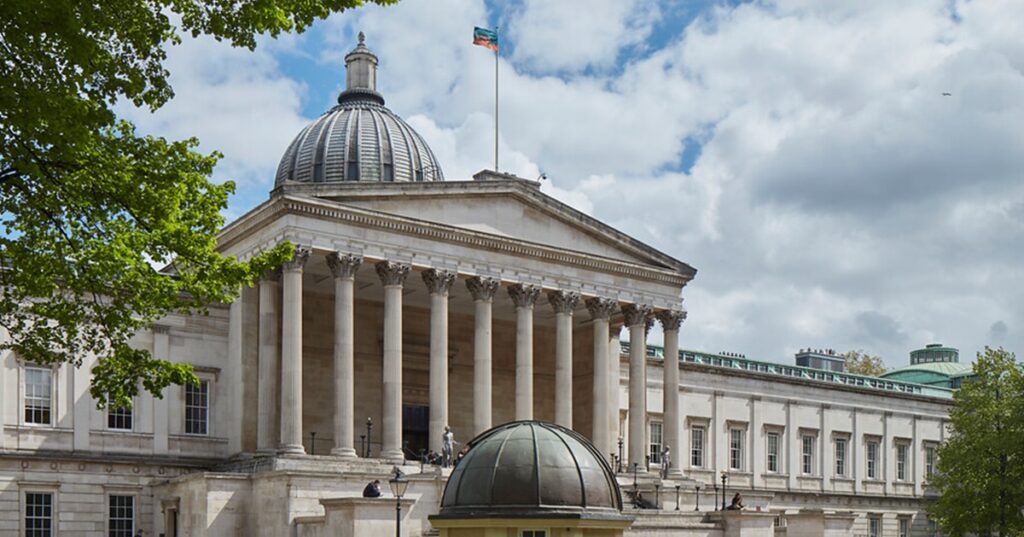
UCL Portico and quad

From its foundation on 11 February 1826, UCL embraced a progressive and pioneering spirit. It was the first university in England to admit students regardless of religion, and made higher education affordable and accessible to a much broader section of society. It was also effectively the first university to welcome women on equal terms with men. From the outset, UCL showed a commitment to innovative ideas and new methods of teaching and research.

To mark the 199th anniversary of the university’s foundation, we are proud to share an extract from The World of UCL exploring how the university was founded, and how – though not as its founder, as is commonly believed – utilitarian philosopher Jeremy Bentham was involved.

What we know today as University College London (UCL) was founded in 1826 and first opened its doors to students as the self-styled ‘University of London’ in October 1828. London at that date was the largest city in Europe and almost the only capital without a university. The new institution was intended from the beginning to open higher education to people excluded from the ancient seats of learning in Oxford and Cambridge. Its first students included nonconformists, Jews, Catholics and others. Notoriously described by Thomas Arnold as that ‘godless institution in Gower Street’, England’s third university prompted anxiety, contempt and curiosity among the early nineteenth-century establishment.

It is generally but incorrectly believed that Jeremy Bentham was the founder of UCL. This myth is sustained in a bizarre manner by the display of the body of the great philosopher of ethics, jurisprudence and government, ‘in the attitude in which I am sitting when engaged in thought’, as he instructed before his death in 1832. Besides the box with Bentham in it, UCL possesses over 200 more boxes full of his writings, a collection that has been called ‘one of the most remarkable monuments to the mind of a single man in all its aspects to be found anywhere’.

Prominently displayed in the Flaxman Gallery is the huge painting undertaken in 1922 by Henry Tonks, the then Slade Professor of Fine Art, portraying William Wilkins, the architect, offering the original College plans up to Bentham for his approval, while Henry Brougham, Thomas Campbell and Henry Crabb Robinson look on. The ‘Auto-Icon’ has been in the possession of UCL since 1850, and occasionally attends meetings of the College’s governing body. His most recent appearance was at a Council meeting in July 2013, the minutes recording that Jeremy Bentham was ‘present but not voting’.

In fact Bentham played no such personal role in the establishment of the College and was an old man of 80 when it opened. He did give his blessing and financial support to the venture, however, and the founders certainly owed a very considerable intellectual debt to him. UCL was founded by what Bentham called ‘an association of liberals’ in which the leading roles were played by an improbable duo formed by a poet and a lawyer. Credit for the original proposal must go to Thomas Campbell, the now largely forgotten Scottish poet whose Pleasures of Hope (1799) brought him popular fame and a rapid entrée into London literary society. In 1820, on a visit to Bonn, he was impressed by the religious toleration of the re-founded university there and formed the idea of establishing ‘a great London University’ for ‘effectively and multifariously teaching, examining, exercising and rewarding with honours, in the liberal arts and sciences, the youth of our middling rich people’. In February 1825 The Times printed a powerful open letter on this subject from Campbell to Henry Brougham, another Scot. Brougham was a brilliant man, one of the founders of the Edinburgh Review, who had moved to London to seek commanding outlets for his versatility and energy in the law and politics. First elected as an MP in 1810, he became particularly involved with the cause of popular education, associating himself with George Birkbeck and the mechanics’ institutes and founding in 1826 the Society for the Diffusion of Useful Knowledge.

Brougham regarded himself as a Benthamite, as a believer in the utilitarian principle of ‘the greatest happiness of the greatest number’ – though it has been claimed that in his view the greatest number was number one. His extravagant style smacked of humbug to many, but he was a man who got things done. Under his direction Campbell’s dreams of a ‘great London University’ were turned into reality. A second university which provided a model for UCL was Thomas Jefferson’s carefully planned University of Virginia, which had opened in 1825. The University of Edinburgh was the most powerful model of all, familiar as it was to Brougham and many of the founding professoriate in London.

When Campbell and Brougham began to organise a university for London, the only existing universities in England were those long established at Oxford and Cambridge – described by Bentham as ‘the two great public nuisances … storehouses and nurseries of political corruption’. Membership of the Church of England was necessary for admission to the one and for graduation from the other. All nonconformists, Catholics and Jews were thus excluded, while many Anglicans were kept out by the social restrictiveness, the cost or the institutions’ characteristic intellectual backwardness. The old universities were seen to be increasingly out of touch with a rapidly changing society. The population of England doubled in the first half of the nineteenth century, and the combined effects of industrialisation and urbanisation were producing new social patterns with new pressures and demands. The industrial revolution necessitated an extended system of higher education.

The main appeal of the new university was therefore to the interests excluded from the established system, such as it was, and to the various new social groups. Isaac Lyon Goldsmid, a millionaire financier and later the first Jew to become a baronet, played an especially significant role. He brought Campbell and Brougham together on the project and ensured the considerable support of the Jewish community. The nonconformists were actively led by Francis Augustus Cox, the Baptist minister of Hackney, while a different dissenting strand was represented by the support of Zachary Macaulay, whose main work had been devoted to the
abolition of the slave trade. Catholics were represented by the Duke of Norfolk and the Whig establishment provided a number of other titled luminaries. James Mill, the utilitarian philosopher and father of John Stuart Mill, actively represented Benthamism, and the various progressive influences rubbed shoulders readily with supporters from the City of London.

As the result of a year-long series of public and private meetings chaired by Brougham, the College came into formal existence on 11 February 1826 with the signing of an elaborate Deed of Settlement. It was agreed to raise a substantial sum of between £150,000 and £300,000 by the selling of shares of £100 each. From among the ‘proprietors’, as the shareholders were called, 24 men were to be elected as the Council, the all-powerful body which was to control the University’s property, appoint the Professors and regulate the education of the students. It was a fundamental principle of the new institution that religion in any form should be neither a requirement for entry nor a subject for teaching. As a corollary it was decided that no minister of religion should sit on the Council. The Revd Dr Cox served therefore as Honorary Secretary of that body until he became UCL’s Librarian in 1827.

From the outset the promoters sought incorporation. Brougham’s soundings towards a Royal Charter in 1825 were rebuffed by the Tory government of the day, and his subsequent efforts to achieve an Act of Parliament were defeated by the influence of Oxford and Cambridge. Parliamentary assistance was provided by Joseph Hume, one of the members of the original Council. A leading
radical, Hume was indefatigable in support of the College as well as of those other great progressive causes of the age, Catholic emancipation and parliamentary reform. After 1832 he was joined in the House of Commons by another member of the original Council, William Tooke, a prominent solicitor who became the first Treasurer of the College and of the Hospital.

The strength of the combined opposition of Oxbridge and of the London medical profession to legal recognition of the College as a ‘University’ could not easily be overcome in Parliament, despite the additional efforts of Brougham in the House of Lords, where he had gone in 1830 as Lord Chancellor. When UCL did eventually get its first charter in 1836, it took an unexpected form.

A base in Bloomsbury

One of the first acquisitions for the new University, even before it was officially constituted, was a building site. Nearly eight acres in Bloomsbury were bought in August 1825 for £30,000 by three of the richest promoters, Goldsmid, John Smith and Benjamin Shaw, and held by them until it could be transferred to the new University. Previously the site had served variously as a drilling ground, a place for duelling and a rubbish dump. It had been intended to develop it as Carmarthen Square, a projected addition to the yet unfinished Bloomsbury. By the time of the holding of the first meeting of the proprietors at the end of October 1826, 1,300 shares in the University had been sold, 200 fewer than the minimum believed necessary. Plans for the building were nevertheless being pressed ahead, and the digging of foundations was already underway. Despite the bad weather of the winter of 1826–27, work was sufficiently advanced by 30 April 1827 for the ceremony of laying the foundation stone.

This was undertaken with full masonic rights by the Duke of Sussex; a brother of George IV and the only member of the royal family with any intellectual pretensions, he was well known for his liberal sympathies. A copper plate with an inscription duly read out by Cox was placed in a cavity in the stone together with the traditional coins. Afterwards some 500 people gathered for a dinner at the Freemasons’ Tavern at which many speeches were made and £8,000 was raised. Henry Brougham made a memorably sarcastic oration attacking the opponents of the University, but annoyed Thomas Campbell’s friends by appearing to accept credit for founding the University single-handed. Campbell was absent from the foundation ceremony, being occupied as Lord Rector of the University of Glasgow, and he did not serve on the Council beyond the first year. Squeezed out by Brougham, Campbell’s connection with the University he had proposed ended as it was coming into being.

The architect chosen for the College was William Wilkins, whose fashionable, neo-Grecian design submitted in response to public advertisement in August 1825 was found exceedingly fine. Wilkins had previously designed new college buildings for Downing and King’s College at Cambridge, as well as Haileybury, the East India Company’s college in Hertfordshire. UCL is widely acknowledged to be Wilkins’ greatest work, far more distinguished than the National Gallery he built in Trafalgar Square a few years later. The main entrance was to be at the top of a wide staircase under a ten-column Corinthian portico topped by an elegant dome. A chapel was conspicuous by its absence, the main entrance being intended to give on to the three principal rooms: the Museum of Natural History to the left, the Library to the right and the Great Hall directly ahead. Lecture theatres of various sizes led off generous cloisters running to the impressive wings that contained further suites of rooms. In the event, shortage of money meant that Wilkins’ splendid design was only partially carried out.

The lowest tender received from a builder for the construction of Wilkins’ building was £110,000 – almost as much as the College had raised in total by autumn 1826. It was confidently declared that: ‘the wish of the Council will appear to have been rather to select a great design suited to the wants, the wealth, and the magnitude of the population for whom the Institution is intended, than one commensurate with its present means.’ To this heroic decision the College owes the iconic centrepiece to its present rambling and in many ways unimpressive premises; the Portico has long formed part of UCL’s branding. It was decided to build the central range of the building with the Portico and Dome as envisaged by Wilkins, but to delay the addition of the two wings until the financial position improved. Together with the stone ornamentation, various fittings and the two front lodges, the cost was not to exceed £86,000. Financial stringency also involved postponement of the Great Hall and strict curtailment of expenditure on
the Museum and Library. The steps under the Portico thus became something of a lavish white elephant; ‘the grandest entrance in London’, it has been called, ‘with nothing behind it’.

Augustus Pugin regarded the architecture of the College as pagan, adding acidly that it was ‘in character with the intentions and principles of the institution’. The College had to put up with a good many such snide remarks and attacks, especially in the crucial years between Campbell’s letter in The Times in 1825 and the opening in 1828. Verses and cartoons ridiculing what was quickly dubbed ‘the Cockney College’ or ‘the radical infidel College’ were published in the ultra-Tory John Bull and other papers:

Come bustle, my neighbours, give over your labours,
Leave digging and delving, and churning:
New lights are preparing to set you a staring,
And fill all your noddles with learning.
Each dustman shall speak, both in Latin and Greek,
And tinkers beat bishops in knowledge –
If the opulent tribe will consent to subscribe
To build up a new Cockney College.

‘The Cockney College’ in John Bull, July 1825

The opposition was provoked partly by the apparent pretension of a joint-stock company masquerading as a university in a period of financial speculation and partly by the College’s appeal to social groups excluded from the two old universities – an appeal intolerable to the Establishment. Above all it was provoked by the rejection of financial setbacks, the great hopes held by many for the new institution continued. Before the building had begun, the College was treated to the publication of what the historian Thomas Babington Macaulay called its ‘horoscope’ in the pages of the Edinburgh Review. ‘We predict’, he wrote, ‘that the
clamour by which it has been assailed will die away, that it is destined to a long, a glorious, and a beneficent existence, that, while the spirit of its system remains unchanged, the details will vary with the varying necessities and facilities of every age, that it will be the model of many future establishments, that even those haughty foundations which now treat it with contempt, will in some degree feel its salutary influence.’ A very bold prediction at the time, Macaulay’s words turned out to be remarkably percipient.


About the Authors

This is an excerpt from the open access book The World of UCL.

Negley Harte is Emeritus Senior Lecturer of History at UCL. He is interested in three main areas of British history: the origins of industrialisation; textile production and consumption (sixteenth to nineteenth centuries); and the history of higher education.

John North was appointed Assistant Lecturer in UCL’s Department of History in 1963, where he taught Greek and Roman History for 40 years. Since 2003 he has been Emeritus Professor of History.

Georgina Brewis is Senior Lecturer in the History of Education at the UCL Institute of Education. She is a historian of higher education, youth and voluntary action and teaches History across UCL. She is also a member of the International Centre for Historical Research in Education (ICHRE).


Meet the author: The Laissez-Faire Peasant

Silhouette of a tractor on a textured red and brown background, as featured on the cover of The Laissez-faire Peasant

Earlier this month, Jovana Diković’s fascinating open access book The Laissez-Faire Peasant was published.  We caught up with her to talk about her fascinating research in Serbia and Kosovo, why peasants are misunderstood and just why ‘Kill your darlings’ was a useful piece of advice she received when completing her PhD.

Tell us about yourself.

I am an economic anthropologist. At the University of Belgrade, I obtained my Bachelor diploma in social anthropology and Masters diploma in political sciences. In 2012, I moved to Zurich to complete a doctoral degree in economic anthropology.

Since then, my main research interests have centred around agriculture and food systems, peasantry, cooperation, rural economies and sustainability. As an avid rural explorer, I conducted more than two years of fieldwork research in villages in Serbia and Kosovo.

During longer research stays at the University of Ottawa and University of Pittsburgh, I furthered my studies in cooperation, self-governance, and property rights. Since 2022 I have headed a research unit on sustainable development and inclusive growth at the Centre for Corporate Responsibility and Sustainability, at the School of Management in Fribourg. In the past eleven years, I have taught several courses on rural economy, development, environment and sustainability at the University of St. Gallen, University of Fribourg, and University of Zurich.

What motivated you to write and publish The Laissez-Faire Peasant?

Serbian peasants were my main motivation. In the book I attempt to show that peasants are not the victims of state politics or market economy which is a prevailing image of them but are rather autonomous and competent actors. Peasants are the architects of their own and local wellbeing, and their conceptions of development are often opposed to state plans for agriculture and rural development. Moreover, state plans for rural development in Serbian villages have been continuously distorted and interrupted by autonomous actions and values of peasants because the state programs do not provide what peasants seek. It is less known that peasants’ values determine the level of their cooperation with the state and are the main drivers of individual and local wellbeing.

Contrary to this explanation, the rural scholarship predominantly focuses on the diverse forms of peasants’ marginalization, completely neglecting that even when that is being true, such a marginalization is often intentionally sustained in order to protect peasant’s autonomy, their ownership of land, way of doing things, and safe distance from the state. In other words, peasants know how to deal with their marginalization. Such an insight questions mainstream interpretations of power relations between the peasants and the state in the literature and public discussions, and urges rethinking theoretical conceptions of the peasantry, and generally paternalistic agricultural policies.

In a nutshell, the book  questions the broader implications of the purposefulness of state programs for rural development (which are doomed to fail in the local context), and whether peasants need state rural development at all.

How and why did you get into this subject area?

In my mid-twenties, I got an opportunity to accompany an older colleague and conduct research on vernacular architecture in several rural municipalities in Serbia. This allowed me to became familiar with the vernacular building techniques and the ways local people preserve their built heritage.

During that time, I discovered a fascinating world I did not know much about. It was the experience of being and living in villages among villagers – not the results of research – that hooked me. I discovered the world of our co-citizens about which we usually believe we know much, and eventually we either misinterpret or romanticize their realities. I wanted to pick up a village life in its entirety and to explain what matters in rural communities, particularly in regard to local rural development. And so, in my thirties, I undertook research on rural development in three villages in Vojvodina province in Serbia.  

Why did you choose to publish your work Open Access?

Typical university publisher books are often expensive and out of reach for the interested and non-academic audience. I always have hard time deciding to purchase a book that costs more than €50. In some parts of the world people live on a less than a $3a day-  buying books investing in education is often  sacrificed first in those societies.

My intention was to publish a book which is accessible, downloadable, and easily available for anyone with an interest in the topic. Open access has allowed me to do this.

Open access has a noble intention of making the books available for everyone and disrupting the monopolies of publishers who established the system for generating enormous profits at the expense of authors.

How do you see your research contributing to a better understanding of the world, and what potential benefits might it offer in the future?

My contribution is in bridging the gap towards understanding peasants’ motivations and realities; these are generally not understood by outsiders or are subjected to severe criticism.

When peasants are not perceived as victims, they are often accused of being severe polluters and free riders. By getting to know them and their farming practices we can understand their attitudes beter. This has the potential to lead toward sound and effective agricultural and rural policies. If we extend the ideas of my book to agri-environmental context and fixing bad practices in agricultural production, they contain an important moral: subtle and direct coercion of peasants will not force them to work toward environmental goals.

Finding a cooperation threshold for sustainable agriculture will not be possible without a dialogue between peasants, consumers, legislators and policymakers. Without this dialogue, the incentives and agendas of sustainable agricultural policies will be failing, one after another. Policymakers, legislators, and consumers need to have an understanding of those whose practices they intend to change – in this case those of the peasants – and to understand what is realistic on that path.

Surprise us with something unexpected you encountered in your research for this book.

‘Land never stays uncultivated, no matter the political and economic conditions’, was one of the most revealing statements by a peasant. It means that peasants will cultivate their land even when they are facing high costs, bankruptcy, or when it is a complete loss for them. In another words, peasants are not only utility maximisers. That was a turning point which changed my perspective and made me rethink my research questions. It forced me to examine the issue of the relationships between the peasants and land, and peasants and the state from an unorthodox angle and understand their viewpoint freed from layers of scientific knowledge installed by post-socialist and rural studies about peasants. It also inspired me to explain why existing scientific conceptions about peasants are wrong, which occupies a special place in my book.

What do you see as the most exciting future directions for research in your field, and what breakthroughs do you hope to see in the coming years?

I am eager to see how the understanding of land property will develop in the era of vertical farming, GMO production, and speed technological advancements that at least hypothetically might enable satisfactory production on smaller and smaller plots of land, or in a laboratory. That will be indeed an exciting time, both for anthropologists and societies. I wonder how agriculture, practices of farming and farming knowledge will change, when practically anyone given meeting certain conditions such as vertical space, agri- or lab-tech, can become a farmer. So, this will change an image of farmers, who can be an everyman without agricultural knowledge and skills on how to use agricultural mechanisation, without which today’s agriculture cannot be imagined. If development of agriculture follows such a path, it will be a structural transformation urging reconsideration of the modern view of land property, concept of farmers, production, and production ethics.    

What advice would you give to students who are interested in pursuing a career in your field, and what skills or qualities do you think are most important for success?

The worst thing one can do is to become a niche expert. This is important, to the  limited extent which requires technical knowledge of the field and literature but it will not make you a good scholar. ‘Kill your darlings’, was one of the best pieces of advice when I was doing my PhD, and which I still find very useful in my career.  It makes you step down from your ivory tower, challenge the niche knowledge and explore the world outside the domain of your expertise.


About the author

Jovana Diković is an economic anthropologist, publicist, and Head of Sustainable Development and Inclusive Growth at the Center for Corporate Responsibility and Sustainability, School of Management, Fribourg.

New open access books published in January 2025

Books on a wooden bookshelf in UCL library.

2025 has begun in the best way possible- with four brand new open access books!

Our first book of the year, The Laissez-Faire Peasant: Post-socialist rural development in Serbia examines manifestations of peasant autonomy, both in response to and independent of state rural development policies through a multi-sited ethnography of three Serbian villages. It is shown how these factors impede state programs for rural development while enabling the spontaneous flourishing of local communities. By focusing on the agency of rural residents, the book finds that peasants are resilient and competent agents who do not need government plans to thrive.

This was closely followed by Alice Stevenson’s Contemporary Art and the Display of Ancient Egypt argues that the contemporary and the ancient do not necessarily inform each other. Rather than explore how contemporary artists have been inspired by Egypt, this book examines how they have shaped the language and discourse around study of the Egyptian past by looking at the wider field of public display in which both have been historically situated. Building on this critical history of practice, the book draws from experiments in bringing contemporary artistic sculptures, conceptual pieces, multimedia films, sounds, smells and performances into galleries: at the British Museum in London, the Egyptian Museum in Turin and the State Museum of Egyptian Art in Munich. These are used to explore what contemporary art does in these spaces, the motivations for inviting artists in, and the legacies of those interventions. It ends with a reflection on how academics and curators can be involved in the creative process and how artists contribute to academic research.

The edited collection Palaeontology in Public: Popular science, lost creatures and deep time followed. This delightful book  considers the connections between palaeontology and public culture across the past two centuries. In so doing, it explores how these public dimensions have been crucial to the develo Dinosaurs feature, of course, including Spinosaurus, Winsor McCay’s ‘Gertie the Dinosaur’ and the creatures of Jurassic Park and The Lost World. A must for anyone with an interest in history of science, palaeontology and culture.

The final book of the month was the immensely important War Essays. In this fantastically absorbing book, Zainab Bahrani charts the devastation, cultural cleansing and targeted erasure of Iraq’s past, and argues that the topics of archaeology, history and memory must be analysed within the larger geopolitical issues of the contemporary Middle East. The essays present a counter-narrative of events that historicize the position of the historian and illustrate the enduring colonial practices of archaeology. Set within a narrative that reflects at once upon the violence of war and the processes of writing, an archaeologist’s personal journey unfolds. War Essays intertwines the autobiographical with the historical and analytical aspects of scholarship, weaving an eye-witness account of war with theoretical discussions around writing, the relationship of monuments, historical landscapes and memory, and how one’s sense of place in the world is disrupted by war. Definitely not one to miss.

We’ll be back again next month with a round up of the very best open access books. As always, stay safe!

The challenges, issues and controversies of ‘Holocaust education’ 

A notebook with a black pen resting on it sits open on a dark blue surface. The notebook is mostly empty with handwritten notes in the top left corner.

This International Holocaust Remembrance Day, Professor Andy Pearce reflects on the challenges, issues and controversies of Holocaust education in the early twenty-first century. 

Since Holocaust education has become a principal conduit for the transmission of its memory and the object of numerous national and transnational initiatives in recent decades, it would be reasonable to presume there is clarity and consensus around elemental issues. This is, however, far from the case. Following Oliver Plessow, Holocaust education can, indeed, be viewed as a ‘field’ when field is taken to mean

‘a relatively autonomous social system with certain practices, rules, and institutions, which is constituted by a system of relative positions created by competitive interaction between different agents and thus prone to constant reorganization.’

 (Plessow 2017, 317

Even so, because it is ‘part of the wider discourse on the overall significance of the Holocaust’, Plessow suggests Holocaust education ‘is also subject to the conflicts that are being waged around the globe to determine the Shoah’s discursive position in memory and history’. Accordingly, ‘struggles between competing “memory frames” mirror in the debates about suitable pedagogies of the Shoah’ .

A perception of the field of Holocaust education as one characterised by fracture and fragmentation has been borne out by a number of studies conducted in recent years. Research by the Georg Eckert Institute on the position of the Holocaust in curricula and its representation in textbooks around the world uncovered ‘general convergent and divergent tendencies’ and ‘evidence of regional convergent and divergent trends’. Accordingly, its authors described ‘an overlapping multipolar pattern which is partly global, partly regional and partly national’, prompting them to forward the notion of ‘education about Holocausts’.

Meanwhile, a major ‘meta-analysis of existing studies’ on ‘teaching and learning about the Holocaust (TLH)’ conducted under the auspices of the International Holocaust Remembrance Alliance (IHRA) found ‘the field remains in quite different states of development in different linguistic communities of scholars, and it lacks mature exchanges between those language communities’ . Tellingly, among the general conclusions forwarded by the authors of this research was the assertion ‘TLH itself is a broad umbrella with many different approaches and areas of focus. Terms such as “Holocaust education” and “teaching and learning about the Holocaust” encompass such a wide range of content and practices that it is problematic to conceive of them as a single entity’.

Such claims pose particular challenges for an organisation which describes itself as ‘promoting Holocaust education, research and remembrance since 1998’ . Yet, according to a recent policy guide produced by UNESCO, ‘the expression “Teaching and Learning about the Holocaust” is used by the International Holocaust Remembrance Alliance’ and ‘addresses didactics and learning, under the larger umbrella of education about the Holocaust, which also comprises curricula and textbook studies’. Holocaust education, meanwhile, is defined by UNESCO as ‘efforts, in formal and non-formal settings, to teach about the Holocaust’.

One could well be forgiven for finding these developments disorienting. The phrase ‘Holocaust education’ has indeed long been problematic, suffering from the ailments of insufficient conceptualisation, lack of clarity, and imprecision. Despite this, the term has been institutionalised in a number of countries and become currency in international Holocaust politics. This does not mean, of course, that we are obliged to using ‘Holocaust education’ indefinitely; in refocusing attention on pedagogy, the phrase ‘teaching and learning about the Holocaust’ has much to commend it and is arguably preferable. However, because ‘Holocaust education’ has acquired normative dimensions  – partly through transnational initiatives promoted by organisations like the IHRA – it seems unlikely that a change in discursive frames will get good traction very quickly.

Ultimately, umbrella phrases are – by their nature – characterised by breadth and variety. They cease to be useful when they create confusion and handicap common understanding. In making sense of the growing questions around ‘Holocaust education’ it is worth reiterating that it has, for some time, been ‘largely under theorized’. On this Doyle Stevick notes, ‘a field requires a certain critical mass of data and research studies to enable the development of well-supported theory, and teaching and learning about the Holocaust is not yet in that position’. This would suggest that whether we call it ‘Holocaust education’ or ‘Teaching and Learning about the Holocaust’, we are talking about a collection of practices, principles adorned with the garbs associated with a field, but bound together by belief, conviction, and resolution rather than being housed within clear conceptual or empirical frameworks. As Eckmann and Stevick have written, ‘there is much more consensus about the importance of addressing the Holocaust than about “why, what and how to teach” it, and about how to know if those goals have been achieved’.

The coexistence of, on the one hand, consensus around addressing the Holocaust and, on the other, inability to determine what this looks like pedagogically, is both a product and cause of reductive understandings of memory, knowledge and education  – as well as the blurring of lines of separation between mnemonic and educational activity. Changes may be slowly occurring, but it remains to be seen how far new research into teaching and learning about the Holocaust, and new ways of theorising these enterprises, will affect practice in classrooms and at a policy-making level. As the IHRA study revealed, for all the diversity, certain trajectories and prevailing issues can be observed. These include the reality that teachers and students are products of their cultural milieu, the deleterious consequences that follow insufficient specialist training, and the potentially problematic ways in which memory is used to teach history, such as a ‘pedagogy of reverence’. In an ideal world, advances in research and changes in pedagogical approaches would exist in a reciprocal relationship. However, certain long-term trends have combined with more recent unforeseeable developments to add new immediacy and new pressures.


About the Author

This is an excerpt from Holocaust Education: Contemporary challenges and controversies, edited by Stuart Foster, Andy Pearce, and Alice Pettigrew. 

Andy Pearce is Associate Professor in Holocaust and History Education who has worked in Holocaust education for over ten years. He is involved in delivering CPD for teachers, in educational research, and has collaborated with the Imperial War Museum, the Wiener Holocaust Library, and the Organization for Security and Co-operation in Europe.

On publishing Memorandoms by James Martin

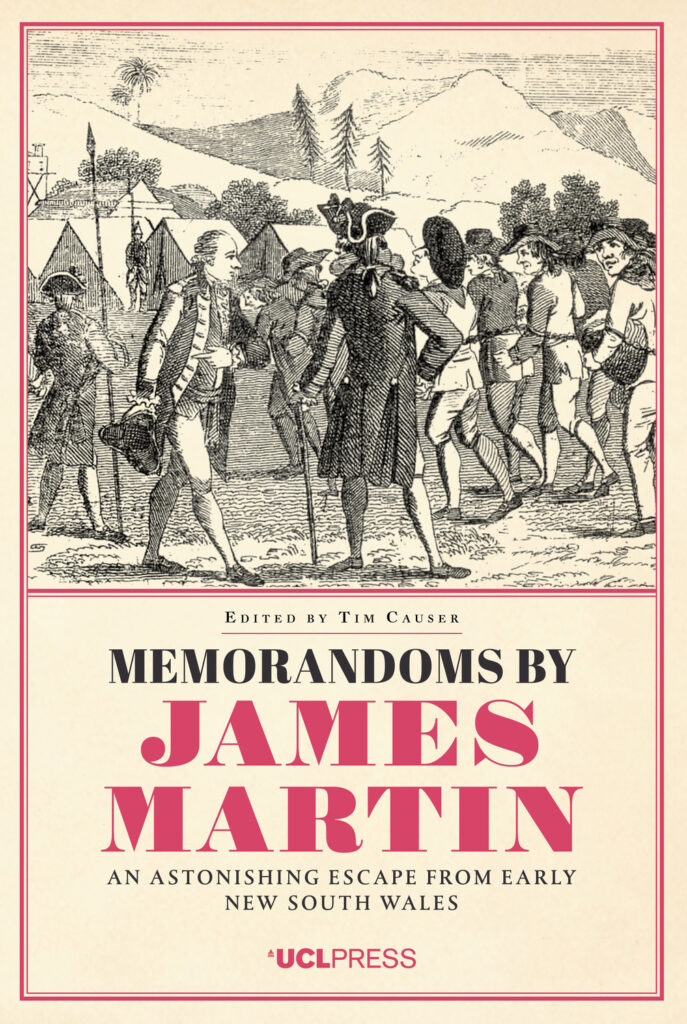
Cover image from of Memorandoms by James Martin, showing the landing of Convicts at Botany Bay.

To celebrate Australia day, today’s guest post is by Tim Causer, editor of Memorandoms by James Martin and Principal Research Fellow at the Bentham Project.

Those of us researching the history of convict transportation to Australia are extraordinarily fortunate in terms of resources, as some of the most important have, for several years, been available digitally on an open-access basis. For instance, we can search colonial-era newspapers in the National Library of Australia’s Trove, or consult the Tasmanian convict records, a body of material unique in its detail about the tens of thousands of ordinary people transported to Van Diemen’s Land.

As a callow undergraduate at the University of Aberdeen, making a first foray into Australian history fourteen years ago, such resources were the stuff of dreams. The university library’s holdings on Australian history were largely limited to landmark secondary texts such as Russel Ward’s The Australian Legend (1958) and A. G. L. Shaw’s Convicts and the Colonies (1966). The most recent work we had to hand was almost two decades old: Robert Hughes’s blockbuster, The Fatal Shore (1986). Hughes’s brilliant, terrible book is beautifully written, but is ultimately frequently misleading. But a major strength of The Fatal Shore’s was its use of convict narratives, giving it an immediacy rare in many earlier histories which relied heavily upon parliamentary papers and official correspondence.

Convict narratives fall into two main types. The first, and most common, are those published in the eighteenth and nineteenth centuries, during or around the period in which convicts were transported to the Antipodes. For instance, two of the most well-known are Martin Cash’s The Bushranger of Van Diemen’s Land (1870) and Mark Jeffrey’s A Burglar’s Life (1893), both of which were ghost-written by the former convict James Lester Burke.

Of course, published narratives such as these present issues of interpretation. How much of Cash’s autobiography is authentically his voice, and how much is that of Burke? Ghost-writers often sanitised their subject’s life into a redemption parable, walking the fine line between titillation while still seeking to attract a respectable audience. Those narratives written by the few transported for political offences—male, middle-class, well-educated authors—are unrepresentative of the experiences of the majority of convicts. There is also a racial and gender imbalance, with the overwhelming majority of narratives dealing with the lives of white convict men—Reverend James Cameron’s partly-fictionalised biography of the Spanish transportee, Adelaide de Thoreza, is a rare exception.

The second type of narrative exists only in manuscript. They are often more exciting to deal with: they were not written for publication, do not have to meet the conventions of any genre, and are often more revealing, explicit, and subversive. For instance, the Irish convict Laurence Frayne’s narrative is a graphic account of his punishment and contains a sustained character assassination of James Morisset, a commandant of the Norfolk Island penal station during the 1830s, which would never have been fit to print.

Memorandoms by James Martin is one such unpublished manuscript which, thanks to UCL Press, is now available in open-access for the first time. The Memorandoms tells the story of the most famous of all escapes from Australia by transported convicts, that led by William and Mary Bryant. On the night 28 March 1791 the Bryants with their two infant children, James Martin, and six other male convicts stole a fishing boat and sailed out of Sydney Harbour and out into the Pacific. They reached Kupang in Timor on 8 June, though were subsequently identified as escaped convicts and the survivors were shipped back to England to face trial—where James Boswell lobbied the government for their release.

The group’s 69-day, 3,000-mile journey has been the subject of two television series, poetry, novels, and innumerable history books, with a focus on Mary Bryant. Yet the modern historical accounts are frequently unsatisfactory and derivative; what then, the reader might wonder, could be said about this story that has not been said so many times before?

Quite a bit, it turns out. Memorandoms by James Martin is the only extant first-hand account of the escape, and it provides a fresh perspective to this often formulaically-told tale. Despite the Memorandoms being spare and prosaic, it provides a sense of the hardship of the journey, the terror of those in the boat as it is pummelled by storms and churning seas, and of the party’s fascination and fear in their encounters with Indigenous Australians and Torres Strait Islanders. The Memorandoms also strikingly reveals just how far some modern historians have departed from the historical record when telling the story.

Memorandoms by James Martin is also important in a second sense: it is the only known narrative written by a member of the first cohort of convicts sent to New South Wales with the First Fleet 1788. The Memorandoms was acquired at some point by one of Britain’s great philosophers, Jeremy Bentham, one of the first and most influential critics of transportation to Australia. The vast Bentham archive is, of course, held in UCL’s Special Collections, and the Memorandoms is but one of the many jewels in the College’s collections.

Now, thanks to UCL Press, the Memorandoms manuscripts are available for the first time, and for free; readers can now access the original narrative for themselves, rather than mediated by some rather dubious historical accounts. The colour reproductions bring the document to life in a way which would not otherwise be captured by publishing a transcript, and I am inordinately grateful to UCL Press for bringing the Memorandoms out in this way. My younger self in Aberdeen would have been thrilled to have had a resource like this to hand, and I hope that those who today may not have ready access to unpublished narratives like the Memorandoms will be equally pleased.


About the Author

Tim Causer is Principal Research Fellow at the Bentham Project.

Does class size matter? We’ll get a better answer if we rethink the debate

Students in classroom

For many teachers, large classes present problems which adversely affect their practice and their pupils’ learning. This is what our surveys show. But researchers and commentators often have a different view. For them the class size debate can be summed up with the question: does class size affect pupil attainment?

As we show in our new open access book, Rethinking Class Size: The Complex Story of Impact on Teaching and Learning, published by UCL Press, researchers (contrary to a practitioner view) commonly find that the statistical association between class size and attainment is not marked and so conclude that class size does not matter much. This has led some to even suggest that we could raise class sizes, and instead invest savings in professional development for teachers. Currently, in the wake of the Covid pandemic and teacher absences, there are reports of some schools being forced to create supersized classes of 60 pupils.

The view that class size is not important is probably the predominant view among researchers and policy makers, and so they may be relatively relaxed about increases in class size. We therefore need – more than ever – good quality evidence on class size effects, but in our view much research is limited and leads to misleading conclusions.

We identify three problems. One issue is that the exclusive concern with the association between class size and academic attainment in first language and mathematics is limited.  It may be that teachers in large classes prioritise these subjects (and this might help account for the relatively small difference in pupil academic outcomes, compared to smaller classes) but this raises a question about the possible way large classes affect other pupil ‘outcomes’, e.g., creativity, independent and critical thinking and motivation to learn. There is very little research that addresses this question.

Second, class size is not an ‘intervention’ like the distinct pedagogical approaches with which it is commonly compared in meta-analyses of research findings. It is not something one adds to the classroom like a reading scheme, but rather one aspect of the classroom context to which teachers and pupils have to adapt.

The third and most important problem with the usual research approach is that it does not take into account ways in which class size affects classroom processes, particularly teaching. At the heart of the claim that class size does not matter is the assumption that teaching is essentially about conveying information to students. If teaching was just about lecturing, then class size is much less important. Good teachers can control and lecture a very large class of 60. Indeed, in higher education we routinely see massive classes of more than 100, listening to a lecture. No doubt, some people would argue that this kind of teacher directed, didactic style of teaching is preferable anyway.

But this is a very narrow view of teaching, especially at primary school. In ‘Rethinking Class Size’ we present results from our own 20-year research programme involving extensive classroom observations, national questionnaire surveys and detailed case studies – probably the largest dedicated study on class size worldwide. We show that large classes: make differentiated teaching and individual support more difficult; mean reduced knowledge about individual pupils; make classroom management more demanding; reduce the amount of educationally valuable activities like practical and investigative tasks; increase the demands of marking, report writing, planning and preparation; and increase teacher stress.

Large classes are particularly demanding given the diverse pupil intake found in many UK schools, as well as policies of inclusion, which mean more individual support is often needed. Worryingly, we found in our research that it is low attaining pupils and those with SEND who are most disadvantaged in large classes, for example in terms of classroom engagement.

Our central conclusion is that the effect of class size on academic attainment is not a direct one, as is assumed in much research, but interconnects in complex ways with classroom processes like the balance of whole class, group and individual teaching, classroom management, relations between pupils, classroom tasks, and administrative activities like marking.

To understand the effect of class size we have as researchers to do more than produce a statistical correlation with academic attainment because without information on what is going on in classrooms we cannot reliably interpret the correlation. In the book we develop a distinctive social pedagogical framework to account for the complex contextual, dynamic and relational factors at work.

Obviously at a time of national emergency, schools have to adapt to staff and pupil numbers as best they can, and large classes may in the short term be necessary. Teachers will also find inventive ways of teaching large groups. But we should not assume this is a long-term solution. We need to be aware of the implications for teaching and the breadth of learning.


About the Authors

Peter Blatchford is Emeritus Professor in Psychology and Education at the UCL Institute of Education. Anthony Russell has had an international career in teaching, teacher training, curriculum development and education research.

This blog post originally appeared on the IOE Blog.

Trump’s ascent via Twitter

US flag flying against a clear blue sky.

Today marks the second inauguration of Donald Trump as US President, following his previous controversial stint from 2017 to 2021. To mark the occasion, we take a look back at how social media (in particular Twitter, now known as X) fuelled Trump’s ascent in the 2016 election in an excerpt from Ralph Schroeder’s open access book Social Theory after the Internet.

In the 2016 presidential primaries, Donald Trump dominated the news headlines on the side of the race to become the nominee for the Republican Party, even though he was a party outsider and the party favoured insider candidates. His dominance was achieved largely because of social media, mainly Twitter (though he also used other social media such as YouTube and Facebook), where he tweeted controversial positions on a range of issues. These positions then featured prominently in television newscasts and newspaper headlines. Many of these headlines were critical of Trump’s positions, which were far from the political
mainstream and promoted a populist right-wing agenda, including, most controversially, an anti-immigrant stance. Yet the headlines ensured that his views received a disproportionate amount of attention. The relation between the number of tweets in which Trump and other candidates are mentioned and their coverage in mainstream media over the course of the primary campaign and beyond has been tracked at http://viz2016.com/ (Groeling et al. 2016). It shows a clear correlation: Trump is mentioned in tweets far more than any other candidate in both parties, often more than all the other candidates combined, and the volume of tweets closely tracks his outsize coverage in the dominant mainstream media (which, in the same tracking analysis, includes CNN, Fox News, MSNBC, ABC, CBS, NBC and local news). Polling data (such as this) confirms that Trump pulled ahead of other Republican candidates in synchrony with his dominance of the media attention space, despite the fact that his nomination as Republican candidate was opposed by the party up until the party’s convention and
beyond.

Traditional news media were compelled to give a lot of time to Trump’s views since, as we have seen, the American media system is characterized by horse-race politics and market competition for audience share. Tomasky (2016) quotes the television executive Les Moonves, who said during the primary election campaign that ‘the Trump phenomenon “may not be good for America, but it’s damn good for CBS” ’. The ‘free’ extensive media coverage also meant that Trump had to spend far less on political advertising than his rivals. Furthermore, journalists covering the campaign, themselves extensive users of Twitter, eagerly picked up newsworthy items on Twitter. Hamby (2013) has argued that Twitter has changed presidential political campaigns, with journalists relying on Twitter as a major source, not just to follow candidates and campaign teams but also to follow each other. However, they are also under pressure from their editors to feature such ‘breaking news’ in their stories, especially attention-grabbing issues, to maximize audience share. Thus Trump was able to set the agenda by tweeting positions that were guaranteed a wide audience in mainstream media.

Hamby criticizes the dominance of Twitter, especially the way it contributes to the greater prominence of trivia or focuses on the process of campaigns rather than the substance. He notes that this is not a new criticism, but the trend is intensified by Twitter since messages are unfiltered – or, put the other way around, there is less editorial control – which allows minor incidents to gain widespread attention quickly. Here it can be noted that Trump’s tweets also went against the grain of the tighter management of campaign messages on social media, which has been characteristic of other presidential campaigns.

He tweeted himself (and still does so!), and the controversial nature of many of his messages means they are a boon to news-starved journalists. Hamby describes how there is often a desperate search to find something newsworthy to report among journalists during the primary campaign, and Trump often provided tweets (and again, still does) that were considered newsworthy enough to be reproduced in full in the news.


Trump’s position could not have been achieved without the support of a substantial proportion of the electorate. His base of support consisted of a part of the population that considers itself left out by the country’s media elites and its established party elites. And while there is an economic aspect to the demographic of this support, it is among the less educated, male, more rural, white population. Trump supporters are against established state elites and share a distrust of government, a deep-rooted tradition in American politics (Hall and Lindholm 2001). Their anti-immigrant, anti-refugee and anti-Muslim stances are more to do with citizenship rights and economic nationalism than purely economic disadvantage or uncertainty.

As we have seen, unlike elections elsewhere (such as in Sweden – Dimitrova and Strömbäck 2011), the focus during American elections in the media is on the horse race between candidates, who rely on personal media attention (as opposed to attention on parties and policies), within a media system where news is driven more strongly (and almost exclusively, unlike Sweden, with its public-service media) by market competition for audiences. The role of Twitter can be singled out here; it was a transmission belt to visibility in traditional media. It did not play a decisive role once Trump was the nominee of the Republican Party since, from that point onwards, the candidates of both parties were guaranteed a roughly equal share of media attention (and Trump could also gain attention by seeking media appearances). But Twitter did play a decisive role in his success in becoming the nominee for the Republican Party and, for a crucial period, he was able to circumvent media autonomy – or use digital media to amplify his message in traditional media.

This success cannot be explained by reference to Twitter alone; rather, again, the explanation relies on how Trump’s political message – his unconventional remarks on Twitter – received a level of attention in traditional media that would have been impossible had he relied on press conferences or traditional broadcast coverage. In other words, by communicating via Twitter, Trump was able to bypass the conventional gatekeepers of journalists and mainstream TV and newspapers because they were compelled to report his views in a competitive environment that relies on audience share. Put differently, Trump did not directly speak tohis audience via Twitter – too few Americans are on Twitter. But he could rely on traditional media to broadcast his new media messages. As Karpf (2016) argues: ‘In a world with digital media, but less analytics, this election drama would have unfolded differently…journalists and their editors would have been less attuned to the immediate feedback of Trump’s daily ratings effects, and this would have led them to spread their coverage more evenly (as they always have in the past). Trump’s media dominance isn’t just driven by our attention, it’s driven by the media industry’s new tools for measuring and responding to that attention.’ As we will see in chapter 6, these analytics have become important beyond politics and elections and now also shape the competition for online audiences generally.

In any event, the role of the media and of Twitter was decisive inasmuch as other factors that typically play a role can be ruled out: the argument that the party and its elites ‘decide’ on the candidate (Cohen et al. 2016) did not apply on this occasion (though arguably, it applied to Hillary Clinton’s nomination). Second, Trump had fewer resources; he spent far less than other candidates during the primary campaign (and he also spent less, and there was less overall spending, than in previous campaigns). Third, Trump did not have an effective data analytics-driven or ground campaign; in this respect, his campaign was less sophisticated
than that of his competitors.

Populists have traditionally been adept at using the mass media of their day. But the reach of their media was limited, as with direct mail and magazines or latterly email (Kazin 1998, 259–60), unless populists could also obtain sufficient attention in the mainstream media. Other populists have had a critical attitude to the mainstream media, and Trump has also maintained a critical – even conspiratorial – attitude towards the establishment-dominated media throughout the election (and beyond) and accused the media of being ‘rigged’ against him. The extent to which this attitude drove his supporters to alternative media and social media has not been systematically examined (to my knowledge). But the key is that Trump was able to continue to have his message relayed from his tweets to the mainstream media, even though the mainstream media often covered him negatively (and covered his claims that the media were biased against him).

Trump stands in a long line of right- and left-wing populism in America, though as Kazin (1998) points out, populism has generally moved rightwards since the Second World War. Populism as an ideology has waxed and waned in the post-war period, though it has often been just as strong as left, right, moderate and libertarian ideologies (Claggett et al. 2014). Trump’s language was strongly populist; only Bernie Sanders rivalled him on the left and Ben Carson on the right for populist language, as Oliver and Rahn (2016) show. They also show that support for his views was strong among voters, and argue that such populist views have not been taken into account by parties, and by the Republican Party in particular, which they say constitutes a ‘representation gap’: ‘Donald Trump’s simple, Manichean rhetoric is quintessentially populist…the opportunity for a Donald Trump presidency is ultimately rooted in a failure of the Republican Party to incorporate a wide range of constituencies’ (2016, 202). In other words, his populist appeal mattered too. In short, Twitter, translated into mainstream media, plus populism, explains Trump’s success.


About the author

Ralph Schroeder is a Professor at the Oxford Internet Institute. Before coming to Oxford University, he was Professor at Chalmers University in Gothenburg. His recent books are Rethinking Science, Technology and Social Change (2007) and, co-authored with Eric T. Meyer, Knowledge Machines: Digital Transformations of the Sciences and Humanities (2015).

Legalise it! Jeremy Bentham on drugs

Monochrome blue portrait of Jeremy Bentham,

The debate on the decriminalisation and legalisation of drugs has been long-running and hotly contested for many years. In an article that originally appeared appeared on the blog of The Journal of Bentham Studies to accompany his new article Jeremy Bentham on Drugs, Greg Cote from the University of Gelph explains what we can learn from Jeremy Bentham’s views on it.

In recent years, many countries have opted to decriminalize or legalize drug use by moving away from maintaining prohibitions and criminal sanctions. With greater emphasis on harm reduction rather than prosecution, governments have found more effective ways to manage illicit drug use through increased tolerance. While this may be considered a relatively new approach to an old problem, it is also something that was recommended long ago, but largely ignored.

This article focuses on Jeremy Bentham’s permissive stance on drug use highlighting his justifications on why society should tolerate such behaviour rather than criminalize it. Bentham anticipated the failure of the war on drugs, arguing that punishment for drug use was not only groundless but also ineffective. He further contended that prohibition would cause more harm than good. In line with this view, we argue that illicit drugs should be tolerated and managed without resorting to criminal punishment. Additionally, we assert that Bentham’s liberal view on this topic has been overlooked and deserves greater recognition. His ideas represent a notable improvement over more commonly cited philosophical arguments in drug policy discussions, such as John Stuart Mill’s harm principle. Unlike Mill, Bentham did not prioritize higher forms of pleasure, such as poetry or music, over lower forms of pleasure, such as drug intoxication. Therefore, recognizing Bentham’s previously underappreciated views on this matter that remain highly relevant to contemporary drug policy discussions seems long overdue.  

Bentham was consistent in his strong opposition to coercive anti-pleasure laws and policies, whether targeting same sex behaviour, which he referred to as a “pleasure of the bed,” or drug intoxication, which he considered a “pleasure of the table.” He was ahead of his time in asserting that the state had no business attempting to prohibit such harmless pleasures with punitive measures. For those who argue that illicit drug use constitutes harm, Bentham encouraged society to explore alternative ways to mitigate such harm without resorting to criminal sanctions. For him, the individual, not the state, was best positioned to judge what was ultimately good or bad for them. Bentham’s well-reasoned views aimed to increase overall happiness in society by allowing a broader range of pleasures while reducing sources of pain and suffering, such as incarceration and the stigmatization from being labelled a criminal.

This topic was selected in large part for its relevance to ongoing drug policy reform where the need to balance tolerate with harm reduction, is often overshadowed by a narrow focus on harm alone. Given the centrality of Bentham’s ideas to this timely debate, the Journal of Bentham Studies is an ideal venue for this discussion.


About the author

Greg Cote was a police officer in the Toronto area, before starting a private investigation firm in Ontario, Canada. During this time he also worked for several years in Yukon Territory supervising and training Park Rangers. While his previous employment involved law enforcement and investigations, his passion has always been philosophy. Greg obtained an undergraduate degree and an MA in philosophy from the University of Waterloo where he also worked as a teaching assistant. He is currently a PhD candidate and teaching assistant in the philosophy program at University of Guelph where his research is focused on Jeremy Bentham in relation to the development of modern policing.

This article originally appeared on the blog of The Journal of Bentham Studies. Jeremy Bentham on Drugs by Greg Cote (University of Guelph, Canada) is published in the Journal of Bentham Studies, volume 22.

Rethinking History Assessment

A person in a green shirt and denim shorts performs a handstand between ancient stone columns.

Assessment forms an integral part of history education at all levels, throughout school, college and university. The process of assessing and being assessed occupies much time and attention of staff and students alike. In a recent article in History Education Research Journal, Sarah Holland uses practitioner research to advocate rethinking assessment in history, and asks how ‘creative’ or ‘innovative’ approaches to assessment can make this a more effective and meaningful process. In this post, she explains more.

My article Rethinking Assessment explores the potential of innovative and creative assessments in history and the importance of diversifying assessment. Assessment forms an integral part of history education at all levels but how often do we stop and reflect on how and why we assess history and consider alternative approaches? The aim of my article is to share my insights into alternative forms of history assessment and encourage others to rethink assessment. It adds a subject specific perspective to the research on alternative forms of assessment. The focus is history assessment in UK Higher Education, but the context, discussion and recommendations have wider relevance extending beyond disciplinary, educational sector and geographical boundaries. It should be relevant to anyone involved with history assessment and those interested in making assessment a more meaningful process.

I argue that alternative forms of assessment matter, especially in text-heavy subjects such as history, as they provide a different way to assess historical skills and assess different ways to communicate historical research. The article begins by establishing the rationale for rethinking assessment, including history specific perspectives. It then focuses on a case study of creative and public history assessments in Higher Education using practitioner research. This includes student perceptions and experiences of these assessments within a history degree. It concludes by exploring the wider implications of the research. Alternative and innovative approaches can make assessment a more effective and meaningful process within a subject specific context, helping to develop historical knowledge, understanding and skills, transferable skills and different ways of communicating historical research. The evidence demonstrates students value having different ways to be assessed, enabling them to develop or demonstrate the same core historical skills as other assessments, together with transferable skills and attributes. Many students reflected that this assessment enabled them to better understand the module content, be more engaged and demonstrate what they knew and understood more effectively.

Providing space to rethink assessment in subject specific contexts is crucial. Alternative assessment won’t be everyone’s preferred choice and nor should it simply replace existing assessment types to become the dominant mode of assessment. However, as part of a varied assessment diet, these assessments can foster curiosity and develop a wide range of historical competencies and transferable skills.

Publishing my research in the History Education Research Journal was an opportunity to provide space to rethink assessment and encourage conversations between universities and schools to shape the future of history assessment. As an open access journal focused on history education with an international readership, HERJ provides an excellent opportunity to engage with practitioners in different contexts.

Rethinking assessment: the potential of ‘innovative’ or ‘creative’ assessments in history by Sarah Holland (University of Nottingham, UK) is published in History Education Research journal, volume 21.

About the author

Sarah Holland is Associate Professor in History at the University of Nottingham. She is a Senior Fellow of Advance HE and Co-Convenor of History UK. Sarah is currently leading two History UK working groups: Assessment and Collaborations between schools and universities, and the History UK Disability and History project.

This post originally appeared on the History Education Research Journal blog, and can be read here.

Sign up to our newsletter

Don't miss out!
Subscribe to the UCL Press newsletter for the latest open access books,
journal CfPs, news and views from our authors and much more!