Five years after COVID: Notes from South Africa, the UK, and Russia

Logo of FACT-COVID: FAMILIES & COMMUNITY IN THE TIME OF COVID-19 A Study Investigating Family Life under Covid 19

Last month marked five years since the WHO declared the COVID-19 worldwide pandemic. In commemoration of this moment, the authors of Family Life in the time of COVID look back at what has changed and what has remained the same in their respective countries. In today’s blog, we hear from South Africa, the UK and Russia.

South Africa

In our project chapter (Haffejee et al 2023) focused on the numerous challenges South African families faced during the pandemic as well as the resources they accessed that enabled their resilience. One of the most significant stressors related to economic hardships – the complete lock-down meant the closure of many businesses, and many people lost their jobs. Single, female headed households were the most vulnerable and food insecurity increased. The closure of schools exacerbated the already deep educational divide in the country, and parents shared concerns over their children’s education. Beyond these challenges, there was also the emotional toll of the pandemic – isolation, financial worries, and worry about the pandemic increased feelings of stress and anxiety. Despite the many challenges, there were some positives; with government introducing emergency relief measures, communities organising to assist those in need and in some cases, families drawing closer without the distractions of everyday life.

What’s changed since this time?

The economic challenges that were exacerbated during the pandemic have yet to be resolved. The Social Relief of Distress (SRD) grant that was introduced as a temporary measure, has been extended to the 31 March 2025. The SRDG was particularly significant as it was the first grant in South Africa specifically designed for individuals aged 18 to 59 with no source of income, marking a shift in social assistance policy aimed at addressing the country’s high unemployment and poverty rates (Vanleeuw, Zembe-Mkabile, & Atkins, 2022). The grant was recognized as a critical social protection measure and continues to be at the forefront of discussions and has contributed to the calls for a Basic Income Grant. In the 2025 State of the Nation Address the President committed to develop the SRD grant into a more permanent solution, that would alleviate poverty.

Findings from a longitudinal study conducted with children and families in Johannesburg, showed that between 2020 and 2023, unemployment levels remained fairly stable and high, but financial debt increased (Patel et al., 2023). Currently, food insecurity in South Africa remains a critical issue, with many households still struggling to access adequate and nutritious food.

For the most part, schools have resumed their normal functioning. We know however that post the lockdown, there was almost a drop of 50% in school attendance (Anakpo, Nkungwana, Mishi, 2024). The longer-term impacts of this are as yet unknown.  As we move past the immediate effects of the pandemic, the psychological impact on children and adolescents continues to be a significant concern (Sayed et al., 2024). However, Patel et al. (2023) showed a significant drop in caregiver depression between 2020 to 2023 ( 52.6 to 23.5%).

UK

As the lockdown periods came to an end in the UK, in June of 2021, we asked our participants in the UK about their hopes and expectations for the future. At this anniversary of the pandemic, we look back at their reflections and consider to what extent they have been realised.

The major shift identified by participants was the ability to work from home, and most hoped that this would be something that would last beyond the pandemic, giving them more time to spend with family, friends and life beyond work:  

I think what I’d like to remain as it is now is the working from home aspect of life – cutting down commute time, cutting down the mad scramble in the mornings and at nursery-pickup time and then that exhausted feeling at the end of the day only to realise it needs to all happen again the following morning. Zenobia Mum, May 2021

The working from home aspect itself I do like, I don’t think I want to go back ever to go for work full time. I think people have enjoyed having an hour to back every day from work for the working day, seeing friends or going doing exercise or seeing your children and cooking a meal, reading a book, it doesn’t really matter. […] I probably want to keep that forward. Lily Mum

People working from home now and after pandemic, […] and that shows that this life will be changed for some people but I’m working in a frontline so my life will not be changed that much. Ilama Dad

Working from home has the potential to improve gendered equality in paid and unpaid work, through increasing men’s time at home and their participation in domestic work and childcare (Twamley 2024). But as we see with Ilama Dad, not everyone can work from home, and in fact it’s more often women than men, leading to further gendered inequalities in paid and unpaid work (Chung 2022). During the pandemic, gendered inequalities in domestic work and ‘COVID labour (Twamley et al 2023) were further embedded. This appears to have had a lasting legacy: this year the UK was awarded its lowest ranking for workplace gender equality in a decade (see here). Either way, increasingly employers are demanding workers return to their offices (HR magazine) suggesting this desired shift is under threat. 

Russia

It’s five years since the start of the COVID-19 pandemic and four since lockdowns. Still, every now and then, about once every couple of months, we hear someone in our immediate social circle say, “Oh, I’ve got that nasty COVID again,” or “My sister has it.” But these mentions have become routine, matter-of-fact—no different from the flu. As a societal crisis, COVID-19 in Russia has been replaced by the crisis of war—first in Ukraine, then in Israel (in Russia, roughly every third person has personal ties to either Ukraine, Israel, or both). If we take a step back and analyse it through a cool sociological lens, the most striking difference between these two crises lies in how society responds to them.

During COVID-19, people largely sought to unite and cooperate against an unknown danger. Even those who refused to wear masks were still seen as part of “us” rather than cast into a hostile “them.” Governments, media, and public discourse framed the virus as a common enemy, fostering a shared reality where collective action and cooperation were necessary for survival. Even when disagreements arose—over masks, lockdowns, or government policies—these differences rarely redefined people as fundamentally opposed. The invisible nature of the virus helped sustain a unifying narrative, reinforcing the idea that, despite conflicts, society was in it together.

War, in contrast, has done the opposite. It constructs a reality not of unity, but of division. Instead of a collective struggle against an external threat, war forces people to take sides. People align with one side, often adopting simplified, emotionally charged narratives that justify their position and demonise the other. Unlike the collective response to COVID-19, where differences were often tolerated within the larger group, war tends to force stark distinctions—disrupting relationships, communities, and even shared historical narratives. 

Both crises serve as powerful examples of the social construction of reality and its influence on group behaviour. COVID-19 fostered a sense of collective responsibility, allowing disagreement to coexist within a broader shared purpose. War, by contrast, demands visible allegiance, dividing society into opposing camps. As such, despite its death toll, COVID-19 now seems like a nice and cozy piece of cake—a glimpse of those stay-at-home days with family and friends, when the crisis, for all its fear and uncertainty, still carried an undertone of togetherness.


References

Anakpo G, Nkungwana S, Mishi S. (2024). Impact of COVID-19 on school attendance in South Africa. Analysis of sociodemographic characteristics of learners. Heliyon. 2024 Apr 1;10(7):e29096. doi: 10.1016/j.heliyon.2024.e29096. PMID: 38601547; PMCID: PMC11004647.

Chung, H. (2022). The Flexibility Paradox: Why flexible working leads to (self-) exploitation. Bristol: Policy Press.

Patel, L., Sello, M., Haffejee, S., Mbowa, S., Sani, T., Graham, L., Gunhidzirai, C., Pillay, J., Henning, E., Telukdarie, A., Norris, S., Ntshingila, N., Raniga, T., Zembe-Mkabile, W., Nyati, L., Nesengani, T.V., Setlhare-Kajee, R., Bezuidenhout, H. How well are children faring? A longitudinal assessment of child wellbeing in the COVID-19 pandemic in selected Johannesburg schools over three waves from 2020 -2022. Johannesburg: Centre for Social Development in Africa, University of Johannesburg. September 2023

Sayed, A. A., El-Gendy, A. A., Aljohani, A. K., Haddad, R. A., Taher, O. H., Senan, A. M., … & Alqelaiti, B. (2024). The effects of COVID-19 on the mental health of children and adolescents: a review. Cureus16(3).

Twamley K (2024) Caring is Sharing? Couples navigating parental leave at the transition to parenthood London: UCL Press

Twamley K, Faircloth C, Iqbal H (2023) COVID Labour: Making a ‘livable life’ under lockdown. The Sociological Review 71(1):85-104Haffejee, S., Mwanda, A. and Simelane, T. (2023). South Africa: COVID-19 and family well-being. In K. Twamley, H. Iqbal and C. Faircloth (eds) Family Life in the Time of COVID: International Perspectives. London: UCL Press

Vanleeuw L, Zembe-Mkabile W, Atkins S (2022) Falling through the cracks: Increased vulnerability and limited social assistance for TB patients and their households during COVID-19 in Cape Town, South Africa. PLOS Glob Public Health 2(7): e0000708. https://doi.org/10.1371/journal.pgph.0000708

(https://www.iol.co.za/news/politics/sona-2025-how-the-expanded-social-relief-grant-could-pave-the-way-for-basic-income-in-south-africa-79083e9b-bf51-4bf8-83d0-0d5904e9d651

(https://iej.org.za/blogs/south-africas-fight-for-a-basic-income/).

About this post

 This post originally appeared on the research team’s blog: https://fact-covid.wixsite.com/study/post/five-years-on

Chasing a ghost: Dark matter physics

A detailed image of outer space showing cosmic web structures. Blue filaments stretch across, with bright orange patches representing galaxies or galaxy clusters.

Today marks the publication of the open access textbook Fundamentals of Dark Matter by Ignacio Ferreras. This new book focuses on pedagogy that guides students through the facts regarding dark matter, and also encourages questions and critical examination of what is known to date.

In this blog post, Professor Ferreras provides an introduction to the discovery of dark matter and offers some pointers about how dark matter science may develop in future years.

Dark matter is unquestionably one of the most important topics of modern physics. Postulated nearly a century ago to account for the motion of galaxies in clusters, and then to describe the orbits of stars within galaxies, it is now found to pervade the Universe as the dominant component of all matter. In contrast, the “standard stuff”, i.e. matter put together by elements taken from the Periodic Table, amounts to a fraction roughly 16% by mass. The composition of dark matter is thus far unknown, but “ordinary particles” that make up the Standard Model are positively ruled out; even standard neutrinos cannot contribute more than a fraction of the total dark matter budget. The subject of dark matter thus overlaps a wide range of disciplines in astrophysics, cosmology and particle physics. Its elusive detection, along with its important contribution to the Universal mass content nicely exemplifies how science has to deal with such elephants in the room. While critics raise this issue to illustrate the weakness of science, it should be noted that there are numerous examples in the history of science when such situations were faced, and so it represents the strength, rather than the weakness, of the scientific method.

A not too dissimilar example of a gravitational conundrum can be found in our Solar system. The traditional family of five planets* (from Mercury to Saturn) has been known for millennia, due to their visibility to the naked eye and their wandering motion on the celestial sphere. Positional astronomy allowed us to make one of the most fundamental discoveries of humanity, namely the workings of the Solar environment through gravity, and the true nature of Earth as just another planet orbiting the Sun. Astrophysics adds one more step in this understanding of the Universe, by adopting a powerful methodology that compares precise measurements of the Heavens with a mathematically-based model (in this case the inverse square law of gravitational forces). After the discovery of planet Uranus by Sir William Herschel, following a careful investigation of a would-be comet by him and others (Lexell and Bode), astronomers were puzzled with the observations of the orbital motion of Uranus that could not be fully explained by the adopted paradigm of Newtonian gravity. In the nineteenth century, Adams and Le Verrier hypothesised a new planet (Neptune) to explain the observations, that was eventually discovered in 1846. In the decades spanning from the confirmation of Uranus as a major planet to the discovery of Neptune, we could make the case that “dark matter” was present in our Solar system.

On the other side of our planetary system, closer to the Sun, another example illustrates a new approach to tackle a similar problem. It was again Le Verrier, who proposed an additional, inner planet to explain the motion of Mercury. The orbit of Mercury was found to feature a characteristic precession of its perihelion, something that could not be accounted by Newton’s gravity. The search for the new “dark matter” was on, and spurious sightings of planet Vulcan were reported. This time, the true nature of Mercury’s motion was due to a substantial change in the adopted paradigm. Einstein’s theory of general relativity predicted a post-Newtonian perturbation in the inner parts of the Solar system that can fully accommodate Mercury’s orbital precession.

These two discoveries show how difficult it is to find definitive solutions to complex problems, and how the unexpected motion of a system can lead either to a new component (say, the dark matter particle), or a change in the working paradigm (say, our understanding of gravity).

My new textbook Fundamentals of Dark Matter, published by UCL Press, is meant to give advanced undergraduates and keen aficionados a general overview of this most elusive case of unexpected gravitational effects over scales ranging from galaxies to the whole Universe. Amazingly enough, the solution to the Dark Matter problem should come at the level of microphysics, in the form of a new particle and/or the modification of our incomplete paradigm based on the Standard Model of particle physics along with General Relativity.

* Plus our own Earth, of course.


About the Author

Ignacio Ferreras is a staff astronomer at the Instituto de Astrofisica de Canarias, in Tenerife, Spain and holds an honorary professor position at the Physics and Astronomy department, UCL. He was academic staff at the Mullard Space Science Laboratory, UCL for eleven years. After obtaining university degrees in theoretical physics in Valladolid, Spain, and Cornell University, USA, he embarked on a career in astrophysics with a PhD in Cantabria, Spain, followed by various research and academic appointments at Oxford, ETH Zürich, UCL, and King’s College London. He was a ‘La Caixa’ fellow and an individual Marie Curie fellow.

Why the work of Millicent Garrett Fawcett still matters

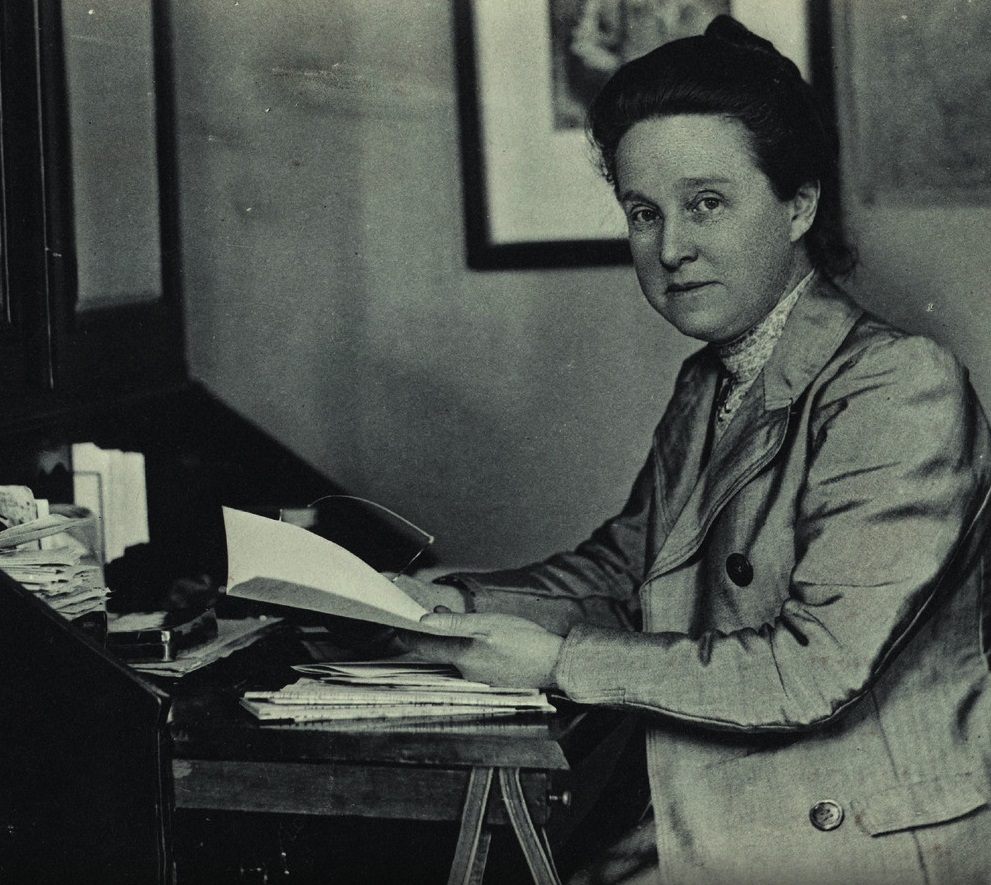
A black and whote picture of Millicent Garrett Fawcett, as show on the cover of Millicent Garrett Fawcett: Selected writings

In an excerpt for International Women’s Day, Fiona McTaggart explains why she welcomes the first scholarly appraisal of Millicent Garrett Fawcett Fawcett in over 30 years.

As the former chair of the Fawcett Society, I am pleased to welcome Millicent Garrett Fawcett: Selected writings, which brings together many of the writings and speeches of our eponymous predecessor Millicent Fawcett. We aim to continue in the tradition she built of campaigning for equality between women and men, focusing particularly on political power, education and work. Like her, we depend on robust research, clear argument and building alliances with women and men to advance our cause. It is a joy to present this collection, which will increase understanding of the role Millicent Fawcett played, not only in the struggle for the women’s franchise but in the series of other causes which she promoted.

The quality I have always most admired in Millicent Fawcett is persistence. She gathered signatures on the petition for women’s suffrage at the age of 18 in 1866, and she persisted with the cause, becoming its leader for many years, until the women of Britain had achieved her aim of the right to vote on the same terms as men, 62 years later in 1928. The Fawcett Society is the successor to the National Union of Women’s Suffrage Societies (NUWSS), which Millicent Fawcett led for many years. We inherited the brooch that appears in pictures reproduced in this volume, which was given to her by members of the society to recognise her leadership. It is engraved on the reverse with the words ‘Steadfastness and Courage’ and is now in the Museum of London.

This scholarly work, peppered with pictures of Millicent, shows her persistence in making the argument for the vote to audiences, many of whom were deeply hostile, and her determination to advance the cause of women through education. When women did gain a limited franchise, she was careful to record how this change had led to many new laws which benefitted women, from protection from forced marriage to the right to join the police. Fawcett’s words on her statue, a comment made relating to the death of Emily Wilding Davison, who was fatally injured by the King’s horse while carrying a banner that demanded votes for women (see Section 46), were a declaration of fact rather than a rallying call. While Fawcett recognised that the militant suffragettes had put the issue on the public agenda (‘They’ve rose the country’, in the words of an audience member at one of her speeches – see Section 25), she was critical of their tactics. And in some ways, the record of her doggedly persistent campaign to advance the cause of women without resorting to the violent tactics of the suffragettes is a lesson for feminists in the twenty-first century.

When I find myself disagreeing with other people who are concerned about issues facing women today, I take inspiration from Millicent. She was often generous in her appreciation of what the militant suffragists had done, while always rejecting their tactics. For universities and public platforms to exclude people because they take one side of a debate is unacceptable in a democratic society. I hope that the middle way which the Fawcett Society adopts can win wider acceptance, so that we can all stop being angry and upset with each other and carry on the dogged work which is still needed to build a society where women and men are truly equal.

The approach to the campaign for votes for women which Millicent Fawcett led has lessons for us today: be clear in your arguments, do not abuse those who disagree with you, build alliances and, above all, be persistent in working towards the changes we need.

About the Author

This is an excerpt from the introduction of Millicent Garrett Fawcett: Selected writings, edited by Melissa Terras and Elizabeth Crawford, with a foreword by Fiona McTaggart.

Fiona Mactaggart was Chair of the Fawcett Society between 2018 and 2021.

Walking the metro line in Lahore

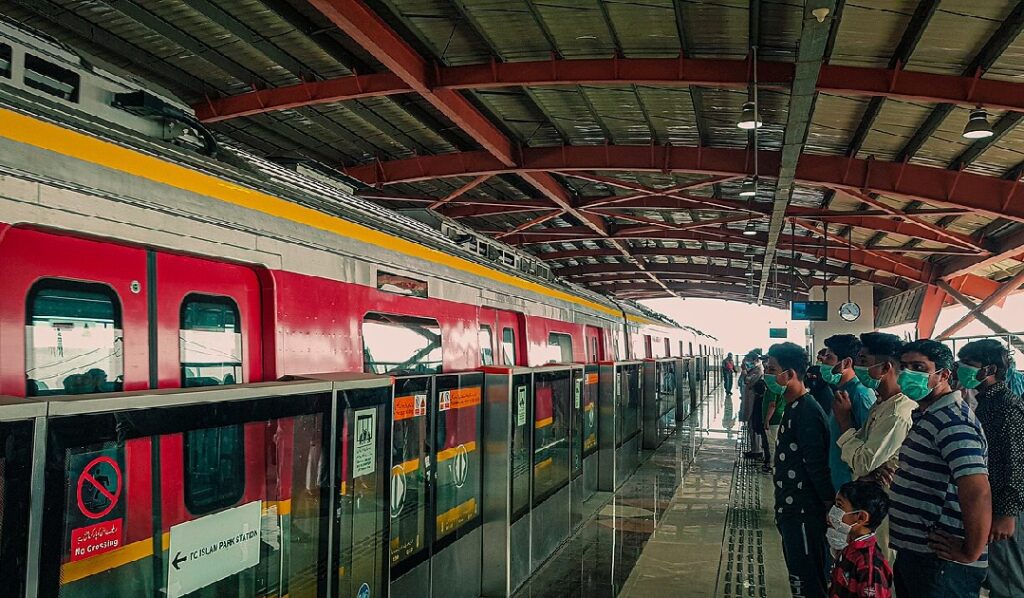
Orange Line Metro Train, Chauburji Station, Lahore

Published last month, Lahore in Motion provides a portrait of the Pakistani metropolis by tracing the path of the city’s first metro rail corridor. Construction for this major piece of public infrastructure began in 2015 and, over subsequent years, the nascent ‘Orange Line’ rapidly reconfigured Lahore’s urban landscape – displacing residents and slicing through existing structures along its route, all while offering Lahoris the promise of ‘world-class’ public transportation.

To mark the book’s publication, we are proud to share an extract from the introduction that explains why the stories from a series of walks along the metro’s 27-kilometre path are important in reflecting on the relationship between urban change and belonging in a historic city.

In October 2020, Pakistan’s first rapid transit metro train was inaugurated in Lahore. The ‘Orange Line’, as it is known, has dramatically reconfigured Pakistan’s second largest city. The metro connects the north-east of Lahore to its south-west along a 27-kilometre route dotted with 26 stations. In a city of 13 million, the train has the capacity to accommodate 30,000 passengers per hour. For most of its path across Lahore, the line takes the form of a viaduct, a raised track elevated over existing roadways, casting a shadow on the buildings and lives that fall beneath. For less than 2 kilometres near its midway point, where the line intersects with the old colonial-era thoroughfare of Lahore, the Mall Road, the metro dips briefly underground.

Even before the line was opened to the public, the monumental form of the viaduct was being integrated into the everyday rhythms of the environments it crossed. Its huge pillars provided ample space for posters and advertisements – cheap buses to Islamabad, news of an upcoming political rally. The paved or bricked islands it created in the middle of traffic-filled streets were turned, where they were wide enough, into new spaces for sociality or trade – men playing ludo near Bund Road, cans of paint for sale on Nicholson Road. Some of these islands acquired young gardens, or were planted with small trees, though much of this greenery wilted early on, covered in layers of dust, hidden from the sky by the viaduct and so unable to be refreshed by rain.

This process of incorporation into Lahori life has not been without its frictions. When construction of the Orange Line was announced in 2015, it prompted vocal opposition across a range of interest groups, from civil society activists to party politicians, religious leaders to local residents’ groups. Although never operating as a cohesive coalition, this shifting contingent was nevertheless responsible for a series of street protests, political campaigns and legal challenges over subsequent years. Much of this opposition was linked to the cost and scale of the project and to the nature of its implementation. Financed through a US$1.6 billion soft loan from China, the project was critiqued by many as a costly and unnecessary undertaking, particularly given widespread evidence of underinvestment in areas of health and education in the city. The 27-kilometre route was carved through some of the most densely populated areas of Lahore, and the line’s construction required the destruction of small commercial centres and neighbourhoods, displacing thousands of residents. Poor standards of occupational safety resulted in the deaths of at least 50 workers during the five years of construction. Many were migrant labourers, living and working in precarious conditions.1 Critics also seized on the proximity of the line’s path to several historic sites, from the seventeenth-century paradise garden at Shalamar Bagh to the monumental Mughal gateway Chauburji. Concerns with how official permission was secured to enable construction so close to legally protected built heritage led to a suspension of construction in August 2016, ordered by the Lahore High Court but eventually overturned (with some small concessions) by Pakistan’s Supreme Court in late 2017.

At the heart of civil society opposition to the Orange Line project was a deep unease with the Punjab government’s relentless pursuit of development, particularly as overseen by the popular centre-right political party in the province, the Pakistan Muslim League (PML-N) and its then-Chief Minister, Shehbaz Sharif. The petition which secured the High Court’s order of suspension characterised the Orange Line as a ‘white elephant’ pursued for ‘cheap publicity’, a prestige object for the ruling party rather than something genuinely needed by Lahore’s residents. Highly visible megaprojects like the Orange Line have been framed plainly by many activists as threats to the city of Lahore – its historic identity, its ways of life and its distinctiveness as an urban centre. The viaduct represented a dramatic example of what some viewed as the ‘Dubai-fication’ of Lahore: the creation of an anonymised, generic space of glass, steel and concrete, following a Gulf model for prosperity rather than something ‘appropriate’ to Lahore’s proud local culture and centuries-old history.

This brand of critique deploys a narrative that will be familiar across a range of twenty-first century urban contexts: neoliberal development, in the shape of large-scale infrastructure projects and associated speculation and commercialisation, is destroying local ways of navigating, knowing and inhabiting a city. But this narrative has its own risks. In framing development as an external imposition following a ‘foreign’ logic of neoliberalism, it can flatten our understanding of the ‘local’, failing to account for the variations in class, ideology and historical experience that shape individual lives in a city. Large-scale projects do, of course, have substantial (and, often, irreversible) impacts, and there does appear to be a shift in the manner and speed in which such developments are taking place. But the ways in which these changes are felt and understood can differ vastly between urban constituencies. They are also frequently contradictory. Many of those dispossessed and displaced by the construction of the Orange Line, for instance, opposed the project entirely. But some readily agreed to leave their homes in the hope that they would resettle in more upwardly mobile neighbourhoods elsewhere in the city. Other affected residents embraced the building of a new mass transit line, but simply wished for their voices to be included in project design and implementation.

Another risk of this narrative is its commitment to an ‘authentic’ Lahore that must be rescued from braying bulldozers and the vulgar aspirations of careerist politicians. The impact of unregulated expansion on the city’s environment – from polluted waterways to shrinking tree coverage to air pollution – certainly demands critical attention. But these processes are not merely symptoms of our neoliberal present. They are in fact constitutive of Lahore’s longer history as an urban space, and certainly since its establishment as the colonial capital of British Punjab in 1849 sparked a population and building boom that continues to this day.4 Earlier rulers had invested lavishly in the city, in particular during the Mughal period (1524–1725) which saw the establishment of many of Lahore’s historic landmarks. But it was in the British period that Lahore started expanding confidently beyond its millennia-old historic centre, the Walled City, absorbing the land and older villages around it. In the 1939 essay Lahore ka Jughrafiya (‘Lahore’s Geography’), the Urdu writer Patras Bokhari joked that ‘once Lahore had surrounding areas, now it is Lahore that surrounds Lahore’.5 In documents from 1941, the Lahore Improvement Trust – a colonial institution founded in 1936 to coordinate urban development – was already noting the ‘extensive purchases of land in the areas surrounding the centre of Lahore’ during the 1920s and 1930s, by residents who hoped to profit from the increase in land values brought about by municipal improvements.6 Change is a quality of urban life. Rather than lamenting a city ‘lost’ through change, it is important to interrogate the different ways change takes place, the inequalities that determine who gains and who suffers, and the political ideas and public imaginaries that frame and mediate interventions into the urban environment.

Lahore in Motion is an attempt to grapple with complexity and contradiction in Lahore’s urban landscape. It does so in a way that is intention- ally multi-vocal; that jumps back and forth across time; that is open to tangents, fragments and impressions as opposed to authoritative statements and comprehensive accounts. We approach the city as a forum of frictions, and the richly generative quality of the Orange Line justifies this concern. In her 2004 ethnography of Indonesia’s rainforests, the anthropologist Anna Lowenhaupt Tsing argues that capitalist desires for connectivity – the unimpeded flow of goods, ideas and people – ‘come to life in “friction”, the grip of worldly encounter’. For Tsing, ‘friction’ describes those awkward, unstable and creative outcomes produced by attempts to forge links across distance and difference. They might be destructive, they may provoke resistance, but they might also enable new social formations and alter conditions of political or economic possibility.

The chapters in Lahore in Motion trace the Orange Line’s work of connection and the ways this infrastructural project has been awkwardly, unstably and creatively incorporated into the city. Our contributors include academics, artists, activists, architects and more. Some have lived in Lahore for decades, others have made it a home more recently, while several consider it their home but no longer live there. All possess a strong affinity with the city and a deep interest in studying and understanding its histories, politics and everyday transformations. Each contributor was assigned one of the Orange Line’s 26 stations and asked to spend time in their respective area, to walk around the station’s environs, to speak to people and to note their own thoughts, concerns and associations. Rather than a conventional academic account of infra- structural development in a postcolonial city, our aim was to create a collaborative portrait of how change is experienced and felt, and how larger historical events, government policies and the politics of class, caste, gender and ethnicity become entangled with personal memories and everyday processes of place-making. Contributors were urged to resist the familiar framing of the Orange Line as an imposed obstruction and to avoid making judgements around ‘(in)authenticity’ in the city.

Many were open to this challenge; others felt compelled to push back against our exhortations and to defend a particular vision of Lahore. The volume thus reflects the fragmentation that characterises contemporary urban life. As editors, our approach recognised that belonging to and inhabiting Lahore entails traversing familiarity and unease, safety and risk, connection and disconnection.

While our work is grounded in Pakistan, it responds to a wider literature on urban life compiled by historians, anthropologists and geographers, in both the Global South and North. The volume is an experiment in how accounts of the contemporary city might profitably stage difference and contestation. We make no claim to provide a ‘representative’ sample of Lahore’s residents in these pages and are keenly aware of the contingent circumstances that brought this collection of (mostly middle class, mostly cosmopolitan, and primarily academic) contributors together, as well as the limitations this poses. Our aim is rather to model an approach for seeing and writing about the city, one that is simultaneously illuminating and inconclusive, one that grapples with friction in order to understand why urban spaces are so productive for thinking about history, identity, politics and belonging in the modern world.


About the Editors

Ammara Maqsood is Associate Professor in Social Anthropology at UCL.

Chris Moffat is Senior Lecturer in South Asian History at Queen Mary University of London.

Fizzah Sajjad is an urban planner and geographer with research positions at the London School of Economics and the Lahore University of Management Sciences.

This is an excerpt from the introduction of Lahore in Motion.

Image credit: Orange Line Metro Train, Chauburji Station, Lahore by Shahzaib Damn Cruze, CC BY-SA 4.0, via Wikimedia Commons

New open access books published in February 2025

Books on a wooden bookshelf in UCL library.

It’s been another grey, dark, wet month, but we’ve almost been too busy to notice. With six more exciting open access books to read, who can blame us?

The final volume of David Scott’s extraordinary On Learning trilogy (v1, v2) , On Learning, Volume 3: Knowledge, curriculum and ethics published at the start of the month. Like the first two volumes, the book is a response to empiricist and positivist conceptions of knowledge. in which the author challenges detheorised and reductionist ideas of learning that have filtered through to the management of our schools, colleges and universities, over-simplified messages about learning, knowledge, curriculum and assessment, and the denial that values are central to understanding how we live and how we should live.

Postcapitalist Countrysides: From commoning to community wealth building explores the tensions that arise from the established conventions of economic production and private accumulation, as they affect life, wealth and work in rural areas. Find out more about the brilliance of the brilliance of the book’s contributors in an interview with one of the editors.

Revisiting Childhood Resilience Through Marginalised and Displaced Voices: Perspectives from the past and present draws on 10 years of Wendy Sims-Schouten’s research with children, young people and adults from marginalised, disadvantaged and displaced communities. These stories draw critical attention to coping strategies in adversity and oppression, and will inform creative research and policymaking. Read our interview with the author to find out more about her fascinating approach to research.

Lahore in Motion: Infrastructure, history and belonging in urban Pakistan provides a vivid portrait of the Pakistani metropolis by tracing the path of the city’s first metro rail corridor. The volume collects stories from a series of walks along the metro’s 27-kilometre path, bringing together a wide variety of authors to reflect on the relationship between urban change and belonging in a historic city. Interested to find out more? We have an excusive excerpt on the blog.

The latest book in the FRINGE series, Anti-Atlas: Critical Area Studies from the East of the West plays with the politics of the conventional atlas, with its assumptions about knowledge and power, its hierarchies of value, and its simplifications. It provides readers with a diverse series of intellectual resources, asking them to think critically about the ways in which we construct the world by dividing it into pieces.

The final book of the month, A Guide to Performing Systematic Reviews of Health and Disease is a fantastic practical guide to performing systematic reviews in a healthcare context provides a step-by-step approach for students and health professionals. Using free, opensource software to extract data and perform the necessary meta-analyses, this open access guide navigates the process of reviews, from study design and randomised controlled trials to interpreting results and reporting your findings. The author explains why this is an important book for health professionals and students alike in a wide-ranging interview.

We’ll be back again next month with a round up of the very best open access books. As always, stay safe!

‘I want to achieve high-quality healthcare for all’: an interview with Professor Kurinchi Gurusamy

Today marks the publication of the open access textbook A Guide to Performing Systematic Reviews of Health and Disease. This new open access guide to performing systematic reviews in a healthcare context provides a practical step-by-step approach for students and health professionals.

We caught up with Professor Kurinchi Gurusamy to discuss why he wrote the book, wanting to achieve quality healthcare for all and why you shouldn’t be afraid to fail.

Tell us more about your background and experience.  

I trained as a surgeon in India. I completed my PhD at UCL.

Currently, I am a Professor of Evidence-based Medicine and Surgery, Head of Research at Division of Surgery and Interventional Science, and Lead of Surgical and Interventional Group at Comprehensive Clinical Trials Unit at University College London (UCL). I have authored more than 150 systematic reviews. More than 50 of my research publications have been used in one or more clinical practice guidelines. I am considered as one of the top 2% of the scientists who have published their research in Medicine since 1960, based on the standardized information on citations, h-index, co authorship-adjusted hm-index, citations to papers indifferent authorship positions and a composite indicator.

How and why did you get into this subject area?    

My father, mother, and my paternal grandmother were doctors and from a young age, I wanted to be a surgeon “like” my father. Therefore, my main interest has always been related to healthcare, particularly gastrointestinal surgery from a very young age.

I wanted to contribute something to the improvement of society. I learnt performing systematic reviews by chance while working with Mr Martyn Parker, a hip surgeon from Peterborough. Being autistic, I was always “methodical” or “systematic” in my approach (even if the approach was not always correct)! I took to writing systematic review like fish takes to water. I wanted to apply my newly learnt method in gastrointestinal surgery. Since Cochrane reviews were widely considered the best systematic reviews, I wanted to write Cochrane systematic reviews. My first Cochrane review as an independent author was on early versus delayed laparoscopic cholecystectomy in acute cholecystitis, which changed clinical practice.

Writing systematic reviews came natural to me, helped me in my career progression, and most importantly acted as a diversion from the feeling of despair that I felt in relation to my personal life by being able to contribute to society’s improvement.

What motivated you to write and publish this book?

The main motivation was to help health professionals without statistical knowledge perform systematic reviews. Currently, systematic reviews are considered the highest level of evidence for making clinical decisions. With increasing emphasis on evidence-based medicine and shared decision making, health professionals perform systematic reviews increasingly while developing clinical practice guidelines. Increasingly funders of clinical studies require systematic reviews before funding primary research with a view to decrease research waste. However, health professionals often do not have the sufficient knowledge and expertise to perform high-quality systematic reviews. So, I wanted to write a textbook that will help such people in mind providing practical advice in performing high-quality systematic reviews.

Why did you choose to publish your work Open Access?

One of the barriers for accessing knowledge is the cost of acquiring the knowledge. UCL and UCL Press have given me the opportunity to disseminate my knowledge to others without others having to pay to acquire this knowledge.

How do you see your research contributing to a better understanding of the world, and what potential benefits might it offer in the future?

In order to use the limited resources optimally, it is important to know the best way to diagnose a health condition, whether a health condition requires any treatment, and what the best treatment is for a health condition (if any) taking the individual’s preferences and resources into account.

My published research has focused around finding the best way to diagnose health conditions what the best treatment is for a health condition is. I am currently developing methods for personalised treatments to individuals taking their individual circumstances and preferences into account.

What do you think sets your approach apart from others in your field, and how do you stay innovative?

I am not afraid of failure or accepting limitations (whether it is my own limitations or those of the processes that I followed). Once you accept limitations and are not constrained by “conventional wisdom”, innovative ideas are born. Once you are not afraid of failure, you can test those innovative ideas. I think that combination of accepting limitations and not being afraid of failure is the reason why I can develop and test disruptive ideas.

What do you see as the most exciting future directions for research in your field, and what breakthroughs do you hope to see in the coming years?

I think that there are two major impending breakthroughs in this field.

1. Personalised clinical guidance: Providing clinical guidance on whether a person will benefit from a treatment based on their circumstances and preferences rather than based on the average treatment effects from clinical studies.

2. Living systematic reviews and clinical practice guidelines (not in the context of how they are defined currently, i.e., a person has to do the analysis and interpret information, but in the context that as new information from clinical studies appear, the information provided to patients and clinical guidance for a health condition are automatically updated).

What advice would you give to students who are interested in pursuing a career in your field, and what skills or qualities do you think are most important for success?

This is my approach to life and my advice to anyone and not just those pursuing a career in my field.

1. Success and failure are just perceptions. Do not allow others define what your success should look like: follow your heart.

2. Do not be afraid to fail.

3. Be prepared to change your plans when new opportunities arise.

4. Look for different opportunities if there are persistent failures on an idea.

5. Do not be afraid of acknowledging your limitations. Our understanding of everything in life improves over time. That also means that you are able to forgive your own mistakes you made because of your understanding at that time.

6. Do not be shy in acknowledging your achievements, even if the society thinks that people should be modest and should not “blow their own trumpet”.

What do you do to stay motivated and inspired in your work, and how do you maintain a positive attitude even in challenging situations?

I want to achieve high-quality healthcare for all. It is probably an ambition that I will never be able to achieve in my life. However, I hope that I can inspire a lot of others who want to achieve high-quality healthcare for all and my dream comes true even if it is long after my existence.

From a young age, my mother has taught me and led by example how to manage with what we have rather than long for what we do not have. This simple philosophy has helped me overcome many challenges in life and bounce back from the depths of despair in life.


About the Author

Kurinchi Gurusamy is Professor of Evidence-based Medicine and Surgery, Head of Research at Division of Surgery and Interventional Science, and Lead of Surgical and Interventional Group at Comprehensive Clinical Trials Unit at UCL.

Book Launch: Lahore in Motion

Join the editors of Lahore in Motion: Infrastructure, History and Belonging in Urban Pakistan on 5th March from 6-7.30pm GMT for a night of conversation, readings and refreshments to celebrate the book’s publication.

All welcome. Please register to attend at https://ucl-cssa-lahore-in-motion.eventbrite.co.uk

This event has been organised by the UCL Centre for the Study of South Asia and the Indian Ocean World, with additional support from UCL Press and UCL Anthropology

About the book

Lahore in Motion: Infrastructure, History and Belonging in Urban Pakistan provides a portrait of the Pakistani metropolis by tracing the path of the city’s first metro rail corridor. Construction for this major piece of public infrastructure began in 2015 and, over subsequent years, the nascent ‘Orange Line’ rapidly reconfigured Lahore’s urban landscape – displacing residents and slicing through existing structures along its route, all while offering Lahoris the promise of ‘world-class’ public transportation. The volume collects stories from a series of walks along the metro’s 27-kilometre path, bringing together twenty-seven different authors – including academics and activists, architects and artists – to reflect on the relationship between urban change and belonging in a historic city.

Each chapter is organised around a particular station on the metro, but the volume moves far beyond the neighbourhoods shadowed by the train’s elevated track. Contributors navigate the friction generated by the Orange Line’s construction and reflect on how this project of connection both responds to and produces fragmentation in the urban environment. The book brings together critical insights on the politics of infrastructure in South Asia and the desires and dispossessions fuelling projects of development in the Global South, assessing how they unevenly inflect the intimate rhythms of everyday life in one of the world’s most populous cities.

The book is available open access via UCL Press.

About the Speakers

  • Ammara Maqsood is Associate Professor in Social Anthropology at University College London. 
  • Chris Moffat is Senior Lecturer in History at Queen Mary University of London.
  • Kasia Paprocki is Associate Professor in Geography and Environment at the London School of Economics. 
  • Fizzah Sajjad in an urban planner and geographer with research positions at the London School of Economics and the Lahore University of Management Sciences. 
  • Majed Akhter is Senior Lecturer in Geography at King’s College London. 

New Event: Diversifying scholarly writing and publishing

Two individuals are collaboratively working on laptops at an outdoor table.

Join Pat Gordon-Smith discuss how scholarly communication is slowly diversifying, and share examples from her work as commissioning editor for UCL Press as part of the Academic Writing Seminar Series run out of UCL IOE.

Event type: Online

Date & time: 27 Feb 2025, 16:00 – 17:00 GMT

Movement in higher education towards diversity, engagement and decolonisation has implications for legitimate scholarly communication, and that has a knock-on impact for publishing. In this talk, Pat will draw on examples of writing she has worked with at UCL Press, including co-produced texts with non-academic partners, scholarly fiction and poetics, and decolonising approaches.

This will come with a health warning that the road less travelled is bumpy, for readers and authors – and publishers! But change will only come through practice. Pat’s examples of working with successful material aim to show that there are options for students and academic writers at all points in their career.

This event will be particularly useful for those interested in publishing, EDI, writing development, and academic writing support.

‘I want to change the world’: Wendy Sims-Schouten on childhood resilience

Professor Wendy Sims-Schouten’s new book Revisiting Childhood Resilience Through Marginalised and Displaced Voices uses an interdisciplinary approach to challenge current childhood resilience research and practice. The culmination of ten years of research and publications around childhood resilience, the book draws upon data collected from and co-produced with children, young people and adults from marginalised, disadvantaged and displaced communities.

We caught up with Wendy to talk about her work on childhood resilience, her interdisciplinary approach to research, and the shortfalls and her desire to change the world for the better.

Tell us more about your background and experience.

I am Professor of Interdisciplinary Psychology and Head of UCL Arts and Sciences, which is the home of new wave liberal arts and sciences degrees, one of the first of its kind in the world. As Head I oversee the running of the department, which is the fastest growing department in the Faculty of Arts and Humanities, and is based across Bloomsbury and UCL East. In addition to this, I undertake research with a focus on wellbeing, eclectic resilience (including resistance and defiance) and coproduction, working collaboratively with members from a range of disadvantaged, displaced and marginalised communities (such as young care leavers, refugees/migrants, as well as members from minority ethnic communities).

How and why did you get into this subject area?

The short answer is because I want to change the world and to do that we should listen to children from diverse backgrounds.

What motivated you to write and publish this book?

After researching childhood wellbeing for 15 years, I felt that we keep missing the boat when it comes to making sense of childhood resilience in light of displacement and marginalisation. This book tries to remedy some of this by presenting stories, memories and experiences of childhood resilience, resistance and compliance, centralising voices of children and young people from a range of marginalised and displaced communities (e.g. care experienced young people, child migrants, children from minority ethnic communities, to name a few),

What do you think sets your approach apart from others in your field, and how do you stay innovative?

I adopt an interdisciplinary approach, drawing on knowledge from the arts, humanities and social sciences, whilst most research around resilience is largely located within health and psychology disciplines. Within my research I include voices, stories and memories, both from the past and present, and keep going back to children and young people to ask what they think, if my approach works and what could be improved.

Surprise us with something unexpected you encountered in your research for this book.

For me the key thing is that I was able to represent individual voices around wellbeing and resilience, something that is often dismissed when it comes to how impact in an academic context is measured. For example, when I completed my impact case study for REF2021 I realised that one particularly impactful event stood out for me. Yet, it was also something that I could not include in my case study, because it only affected one person and one school. Let me explain this. As part of REF impact cases studies, researchers are required to provide evidence of the impact of their research. In my case, this was my research centred on coproducing new understandings and interventions around mental health and wellbeing working collaboratively with care-experienced young people, new mothers with mental health issues and members from minority ethnic communities and related charities and organisations. I was able to show that the research had significant impact, for instance by changing uptake of mental health support among young care leavers in Hampshire from 16% to 60%, as well as young people living in supported accommodation in Scotland. Yet, what I was most proud of was the EDI work that I collaborated on with the lead of the Race Equality Council in the South-West of England, working with a girl with mixed heritage who had been suspended from school due to ‘aggressive behaviour’. Working extensively with the girl in question and the school that had suspended her, we were able to show that what was described by the school as ‘aggressive behaviour’ was in fact a child (she was only 12) who resisted the racist bullying that she had been on the receiving end of since primary school. The school lacked EDI training and understanding, and we were able to support the girl. educate the school and get her education back on track. REF impact is centred on ‘big numbers’ of impact and as such this was not included in my REF case study, yet I could include this in my book.

Why did you choose to publish your work Open Access?

Because Open Access allows for increased visibility and wider dissemination.

How do you see your research contributing to a better understanding of the world, and what potential benefits might it offer in the future?

This book urges us to keep a more open mind when it comes to how we talk about ‘resilience’. Too often children and young people are just told to ‘be more resilient’ and new resilience tools and measures are coming out all the time, as if resilience can just be taught and measured. Yet, within this children and young people are rarely consulted and children who adopt resistant and defiant behaviours in light of adversity are frowned upon.

What do you see as the most exciting future directions for research in your field, and what breakthroughs do you hope to see in the coming years?

I hope we take coproduction with children and young people more seriously and not use this as a ‘tick box’ exercise.

What advice would you give to students who are interested in pursuing a career in your field, and what skills or qualities do you think are most important for success?

For me personally, the mix between research and practice was very beneficial. I first qualified as a psychiatric nurse and worked in various clinics, whilst specialising further in child psychology. Having this practical background and experience was invaluable when I eventually embarked on a PhD and an academic career.

What do you do to stay motivated and inspired in your work, and how do you maintain a positive attitude even in challenging situations?

What inspires and motivates me most is working with the community, whether charities, schools or museums. Since becoming a Head of Department I have had less time for research and I am very keen to pick up the collaborative projects and community work again as soon as I can..

What is something you are never asked, but wish you were?

I am not sure… I think there is still a lack of clarity around and engagement with the arts and humanities when it comes to making sense of concepts, such as mental health, wellbeing and resilience. I would love to have further discussions with people about that.


About the Author

Wendy Sims-Schouten is Professor of Interdisciplinary Psychology and Head of UCL Arts & Sciences.

Romantic relationships on social media

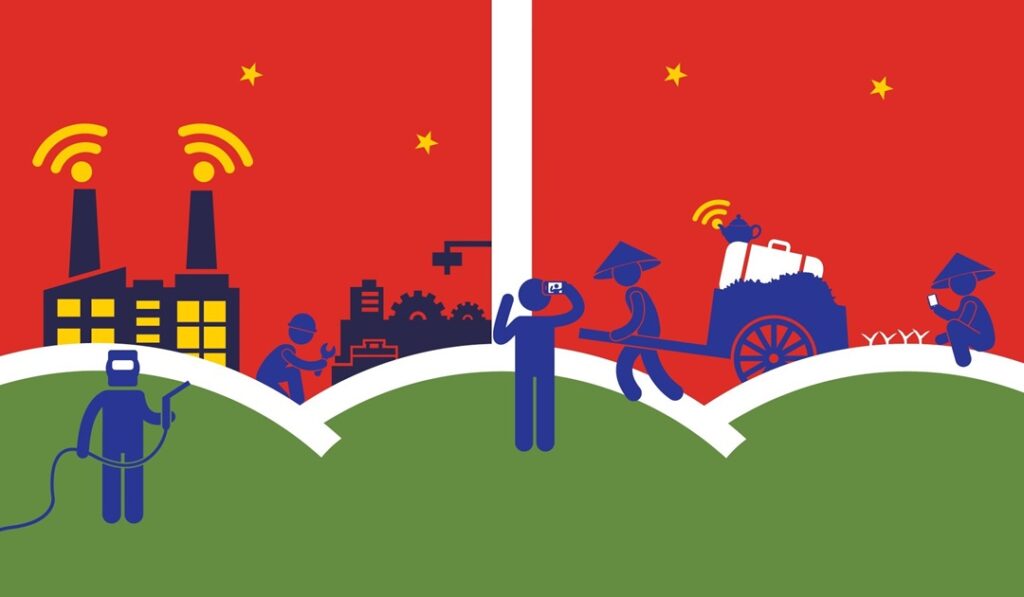
Illustration depicting a split scene, represnting the Chinese factory workers' split lives: on the left, a modern setting with industrial buildings, people using advanced technology, and a car; on the right, a historical setting with people in traditional attire, using an ox-drawn plow.

In celebration of Valentine’s Day, we bring you an excerpt from Xinyuan Wang’s popular book Social Media in Industrial China. In it, she describes the role of social media in the romantic relationships of the factory workers that she observed for her ethnographic fieldwork.

Every day after work, a group of young female factory workers leaves the factory plant together, hand in hand. All of them are unmarried young women, and gossip about relationships is always the most popular topic. Girls chatter avidly on the 10-minute walk from factory to dormitories; everybody is trying to contribute something to the daily ‘gossip time’:

‘Hey, did you hear that he just asked for her QQ number? I was surprised that he wanted to add her on QQ!’

‘Really? I didn’t know he was keen on her. Oh no — it is really bad news for his ex-girlfriend. A few days ago I just saw her new QQ status … sounds like she really regrets the break-up. Look, look … ’

The girl then took out her smartphone, showing her friends the evidence she had spotted on QQ.

The very action of men and women adding each other on QQ can easily be interpreted as romance, since, in the words of one girl, ‘QQ is not used for talking business or other things; QQ is for you to fall in love (tan lian ai)’. It has become almost a consensus among young people that one of the major functions of social media is to develop and maintain romantic relationships. Xiao Lin, a 20-year-old factory worker, sent me QQ messages explaining how QQ helped him to become a better lover:

‘I am much more bold and romantic on QQ … you just wouldn’t say those sweet words face to face … And I used lots of cute stickers when we were chatting on QQ, which made her find me really funny.’

Many young migrant workers, like Xiao Lin, think they can be a better lover on social media. Vivid stickers and emojis enrich people’s expression; an element of time delay allows more scope for strategic communication. Behind the screens of their smartphones, people feel more empowered and confident. Rather than a diminished form of intimate interaction, romantic relationships on social media have become an efficient modality combining elements of voice, image and text, as well as emoji and stickers. There is another reason why social media is regarded a place for romantic love: a public display of love offline is usually frowned upon in GoodPath. Walking hand in hand was the most intimate interaction that one could spot on the street. When Xiao Yu, a 21-year-old hairdresser’s apprentice, posted photos of herself kissing her boyfriend on QQ, she perceived QQ to be a romantic and liberating place where one can feel free to display intimacy as the ‘public’ was different:

In big cities people won’t make a fuss [about kissing in public]. But here some traditional people would dislike it … but the good thing is they are not on my QQ!

Xiao Yu’s kiss photographs elicited many comments. Rather than feeling embarrassed, she felt that was exactly what she was looking for: ‘… When you posted something like that, you just knew what people would comment. If I am not sure, then I won’t post it,’ Xiao Yu explained. To the question ‘do you think about what kind of reaction you will receive when you post something on social media?’, the majority of participants, both in GoodPath and in Shanghai, said yes. Moreover in many cases the imagined audience and presupposed reaction justify the posting. A few days later, Xiao Yu finally uttered the real reason why she posted the kiss photos — to warn another girl to stay away from her boyfriend as she assumed the girl had been stalking her.11 ‘It’s so annoying, she is still flirting with him (Xiao Yu’s boyfriend) on his Qzone. Is she blind? I am pretty sure she saw the kiss photo on my Qzone.’

In romantic relationships, surveillance on social media can lead to jealousy in various ways. For instance, a delayed reply to a WeChat message can make the romantic partner feel unimportant, especially when he or she can see on other social media platforms that their partner is online. Situations such as that described by Cai, a 22-year-old waitress in a restaurant, are very common: ‘I sent him a message half hour ago; he didn’t reply, but ten minutes ago, he updated his QQ status … that made me feel upset.’ She was always online throughout the day when working at the restaurant; the multiple social media platforms her boyfriend used allowed her to connect with him constantly, but such an environment also made it more difficult for her boyfriend to hide anything from her. Many young people share similar insecurities about their romantic relationships, As Zhu, a factory worker aged 20, complained: ‘She [his girlfriend] never mentioned our relationship on her QQ. My gut feeling is she is not that committed, or maybe she is hiding something from me?’

Because social media profiles are continuously subjected to scrutiny to a greater extent than most offline spaces, for many young people such as Zhu a romantic relationship gained its ‘legitimacy’ by a public announcement on social media. However, in practice, the attempt to make a public announcement may backfire. Lujia, a factory worker, set up a QQ group of 78 contacts in order to win the trust of his new girlfriend. He explained:

My girlfriend said she was not sure about my love, unless I showed it in public (gong kai); Once I set up the QQ group and show my love for her she will believe me.

On this QQ group, every few hours Lujia wrote something along the lines of ‘ … darling you are the most beautiful woman in my life and I love you so much’. Clearly not everybody thought Lujia’s declaration of love quite as sweet as his partner did, and most people soon quit the group. As one former member complained, he thought QQ was his own place to do whatever he wanted … But why should I read screenfuls of such goosebump-arousing nonsense?’ What was evident in Lujia’s case was that ‘audiences’ felt extremely disturbed and offended. Unlike posting something on one’s own social media profile, Lujia’s QQ group messaging, which constantly tried to grab people’s attention to witness something of little relevance for them, was way too aggressive and inappropriate.

However, in most cases some subtle strategies regarding the public display of love on QQ had been applied. It was very common to see a couple talk to each other in a way that others would not be able to understand without knowing the context of the dialogue. For example, a conversation between a young couple on Qzone that could be seen by all the online contacts was:

‘Don’t forget you promised me that you wouldn’t tell her about that.’

‘Yes I promised, and I didn’t tell her about that at all, quite the opposite, I told her that you said those three words on my birthday, and she was so delightfully surprised. I told you she liked you.’

Even though substantial information from the above correspondence was very limited, everyone who read the dialogue got the message that these two people were close to each other and that their relationship was exclusive. That is exactly the reason why, rather than this taking place on the seemingly more convenient and private basis of one-to-one chatting, the couple chose to talk secretly ‘in public’. Such ‘coded’ intimate talk on QQ between lovers skilfully displayed love in public without disturbing others too much.

The self-exposure of personal relationships on social media is not always about positive emotions. Having arguments on social media, for example, is regarded as a fatal hit to a romantic relationship. Huang Ling, a 19-year-old factory worker, explained the problem:

Each time, when we had some friction, he would update his QQ status immediately with things like ‘please introduce girls to me, I need a girlfriend, blah blah … I really hated him for that!

Two weeks after their break-up, Huang Ling was still complaining about her ex’s outrageous QQ usage, and every female friend of hers expressed the same resentment. As one of her close female friends remarked, ‘How could he say so regardless of the place and the situation (chang he)?! He just wanted her to lose face’. Ling applied some ‘media sanctions’ to cope with the break-up’s aftermath. First of all she locked her Qzone, which means nobody could view it except herself.

I need some space you know. I don’t want people to gossip about my break-up. Even though they do it out of kindness, I still find it so annoying.

Huang Ling’s elder cousin even called her very late at night to ask her what had happened when he saw her ‘unusual’ QQ status update. She felt embarrassed to explain the reason to her friends and relatives, and therefore locked the only channel (Qzone) from which most of her friends got news about her. After four days Huang Ling reopened her Qzone, having already deleted all her previous QQ status updates. Meanwhile Huang Ling’s updates on WeChat were very remarkable, even dramatic. During the four ‘non-QQ’ days she uploaded a large number of emotional remarks on WeChat. One day she even uploaded a photo of her arm, carved by herself with a steel ruler (Fig. 4.3). The two ‘bloody’ Chinese characters she carved on her skin were hate (hen) and love (ai). It seems that only carving her own skin would fully express her strong feelings about the frustrating break-up. She told me:

Because some of my family members are on Qzone, I don’t want to scare my relatives and other friends. Whereas the circle of friends on WeChat is much smaller; most of them are just colleagues at the factory, so it won’t cause me too much trouble. And he [the ex-boyfriend] will see the photo either way as he is also my WeChat friend.

If we view Huang Ling’s story together with the accounts of Xiao Yu’s careless display of a kiss photo on Qzone and Lujia’s less successful public display of love on QQ group, a more comprehensible picture emerges. First of all, we need to recognise that social media provides many possibilities; it enables people to practise romantic relationships online with much greater freedom than in offline situations. Social media has also become an essential arena in which romantic relationships take place in daily life. However, a more liberating place online does not equal fewer social norms. New norms about what is appropriate or inappropriate on social media dealing with romantic relationships emerged almost immediately. For instance, the release of private problems between couples on social media usually brought immense embarrassment, serving to trigger even worse consequences than in an offline situation. Sociologist Erving Goffman used the word ‘frame’ to explain how people’s behaviour is cued by elements that constitute the context of action. In the frame of social media, people were not only aware of the private/public nature of social media, but also intentionally played around with it to express the exclusiveness and intimacy of relationships — even though not everyone was successful at first.

Also, from the frequently applied and highly valued public displays of love on social media, we see how on social media the perceived public gaze is just as strong as in the offline situation. Online, young rural migrants may be free from the disapproval and judgement of senior relatives and fellow villagers, yet their peers’ opinions or those of even strangers were highly valued, and can also cause concern. Regardless of what kind of social rules one follows, as long as there are ‘others’ the risk of ‘losing face’ always exists, and sometimes the uncertainty of who is watching online exacerbates the anxiety.

Another point that emerged from the varied use of social media in romantic relationships is that, in order to make sense of sociality on social media, a whole range of available communication tools must be taken into account. As suggested by the concept of ‘polymedia’,13 it makes no sense to study only one particular media platform in isolation — the meaning and use of any one of them is relative to the others. As is clearly shown in Huang Ling’s situation, her choice of WeChat only made sense in comparison with the role that QQ and mobile phones played in her social life. Furthermore, in a polymedia environment, once one has either the smartphone or a personal computer, the decision which media to use is no longer much affected by either access or cost; instead it becomes a social and moral choices. For instance, in Lujia’s case, his choice of using QQ group messaging to declare his love for his girlfriend had been regarded as very inappropriate. The approach of polymedia, as well as the arguments put forward about new social norms on social media, are not confined to the analysis of romantic relationships on social media.


About the author

Xinyuan Wang is a digital anthropologist based at UCL’s Department of Anthropology. 

This is an excerpt from the open access book Social Media in Industrial China by Xinyuan Wang.

Sign up to our newsletter

Don't miss out!
Subscribe to the UCL Press newsletter for the latest open access books,
journal CfPs, news and views from our authors and much more!