
Publication date: 24 May 2021
DOI: https://doi.org/10.14324/111.9781787356559
Number of illustrations: 32

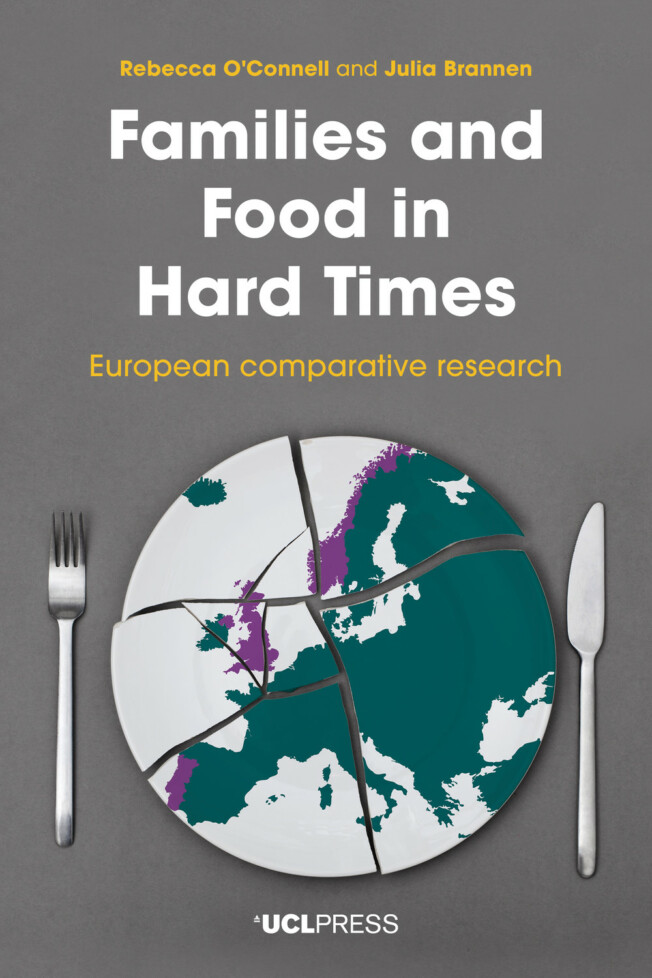
Families and Food in Hard Times
European comparative research
Rebecca O'Connell (Author), Julia Brannen (Author)
Food is fundamental to health and social participation, yet food poverty has increased in the global North. Adopting a realist ontology and taking a comparative case approach, Families and Food in Hard Times addresses the global problem of economic retrenchment and how those most affected are those with the least resources.
Based on research carried out with low-income families with children aged 11-15, this timely book examines food poverty in the UK, Portugal and Norway in the decade following the 2008 financial crisis. It examines the resources to which families have access in relation to public policies, local institutions and kinship and friendship networks, and how they intersect. Through ‘thick description’ of families’ everyday lives, it explores the ways in which low income impacts upon practices of household food provisioning, the types of formal and informal support on which families draw to get by, the provision and role of school meals in children’s lives, and the constraints upon families’ social participation involving food.
Providing extensive and intensive knowledge concerning the conditions and experiences of low-income parents as they endeavour to feed their families, as well as children’s perspectives of food and eating in the context of low income, the book also draws on the European social science literature on food and families to shed light on the causes and consequences of food poverty in austerity Europe.
List of figures
List of tables
Acknowledgements
Introduction
Section 1 Setting the scene
1 The national contexts: the UK, Portugal and Norway
2 Research questions and concepts
3 The study
4 Which types of family are at risk of food poverty?
Section 2 Households as resource units
5 Three families headed by an unemployed lone mother
6 Three dual-earner households
7 Three undocumented migrant families
Section 3 The social dimensions of food poverty
8 Exclusion from sociability and social relationships
Section 4: Formal and informal support
9 Charity, family and friends 10 Children’s experiences of school meals 11
Conclusions and reflections
References
Index
DOI: 10.14324/111.9781787356559
Number of illustrations: 32
Publication date: 24 May 2021
PDF ISBN: 9781787356559
EPUB ISBN: 9781787356580
Hardback ISBN: 9781787356573
Paperback ISBN: 9781787356566
‘A valuable contribution to trans-national debates on food policy and social policy as well as a key addition to academic literature on poverty as experienced by mothers and children. …It will greatly contribute to academic understanding and provides useful policy insights which should be heeded by policy makers and those in power across Europe.’ Critical Social Policy
‘The ambitious scope of Families and Food in Hard Times – the culmination of a £1 million European Research Council grant – is matched only by the quality, depth and detail of the accounts it describes…. [a] considerable contribution to understanding the material, social, emotional consequences of food poverty’
Sociology
Related titles

Marriage in Past, Present and Future Tense
Janet Carsten, Hsiao-Chiao Chiu, Siobhan Magee, Eirini Papadaki, Koreen M. Reece,
01 September 2021
Rachel Rosen, Elaine Chase, Sarah Crafter, Valentina Glockner, Sayani Mitra,
09 January 2023
Family Life in the Time of COVID
Katherine Twamley, Humera Iqbal, Charlotte Faircloth,
31 August 2023
Claire Cameron, Alison Koslowski, Alison Lamont, Peter Moss,
06 November 2023
Families and Food in Hard Times
European comparative research
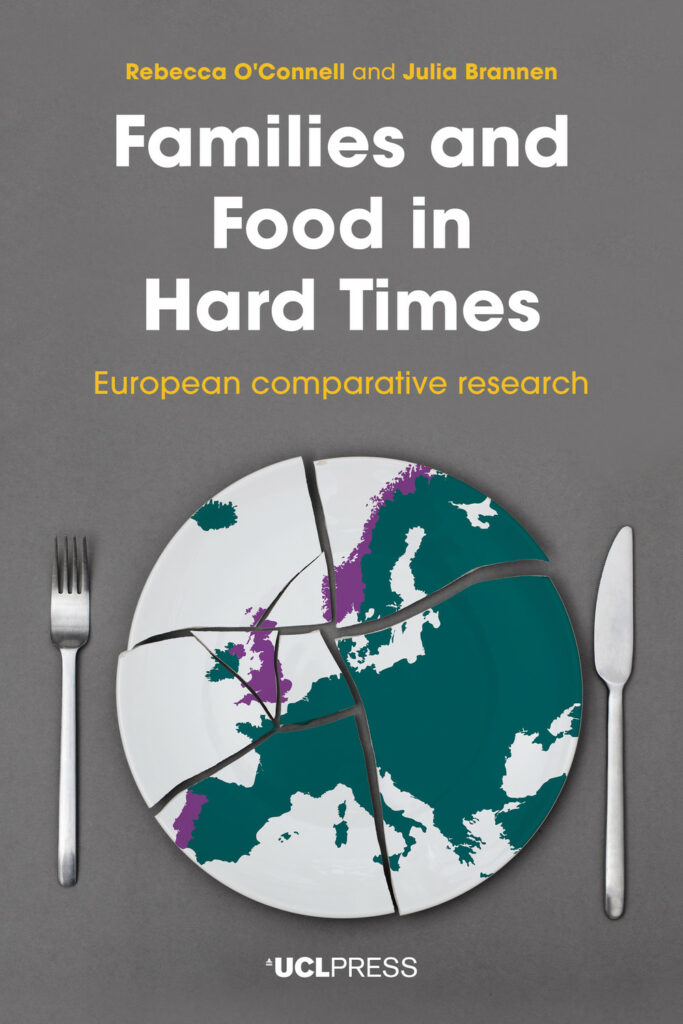
Publication date: May 24, 2021
Open Access PDF ISBN: 9781787356559
Paperback ISBN: 9781787356566
Hardback ISBN: 9781787356573
Trim size (hardback): 23.4cm x 15.6cm
Trim size (paperback): 23.4cm x 15.6cm
Food is fundamental to health and social participation, yet food poverty has increased in the global North. Adopting a realist ontology and taking a comparative case approach, Families and Food in Hard Times addresses the global problem of economic retrenchment and how those most affected are those with the least resources.
Based on research carried out with low-income families with children aged 11-15, this timely book examines food poverty in the UK, Portugal and Norway in the decade following the 2008 financial crisis. It examines the resources to which families have access in relation to public policies, local institutions and kinship and friendship networks, and how they intersect. Through ‘thick description’ of families’ everyday lives, it explores the ways in which low income impacts upon practices of household food provisioning, the types of formal and informal support on which families draw to get by, the provision and role of school meals in children’s lives, and the constraints upon families’ social participation involving food.
Providing extensive and intensive knowledge concerning the conditions and experiences of low-income parents as they endeavour to feed their families, as well as children’s perspectives of food and eating in the context of low income, the book also draws on the European social science literature on food and families to shed light on the causes and consequences of food poverty in austerity Europe.
‘A valuable contribution to trans-national debates on food policy and social policy as well as a key addition to academic literature on poverty as experienced by mothers and children. …It will greatly contribute to academic understanding and provides useful policy insights which should be heeded by policy makers and those in power across Europe.’ Critical Social Policy
‘The ambitious scope of Families and Food in Hard Times – the culmination of a £1 million European Research Council grant – is matched only by the quality, depth and detail of the accounts it describes…. [a] considerable contribution to understanding the material, social, emotional consequences of food poverty’
Sociology