We are currently upgrading our shopping cart; in the interim all orders are being diverted to Waterstones. If you would like to redeem a promotional code, or are an author wanting to place an order, please email us.

Contact us

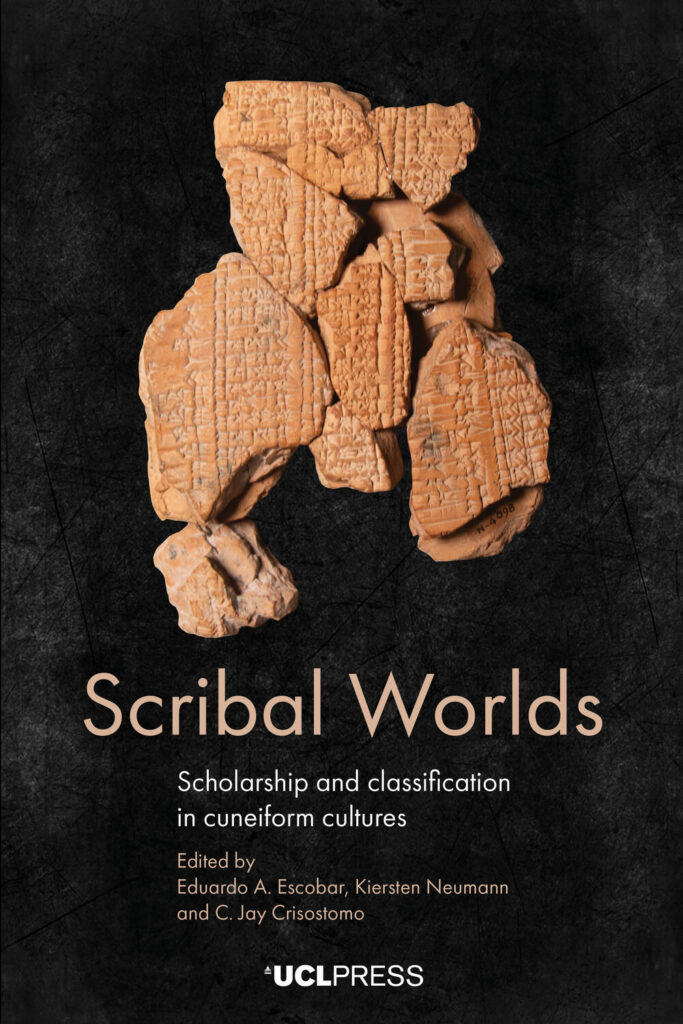
Scribal Worlds

Scribal Worlds: Scholarship and classification in cuneiform cultures delves into the history of the earliest writing cultures of the ancient Middle East, bridging disciplines such as ancient history, philology, semiotics, material culture studies and philosophy of science. Bringing together scholars in the fields of Assyriology, History of Science and Art History, the collection examines how language, ontology, classification and scribal learning shaped cuneiform traditions. Through focused textual and material case studies, contributors employ diverse heuristic tools to reconstruct the intellectual frameworks of scribal cultures and the transmission of knowledge. Inspired by and in appreciation of the work of Niek Veldhuis, this collaborative and timely exploration highlights the interwoven nature of classification and scholarship within cuneiform studies, demonstrating how specific texts, object groups and practices can be interpreted within their cultural contexts. By critically analysing and reframing these sources, the volume exemplifies how scholars extract meaning from even the most fragmentary evidence – truly ‘squeezing juice out of stones’.
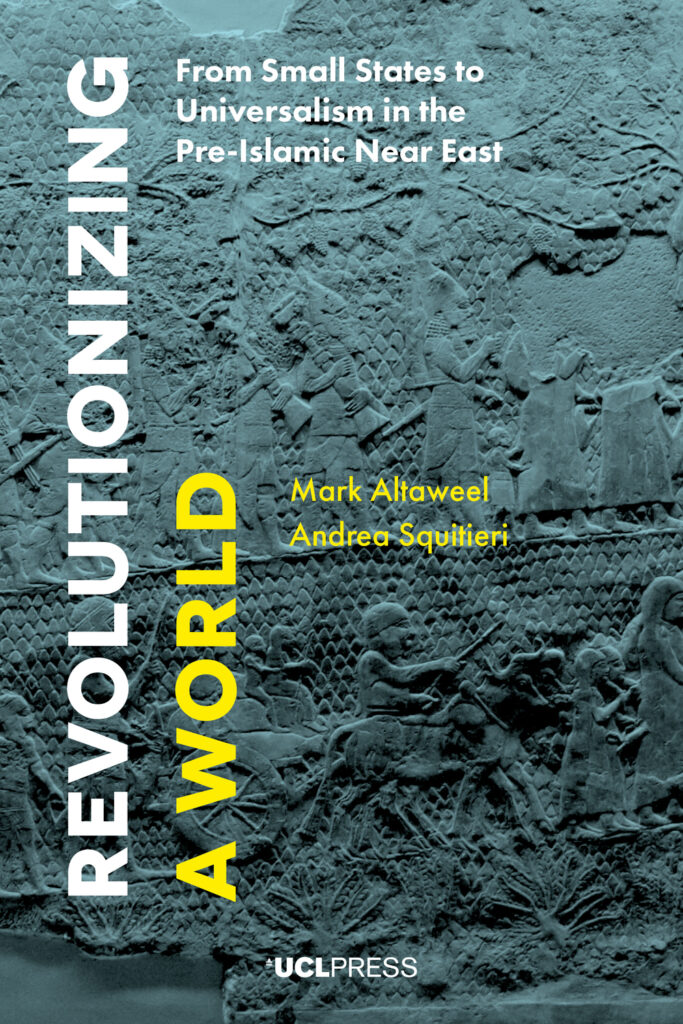
Revolutionizing a World

This book investigates the long-term continuity of large-scale states and empires, and its effect on the Near East’s social fabric, including the fundamental changes that occurred to major social institutions. Its geographical coverage spans, from east to west, modern-day Libya and Egypt to Central Asia, and from north to south, Anatolia to southern Arabia, incorporating modern-day Oman and Yemen. Its temporal coverage spans from the late eighth century BCE to the seventh century CE during the rise of Islam and collapse of the Sasanian Empire.

The authors argue that the persistence of large states and empires starting in the eighth/seventh centuries BCE, which continued for many centuries, led to new socio-political structures and institutions emerging in the Near East. The primary processes that enabled this emergence were large-scale and long-distance movements, or population migrations. These patterns of social developments are analysed under different aspects: settlement patterns, urban structure, material culture, trade, governance, language spread and religion, all pointing at movement as the main catalyst for social change. This book’s argument is framed within a larger theoretical framework termed as ‘universalism’, a theory that explains many of the social transformations that happened to societies in the Near East, starting from the Neo-Assyrian period and continuing for centuries.

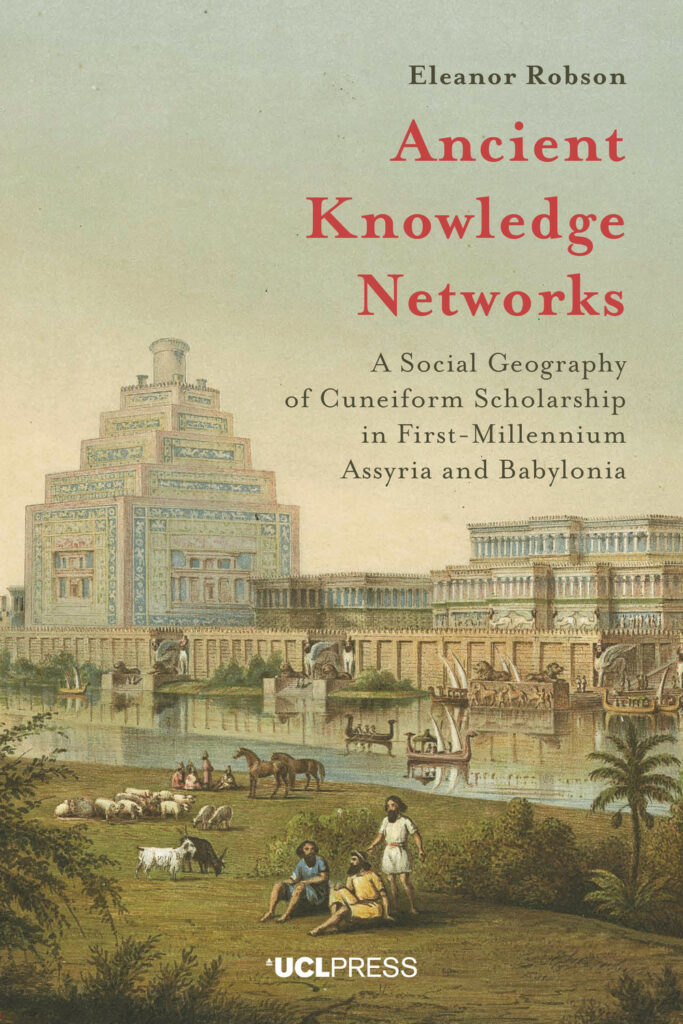
Ancient Knowledge Networks

Ancient Knowledge Networks is a book about how knowledge travels, in minds and bodies as well as in writings. It explores the forms knowledge takes and the meanings it accrues, and how these meanings are shaped by the peoples who use it.

Addressing the relationships between political power, family ties, religious commitments and literate scholarship in the ancient Middle East of the first millennium BC, Eleanor Robson focuses on two regions where cuneiform script was the predominant writing medium: Assyria in the north of modern-day Syria and Iraq, and Babylonia to the south of modern-day Baghdad. She investigates how networks of knowledge enabled cuneiform intellectual culture to endure and adapt over the course of five world empires until its eventual demise in the mid-first century BC. In doing so, she also studies Assyriological and historical method, both now and over the past two centuries, asking how the field has shaped and been shaped by the academic concerns and fashions of the day. Above all, Ancient Knowledge Networks is an experiment in writing about ‘Mesopotamian science’, as it has often been known, using geographical and social approaches to bring new insights into the intellectual history of the world’s first empires.

Sign up to our newsletter

Don't miss out!
Subscribe to the UCL Press newsletter for the latest open access books,
journal CfPs, news and views from our authors and much more!