We are currently upgrading our shopping cart; in the interim all orders are being diverted to Waterstones. If you would like to redeem a promotional code, or are an author wanting to place an order, please email us.

Contact us

Urban Beauty

Urban Beauty asks a deceptively simple question: what does it mean to make cities beautiful? Most of us agree that beautiful streets, buildings and public spaces enrich our lives. They lift spirits, strengthen communities and even improve health. Yet the moment we try to define ‘urban beauty’, certainty crumbles. Is beauty objective, something we ‘know when we see it’? Or is it wholly subjective, forever ‘in the eye of the beholder’?

This book explores the fertile tension between these poles. Around the world, governments now regulate for beauty, planners and designers are tasked with delivering it, and communities increasingly demand it. But how do we pursue something that resists clear definition?

Structured in four parts across eight chapters, the book traces beauty’s rise as a public mission, probes its contested meaning, investigates what people prefer in their built environments and reports on innovative experiments that have sought to test out the delivery of a beauty agenda. Six guiding questions shape the journey, culminating in a seventh: can the unknowable ever be made knowable? Rather than offering one final answer, the book maps a rich and unsettled terrain, showing why urban beauty matters, and how it might guide the creation of more humane cities.

Rethinking the Pavilion

Rethinking the Pavilion investigates one unique project in detail, the Vajrasana Buddhist Retreat Centre in rural Suffolk, completed by Walters & Cohen Architects in 2018. The result was an innovative building typology that has never been designed before in any western country. The process by which the Vajrasana project came into existence has come to define and shape the way in which the practice makes architecture, through a deepened understanding of how buildings can exert powerful social impacts on all who use them.

It was the Vajrasana Buddhist Retreat Centre project that enabled Walters & Cohen Architects to shift the focus away from the ideal pavilion to the social pavilion. While pavilions are usually seen as finished objects, this book argues that they can be seen as a process, namely a social process. The book describes how shared experience defines a new way of working towards an architecture that rediscovers and enriches its communal purpose. The ethos of Walters & Cohen’s practice has thus become one that encourages a broader conversation about architecture, with buildings seeking to convey a raw sense of place and to reduce the many complexities of site and programme to the simplest arrangement and expression.

Experiments with Body Agent Architecture

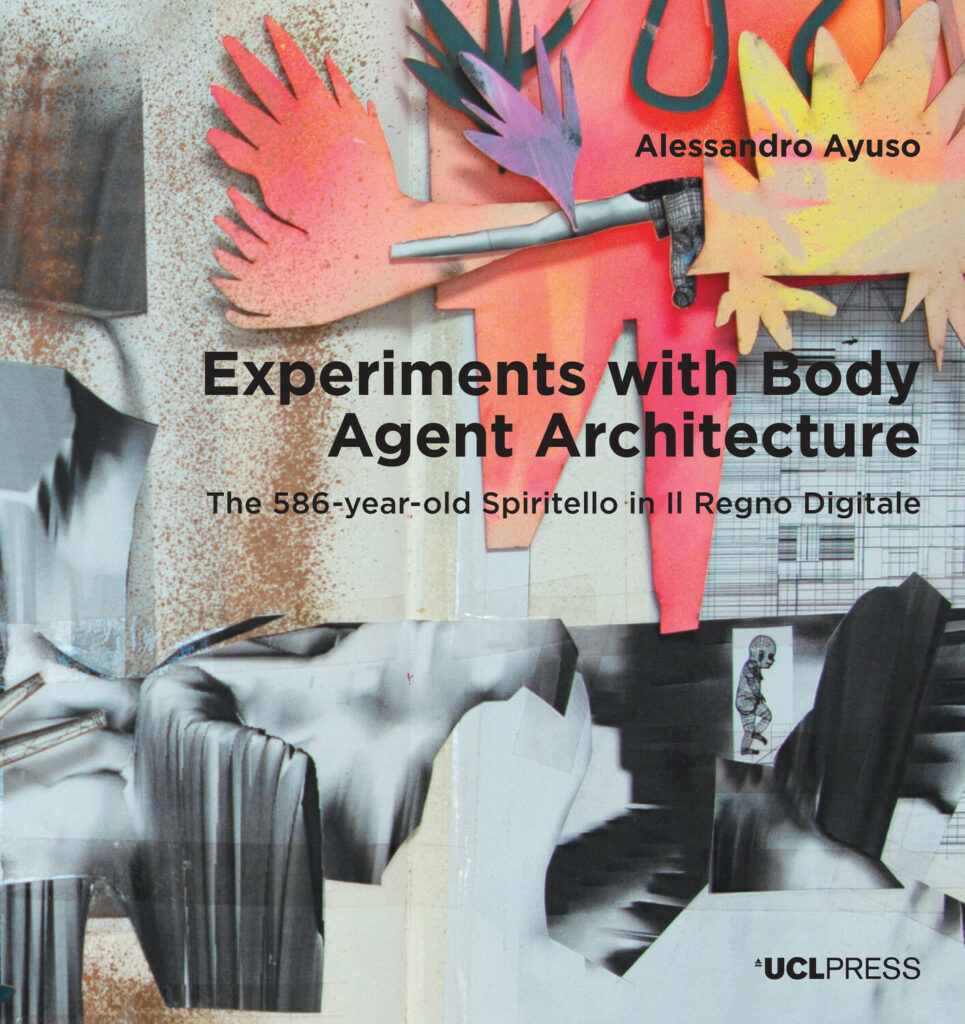
Experiments with Body Agent Architecture puts forward the notion of body agents: non-ideal, animate and highly specific figures integrated with design to enact particular notions of embodied subjectivity in architecture. Body agents present opportunities for architects to increase imaginative and empathic qualities in their designs, particularly amidst a posthuman condition.

Beginning with narrative writing from the viewpoint of a body agent, an estranged ‘quattrocento spiritello’ who finds himself uncomfortably inhabiting a digital milieu (or, as the spiritello calls it, ‘Il Regno Digitale’), the book combines speculative historical fiction and original design experiments. It focuses on the process of creating the multi-media design experiments, moving from the design of the body itself as an original prosthetic to architectural proposals emanating from the body.

A fragmented history of the figure in architecture is charted and woven into the designs, with chapters examining Michelangelo’s enigmatic figures in his drawings for the New Sacristy in the early sixteenth century, Gian Lorenzo Bernini’s physically ephemeral ‘putti’ adorning chapels and churches in the seventeenth century, and Austrian artist-architect Walter Pichler’s personal and prescient figures of the twentieth century.
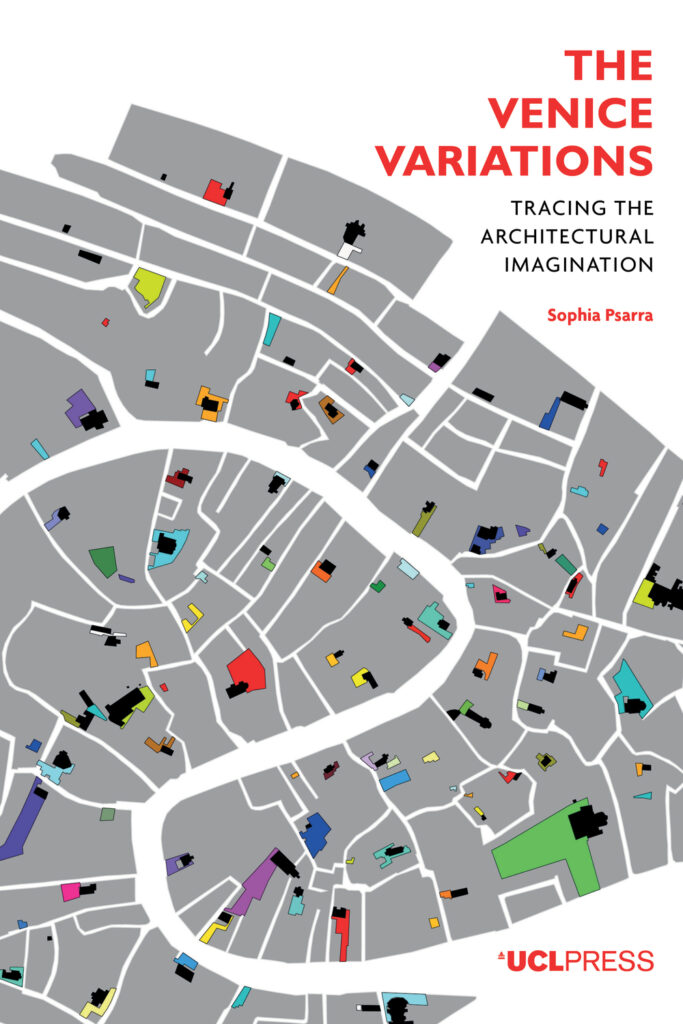
The Venice Variations

From the myth of Arcadia through to the twenty-first century, ideas about sustainability – how we imagine better urban environments – remain persistently relevant, and raise recurring questions. How do cities evolve as complex spaces nurturing both urban creativity and the fortuitous art of discovery, and by which mechanisms do they foster imagination and innovation? While past utopias were conceived in terms of an ideal geometry, contemporary exemplary models of urban design seek technological solutions of optimal organisation. The Venice Variations explores Venice as a prototypical city that may hold unique answers to the ancient narrative of utopia. Venice was not the result of a preconceived ideal but the pragmatic outcome of social and economic networks of communication. Its urban creativity, though, came to represent the quintessential combination of place and institutions of its time.

Through a discussion of Venice and two other works owing their inspiration to this city – Italo Calvino’s Invisible Cities and Le Corbusier’s Venice Hospital – Sophia Psarra describes Venice as a system that starts to resemble a highly probabilistic ‘algorithm’. The rapidly escalating processes of urban development around our big cities share many of the motivations for survival, shelter and trade that brought Venice into existence. Rather than seeing these places as problems to be solved, we need to understand how urban complexity can evolve, as happened from its unprepossessing origins in the marshes of the Venetian lagoon to the ‘model city’ enduring a 1000 years. This book frees Venice from stereotypical representations, revealing its generative capacity to inform potential other ‘Venices’ for the future.

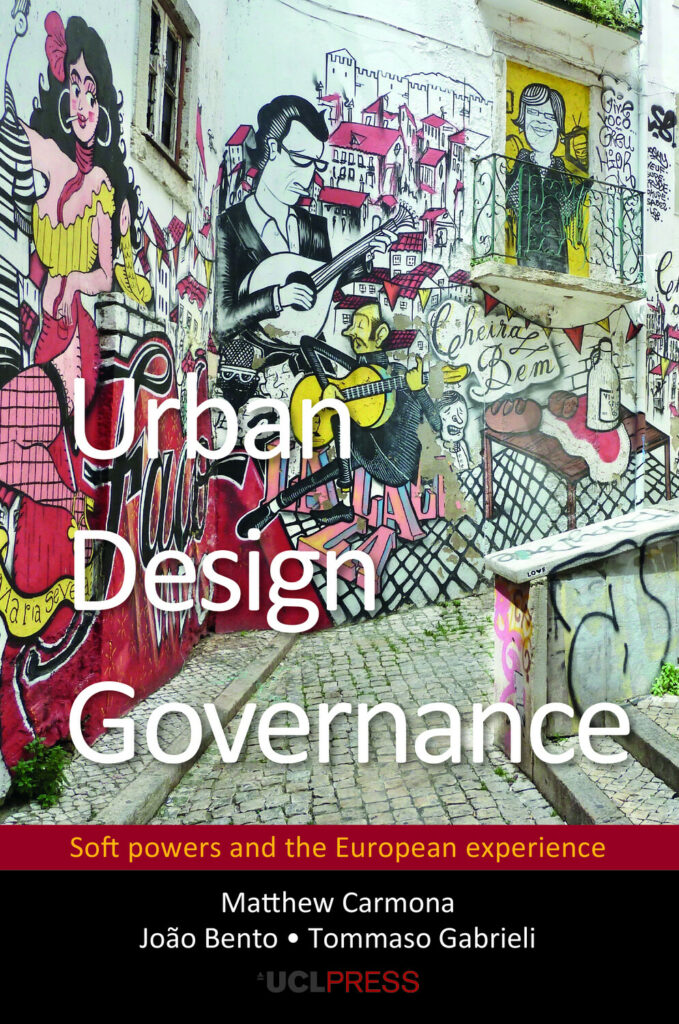
Urban Design Governance

Urban Design Governance takes a deep dive into the governance of urban design around Europe. It examines interventions in the means and processes of designing the built environment as devised by public authorities and other stakeholders across the continent. In particular, the focus is on the use of soft powers and allied financial mechanisms to influence design quality in the public interest. In doing so, the book traces the scope, use and effectiveness of the range of informal (non-regulatory) urban design governance tools that governments, municipalities and others have at their disposal.
Developed from the Urban Maestro project, a joint initiative of the United Nations Human Settlement programme (UN-Habitat), UCL and the Brussels Bouwmeester Maître Architecte (BMA), Urban Design Governance offers the first panorama of informal urban design governance tools from across Europe, and places the tools within a theoretical and analytical framework with the potential to be applied locally and internationally. Last, the book discusses and reveals the essential pre-requisites for the effective governance of urban design.

Governments everywhere are increasingly seeing these sorts of tools as part of a necessary investment in delivering the high-quality built environments that their residents, businesses and investors demand. This book shows how.

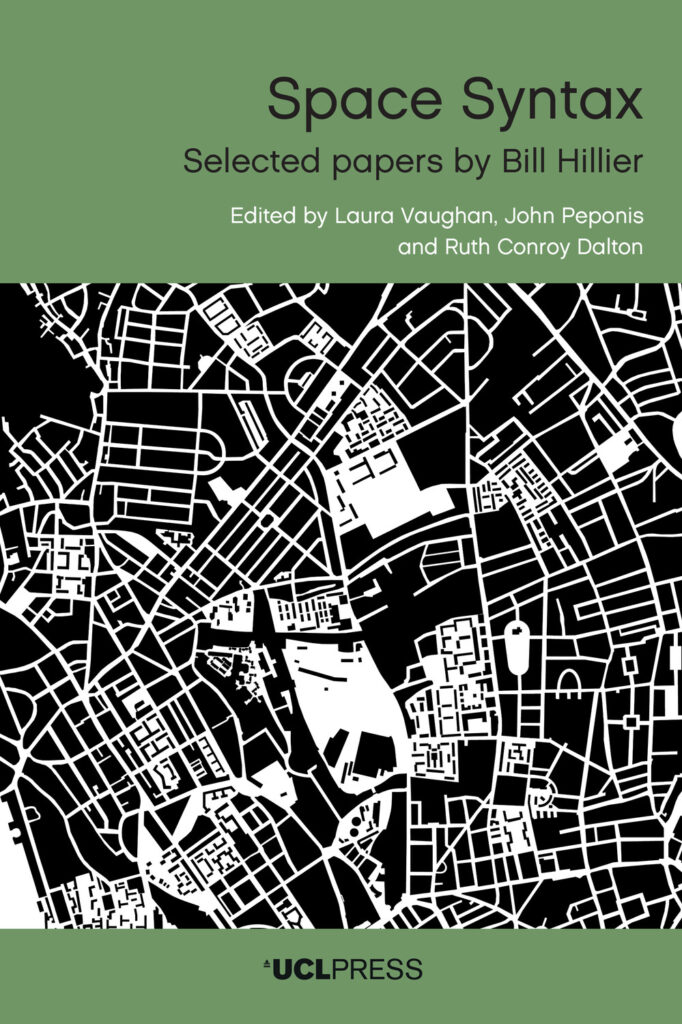
Space Syntax

Professor Bill Hillier spent most of his career at The Bartlett, University College London, where he founded and developed, with a team of colleagues, an original research programme that set the study of architecture on a firm scientific basis. His transformational way of thinking about buildings and cities influenced generations of scholars, researchers and practitioners within the built environment disciplines and way beyond – in fields ranging from archaeology and biology to physics and zoology.

Space Syntax: Selected papers by Bill Hillier provides a canon of works that reflects the progression of Hillier’s ideas from the early publications of the 1970s to his most recent work, published before his death in 2019. This selection of influential works ranges from his papers on architecture as a professional and research discipline, through to his later papers that present a theory of the spatial structure of the city and its social functions. By bringing together writing from across his career-span of half a century, with specially commissioned introductions by a wide range of international experts in the field, we are able to contextualise and show the range and evolution of Hillier’s key ideas.

Fabricate 2011

FABRICATE is an international peer reviewed conference that takes place every three years with a supporting publication on the theme of Digital Fabrication. Discussing the progressive integration of digital design with manufacturing processes, and its impact on design and making in the 21st century, FABRICATE brings together pioneers in design and making within architecture, construction, engineering, manufacturing, materials technology and computation. Discussion on key themes includes: how digital fabrication technologies are enabling new creative and construction opportunities from component to building scales, the difficult gap that exists between digital modelling and its realisation, material performance and manipulation, off-site and on-site construction, interdisciplinary education, economic and sustainable contexts. FABRICATE features cutting-edge built work from both academia and practice, making it a unique event that attracts delegates from all over the world. FABRICATE 2011, 2014 and 2017 are now all available to download free from UCL Press.

Fabricate 2014

FABRICATE is an international peer reviewed conference that takes place every three years with a supporting publication on the theme of Digital Fabrication. Discussing the progressive integration of digital design with manufacturing processes, and its impact on design and making in the 21st century, FABRICATE brings together pioneers in design and making within architecture, construction, engineering, manufacturing, materials technology and computation. Discussion on key themes includes: how digital fabrication technologies are enabling new creative and construction opportunities from component to building scales, the difficult gap that exists between digital modelling and its realisation, material performance and manipulation, off-site and on-site construction, interdisciplinary education, economic and sustainable contexts. FABRICATE features cutting-edge built work from both academia and practice, making it a unique event that attracts delegates from all over the world. FABRICATE 2011, 2014 and 2017 are now all available to download free from UCL Press.

Design Transactions

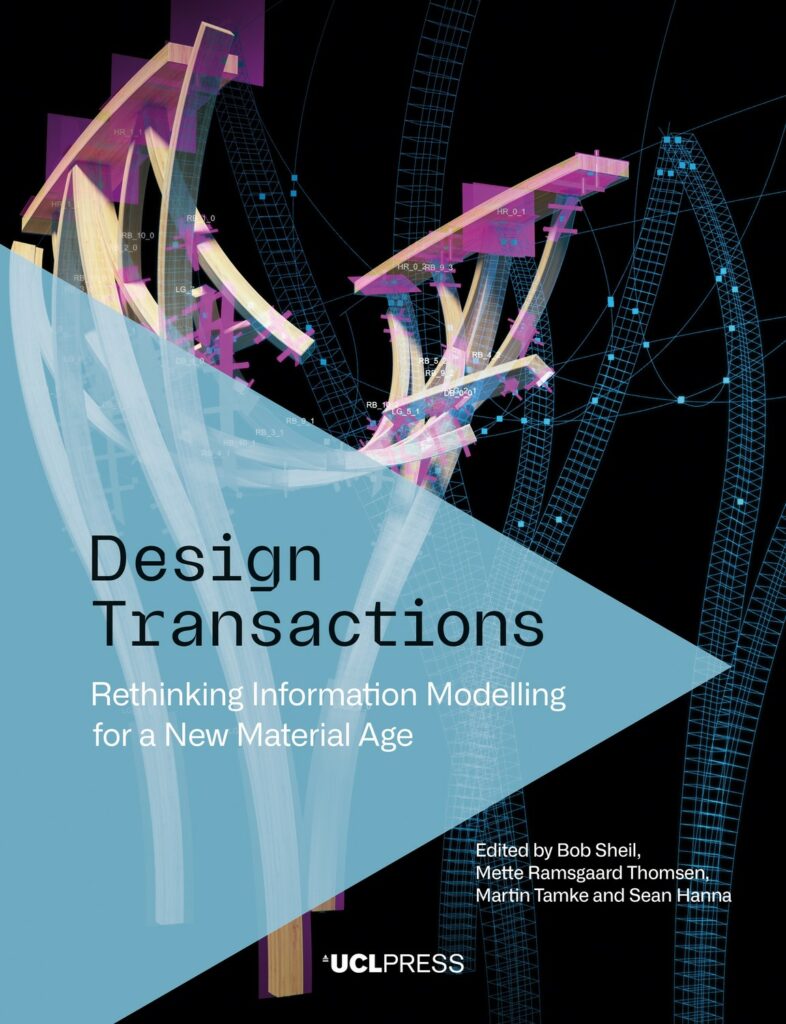
Design Transactions presents the outcome of new research to emerge from ‘Innochain’, a consortium of six leading European architectural and engineering-focused institutions and their industry partners. The book presents new advances in digital design tooling that challenge established building cultures and systems. It offers new sustainable and materially smart design solutions with a strong focus on changing the way the industry thinks, designs, and builds our physical environment.

Divided into sections exploring communication, simulation and materialisation, Design Transactions explores digital and physical prototyping and testing that challenges the traditional linear construction methods of incremental refinement. This novel research investigates ‘the digital chain’ between phases as an opportunity for extended interdisciplinary design collaboration. The highly illustrated book features work from 15 early-stage researchers alongside chapters from world-leading industry collaborators and academics.

The Covert Life of Hospital Architecture

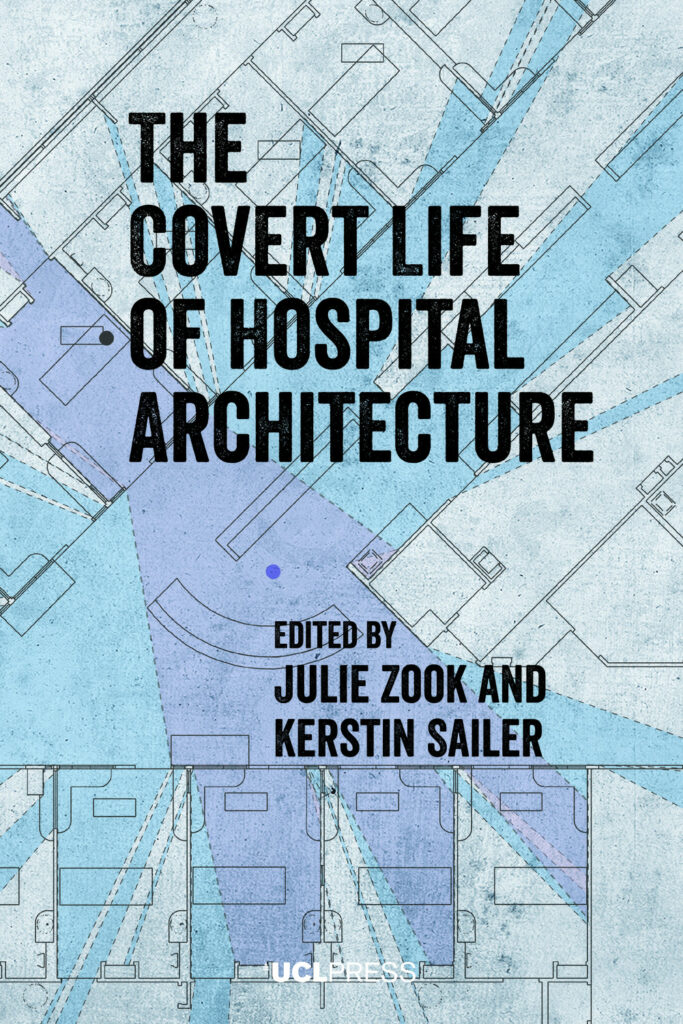
The Covert Life of Hospital Architecture addresses hospital architecture as a set of interlocked, overlapping spatial and social conditions. It identifies ways that planned-for and latent functions of hospital spaces work jointly to produce desired outcomes such as greater patient safety, increased scope for care provider communication and more intelligible corridors.

By advancing space syntax theory and methods, the volume brings together emerging research on hospital environments. Opening with a description of hospital architecture that emphasizes everyday relations, the sequence of chapters takes an unusually comprehensive view that pairs spaces and occupants in hospitals: the patient room and its intervisibility with adjacent spaces, care teams and on-ward support for their work and the intelligibility of public circulation spaces for visitors. The final chapter moves outside the hospital to describe the current healthcare crisis of the global pandemic as it reveals how healthcare institutions must evolve to be adaptable in entirely new ways. Reflective essays by practicing designers follow each chapter, bringing perspectives from professional practice into the discussion.

The Covert Life of Hospital Architecture makes the case that latent dimensions of space as experienced have a surprisingly strong link to measurable outcomes, providing new insights into how to better design hospitals through principles that have been tested empirically. It will become a reference for healthcare planners, designers, architects and administrators, as well as for readers from sociology, psychology and other areas of the social sciences.

Sign up to our newsletter

Don't miss out!
Subscribe to the UCL Press newsletter for the latest open access books,
journal CfPs, news and views from our authors and much more!