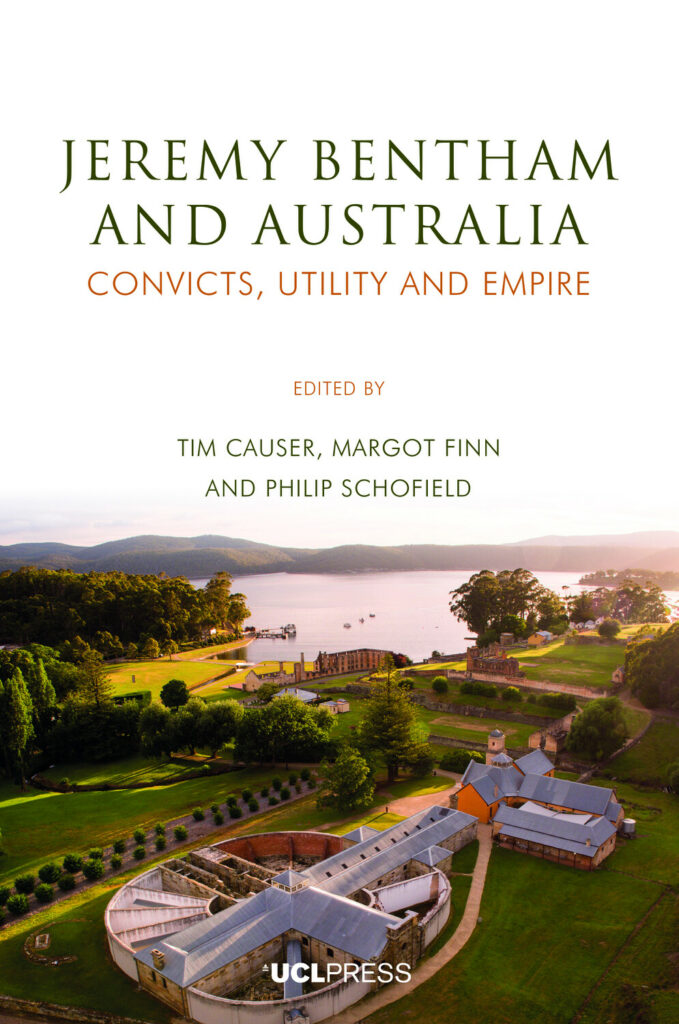
Jeremy Bentham and Australia

Jeremy Bentham and Australia is a collection of scholarship inspired by Bentham’s writings on Australia. These writings are available for the first time in authoritative form in Panopticon versus New South Wales and other writings on Australia, a volume in The Collected Works of Jeremy Bentham published by UCL Press.

In the present collection, a distinguished group of authors reflect on Bentham’s Australian writings, making original contributions to existing debates and setting agendas for future ones. In the first part of the collection, the works are placed in their historical contexts, while the second part provides a critical assessment of the historical accuracy and plausibility of Bentham’s arguments against transportation from the British Isles. In the third part, attention turns to Bentham’s claim that New South Wales had been illegally founded and to the imperial and colonial constitutional ramifications of that claim. Here, authors also discuss Bentham’s work of 1831 in which he supports the establishment of a free colony on the southern coast of Australia. In the final part, authors shed light on the history of Bentham’s panopticon penitentiary scheme, his views on the punishment and reform of criminals and what role, if any, religion had to play in that regard, and discuss apparently panopticon-inspired institutions built in the Australian colonies.

This collection will appeal to readers interested in Bentham’s life and thought, the history of transportation from the British Isles, and of British penal policy more generally, colonial and imperial history, Indigenous history, legal and constitutional history, and religious history.
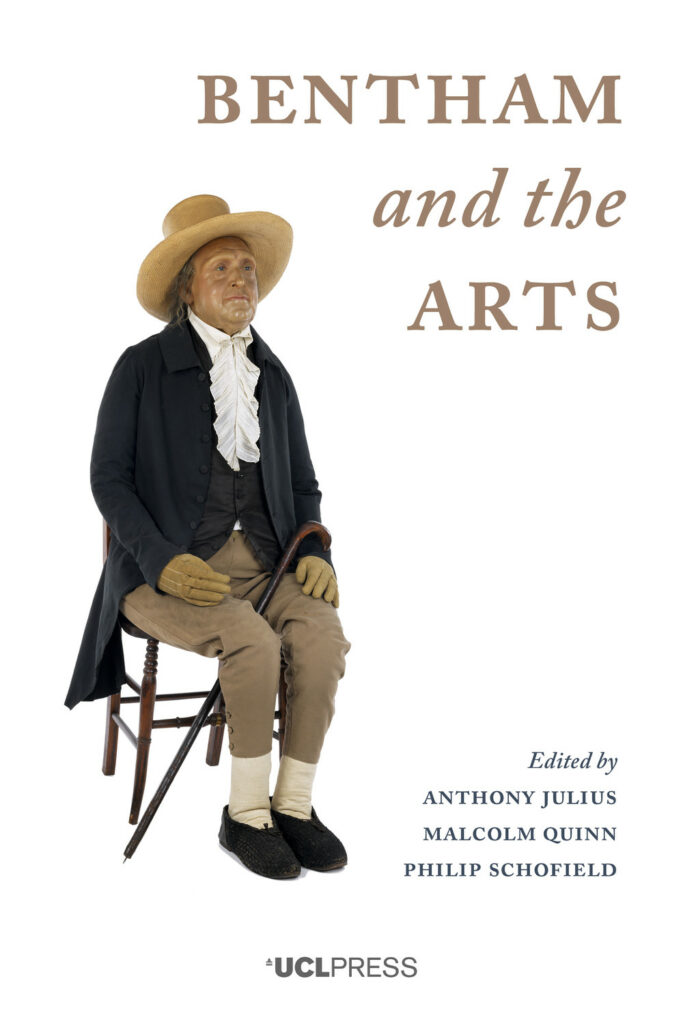
Bentham and the Arts

Bentham and the Arts considers the sceptical challenge presented by Bentham’s hedonistic utilitarianism to the existence of the aesthetic, as represented in the oft-quoted statement that, ‘Prejudice apart, the game of push-pin is of equal value with the arts and sciences of music and poetry. If the game of push-pin furnish more pleasure, it is more valuable than either.’ This statement is one part of a complex set of arguments on culture, taste, and utility that Bentham pursued over his lifetime, in which sensations of pleasure and pain were opposed to aesthetic sensibility. Leading scholars from a variety of disciplines reflect on the implications of Bentham’s radical utilitarian approach for our understanding of the history and contemporary nature of art, literature, and aesthetics more generally.

Each contributor takes into account, from the perspective of their own discipline and expertise, the implications for their research area of the views contained in Bentham’s Of Sexual Irregularities, and other writings on Sexual Morality (published in the authoritative edition of The Collected Works of Jeremy Bentham in 2014) and ‘Not Paul, but Jesus: Volume III’ (published online by the Bentham Project in 2014). In these essays, Bentham puts forward the first philosophical defence of sexual liberty. In doing so, he questions the meaning of ‘taste’ and hence the received understanding of aesthetics more generally.

The contributors, moreover, challenge two of the major commonplaces in literary and historical studies of the nineteenth century: first that literature and utilitarianism represented alternative and incompatible views of the world; and second that Bentham’s utilitarianism was somehow emaciated in comparison with that of John Stuart Mill. The volume also includes new reflections on the auto-icon and the panopticon, the latter showing the utilitarian genealogy of a collaborative art and architecture project on the site of the Millbank Penitentiary.

The title ‘Bentham and the Arts’ itself challenges the commonly held notion that Bentham had nothing relevant to say on the subject of the Arts – the essays in this volume show that Bentham remains extraordinarily relevant, both in historical and philosophical terms.

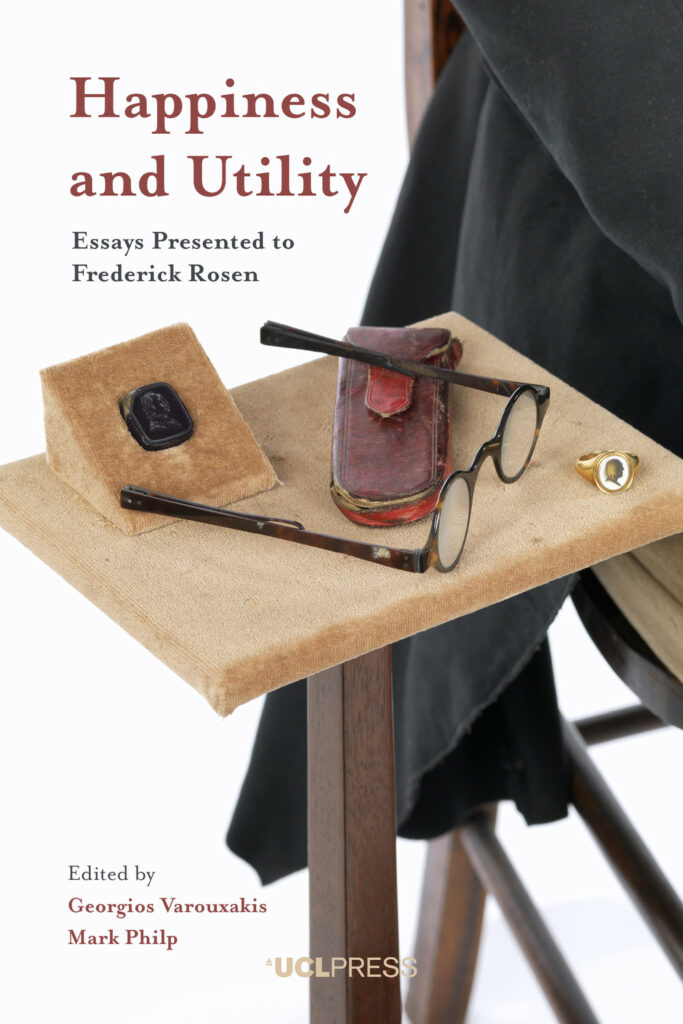
Happiness and Utility

Happiness and Utility brings together experts on utilitarianism to explore the concept of happiness within the utilitarian tradition, situating it in earlier eighteenth-century thinkers and working through some of its developments at the end of the nineteenth and beginning of the twentieth centuries. Drawing on a range of philosophical and historical approaches to the study of the central idea of utilitarianism, the chapters provide a rich set of insights into a founding component of ethics and modern political and economic thought, as well as political and economic practice. In doing so, the chapters examine the multiple dimensions of utilitarianism and the contested interpretations of this standard for judgement in morality and public policy.

The chapters are written in celebration of the career of Professor Frederick Rosen. They follow his work by concentrating on Bentham and the two Mills, and by the subtleties and sophistication of their understanding of one of the most alluring but elusive ideas of modern times. The volume will be of interest not only to admirers of Rosen but to academics and postgraduate students in disciplines such as Philosophy, Political Theory, History of Political Thought, Legal Theory and Legal History.

Sign up to our newsletter

Don't miss out!
Subscribe to the UCL Press newsletter for the latest open access books,
journal CfPs, news and views from our authors and much more!