We are currently upgrading our shopping cart; in the interim all orders are being diverted to Waterstones. If you would like to redeem a promotional code, or are an author wanting to place an order, please email us.

Contact us

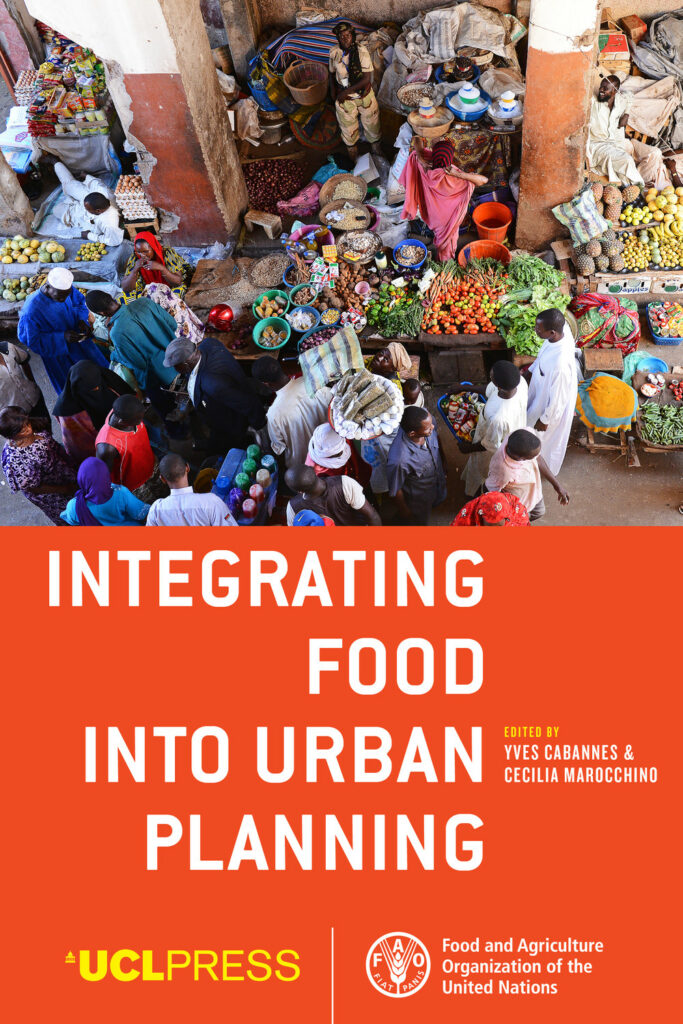
Integrating Food into Urban Planning

The integration of food into urban planning is a crucial and emerging topic. Urban planners, alongside the local and regional authorities that have traditionally been less engaged in food-related issues, are now asked to take a central and active part in understanding how food is produced, processed, packaged, transported, marketed, consumed, disposed of and recycled in our cities.

While there is a growing body of literature on the topic, the issue of planning cities in such a way they will increase food security and nutrition, not only for the affluent sections of society but primarily for the poor, is much less discussed, and much less informed by practices. This volume, a collaboration between the Bartlett Development Planning Unit at UCL and the Food Agricultural Organisation, aims to fill this gap by putting more than 20 city-based experiences in perspective, including studies from Toronto, New York City, Portland and Providence in North America; Milan in Europe and Cape Town in Africa; Belo Horizonte and Lima in South America; and, in Asia, Bangkok and Tokyo.

By studying and comparing cities of different sizes, from both the Global North and South, in developed and developing regions, the contributors collectively assert for the importance and circulation of global knowledge rooted in local food planning practices, programmes and policies.
Everyday Streets

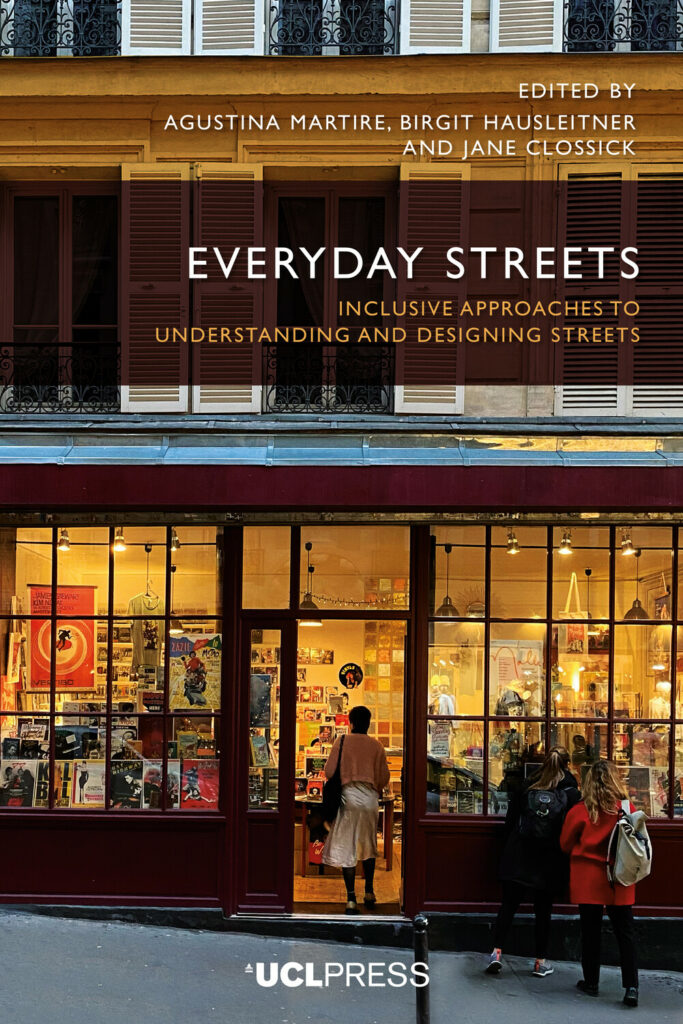
Everyday streets are both the most used and most undervalued of cities’ public spaces. They are places of social aggregation, bringing together those belonging to different classes, genders, ages, ethnicities and nationalities. They comprise not just the familiar outdoor spaces that we use to move and interact but also urban blocks, interiors, depths and hinterlands, which are integral to their nature and contribute to their vitality. Everyday streets are physically and socially shaped by the lives of the people and things that inhabit them through a reciprocal dance with multiple overlapping temporalities.

The primary focus of this book is an inclusive approach to understanding and designing everyday streets. It offers an analysis of many aspects of everyday streets from cities around the globe. From the regular rectilinear urban blocks of Montreal to the military-regulated narrow alleyways of Naples, and from the resilient market streets of London to the crammed commercial streets of Chennai, the streets in this book were all conceived with a certain level of control.
Everyday Streets is a palimpsest of methods, perspectives and recommendations that together provide a solid understanding of everyday streets, their degree of inclusiveness, and to what extent they could be more inclusive.

Disrupting the Speculative City

In 2011, police violence triggered an uprising in Tottenham that laid bare decades of neglect and state violence against the area’s racialised communities. In its aftermath, local leaders and corporate developers devised an aggressive redevelopment agenda that would have demolished the homes, workspaces and communities of thousands of council tenants, private renters and traders. Their plan was to transform Tottenham and surrounding areas from a diverse working-class place to a space for wealthy investors, residents and consumers.

Available as a free open access download and in print, Disrupting the Speculative City tells the story of how a community coalition defeated one of the most ambitious programmes of state-led gentrification in London. Known as the ‘Haringey Development Vehicle’ (HDV), it would have been executed through an undemocratic and speculative joint venture between the local council and the notorious international developer Lendlease. Thanks to the political creativity, tactical nous and extraordinary commitment of ordinary people, the HDV was scrapped by the local council in 2018. Drawing on the accounts of those at the heart of the struggle and analysing crucial developments in property investment, local statecraft and grassroots organising, this book explores a significant and inspirational success for campaigners in London, where social cleansing has become the default outcome of redevelopment.

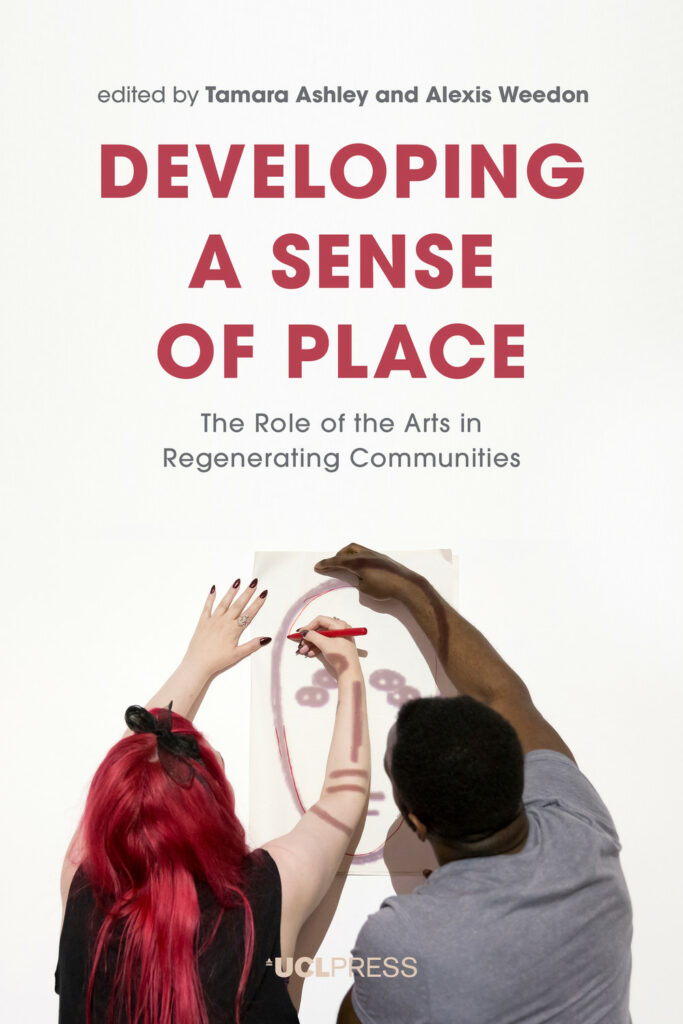
Developing a Sense of Place

How do cultural planners and policymakers work through the arts to create communities? What do artists need to build a sense of place in their community? To discuss these issues, Developing a Sense of Place brings together new models and case studies, each drawn from a specific geographical or socio-cultural context.

Selected for their lasting effect in their local community, the case studies explore new models for opening up the relationship between the university and its regional partners, explicitly connecting creative, critical and theoretical approaches to civic development. The volume has three sections: Case Studies of Place-Making; Models and Methods for Developing Place-Making Through the Arts; and Multidisciplinary Approaches to Place and Contested Identities. The sections cover regions in the UK such as Bedford, East Anglia, Edinburgh, Manchester, London, Plymouth and Wakefield, and internationally in countries such as Brazil, Turkey and Zimbabwe.

Developing a Sense of Place offers a range of viewpoints from, for example, the arts strategist, the academic, the practice-researcher and the artist. Through its innovative models, from performing arts to architectural design, the volume will serve the needs and interests of arts and cultural policy managers, master planners and arts workers, as well as students of Human Geography, Cultural Planning, Business and the Creative Industries, and Arts Administration, at undergraduate and postgraduate level.

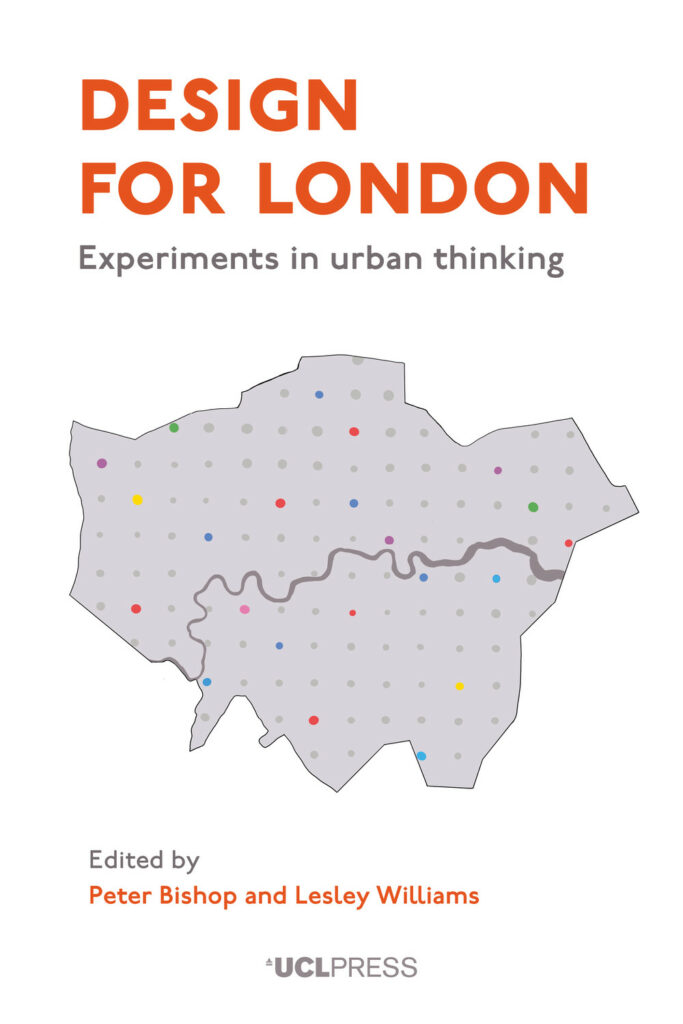
Design for London

Design for London was a unique experiment in urban planning, design and strategic thinking. Set up in 2006 by Mayor Ken Livingstone and his Architectural Advisor, Richard Rogers, the brief for the team was ‘to think about London, what made London unique and how it could be made better’. Sitting within London government but outside its formal statutory responsibilities, it was given freedom to question and challenge. The team had no power or money, but it did have the licence to operate without the usual constraints of government.

With introductions from Ken Livingstone and Richard Rogers, Design for London covers the tumultuous and heady period of the first decade of this century when London was a test bed for new ideas. It outlines how key projects such as the London Olympics, public space programmes, high street regeneration and greening programmes were managed, critically examines the lessons that might be learnt in strategic urban design and considers how a design agenda for London could be developed in the future.

By providing an engaging account of the strategic approaches and work of Design for London, and documenting the particular methodology and approach to urban theory it developed, Design for London will appeal to undergraduate and postgraduate students of planning, urban design and architecture, and to current practitioners from the public, private and community sectors who are struggling to achieve regeneration through poorly understood ‘placemaking’ concepts.

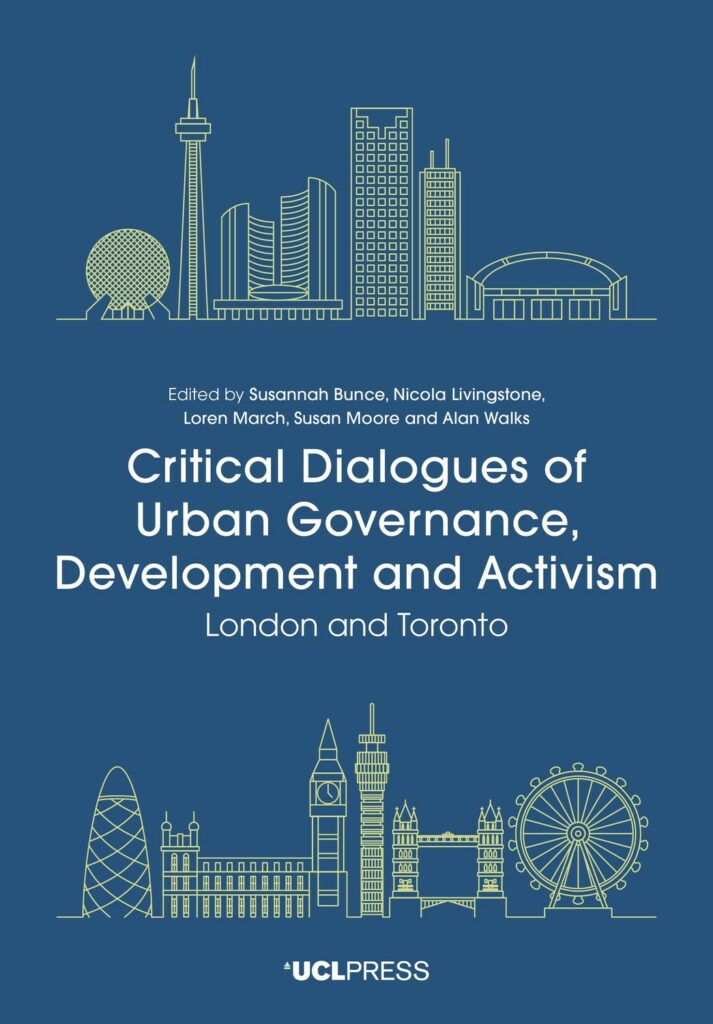
Critical Dialogues of Urban Governance, Development and Activism

Cities have been sites of some of the most visible manifestations of the evolution of processes of globalization and population expansion, and global cities are at the cutting edge of such changes. Critical Dialogues of Urban Governance, Development and Activism examines changes in governance, property development, urban politics and community activism, in two key global cities: London and Toronto.

The analysis is inherently comparative, but not in the traditional sense – the volume does not seek to deliver a like-for-like comparison. Instead, taking these two cities as empirical cases, the chapters engage in constructive dialogues about the contested and variegated built forms, formal and informal governmental mechanisms and practices, and policy and community-based responses to contemporary urban concerns.

The authors position a critical dialogue on three central issues in contemporary urban studies: governance, real estate and housing, and community activism and engagement. Their less traditional approach to comparative framing seeks to understand London and Toronto from a nuanced perspective, promoting critical reflection on the experiences and evaluative critiques of each urban context, providing insight into each city’s urban trajectory and engaging critically with wider phenomena and influences on the urban governance challenges beyond these two cities.

Sign up to our newsletter

Don't miss out!
Subscribe to the UCL Press newsletter for the latest open access books,
journal CfPs, news and views from our authors and much more!