Navigating Artificial Intelligence for Cultural Heritage Organisations

The question of how artificial intelligence and machine learning should be applied to data in libraries and other cultural institutions is a challenge shared by heritage professionals, computer scientists and digital humanities scholars.

As the number of digitised and born-digital records grows, archival practices are looking to automated systems to manage workloads and make cultural records more accessible. AI is playing a crucial role in data management systems within the cultural heritage sector, and information professionals are looking for ways to navigate current challenges and opportunities. Additionally, sector professionals and scholars are benefiting from the many new affordances and innovative research questions offered by using large-scale digital collections as data.

Navigating Artificial Intelligence for Cultural Heritage Organisations explores the innovative technologies and approaches to digitised and born-digital records within libraries and archives across the UK and US, and beyond. It brings together chapters from experts across the fields of digital humanities, computer science and information science, alongside professionals within the library and archival sector. The authors explore technologies being applied to digitised and born-digital records within libraries, archives and other heritage organisations, including innovative approaches in computer vision, Chat GPT, and user experience. The volume has been designed to reflect current and state-of-the-art technologies and innovations for the preservation and accessibility of digitised and born-digital records, to help navigate the future of AI for cultural heritage organisations.
Methods and Methodologies in Heritage Studies

Methods and Methodologies in Heritage Studies offers succinct, easily accessible analyses of the disciplinary debates, intellectual legacies and practical innovations that have led to understandings of heritage value today.

Through a diverse collection of expert voices, this volume invites readers to embark on their own journeys through appropriate methodologies for research and public engagement. Readers can draw on analyses of key problem areas and argumentative interventions to create a roadmap for the many disciplinary approaches that converge on heritage studies.

Oriented specifically towards learning and teaching heritage across archaeology, anthropology, history and geography, this textbook is designed to support critical, ethical heritage students, researchers and practitioners.

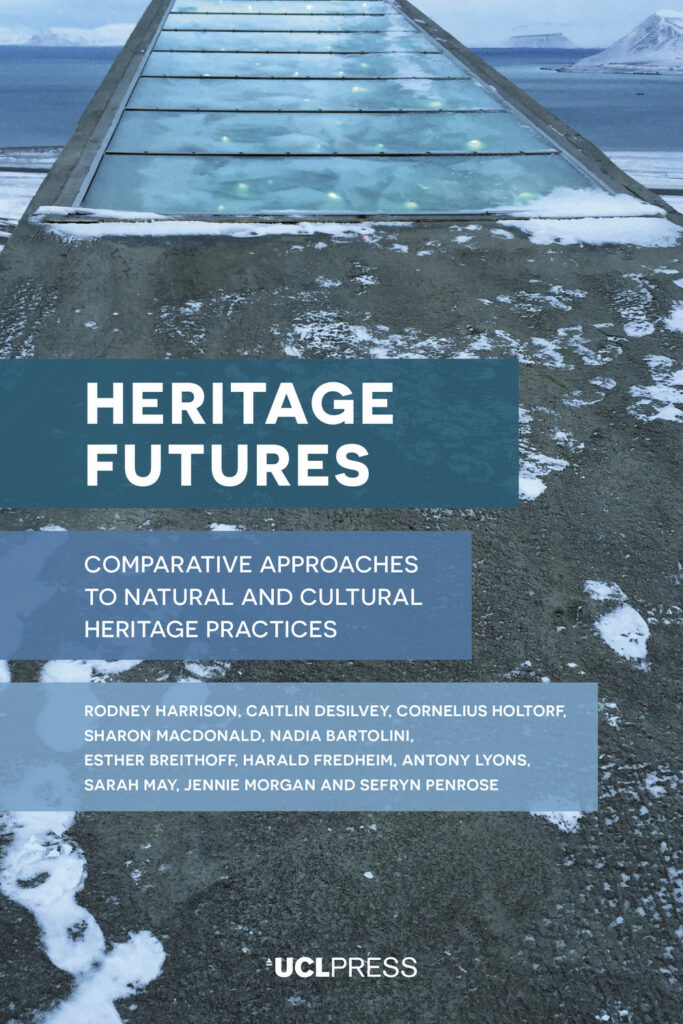
Heritage Futures

Preservation of natural and cultural heritage is often said to be something that is done for the future, or on behalf of future generations, but the precise relationship of such practices to the future is rarely reflected upon. Heritage Futures draws on research undertaken over four years by an interdisciplinary, international team of 16 researchers and more than 25 partner organisations to explore the role of heritage and heritage-like practices in building future worlds.

Engaging broad themes such as diversity, transformation, profusion and uncertainty, Heritage Futures aims to understand how a range of conservation and preservation practices across a number of countries assemble and resource different kinds of futures, and the possibilities that emerge from such collaborative research for alternative approaches to heritage in the Anthropocene. Case studies include the cryopreservation of endangered DNA in frozen zoos, nuclear waste management, seed biobanking, landscape rewilding, social history collecting, space messaging, endangered language documentation, built and natural heritage management, domestic keeping and discarding practices, and world heritage site management.

An Anthropology of Landscape

An Anthropology of Landscape tells the fascinating story of a heathland landscape in south-west England and the way different individuals and groups engage with it. Based on a long-term anthropological study, the book emphasises four individual themes: embodied identities, the landscape as a sensuous material form that is acted upon and in turn acts on people, the landscape as contested, and its relation to emotion. The landscape is discussed in relation to these themes as both ‘taskscape’ and ‘leisurescape’, and from the perspective of different user groups. First, those who manage the landscape and use it for work: conservationists, environmentalists, archaeologists, the Royal Marines, and quarrying interests. Second, those who use it in their leisure time: cyclists and horse riders, model aircraft flyers, walkers, people who fish there, and artists who are inspired by it. The book makes an innovative contribution to landscape studies and will appeal to all those interested in nature conservation, historic preservation, the politics of nature, the politics of identity, and an anthropology of Britain.

Sign up to our newsletter

Don't miss out!
Subscribe to the UCL Press newsletter for the latest open access books,
journal CfPs, news and views from our authors and much more!