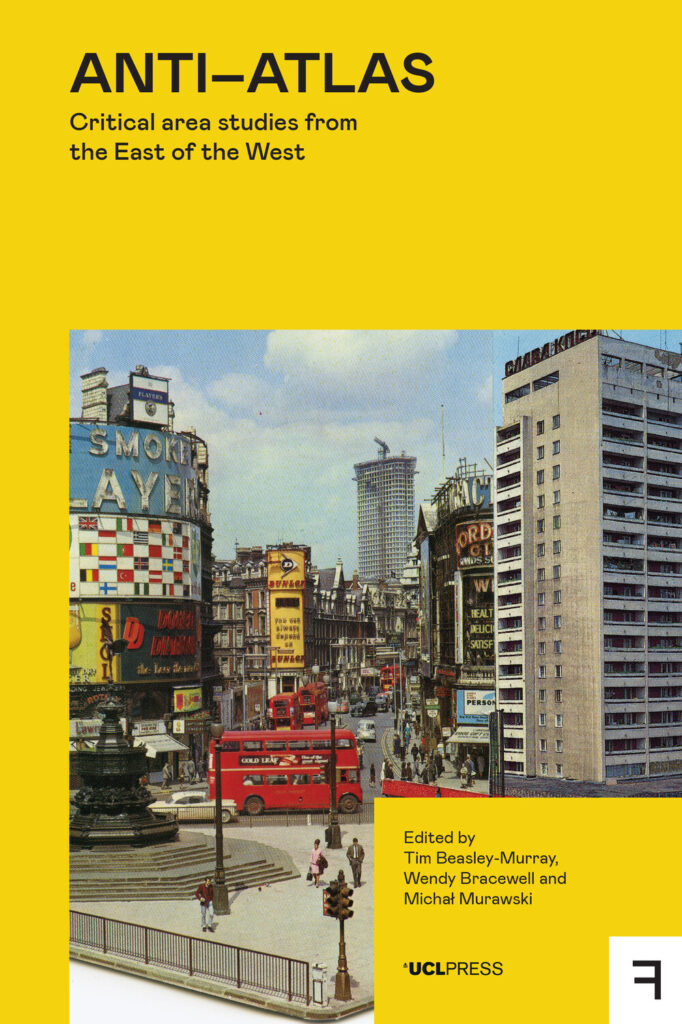
Anti-Atlas

The invasion of Ukraine is the latest in a series of upheavals that have made eastern Europe a telling point from which to consider the place of area studies in the construction of knowledge about the world. The politics of academic knowledge about ‘areas’ now feels more urgent than ever.

Anti-Atlas plays with the politics of the conventional atlas, with its assumptions about knowledge and power, its hierarchies of value, and its simplifications. It presents a collection of essays written by an eclectic mix of authors from Europe, both east and west, the UK and North America. These entries analyse a necessarily incomplete selection of topics, but they all engage with the question of how an approach to area can be ‘critical’ – and each entry demonstrates different aspects of criticality. The editors develop a manifesto for such criticality, calling attention to positions that are heterodox, area-informed or vernacular, ‘undisciplined’, and collaborative. Through a variety of genres, including the scholarly article, the travel guide, autobiographical reflections and data visualisations, Anti-Atlas provides readers with a diverse series of intellectual resources, asking them to think critically about the ways in which we construct the world by dividing it into pieces.
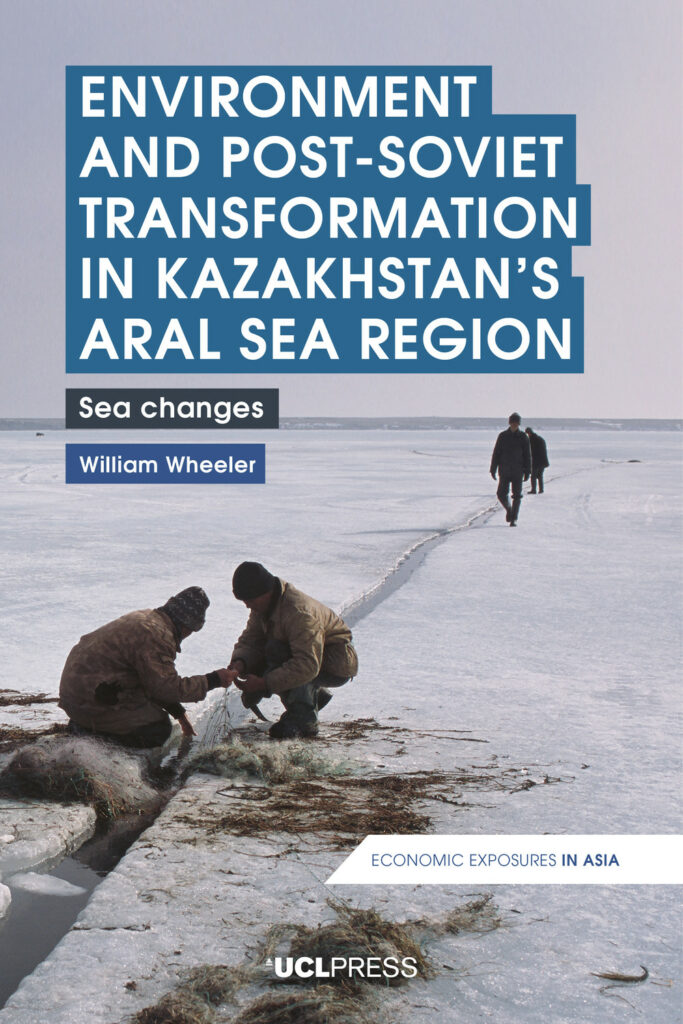
Environment and Post-Soviet Transformation in Kazakhstan’s Aral Sea Region

The Aral Sea is well known for its devastating regression over the second half of the twentieth century, and for its recent partial restoration. Environment and Post-Soviet Transformation in Kazakhstan’s Aral Sea Region is the first book to explore what these monumental changes have meant to those living on the sea’s shores.
Following the fluctuating fortunes of the pre-Soviet, Soviet and post-Soviet fisheries, the book shows how the vast environmental changes the region has undergone cannot be disentangled from the transformations of Soviet socialism and postsocialism. This ethnographic perspective prompts a critical rethinking of the category of environmental disaster through which the region is predominantly known. Tracing how the sea’s retreat and partial return have been apprehended by diverse local actors in the former port of Aral’sk and surrounding fishing villages, as well as by scientists, bureaucrats and international development workers, William Wheeler draws out the multiple meanings environmental change acquires within different contexts. This study of how people make their lives amidst overlapping ecological and political-economic upheavals is rich in ethnographic detail that is both rooted in Soviet legacies and alive to the new transnational connections that are reshaping the region.
Offering a rigorous political ecology of Soviet socialism and after, the book is a major contribution to the nascent environmental anthropology of Central Asia. It will be of interest to environmental anthropologists, environmental historians, and scholars of all disciplines working on Central Asia and the former USSR.

Sign up to our newsletter

Don't miss out!
Subscribe to the UCL Press newsletter for the latest open access books,
journal CfPs, news and views from our authors and much more!