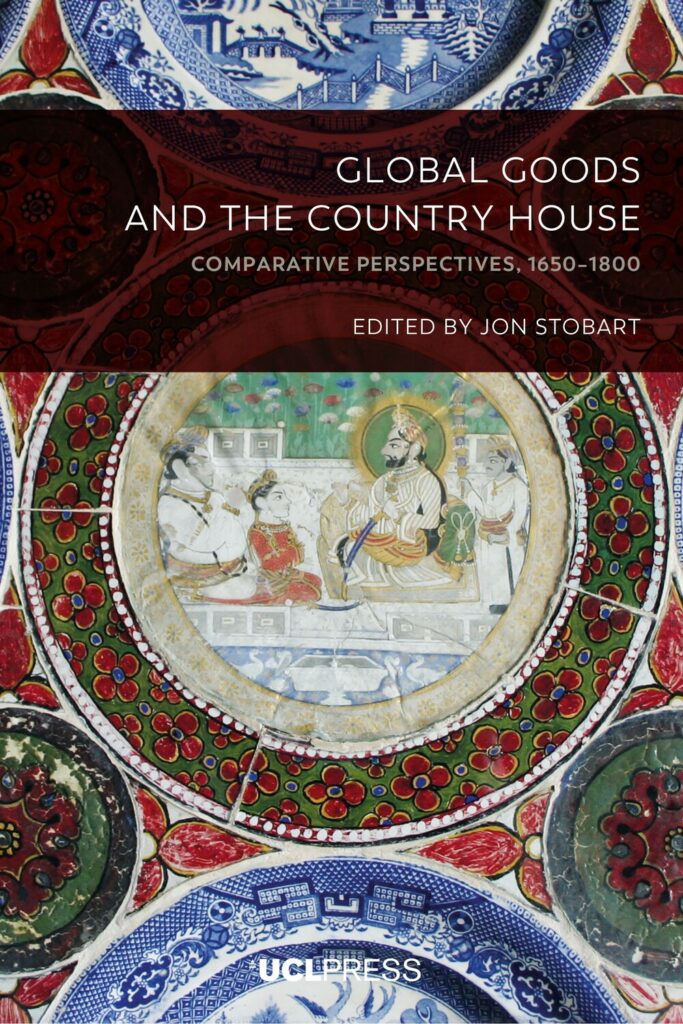
Global goods were central to the material culture of eighteenth-century country houses. Across Europe, mahogany furniture, Chinese wallpapers and Indian textiles formed the backdrop to genteel practices of drinking sweetened coffee, tea and chocolate from Chinese porcelain. They tied these houses and their wealthy owners into global systems of supply and the processes of colonialism and empire.
Global Goods and the Country House builds on these narratives, and then challenges them by decentring our perspective. It offers a comparative framework that explores the definition, ownership and meaning of global goods outside the usual context of European imperial powers. What were global goods and what did they mean for wealthy landowners in places at the ‘periphery’ of Europe (Sweden and Wallachia), in the British colonies of North America and the Caribbean, or in the extra-colonial context (Japan or Rajasthan)? By addressing these questions, this volume offers fresh insights into the multi-directional flow of goods and cultures that enmeshed the eighteenth-century world. And by placing these goods in their specific material context – from the English country house to the princely palaces of Rajasthan – we gain a better understanding of their use and meaning, and of their role in linking the global and the local.