Voices For Change is a groundbreaking history of environmental activism across the UK since the early 1970s, revealed in first-hand testimony by some of those who were most closely involved. It highlights the lived experiences of generations of environmental campaigners engaged in a wide variety of protest, projects and policy during this period, from grassroots actions in local communities to the leadership of major national organisations. The book draws on a unique archive of one hundred in-depth life-history interviews with environmental campaigners involved in action on a wide range of concerns, from conservation and transport to energy and climate change. It situates the experience of activism biographically and historically, exploring the role of family, region, class, ethnicity, gender and generation in the lives of participants in the key campaigns of the period. The voices of campaigners whose contributions have never been widely recognised appear here, alongside some of the most high-profile, including Jonathan Porritt, Caroline Lucas, George Monbiot and Swampy. Together, these voices highlight the achievements and the challenges of activism across more than 50 years, revealing diverse and unsung stories from the movement. Through this focus on life stories, the book provides a vital resource for today’s environmental activists, throwing new light on the diverse origins, forms and impacts of their campaigns.
We are currently upgrading our shopping cart; in the interim all orders are being diverted to Waterstones. If you would like to redeem a promotional code, or are an author wanting to place an order, please email us.
Blog Archives
Ethics and Aesthetics of Translation
Ethics and Aesthetics of Translation engages with translation, in both theory and practice, as part of an interrogation of ethical as well as political thought in the work of three bilingual European authors: Bernardo Atxaga, Milan Kundera and Jorge Semprún. In approaching the work of these authors, the book draws upon the approaches to translation offered by Benjamin, Derrida, Ricœur and Deleuze to highlight a broad set of ethical questions, focused upon the limitations of the monolingual and the democratic possibilities of linguistic plurality; upon our innate desire to translate difference into similarity; and upon the ways in which translation responds to the challenges of individual and collective remembrance.
Each chapter explores these interlingual but also intercultural, interrelational and interdisciplinary issues, mapping a journey of translation that begins in the impact of translation upon the work of each author, continues into moments of linguistic translation, untranslatability and mistranslation within their texts and ultimately becomes an exploration of social, political and affective (un)translatability. In these journeys, the creative and critical potential of translation emerges as a potent, often violent, but always illuminating, vision of the possibilities of differentiation and connection, generation and memory, in temporal, linguistic, cultural and political terms.
Architecture of Memory
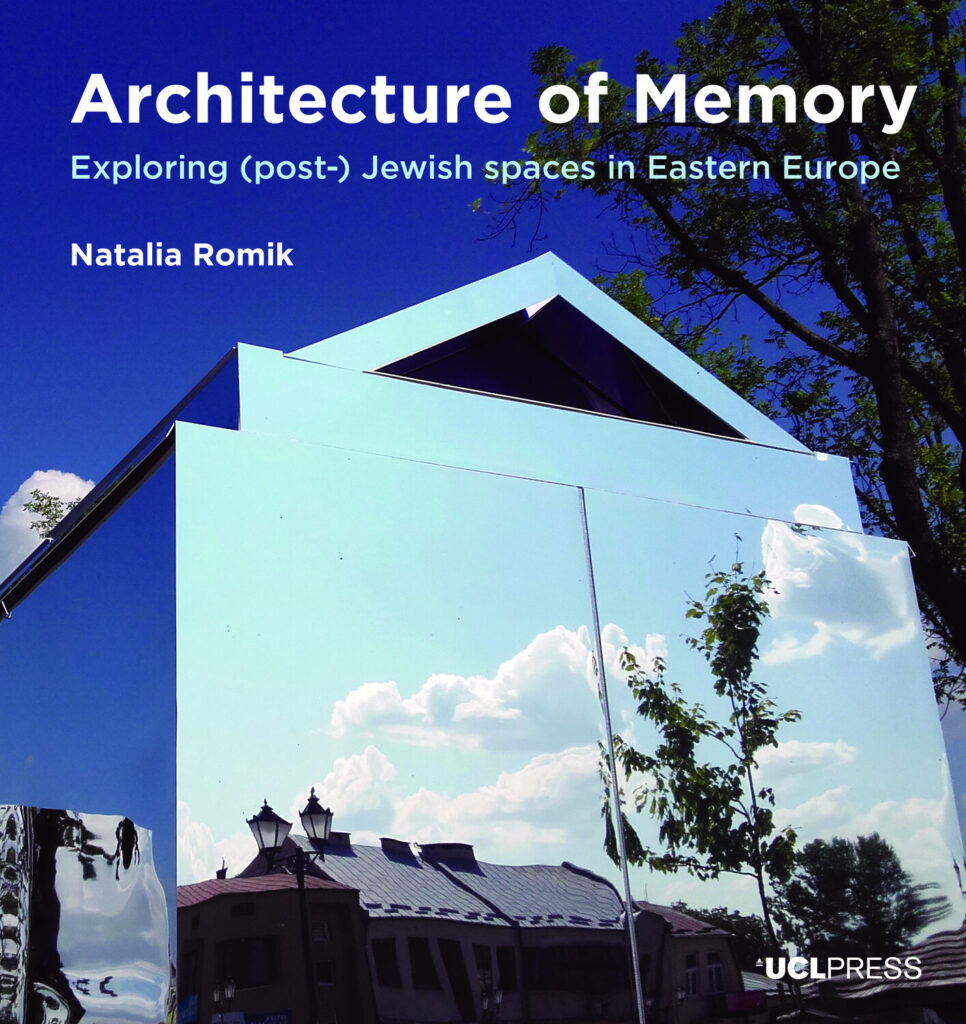
Architecture of Memory explores architectural disappearance, urban remembrance and functional change amid social upheaval. Using archival, architectural and artistic methods, Natalia Romik investigates the spectral architecture of former shtetls – predominantly Jewish towns in Central and Eastern Europe before the Second World War. After the war, these towns were repopulated by people of other nationalities, who reused former Jewish properties. Today, traces of the Jewish populations have nearly vanished from urban reality and public discourse. Romik’s work seeks to discover new ways to develop abandoned shtetl architecture, focusing on Jewish heritage sites like synagogue ruins and ritual baths.
Through an interdisciplinary approach that merges architectural design, contemporary art and Jewish studies, Romik’s experimental research addresses the complex social issues of former shtetls by combining theoretical discussions with artistic performances and architectural interventions. The book documents projects ranging from subtle, mirror-clad interventions – such as the Nomadic Shtetl Archive, JAD, and Hurdy-Gurdy – to practical renovations that transform derelict synagogues and Jewish pre-burial houses into historical museums and cultural centres. These efforts confront the ‘present absence’ of these towns by merging theoretical discourse with archival research, artistic performances and architectural interventions, aimed at investigating the lost Jewish communities’ spectral architecture.
War Essays

More than 20 years have passed since Iraq was invaded in an illegal war, justified on the basis of falsified evidence. Operation Iraqi Freedom led to untold human suffering and massive destruction, the ruinous consequences of which persist to this very day. The war and occupation also had a devastating impact on the history and heritage of Iraq, a land ironically seen as the cradle of civilisation. The scale of theft and destruction of heritage sent shockwaves around the world that had radical consequences for the trade in antiquities and museum practices across the globe, and contributed to a paradigm shift in the discipline of archaeology.
In War Essays Zainab Bahrani charts the devastation, cultural cleansing and targeted erasure of Iraq’s past, and argues that the topics of archaeology, history and memory must be analysed within the larger geopolitical issues of the contemporary Middle East. The essays present a counter-narrative of events that historicize the position of the historian and illustrate the enduring colonial practices of archaeology. Set within a narrative that reflects at once upon the violence of war and the processes of writing, an archaeologist’s personal journey unfolds. War Essays intertwines the autobiographical with the historical and analytical aspects of scholarship, weaving an eye-witness account of war with theoretical discussions around writing, the relationship of monuments, historical landscapes and memory, and how one’s sense of place in the world is disrupted by war.
Space, Affect, Memory
Space, Affect, Memory highlights the centrality of space in modern and contemporary culture, both as an object of study and as a concept that underpins research and creative practice. In so doing, this book argues for the necessity of a new approach to space which integrates its affective and memorial dimension.
Contributors from different fields explore and advance debates in literary geography from diverse transnational perspectives through close readings of canonical and less familiar cultural and literary productions in English, Spanish, Portuguese, French, Italian and Japanese, in locales spanning Africa, the Americas, Asia and Europe. In this way, Space, Affect, Memory decentres the anglophone bias of established scholarly approaches in literary geography, probing terminologies and methodologies from different national traditions.
Finally, Space, Affect, Memory interweaves the visual arts by engaging with photography, performance and architecture. As a result, the volume offers a fresh, comparative perspective on the intermingling of space, affect and memory that lies at the heart of literary geography and comparative literature. These efforts converge in a shared attempt to pluralize the field (geographies) and to showcase the numerous possibilities of creative, transdisciplinary interaction between media, performance and representation, across cultures.
Material Culture and (Forced) Migration
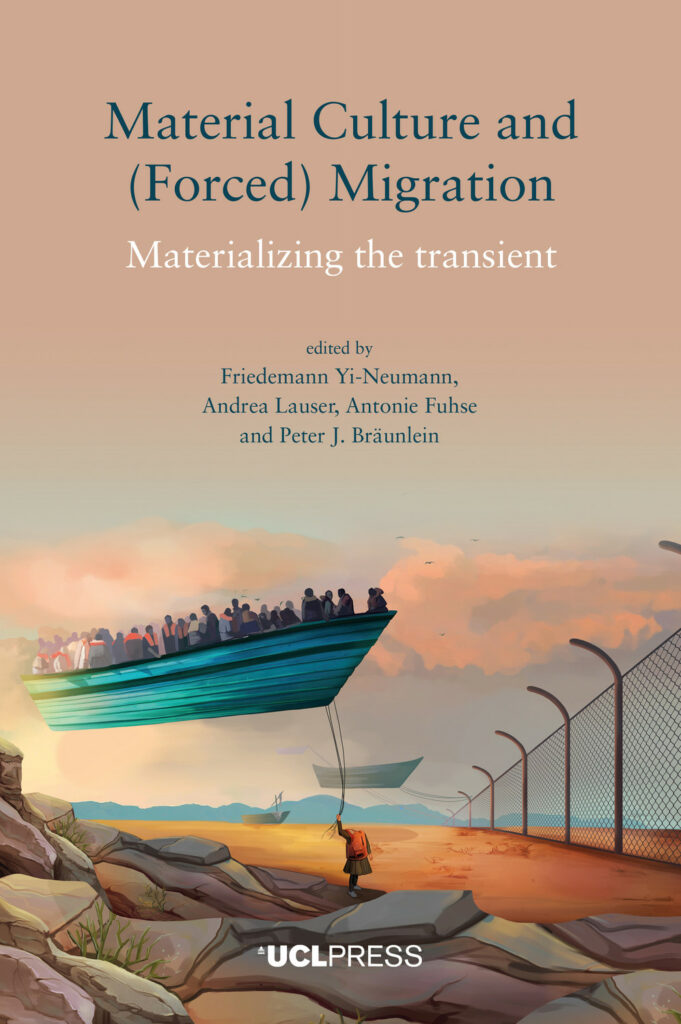
Material Culture and (Forced) Migration argues that materiality is a fundamental dimension of migration. During journeys of migration, people take things with them, or they lose, find and engage things along the way. Movements themselves are framed by objects such as borders, passports, tents, camp infrastructures, boats and mobile phones. This volume brings together chapters that are based on research into a broad range of movements – from the study of forced migration and displacement to the analysis of retirement migration. What ties the chapters together is the perspective of material culture and an understanding of materiality that does not reduce objects to mere symbols.
Centring on four interconnected themes – temporality and materiality, methods of object-based migration research, the affective capacities of objects, and the engagement of things in place-making practices – the volume provides a material culture perspective for migration scholars around the globe, representing disciplines such as anthropology, sociology, contemporary archaeology, curatorial studies, history and human geography. The ethnographic nature of the chapters and the focus on everyday objects and practices will appeal to all those interested in the broader conditions and tangible experiences of migration.
Critical Perspectives on Cultural Memory and Heritage
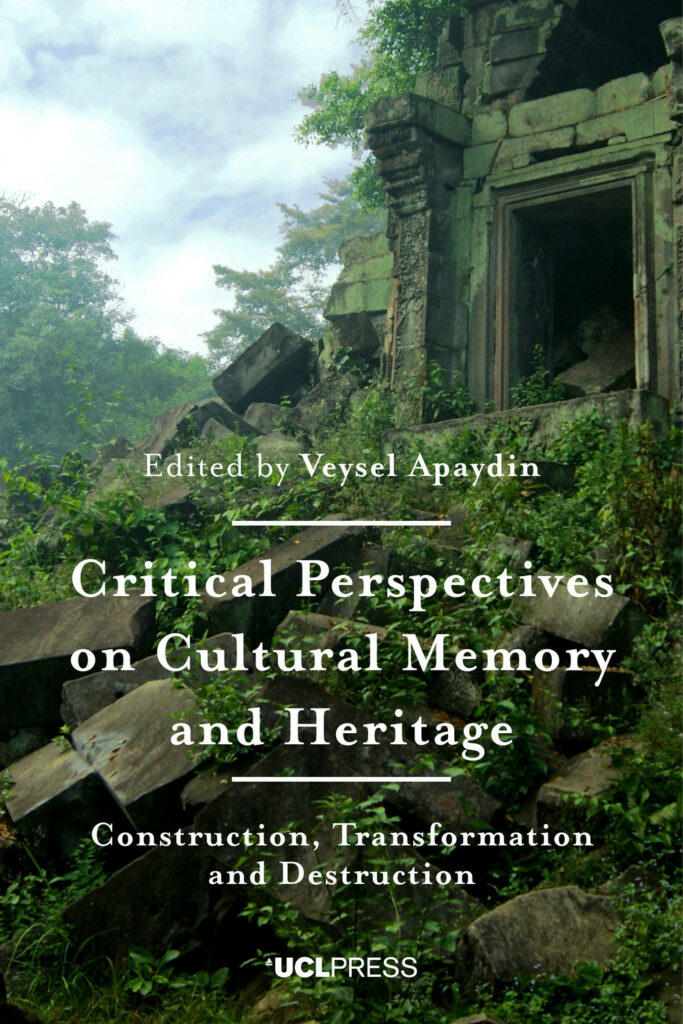
Critical Perspectives on Cultural Memory and Heritage focuses on the importance of memory and heritage for individual and group identity, and for their sense of belonging. It aims to expose the motives and discourses related to the destruction of memory and heritage during times of war, terror, sectarian conflict and through capitalist policies. It is within these affected spheres of cultural heritage where groups and communities ascribe values, develop memories, and shape their collective identity.
Chapters in the volume address cultural memory and heritage from six global perspectives and contexts: first, the relationship between cultural memory and heritage; second, the effect of urban development and large infrastructure on heritage; third, the destruction of indigenous heritage; fourth, the destruction of heritage in relation to erasing memory during sectarian violence and conflict; fifth, the impact of policymaking on cultural heritage assets; and sixth, a broad reflection on the destruction, change and transformation of heritage in an epilogue by Cornelius Holtorf, archaeologist and Chair of Heritage Futures at UNESCO.
The range of sites discussed in the volume – from Australia, Brazil and Syria, to Bosnia, the UK and Taiwan – make it essential reading for researchers in Museum and Heritage Studies, Archaeology and History seeking a global, comprehensive study of cultural memory and heritage.
Central Peripheries
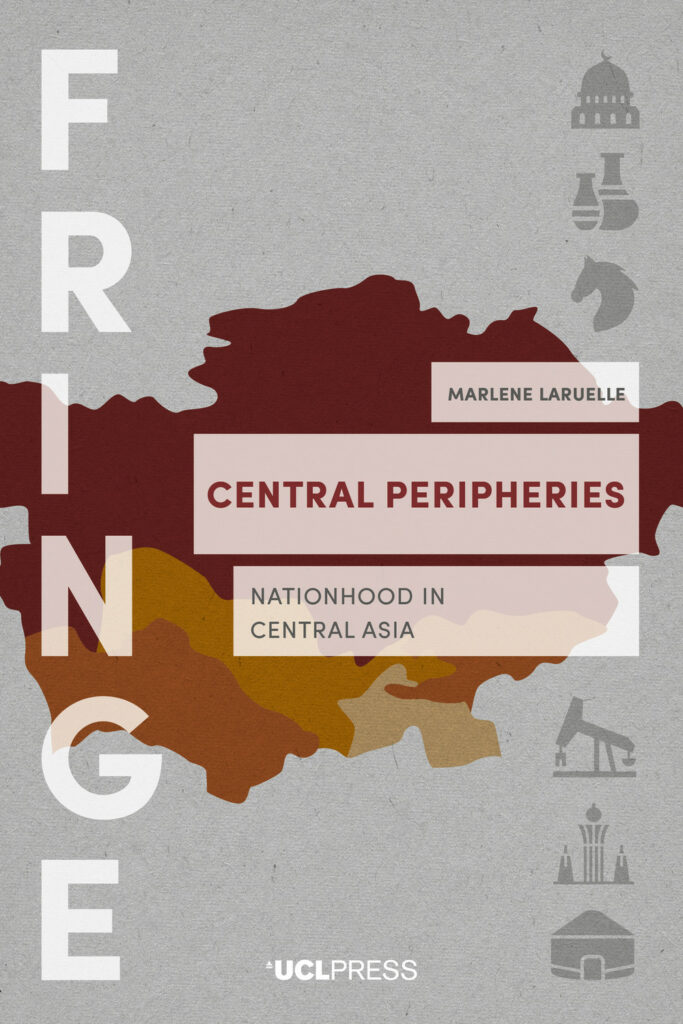
Central Peripheries explores post-Soviet Central Asia through the prism of nation-building. Although relative latecomers on the international scene, the Central Asian states see themselves as globalized, and yet in spite of – or perhaps precisely because of – this, they hold a very classical vision of the nation-state, rejecting the abolition of boundaries and the theory of the ‘death of the nation’. Their unabashed celebration of very classical nationhoods built on post-modern premises challenges the Western view of nationalism as a dying ideology that ought to have been transcended by post-national cosmopolitanism.
Marlene Laruelle looks at how states in the region have been navigating the construction of a nation in a post-imperial context where Russia remains the dominant power and cultural reference. She takes into consideration the ways in which the Soviet past has influenced the construction of national storylines, as well as the diversity of each state’s narratives and use of symbolic politics. Exploring state discourses, academic narratives and different forms of popular nationalist storytelling allows Laruelle to depict the complex construction of the national pantheon in the three decades since independence. The second half of the book focuses on Kazakhstan as the most hybrid national construction and a unique case study of nationhood in Eurasia.
Based on the principle that only multidisciplinarity can help us to untangle the puzzle of nationhood, Central Peripheries uses mixed methods, combining political science, intellectual history, sociology and cultural anthropology. It is inspired by two decades of fieldwork in the region and a deep knowledge of the region’s academia and political environment.
Architecture and Fire
Architecture and Fire develops a conceptual reassessment of architectural conservation through the study of the intimate relationship between architecture and fire. Stamatis Zografos expands on the general agreement among many theorists that the primitive hut was erected around fire – locating fire as the first memory of architecture, at the very beginning of architectural evolution.
Following the introduction, Zografos analyses the archive and the renewed interest in the study of archives through the psychoanalysis of Jacques Derrida. He moves on to explore the ambivalent nature of fire, employing the conflicting philosophies of Gaston Bachelard and Henri Bergson to do so, before discussing architectural conservation and the relationship between listed buildings, the function of archives, and the preservation of memories from the past. The following chapter investigates how architecture evolves by absorbing and accommodating fire, while the penultimate chapter examines the critical moment of architectural evolution: the destruction of buildings by fire, with a focus on the tragic disaster at London’s Grenfell Tower in 2017. Zografos concludes with thoughts on Freud’s drive theory. He argues the practice of architectural conservation is an expression of the life drive and a simultaneous repression of the death drive, which suggests controlled destruction should be an integral part of the conservation agenda.
Architecture and Fire is founded in new interdisciplinary research navigating across the boundaries of architecture, conservation, archival theory, classical mythology, evolutionary theory, thermodynamics, philosophy and psychoanalysis. It will be of interest to readers working in and around these disciplines.
An Anthropology of Landscape
An Anthropology of Landscape tells the fascinating story of a heathland landscape in south-west England and the way different individuals and groups engage with it. Based on a long-term anthropological study, the book emphasises four individual themes: embodied identities, the landscape as a sensuous material form that is acted upon and in turn acts on people, the landscape as contested, and its relation to emotion. The landscape is discussed in relation to these themes as both ‘taskscape’ and ‘leisurescape’, and from the perspective of different user groups. First, those who manage the landscape and use it for work: conservationists, environmentalists, archaeologists, the Royal Marines, and quarrying interests. Second, those who use it in their leisure time: cyclists and horse riders, model aircraft flyers, walkers, people who fish there, and artists who are inspired by it. The book makes an innovative contribution to landscape studies and will appeal to all those interested in nature conservation, historic preservation, the politics of nature, the politics of identity, and an anthropology of Britain.
Sign up to our newsletter
Don't miss out!
Subscribe to the UCL Press newsletter for the latest open access books,
journal CfPs, news and views from our authors and much more!