We are currently upgrading our shopping cart; in the interim all orders are being diverted to Waterstones. If you would like to redeem a promotional code, or are an author wanting to place an order, please email us.

Contact us

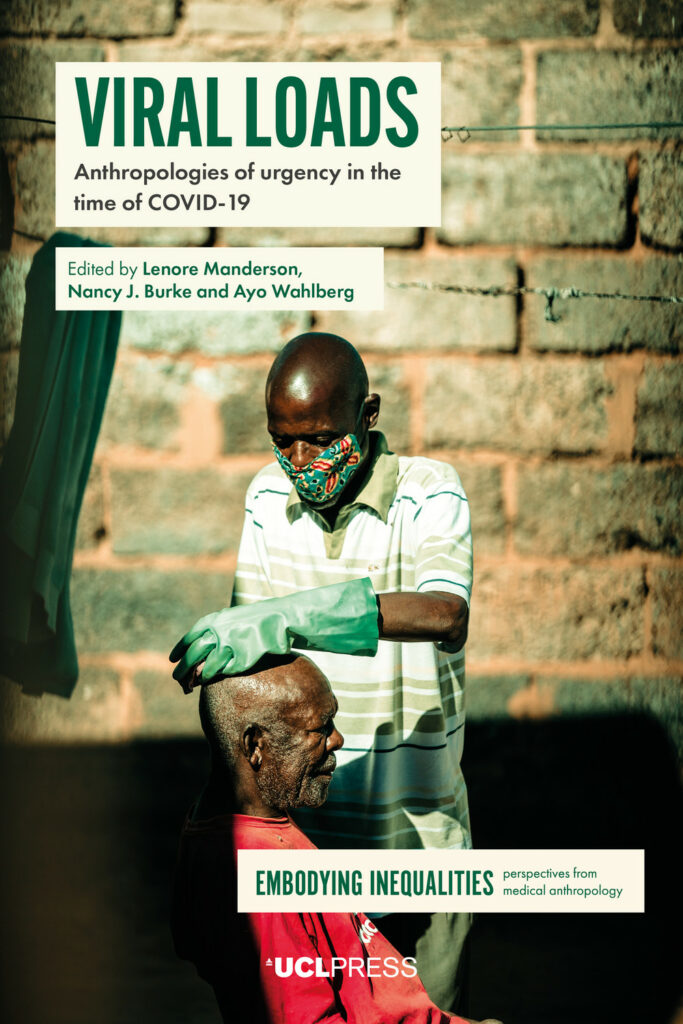
Viral Loads

Drawing upon the empirical scholarship and research expertise of contributors from all settled continents and from diverse life settings and economies, Viral Loads illustrates how the COVID-19 pandemic, and responses to it, lay bare and load onto people’s lived realities in countries around the world.

A crosscutting theme pertains to how social unevenness and gross economic disparities are shaping global and local responses to the pandemic, and illustrate the effects of both the virus and efforts to contain it in ways that amplify these inequalities. At the same time, the contributions highlight the nature of contemporary social life, including virtual communication, the nature of communities, neoliberalism and contemporary political economies, and the shifting nature of nation states and the role of government. Over half of the world’s population has been affected by restrictions of movement, with physical distancing requirements and self-isolation recommendations impacting profoundly on everyday life but also on the economy, resulting also, in turn, with dramatic shifts in the economy and in mass unemployment.

By reflecting on how the pandemic has interrupted daily lives, state infrastructures and healthcare systems, the contributing authors in this volume mobilise anthropological theories and concepts to locate the pandemic in a highly connected and exceedingly unequal world. The book is ambitious in its scope – spanning the entire globe – and daring in its insistence that medical anthropology must be a part of the growing calls to build a new world.

Violent Affections

Violent Affections uncovers techniques of power that work to translate emotions into violence against queer people. Based on analysis of over 300 criminal cases of anti-queer violence in Russia before and after the introduction of ‘gay propaganda’ law, the book shows how violent acts are framed in emotional language by perpetrators during their criminal trials. It then utilises an original methodology of studying ‘legal memes’ and argues that these individual affective states are directly connected to the political violence aimed at queer lives more generally.

The main aim of Violent Affections is to explore the social mechanisms and techniques that impact anti-queer violence evidenced in the reviewed cases. Alexander Sasha Kondakov expands upon two sets of interdisciplinary literature – queer theory and affect theory – in order to conceptualise what is referred to as neo-disciplinary power. Taking the empirical observations from Russia as a starting point, he develops an original explanation of how contemporary power relations are changing from those of late modernity as envisioned by Foucault’s Panopticon to neo-disciplinary power relations of a much more fragmented, fluid and unstructured kind – the Memeticon.
The book traces how exactly affections circulate from body to body as a kind of virus and eventually invade the body that responds with violence. In this analytic effort, it draws on the arguments from memetics – the theory of how pieces of information pass on from one body to another as they thrive to survive by continuing to resonate. This work makes the argument truly interdisciplinary.
Urban Childhoods

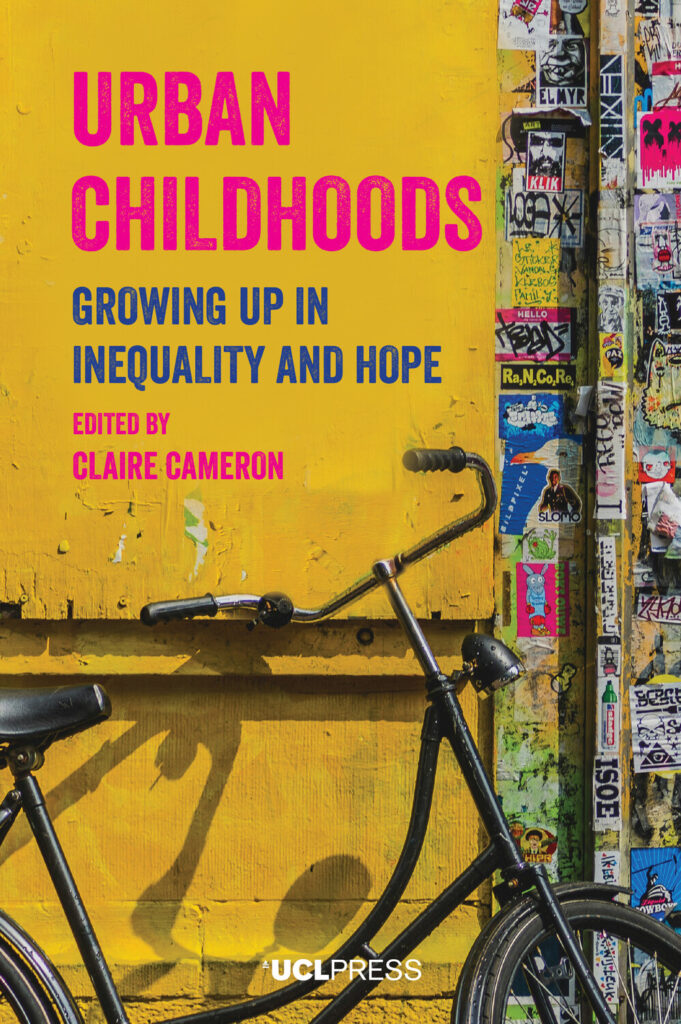
Growing up in English inner cities today is a distinctive experience: deprivation and poverty are intense, while social and cultural diversity enriches everyday life. Urban Childhoods puts children’s and families’ voices centre stage while investigating ways of bringing children’s wellbeing to the fore in planning for urban life today and tomorrow.

Children’s wellbeing starts from what children themselves find important: reliable relationships, plenty to do, especially outdoors, and having a say in their lives. Organised around three main themes of place, provisioning and infrastructure, the book brings together key concepts from critical childhood studies, urban studies and public health to argue that, used together, these approaches offer a dynamic framework for considering urban childhood. Chapters are linked to a major prevention programme that ran between 2019 and 2025 in the northern city of Bradford and the London Borough of Tower Hamlets. They investigate spaces to play outdoors, reclaiming school streets, child poverty, economic support for child wellbeing via families, and provision for under threes. A number of strategies also feature, including support for mothers’ mental health, resolving overcrowding, involving children in making better school food, and increasing community participation in co-creating health and wellbeing. Each chapter has sections on inequality of experience, voices of children, families and professionals who work with them, and hopeful courses of action, including potential policy actions. The whole builds into a blueprint for an urgently needed thriving urban childhood.

Structural Injustice and the Law

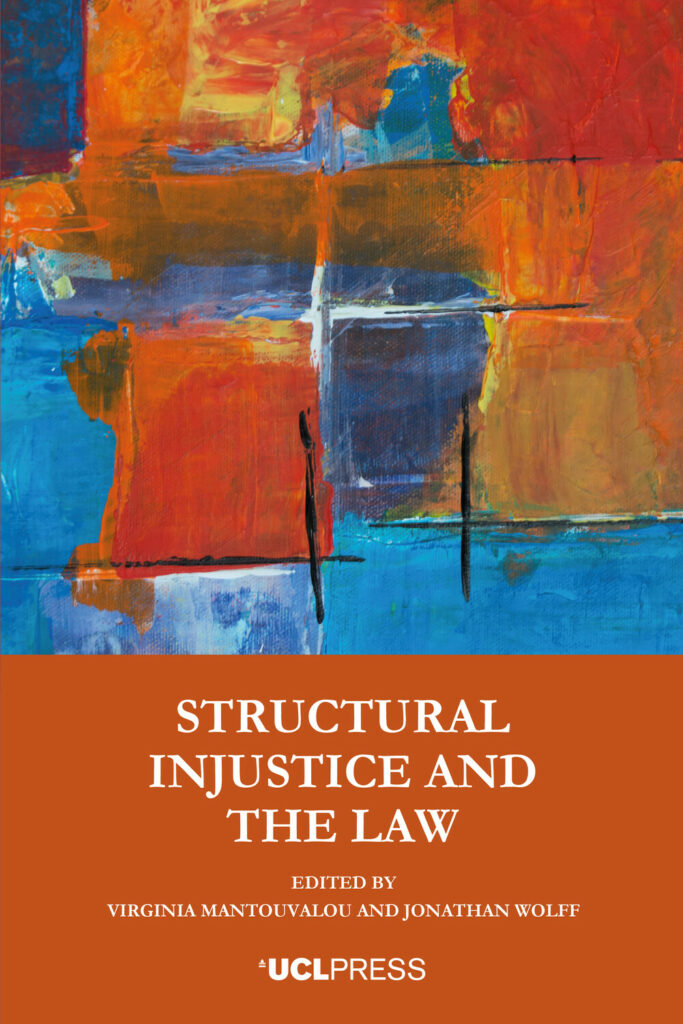
Cover of the book ‘Structural Injustice and the Law’ edited by Virginia Mantouvalou and Jonathan Wolff, published by UCL Press. The artwork on the cover displays an abstract composition with dynamic blocks of color in shades of blue, orange, red, and yellow, with visible brushstrokes adding texture. The upper portion of the background is a deep blue, which gradually transitions to a vivid orange towards the bottom. The book’s title and editors’ names are prominently displayed in white text over the colourful background.

In developing her conception of structural injustice, Iris Marion Young made a strict distinction between large-scale collective injustice that results from the normal functions of a society, and the more familiar concepts of individual wrong and deliberate state repression. Her ideas have attracted considerable attention in political philosophy, but legal theorists have been slower to consider the relation between structural injustice and legal analysis. While some forms of vulnerability to structural injustice can be the unintended consequences of legal rules, the law also has potential instruments to alleviate some forms of structural injustice.

Structural Injustice and the Law presents theoretical approaches and concrete examples to show how the concept of structural injustice can aid legal analysis, and how legal reform can, in practice, reduce or even eliminate some forms of structural injustice. A group of outstanding law and political philosophy scholars discuss a comprehensive range of interdisciplinary topics, including the notion of domination, equality and human rights law, legal status, sweatshop labour, labour law, criminal justice, domestic homicide reviews, begging, homelessness, regulatory public bodies and the films of Ken Loach. Drawn together, they build an invaluable resource for legal theorists exploring how to make use of the concept of structural injustice, and for political philosophers looking for a nuanced account of the law’s role both in creating and mitigating structural injustice.

Packaged Plants

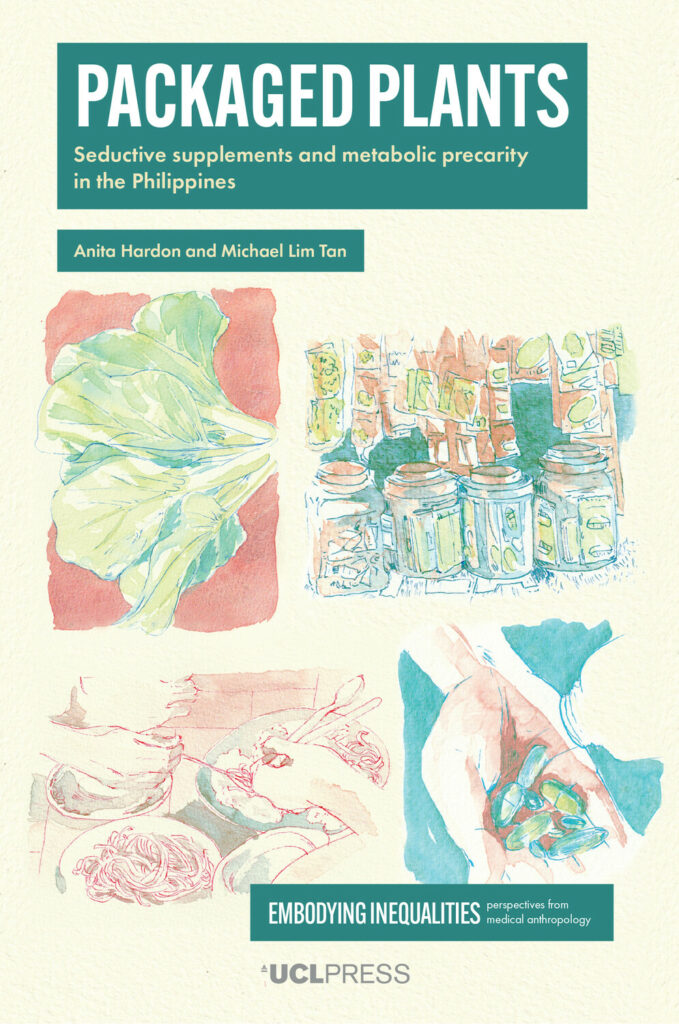
The cover of the book ‘Packaged Plants: Seductive supplements and metabolic precarity in the Philippines’ by Anita Hardon and Michael Lim Tan features water colour illustrations of various objects related to nutrition and health supplements.

Packaged Plants offers an absorbing ethnography and cultural history of how the production and consumption of plants for food and medicine has gone through ‘metabolic rifts’, increasingly processed into commodities with adverse impact on health and aggravating existing economic and social inequities. The book also describes ultra-processed foods that are linked to metabolic syndrome, including cardiovascular disease, diabetes and obesity.

Divided into three parts, the first part presents a comprehensive historical analysis of the socio-metabolic shifts leading to the loss of plant sovereignty in the Philippines. It scrutinizes colonial influences, urbanization, nutritional policies, scientific research programs and neoliberal marketing strategies that have paved the way for the proliferation of packaged plant-based products passed as food or medicines. The second part delves into contemporary socio-metabolic dynamics within Puerto Princesa, interweaving urban political ecology frameworks with medical anthropological perspectives. It elucidates the precarious circumstances of daily life in a boomtown, compelling individuals to invest in supplements and engage in resource-intensive multi-level marketing endeavours.

The third and final part sheds light on efforts to reclaim plant sovereignty, including a resurgence of backyard farming in response to food insecurity exacerbated by the COVID-19 pandemic. Through meticulous research and insightful analysis, Packaged Plants offers a compelling exploration of the intersectionality between health, economics and environment in the Filipino context.

Managing Chronicity in Unequal States

By portraying the circumstances of people living with chronic conditions in radically different contexts, from Alzheimer’s patients in the UK to homeless people with psychiatric disorders in India, Managing Chronicity in Unequal States offers glimpses of what dealing with medically complex conditions in stratified societies means. While in some places the state regulates and intrudes on the most intimate aspects of chronic living, in others it is utterly and criminally absent. Either way, it is a present/absent actor that deeply conditions people’s opportunities and strategies of care.

This book explores how individuals, groups and communities navigate uncertain and unequal healthcare systems, in which inherent moral judgements on human worth have long-lasting effects on people’s wellbeing. This is key reading for anyone wishing to deconstruct the issues at stake when analysing how care and chronicity are entangled with multiple institutional, economic, and other circumstantial factors. How people access the available informal and formal resources as well as how they react to official diagnoses and decisions are important facets of the management of chronicity.

In the arena of care, people with chronic conditions find themselves negotiating restrictions and handling issues of power and (inter)dependency in relationships of inequality and proximity. This is particularly relevant in current times, when care has given in to the lure of the market, and the possibility of living a long and fulfilling life has been drastically reduced, transformed into a ‘reward’ for the few who have been deemed worthy of it.

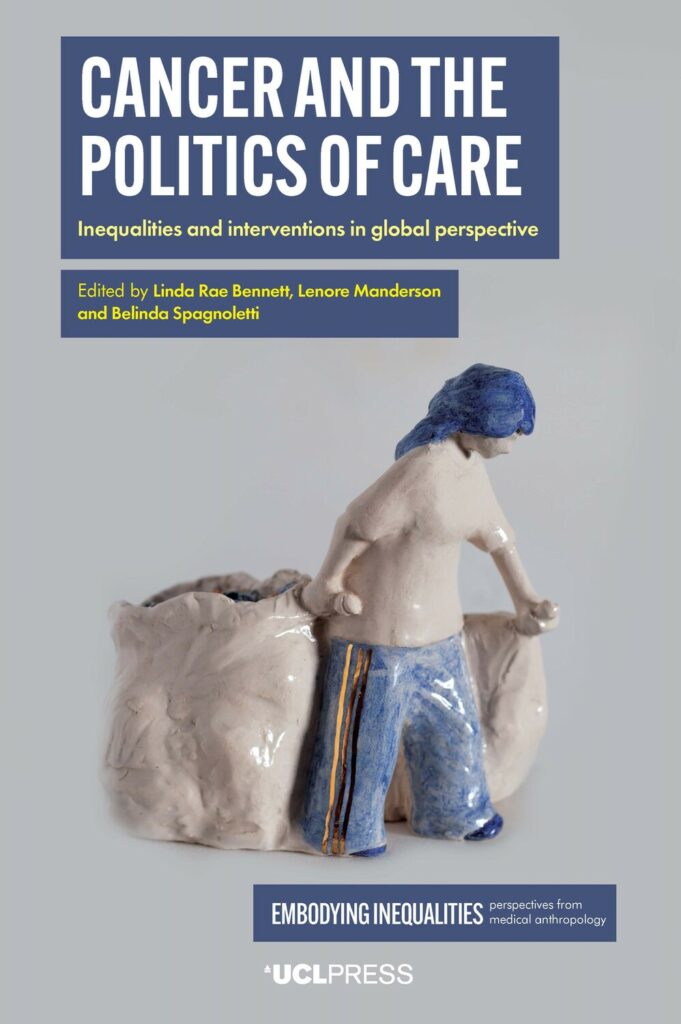
Cancer and the Politics of Care

This timely volume responds to the epic impacts of cancer as a global phenomenon. Through the fine-grained lens of ethnography, the contributors present new thinking on how social, economic, race, gender and other structural inequalities intersect, compound and complicate health inequalities. Cancer experiences and impacts are explored across eleven countries: Argentina, Brazil, Denmark, France, Greece, India, Indonesia, Italy, Senegal, the United Kingdom and the United States. The volume engages with specific cancers from the point of primary prevention, to screening, diagnosis, treatment (or its absence), and end-of-life care.

Cancer and the Politics of Care traverses new theoretical terrain through explicitly critiquing cancer interventions, their limitations and success, the politics that drive them, and their embeddedness in local cultures and value systems. It extends prior work on cancer, by incorporating the perspectives of patients and their families, ‘at risk’ groups and communities, health professionals, cancer advocates and educators, and patient navigators.
The volume advances cross-cultural understandings of care, resisting simple dichotomies between caregiving and receiving, and reveals the fraught ethics of care that must be negotiated in resource-poor settings and stratified health systems. Its diversity and innovation ensures its wide utility among those working in and studying medical anthropology, social anthropology and other fields at the intersections of social science, medicine and health equity.

Sign up to our newsletter

Don't miss out!
Subscribe to the UCL Press newsletter for the latest open access books,
journal CfPs, news and views from our authors and much more!