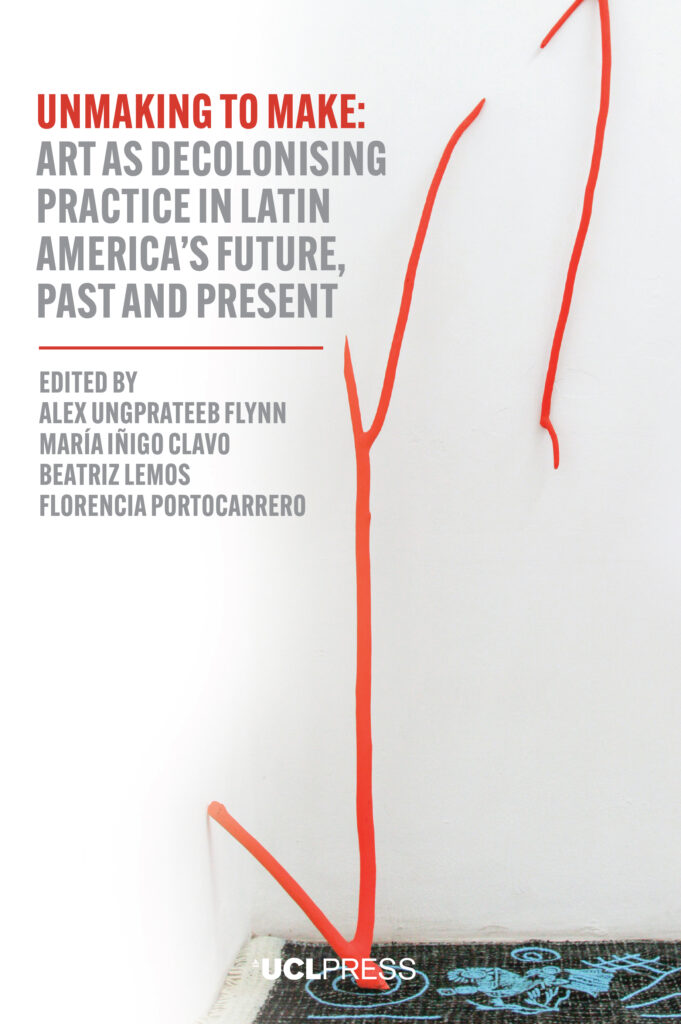
Unmaking to Make

The call to decolonise has become one of the dominant forces in contemporary art – yet its most radical possibilities are routinely absorbed and neutralised by the institutions of the Global North. Unmaking to Make intervenes in this impasse by turning to Latin America, centring Afro-diasporic and Indigenous perspectives from a region where artistic practice operates at the intersection of aesthetics, politics and social life, and whose thinkers and practitioners have long theorised decolonisation from within.

Drawing on essays, curatorial reflections and conversations with contributors from Argentina, Bolivia, Brazil, Chile, Cuba, Ecuador, Guatemala, Martinique, Mexico and Peru, the volume moves across four thematic terrains – counter-genealogies, museums and cultural institutions, the decolonisation of language, and plural temporalities – to show how art unsettles colonial narratives, reshapes knowledge and generates new vocabularies of power.

At its core, the volume makes a bold claim: that Latin American artistic practice is not just transforming the canon but articulating a form of thought – one that theorises, enacts and insists upon other worlds. Essential reading for scholars, curators, artists and students of contemporary art, decolonial thought and Latin American cultural politics.
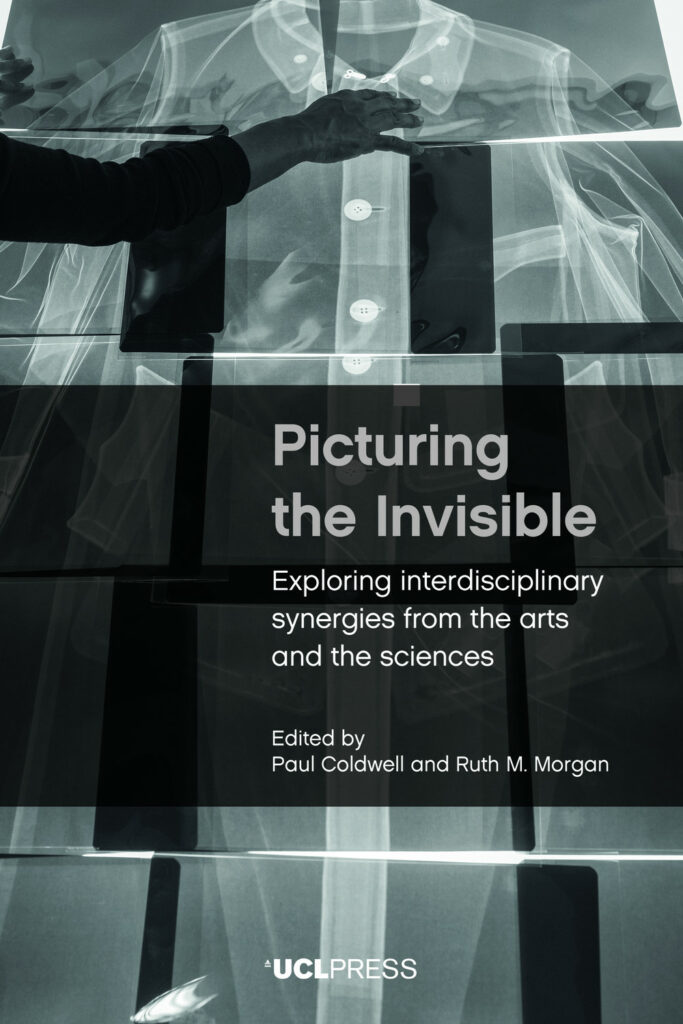
Picturing the Invisible

Picturing the Invisible presents different disciplinary approaches to articulating the invisible, that which is not known or that which is not provable. The challenge that we have seen is how to articulate these concepts, not only to those within a particular academic field but beyond, to other disciplines and society at large. As our understanding of the complexity of the world grows incrementally, so does our realisation that issues and problems can rarely be resolved within neat demarcations. Therefore, the importance of finding means of communicating across disciplines and fields becomes a priority. Whilst acknowledging the essential importance of the specialist academic, the capacity to understand other disciplines, their priorities, methodologies and even the language used can become crucial in being an effective instrument for change.
This book brings together insights from leading academics from a wide range of disciplines including Art and Design, Curatorial Practice, Literature, Forensic Science, Fashion, Medical Science, Psychoanalysis and Psychotherapy, Philosophy, Astrophysics and Architecture with a shared interest in exploring how, in each discipline, we strive to find expression for the invisible or unknown, and to draw out and articulate some of the explicit and tacit ways of communicating those concepts that transcends traditional disciplinary boundaries.

Sign up to our newsletter

Don't miss out!
Subscribe to the UCL Press newsletter for the latest open access books,
journal CfPs, news and views from our authors and much more!