Violent Affections

Violent Affections uncovers techniques of power that work to translate emotions into violence against queer people. Based on analysis of over 300 criminal cases of anti-queer violence in Russia before and after the introduction of ‘gay propaganda’ law, the book shows how violent acts are framed in emotional language by perpetrators during their criminal trials. It then utilises an original methodology of studying ‘legal memes’ and argues that these individual affective states are directly connected to the political violence aimed at queer lives more generally.

The main aim of Violent Affections is to explore the social mechanisms and techniques that impact anti-queer violence evidenced in the reviewed cases. Alexander Sasha Kondakov expands upon two sets of interdisciplinary literature – queer theory and affect theory – in order to conceptualise what is referred to as neo-disciplinary power. Taking the empirical observations from Russia as a starting point, he develops an original explanation of how contemporary power relations are changing from those of late modernity as envisioned by Foucault’s Panopticon to neo-disciplinary power relations of a much more fragmented, fluid and unstructured kind – the Memeticon.
The book traces how exactly affections circulate from body to body as a kind of virus and eventually invade the body that responds with violence. In this analytic effort, it draws on the arguments from memetics – the theory of how pieces of information pass on from one body to another as they thrive to survive by continuing to resonate. This work makes the argument truly interdisciplinary.
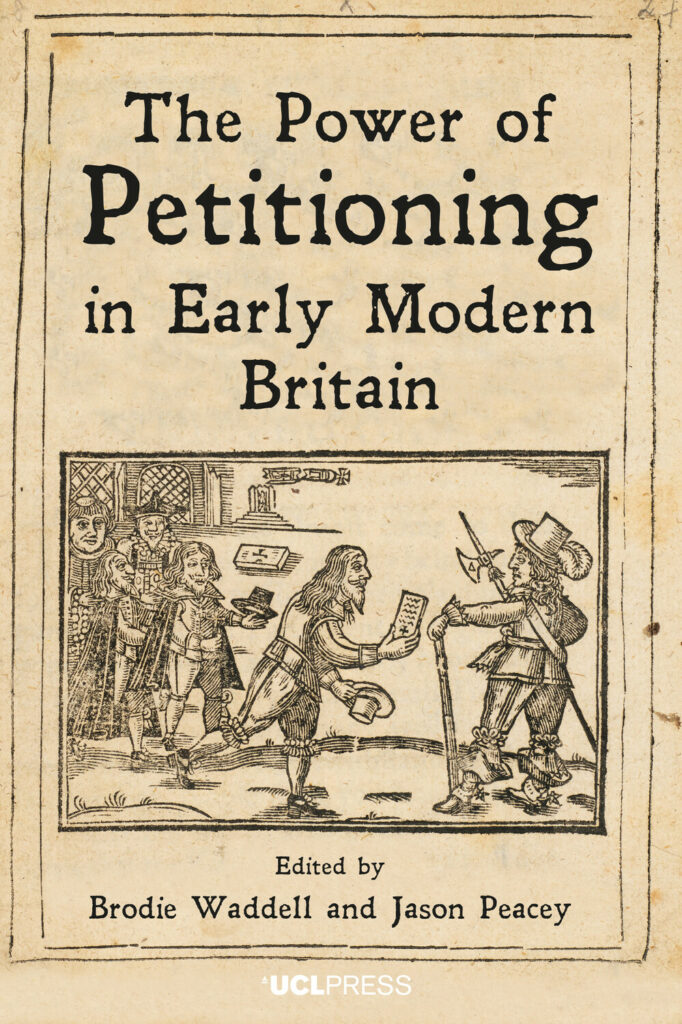
The Power of Petitioning in Early Modern Britain

The ‘humble petition’ was ubiquitous in early modern society and featured prominently in crucial moments such as the outbreak of the civil wars and in everyday local negotiations about taxation, welfare and litigation. People at all levels of society – from noblemen to paupers – used petitions to make their voices heard and these are valuable sources for mapping the structures of authority and agency that framed early modern society.

The Power of Petitioning in Early Modern Britain offers a holistic study of this crucial topic in early modern British history. The contributors survey a vast range of sources, showing the myriad ways people petitioned the authorities from the sixteenth to the eighteenth centuries. They cross the jurisdictional, sub-disciplinary and chronological boundaries that have otherwise constrained the current scholarly literature on petitioning and popular political engagement. Teasing out broad conclusions from innumerable smaller interventions in public life, they not only address the aims, attitudes and strategies of those involved, but also assesses the significance of the processes they used. This volume makes it possible to rethink the power of petitioning and to re-evaluate broad trends regarding political culture, institutional change and state formation.

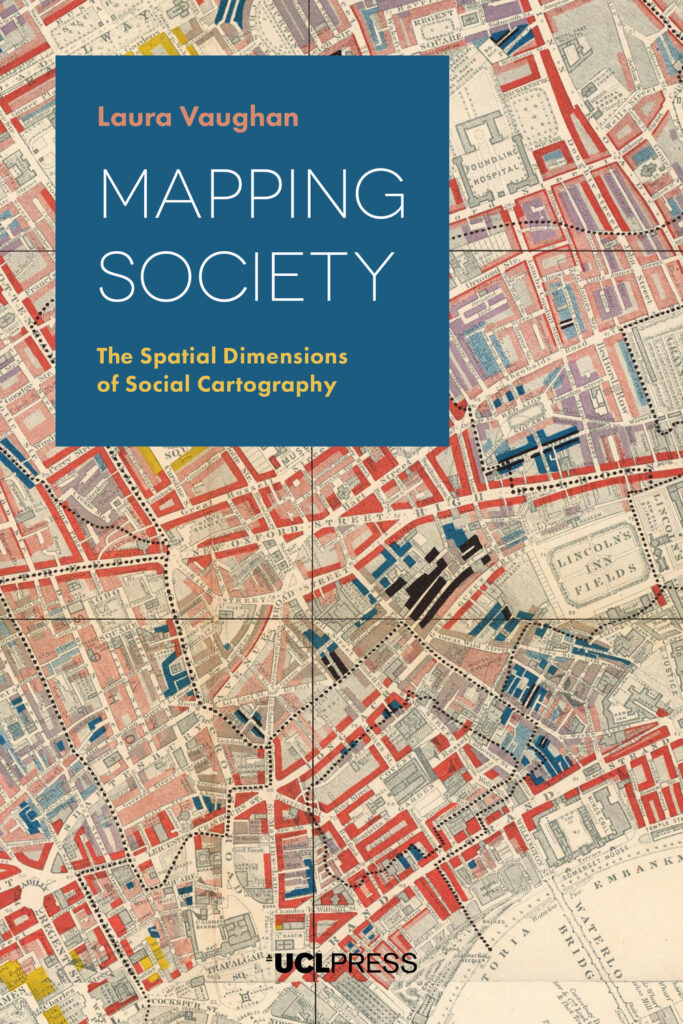
Mapping Society

From a rare map of yellow fever in eighteenth-century New York, to Charles Booth’s famous maps of poverty in nineteenth-century London, an Italian racial zoning map of early twentieth-century Asmara, to a map of wealth disparities in the banlieues of twenty-first-century Paris, Mapping Society traces the evolution of social cartography over the past two centuries. In this richly illustrated book, Laura Vaughan examines maps of ethnic or religious difference, poverty, and health inequalities, demonstrating how they not only serve as historical records of social enquiry, but also constitute inscriptions of social patterns that have been etched deeply on the surface of cities.

The book covers themes such as the use of visual rhetoric to change public opinion, the evolution of sociology as an academic practice, changing attitudes to physical disorder, and the complexity of segregation as an urban phenomenon. While the focus is on historical maps, the narrative carries the discussion of the spatial dimensions of social cartography forward to the present day, showing how disciplines such as public health, crime science, and urban planning, chart spatial data in their current practice. Containing examples of space syntax analysis alongside full colour maps and photographs, this volume will appeal to all those interested in the long-term forces that shape how people live in cities.

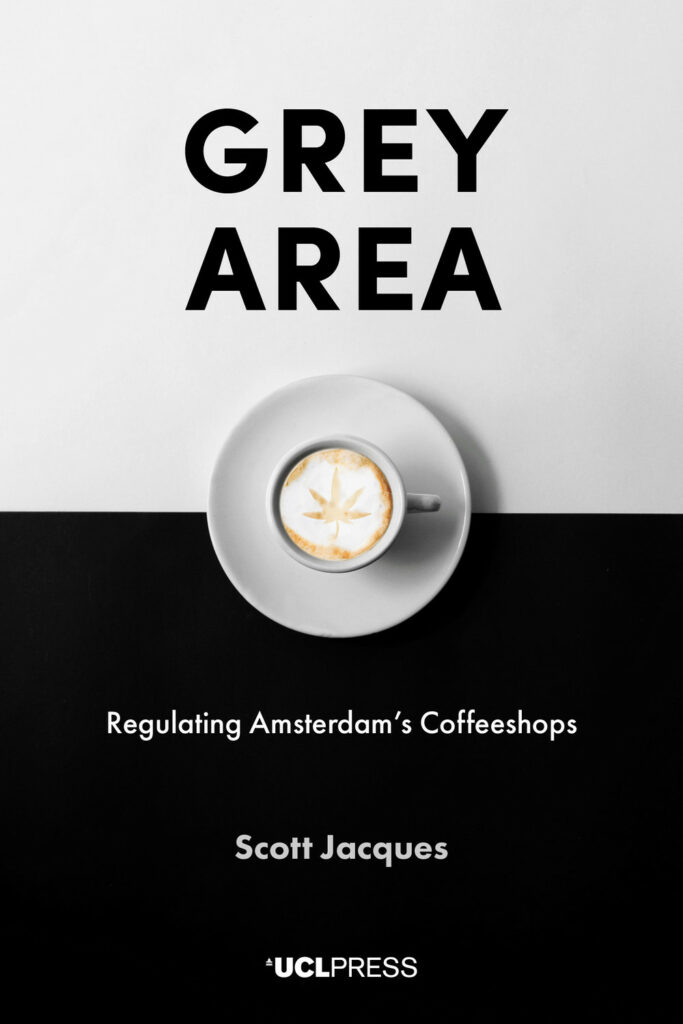
Grey Area

Coffeeshops are the most famous example of Dutch tolerance. But in fact, these cannabis distributors are highly regulated. Coffeeshops are permitted to break the law, but not the rules. On the premises, there cannot be minors, hard drugs or more than 500 grams. Nor can a coffeeshop advertise, cause nuisance or sell over five grams to a person in a day. These rules are enforced by surprise police checks, with violation punishable by closure.

In Grey Area, Scott Jacques examines the regulations with a huge stash of data, which he collected during two years of fieldwork in Amsterdam. How do coffeeshop owners and staff obey the rules? How are the rules broken? Why so? To what effect? The stories and statistics show that order in the midst of smoke is key to Dutch drug policy, vaporising the idea that prohibition is better than regulation. Grey Area is a timely contribution in light of the blazing reform to cannabis policy worldwide.

Sign up to our newsletter

Don't miss out!
Subscribe to the UCL Press newsletter for the latest open access books,
journal CfPs, news and views from our authors and much more!