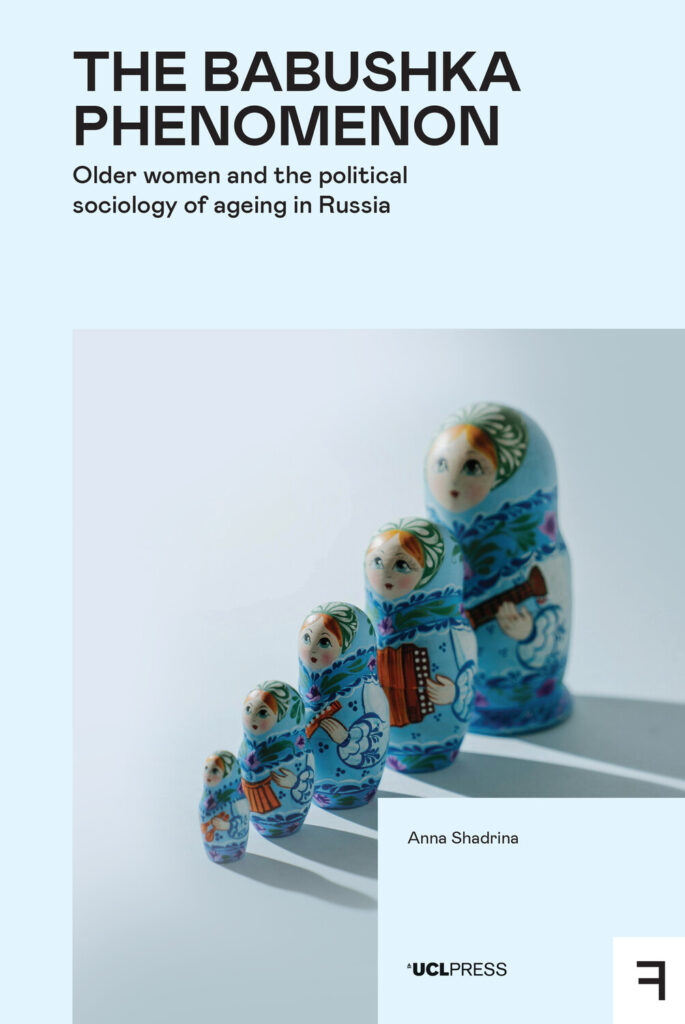
The Babushka Phenomenon examines the social production of ageing in post-Soviet Russia, highlighting the role of grandmothers as primary caregivers due to men’s traditional estrangement from family life. This expectation places grandmothers, or babushkas, in a position where they prioritise childcare and housework over their careers, making them unpaid family carers reliant on the state and their children.
Anna Shadrina situates older Russian women’s experiences within the post-Soviet redefinition of the nation, analysing their portrayal in popular media and biographical narratives of women aged 60 and over in Russia and the UK. It addresses class and racial disparities, noting how some women outsource family duties to less qualified women, and emphasises age as a significant but overlooked axis of social inequality. From a feminist perspective, the book explores citizenship as both a status and a practice of inclusion and exclusion. By focusing on older women’s rights to participate in private and public spheres, it discusses the new social inequalities that emerged after the USSR’s collapse. Despite prioritising others’ interests, older Russian women actively engage in economic citizenship, though their struggles for recognition are often excluded from formal economy and politics.