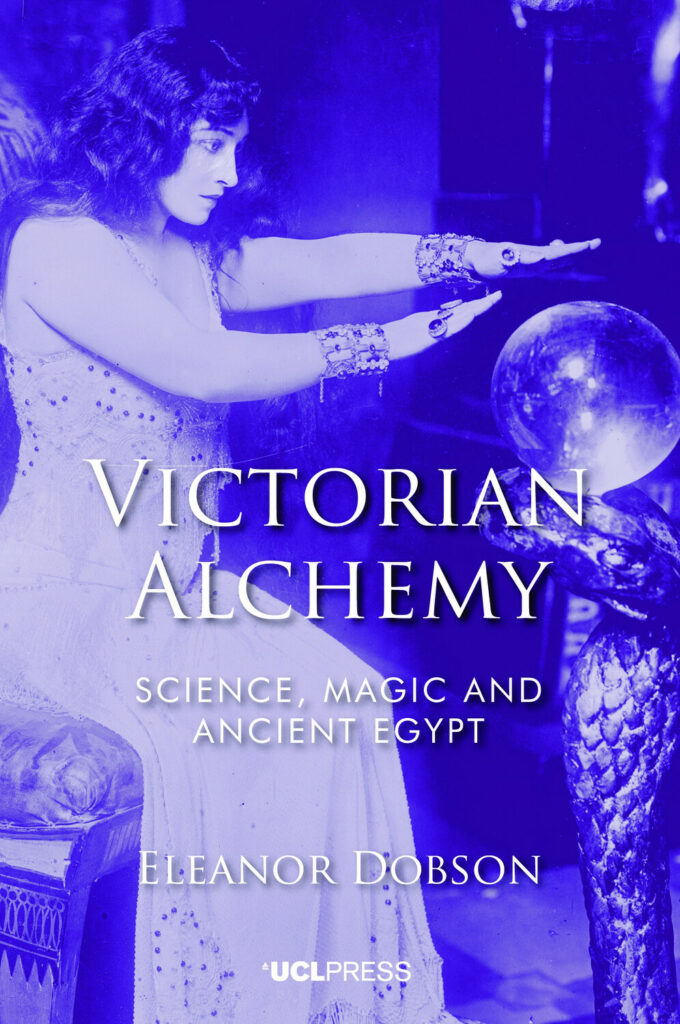
Victorian Alchemy

Victorian Alchemy explores nineteenth-century conceptions of ancient Egypt as this extant civilisation was being ‘rediscovered’ in the modern world. With its material remnants somewhat paradoxically symbolic of both antiquity and modernity (in the very currentness of Egyptological excavations), ancient Egypt was at once evocative of ancient magical power and of cutting-edge science, a tension that might be productively conceived of as ‘alchemical’. Allusions to ancient Egypt simultaneously lent an air of legitimacy to depictions of the supernatural while projecting a sense of enchantment onto representations of cutting-edge science.

Examining literature and other cultural forms including art, photography and early film, Eleanor Dobson traces the myriad ways in which magic and science were perceived as entwined, and ancient Egypt evoked in parallel with various fields of study, from imaging technologies and astronomy, to investigations into the electromagnetic spectrum and the human mind itself. In so doing, counter to linear narratives of nineteenth-century progress, and demonstrating how ancient Egypt was more than a mere setting for Orientalist fantasies or nightmares, the book establishes how conceptions of modernity were inextricably bound up in the contemporary reception of the ancient world, and suggests how such ideas that took root and flourished in the Victorian era persist to this day.
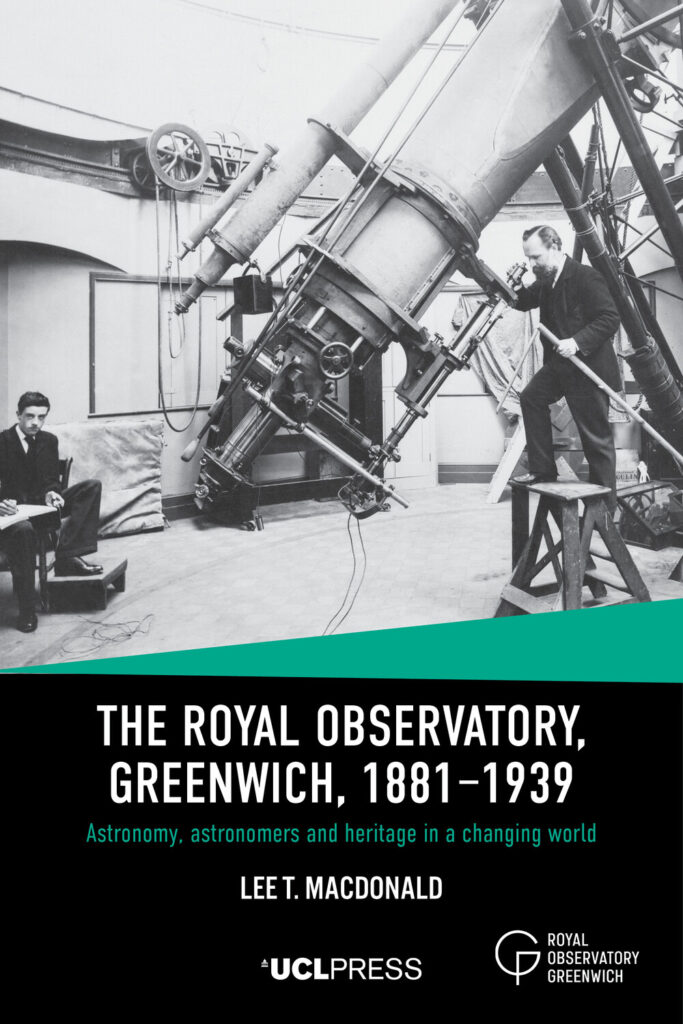
The Royal Observatory, Greenwich, 1881–1939

Between the late nineteenth century and the outbreak of the Second World War, astronomy underwent a radical change, from a science centred on the positional measurement of stars to the study of astrophysics and the universe. This book tells the story of the Royal Observatory at Greenwich from 1881 to 1939, charting a hitherto under-researched period of its history and bringing its management to life.

Using a wealth of primary-source research in the Royal Observatory’s archives and elsewhere, Lee T. Macdonald describes and analyses how the Observatory, originally founded in 1675 to tackle the problem of finding longitude at sea, branched out into areas at the cutting edge of astronomical research, including photographic mapping of the sky and the study of solar eclipses. He shows how the Observatory remained committed to the traditional missions in navigational and positional astronomy, and how its work became increasingly challenged by the growth of London, culminating in relocation. The story is a valuable exemplar of how a working observatory gradually transformed into a heritage institution, which thrives to this day.

The Royal Observatory, Greenwich, 1881–1939 will be essential reading for astronomers and historians of science, and important for heritage professionals, particularly those working in historic scientific institutions.

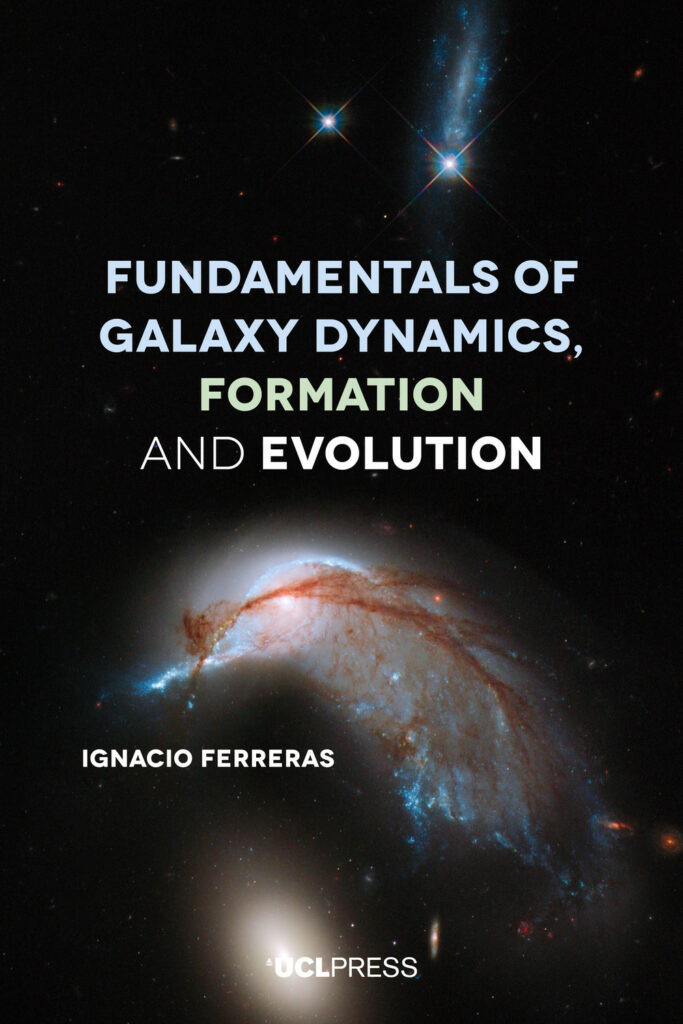
Fundamentals of Galaxy Dynamics, Formation and Evolution

Galaxies, along with their underlying dark matter halos, constitute the building blocks of structure in the Universe. Of all fundamental forces, gravity is the dominant one that drives the evolution of structures from small density seeds at early times to the galaxies we see today. The interactions among myriads of stars, or dark matter particles, in a gravitating structure produce a system with fascinating connotations to thermodynamics, with some analogies and some fundamental differences.

Ignacio Ferreras presents a concise introduction to extragalactic astrophysics, with emphasis on stellar dynamics, and the growth of density fluctuations in an expanding Universe. Additional chapters are devoted to smaller systems (stellar clusters) and larger ones (galaxy clusters). Fundamentals of Galaxy Dynamics, Formation and Evolution is written for advanced undergraduates and beginning postgraduate students, providing a useful tool to get up to speed in a starting research career. Some of the derivations for the most important results are presented in detail to enable students appreciate the beauty of maths as a tool to understand the workings of galaxies. Each chapter includes a set of problems to help the student advance with the material.

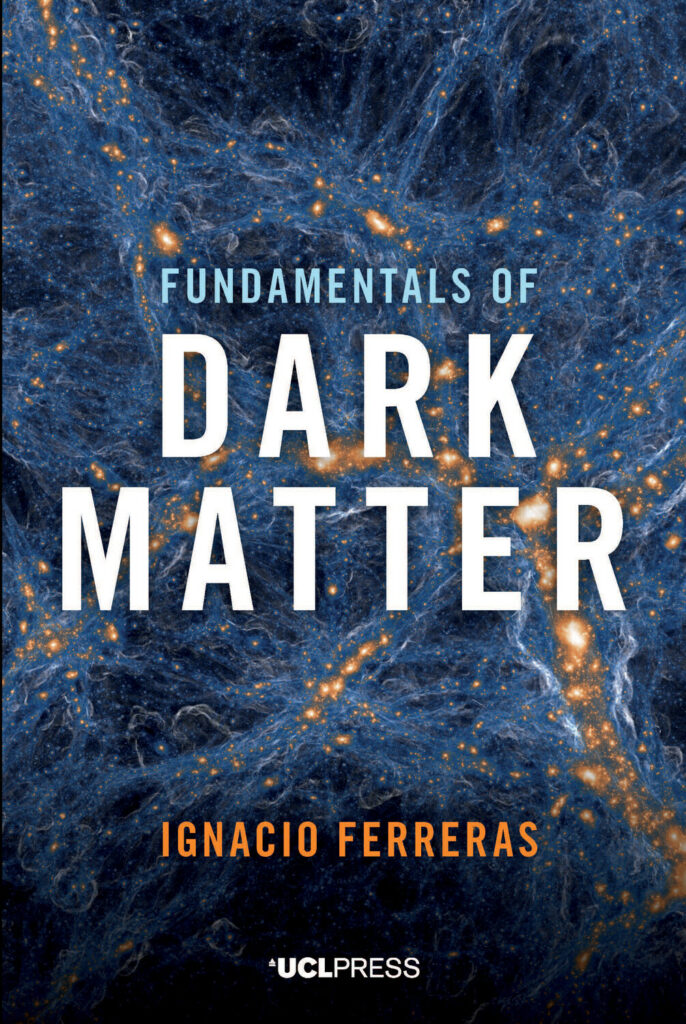
Fundamentals of Dark Matter

Drawing on the experience of the author, this textbook focuses on pedagogy that guides students through the facts regarding dark matter, but also encourages questions and critical examination of what is known, through thought-provoking exercises under the heading “How about…?” in each chapter. Each chapter includes learning outcomes, discussion questions and classroom exercises.

The book guides students through the first challenges in galactic astrophysics that led to the hypothesis of dark matter; the subsequent detailed studies of large-scale structure and cosmic microwave background that unequivocally identifies this component as a fundamental one; and the latest developments in our understanding of galaxy formation.

The material can be used as the main textbook for a dedicated module on dark matter. It can also be adopted to support a general course on extragalactic astrophysics and cosmology.

Sign up to our newsletter

Don't miss out!
Subscribe to the UCL Press newsletter for the latest open access books,
journal CfPs, news and views from our authors and much more!