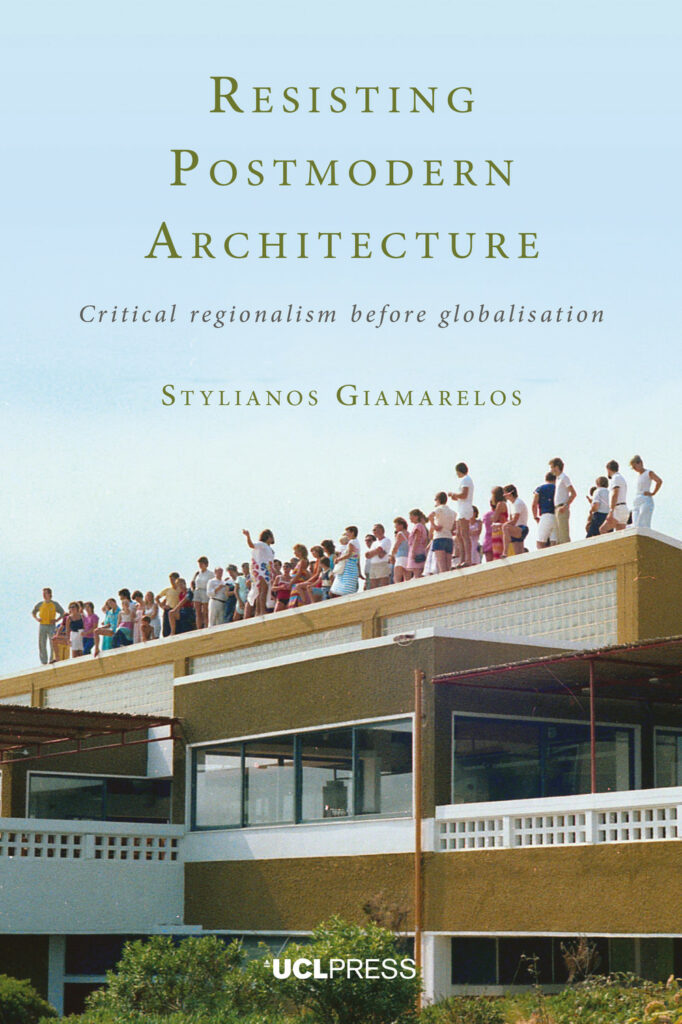
Resisting Postmodern Architecture

Since its first appearance in 1981, critical regionalism has enjoyed a celebrated worldwide reception. The 1990s increased its pertinence as an architectural theory that defends the cultural identity of a place resisting the homogenising onslaught of globalisation. Today, its main principles (such as acknowledging the climate, history, materials, culture and topography of a specific place) are integrated in architects’ education across the globe. But at the same time, the richer cross-cultural history of critical regionalism has been reduced to schematic juxtapositions of ‘the global’ with ‘the local’.

Retrieving both the globalising branches and the overlooked cross-cultural roots of critical regionalism, Resisting Postmodern Architecture resituates critical regionalism within the wider framework of debates around postmodern architecture, the diverse contexts from which it emerged, and the cultural media complex that conditioned its reception. In so doing, it explores the intersection of three areas of growing historical and theoretical interest: postmodernism, critical regionalism and globalisation.

Based on more than 50 interviews and previously unpublished archival material from six countries, the book transgresses existing barriers to integrate sources in other languages into anglophone architectural scholarship. In so doing, it shows how the ‘periphery’ was not just a passive recipient, but also an active generator of architectural theory and practice. Stylianos Giamarelos challenges long-held ‘central’ notions of supposedly ‘international’ discourses of the recent past, and outlines critical regionalism as an unfinished project apposite for the 21st century on the fronts of architectural theory, history and historiography.
Developing a Sense of Place

How do cultural planners and policymakers work through the arts to create communities? What do artists need to build a sense of place in their community? To discuss these issues, Developing a Sense of Place brings together new models and case studies, each drawn from a specific geographical or socio-cultural context.

Selected for their lasting effect in their local community, the case studies explore new models for opening up the relationship between the university and its regional partners, explicitly connecting creative, critical and theoretical approaches to civic development. The volume has three sections: Case Studies of Place-Making; Models and Methods for Developing Place-Making Through the Arts; and Multidisciplinary Approaches to Place and Contested Identities. The sections cover regions in the UK such as Bedford, East Anglia, Edinburgh, Manchester, London, Plymouth and Wakefield, and internationally in countries such as Brazil, Turkey and Zimbabwe.

Developing a Sense of Place offers a range of viewpoints from, for example, the arts strategist, the academic, the practice-researcher and the artist. Through its innovative models, from performing arts to architectural design, the volume will serve the needs and interests of arts and cultural policy managers, master planners and arts workers, as well as students of Human Geography, Cultural Planning, Business and the Creative Industries, and Arts Administration, at undergraduate and postgraduate level.

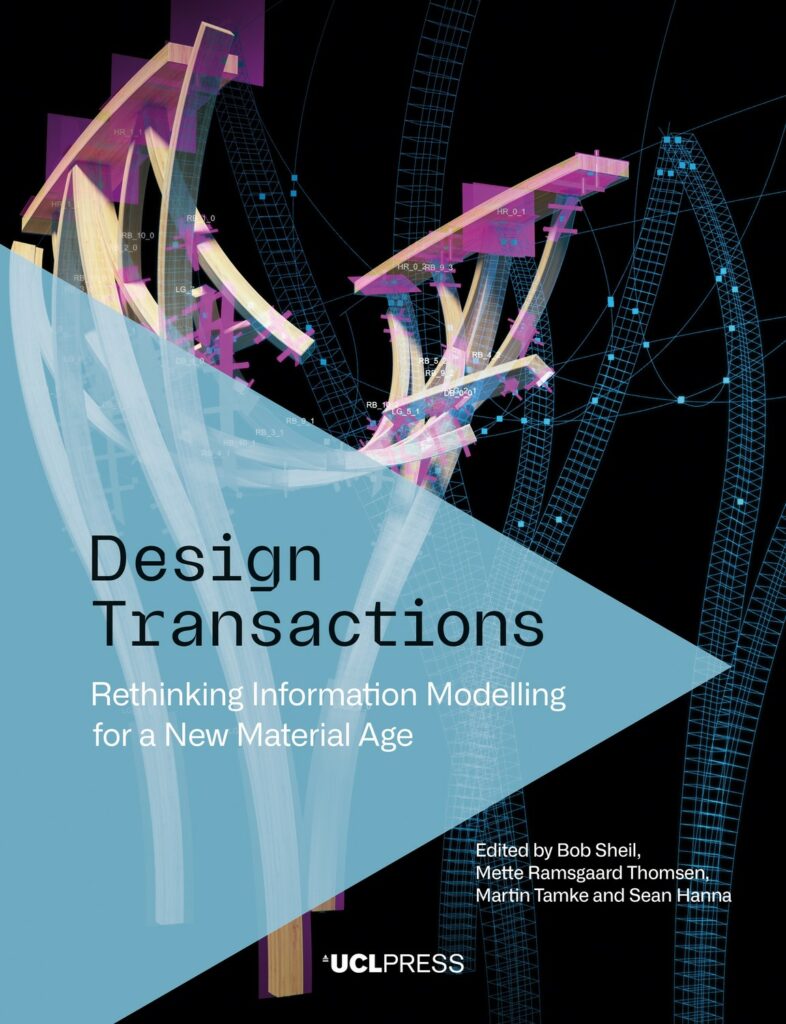
Design Transactions

Design Transactions presents the outcome of new research to emerge from ‘Innochain’, a consortium of six leading European architectural and engineering-focused institutions and their industry partners. The book presents new advances in digital design tooling that challenge established building cultures and systems. It offers new sustainable and materially smart design solutions with a strong focus on changing the way the industry thinks, designs, and builds our physical environment.

Divided into sections exploring communication, simulation and materialisation, Design Transactions explores digital and physical prototyping and testing that challenges the traditional linear construction methods of incremental refinement. This novel research investigates ‘the digital chain’ between phases as an opportunity for extended interdisciplinary design collaboration. The highly illustrated book features work from 15 early-stage researchers alongside chapters from world-leading industry collaborators and academics.

Sign up to our newsletter

Don't miss out!
Subscribe to the UCL Press newsletter for the latest open access books,
journal CfPs, news and views from our authors and much more!