
Publication date: 24 September 2024
DOI: https://doi.org/10.14324/111.9781800087088
Number of illustrations: 28

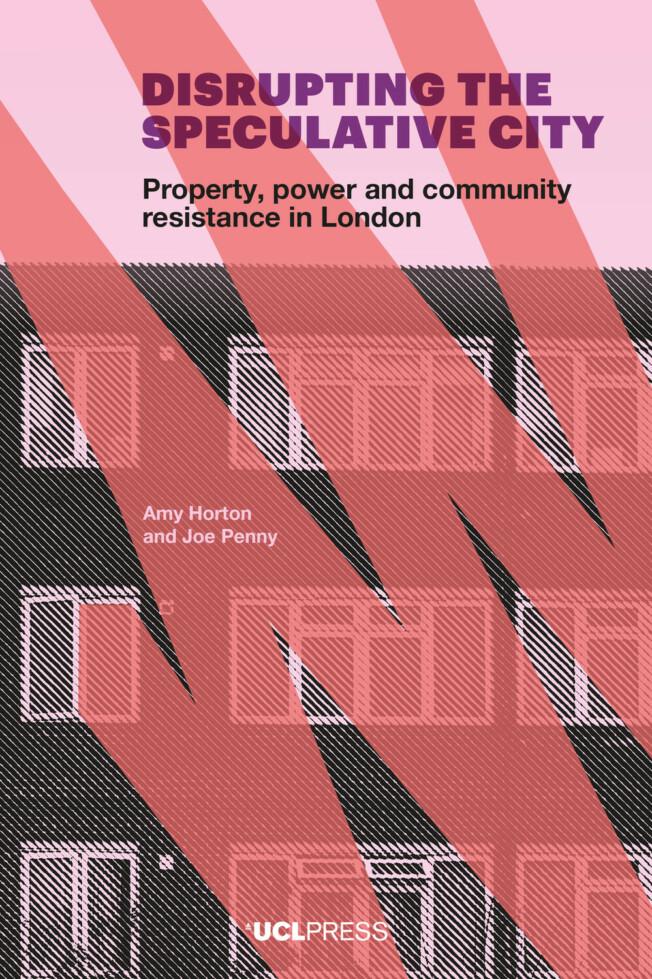
Disrupting the Speculative City
Property, power and community resistance in London
Amy Horton (Author), Joe Penny (Author)
In 2011, police violence triggered an uprising in Tottenham that laid bare decades of neglect and state violence against the area’s racialised communities. In its aftermath, local leaders and corporate developers devised an aggressive redevelopment agenda that would have demolished the homes, workspaces and communities of thousands of council tenants, private renters and traders. Their plan was to transform Tottenham and surrounding areas from a diverse working-class place to a space for wealthy investors, residents and consumers.
Available as a free open access download and in print, Disrupting the Speculative City tells the story of how a community coalition defeated one of the most ambitious programmes of state-led gentrification in London. Known as the ‘Haringey Development Vehicle’ (HDV), it would have been executed through an undemocratic and speculative joint venture between the local council and the notorious international developer Lendlease. Thanks to the political creativity, tactical nous and extraordinary commitment of ordinary people, the HDV was scrapped by the local council in 2018. Drawing on the accounts of those at the heart of the struggle and analysing crucial developments in property investment, local statecraft and grassroots organising, this book explores a significant and inspirational success for campaigners in London, where social cleansing has become the default outcome of redevelopment.
List of figures
List of tables
Acknowledgements
Note on authorship
Timeline of key events
1 Introduction
Part I: The speculative city
2 Conception: reactionary urban policy after the 2011 uprisings
3 Creation: the urban politics of the speculative city
Part II: Disrupting the speculative city
4 Opposition: building grassroots power
5 Disruption: tactics in and against the local real estate state
6 Conclusion: beyond the speculative city?
Appendix: key tactics against speculative redevelopment
References
Index
DOI: 10.14324/111.9781800087088
Number of illustrations: 28
Publication date: 24 September 2024
PDF ISBN: 9781800087088
EPUB ISBN: 9781800087118
Hardback ISBN: 9781800087101
Paperback ISBN: 9781800087095
Amy Horton (Author)
Amy Horton is Associate Professor in Economic Geography at UCL.
Joe Penny (Author)
Joe Penny is Associate Professor in Global Urbanism at the UCL Urban Laboratory.
‘As a contribution to planning scholarship and practice, Disrupting the Speculative City succeeds by maintaining conceptual clarity while grounding it in institutional detail. Academics will find a carefully theorized account of financialized governance; policymakers will recognize the institutional pressures described; and practitioners will gain insight into how residents interpret and contest redevelopment. The book’s value lies in showing that speculation is a political project that planners and communities have the capacity to disrupt’
Journal of the American Planning Association
‘This book successfully combines rigorous research and political clarity. Through their chronicle of an important urban struggle in North London, the authors speak to broader issues about power, politics and development. The book will be of interest to students and scholars of urban planning, urban geography and social movements, as well as to anyone trying to understand the contradictions of urbanism today.’
David Madden, LSE
‘This important book narrates how a grassroots campaign successfully fought off one of the most appalling mega-gentrification schemes in London. It makes clear that the fight was not simply political – Momentum versus New Labour in Haringey – but a coming together of a broad coalition of people who used practices and tactics that will be of real value in other anti-gentrification struggles locally, nationally and globally.’
Loretta Lees, Boston University
‘Disrupting the Speculative City represents an inspirational major contribution to urban regeneration scholarship in relation to understanding how and why grassroots’ activists were able to successfully mount the StopHDV campaign in north London.’
Paul Watt, LSE
Related titles
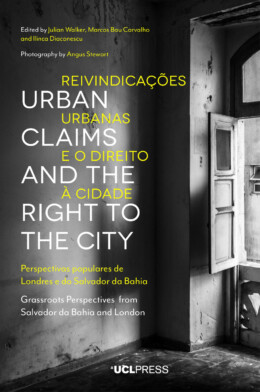
Urban Claims and the Right to the City
Julian Walker, Marcos Bau Carvalho, Ilinca Diaconescu,
16 March 2020
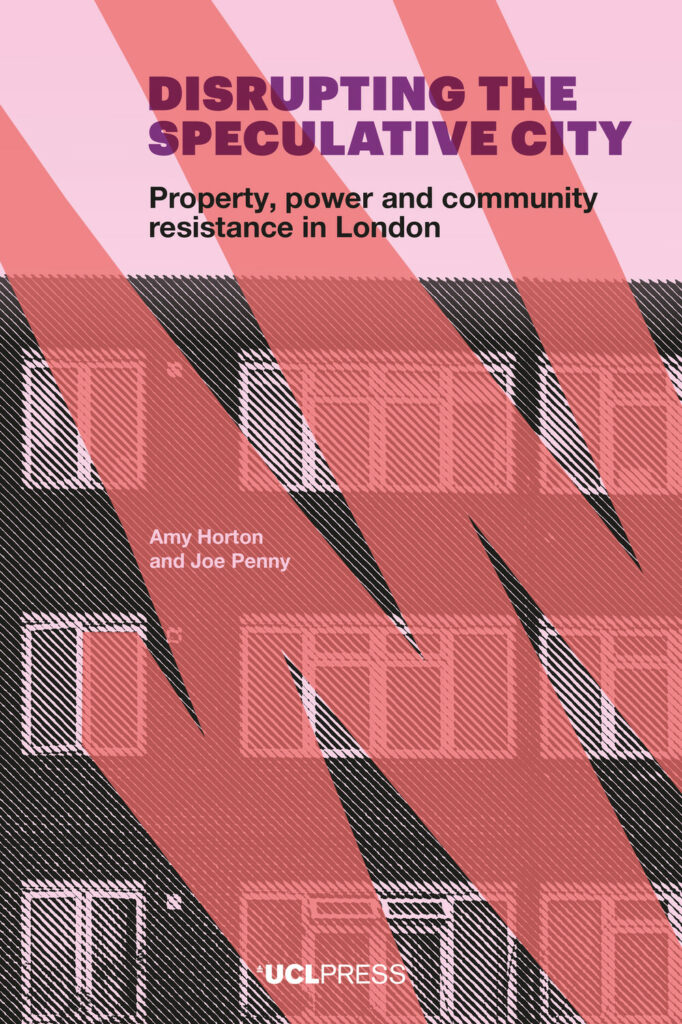
Disrupting the Speculative City
Property, power and community resistance in London
Publication date: September 24, 2024
Open Access PDF ISBN: 9781800087088
Paperback ISBN: 9781800087095
Hardback ISBN: 9781800087101
Trim size (hardback): 23.4cm x 15.6cm
Trim size (paperback): 23.4cm x 15.6cm
In 2011, police violence triggered an uprising in Tottenham that laid bare decades of neglect and state violence against the area’s racialised communities. In its aftermath, local leaders and corporate developers devised an aggressive redevelopment agenda that would have demolished the homes, workspaces and communities of thousands of council tenants, private renters and traders. Their plan was to transform Tottenham and surrounding areas from a diverse working-class place to a space for wealthy investors, residents and consumers.
Available as a free open access download and in print, Disrupting the Speculative City tells the story of how a community coalition defeated one of the most ambitious programmes of state-led gentrification in London. Known as the ‘Haringey Development Vehicle’ (HDV), it would have been executed through an undemocratic and speculative joint venture between the local council and the notorious international developer Lendlease. Thanks to the political creativity, tactical nous and extraordinary commitment of ordinary people, the HDV was scrapped by the local council in 2018. Drawing on the accounts of those at the heart of the struggle and analysing crucial developments in property investment, local statecraft and grassroots organising, this book explores a significant and inspirational success for campaigners in London, where social cleansing has become the default outcome of redevelopment.
‘As a contribution to planning scholarship and practice, Disrupting the Speculative City succeeds by maintaining conceptual clarity while grounding it in institutional detail. Academics will find a carefully theorized account of financialized governance; policymakers will recognize the institutional pressures described; and practitioners will gain insight into how residents interpret and contest redevelopment. The book’s value lies in showing that speculation is a political project that planners and communities have the capacity to disrupt’
Journal of the American Planning Association
‘This book successfully combines rigorous research and political clarity. Through their chronicle of an important urban struggle in North London, the authors speak to broader issues about power, politics and development. The book will be of interest to students and scholars of urban planning, urban geography and social movements, as well as to anyone trying to understand the contradictions of urbanism today.’
David Madden, LSE
‘This important book narrates how a grassroots campaign successfully fought off one of the most appalling mega-gentrification schemes in London. It makes clear that the fight was not simply political – Momentum versus New Labour in Haringey – but a coming together of a broad coalition of people who used practices and tactics that will be of real value in other anti-gentrification struggles locally, nationally and globally.’
Loretta Lees, Boston University
‘Disrupting the Speculative City represents an inspirational major contribution to urban regeneration scholarship in relation to understanding how and why grassroots’ activists were able to successfully mount the StopHDV campaign in north London.’
Paul Watt, LSE