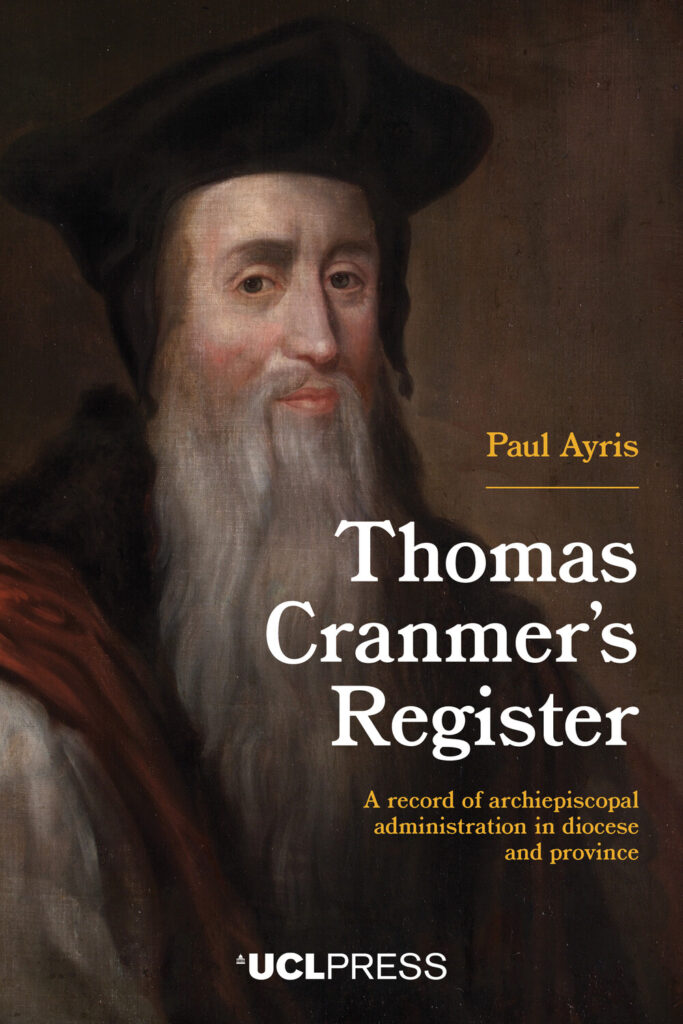
Thomas Cranmer’s Register

Thomas Cranmer’s Register records turbulent change in England and Wales between 1533 and 1553. The crown abolished Roman jurisdiction, and the first steps towards the creation of a Protestant state were made. As archbishop of Canterbury, Thomas Cranmer was a seminal figure in these developments, and his register is a key Reformation document.

The physical register at Lambeth Palace has been out of reach for many scholars. Paul Ayris’s extraordinary edition makes more of the text available to readers than ever before, with transcriptions and editorial introductions that illuminate the sometimes cryptic sixteenth-century text. Here, the appointment of Cranmer to Canterbury (at the hands of the papacy) in 1533 is recorded. Commissions and letters reveal how the crown assumed authority over the church and, through Thomas Cromwell as vicegerent in spirituals, supplanted the role of the archbishop as the principal minister of the king’s spiritual jurisdiction. The work suggests a new explanation for the inclusion/exclusion of the stipulation in the 1536 royal Injunctions concerning the Bible in English. Moreover, unpublished records for the diocese of Norwich in 1550 reveal that the order for removing altars in English churches emanated from Thomas Cranmer not, as is usually thought, from the bishop of London, Nicholas Ridley. This edition will be a touchstone reference for global scholars of the Tudor period.

Published in association with the Canterbury and York Society
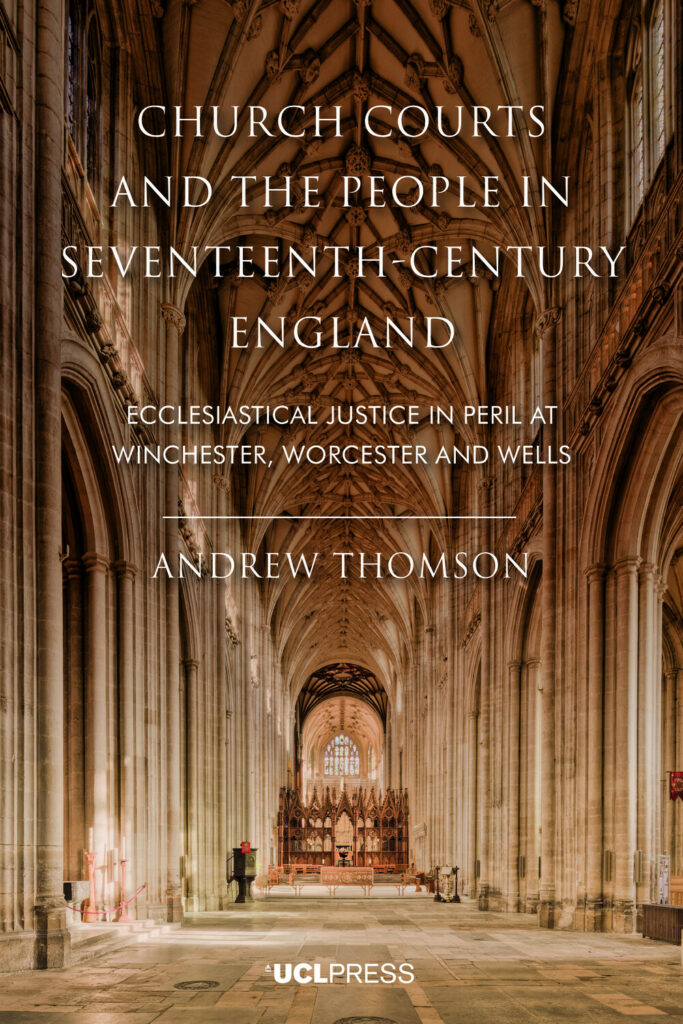
Church Courts and the People in Seventeenth-Century England

Religion meant far more in early modern England than church on Sundays, a baptism, a funeral or a wedding ceremony. The Church was fully enmeshed in the everyday lives of the people; in particular, their morals and religious observance. The Church imposed comprehensive regulations on its flock, and it employed an army of informers and bureaucrats, headed by a diocesan chancellor, to enable its courts to enforce the rules. Church courts lay, thus, at the very intersection of Church and people.

The courts of the seventeenth century – when ‘a cyclonic shattering’ produced a ‘great overturning of everything in England’ – have, surprisingly, had to wait until now for scrutiny. Church Courts and the People in Seventeenth-Century England offers a detailed survey of three dioceses across the whole of the century, examining key aspects such as attendance at court, completion of business and, crucially, the scale of guilt to test the performance of the courts.

While the study will capture the interest of lawyers to clergymen, or from local historians to sociologists, its primary appeal will be to researchers in the field of Church history. For students and researchers of the seventeenth century, it provides a full account of court operations, measuring the extent of control, challenging orthodoxies about excommunication, penance and juries, contextualising ecclesiastical justice within major societal issues of the times and, ultimately, presents powerful evidence for a ‘church in danger’ by the end of the century.

Sign up to our newsletter

Don't miss out!
Subscribe to the UCL Press newsletter for the latest open access books,
journal CfPs, news and views from our authors and much more!