We are currently upgrading our shopping cart; in the interim all orders are being diverted to Waterstones. If you would like to redeem a promotional code, or are an author wanting to place an order, please email us.

Contact us

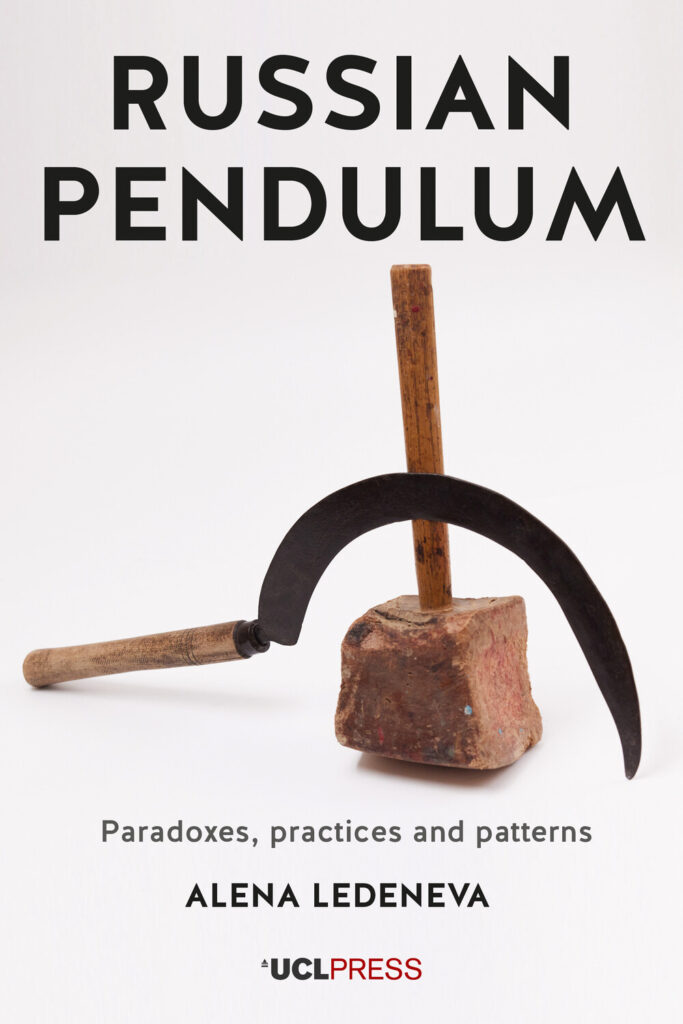
Russian Pendulum

In Russian Pendulum, Alena Ledeneva takes readers on a compelling journey to Russia, where tradition, modernity, power and people collide. Through the prism of ambivalence, the author unveils patterns that have shaped Russia’s politics and society for centuries, pointing to an intricate system of informal networks that are held together by practices of cooptation, control and camouflage.

For readers seeking to look beyond stereotypes, this book provides a brief yet nuanced exploration of Russia’s complexity and unpredictability. The ever-moving Russian pendulum dwells on paradoxes and the hidden practices that resolve them. Patterns such as doublethink, double standards, zigzags, cascades, waves and tides are captured in the author’s own artworks that introduce each chapter.

Nine musical compositions by Benjamin Woodgates add a further dimension, exploring these paradoxes, practices and patterns, and realising them in sound.

Drawing on the Global Informality Project (www.in-formality.com), the artwork and the music, Russian Pendulum establishes connections between Russia’s distinctive paradoxes and broader patterns of informality found worldwide. It is ideal for students, scholars and anyone seeking to understand hidden yet increasingly powerful forces.
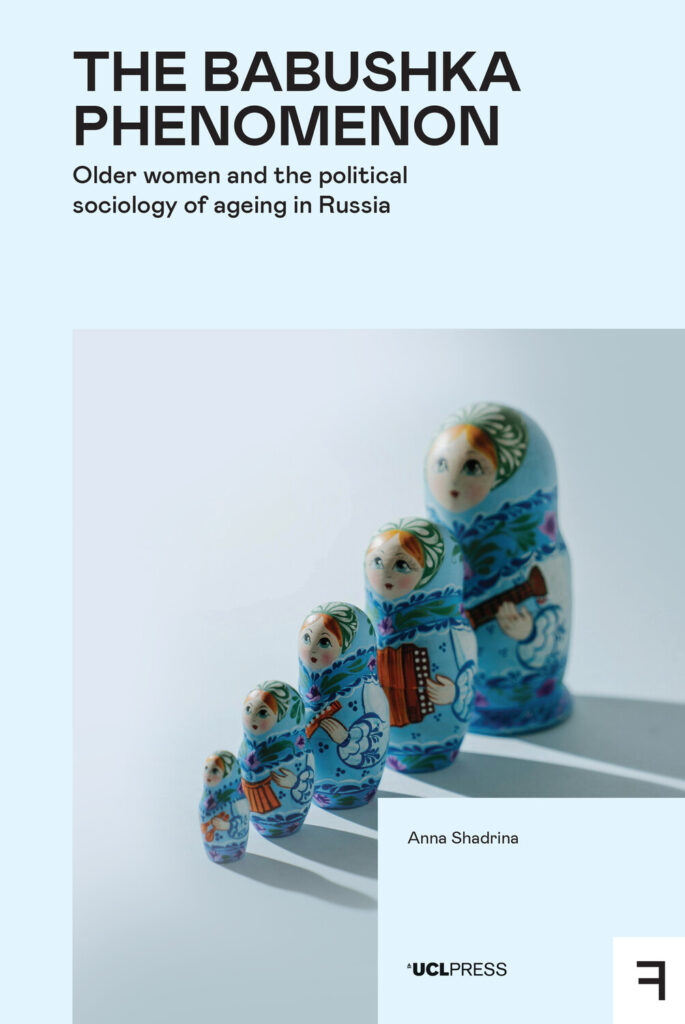
The Babushka Phenomenon

The Babushka Phenomenon examines the social production of ageing in post-Soviet Russia, highlighting the role of grandmothers as primary caregivers due to men’s traditional estrangement from family life. This expectation places grandmothers, or babushkas, in a position where they prioritise childcare and housework over their careers, making them unpaid family carers reliant on the state and their children.

Anna Shadrina situates older Russian women’s experiences within the post-Soviet redefinition of the nation, analysing their portrayal in popular media and biographical narratives of women aged 60 and over in Russia and the UK. It addresses class and racial disparities, noting how some women outsource family duties to less qualified women, and emphasises age as a significant but overlooked axis of social inequality. From a feminist perspective, the book explores citizenship as both a status and a practice of inclusion and exclusion. By focusing on older women’s rights to participate in private and public spheres, it discusses the new social inequalities that emerged after the USSR’s collapse. Despite prioritising others’ interests, older Russian women actively engage in economic citizenship, though their struggles for recognition are often excluded from formal economy and politics.

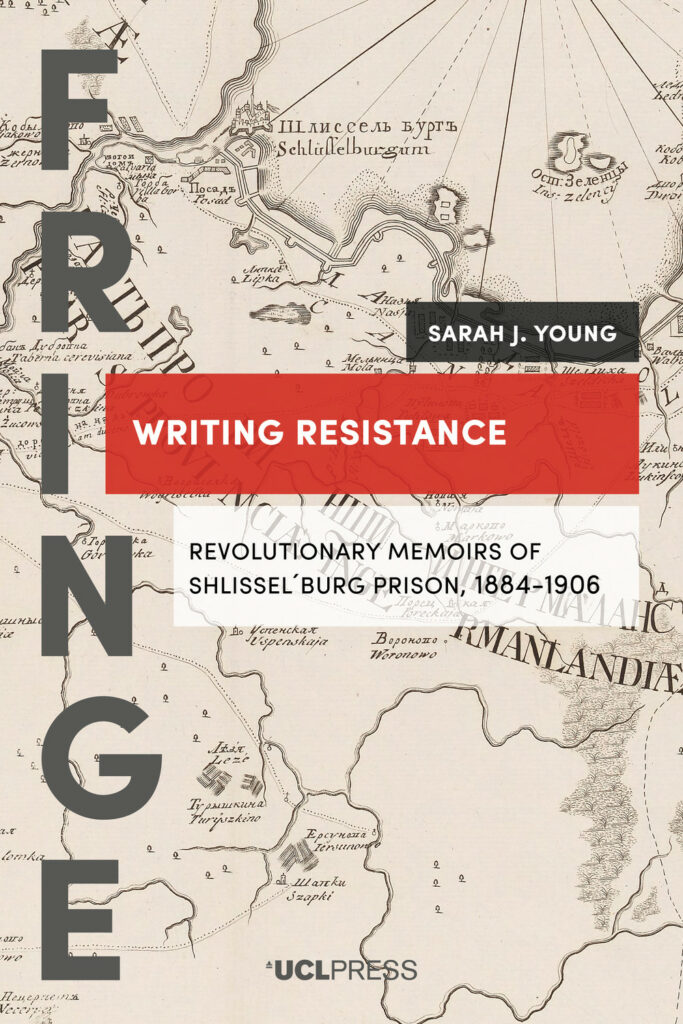
Writing Resistance

In 1884, the first of 68 prisoners convicted of terrorism and revolutionary activity were transferred to a new maximum security prison at Shlissel´burg Fortress near St Petersburg. The regime of indeterminate sentences in isolation caused severe mental and physical deterioration among the prisoners, over half of whom died. But the survivors fought back to reform the prison and improve the inmates’ living conditions. The memoirs many survivors wrote enshrined their story in revolutionary mythology, and acted as an indictment of the Tsarist autocracy’s loss of moral authority.

Writing Resistance features three of these memoirs, all translated into English for the first time. They show the process of transforming the regime as a collaborative endeavour that resulted in flourishing allotments, workshops and intellectual culture – and in the inmates running many of the prison’s everyday functions. Sarah J. Young’s introductory essay analyses the Shlissel´burg memoirs’ construction of a collective narrative of resilience, resistance and renewal. It uses distant reading techniques to explore the communal values they inscribe, their adoption of a powerful group identity, and emphasis on overcoming the physical and psychological barriers of the prison.

The first extended study of Shlissel´burg’s revolutionary inmates in English, Writing Resistance uncovers an episode in the history of political imprisonment that bears comparison with the inmates of Robben Island in South Africa’s apartheid regime and the Maze Prison in Belfast during the Troubles. It will be of interest to scholars and students of the Russian revolution, carceral history, penal practice and behaviours, and prison and life writing.

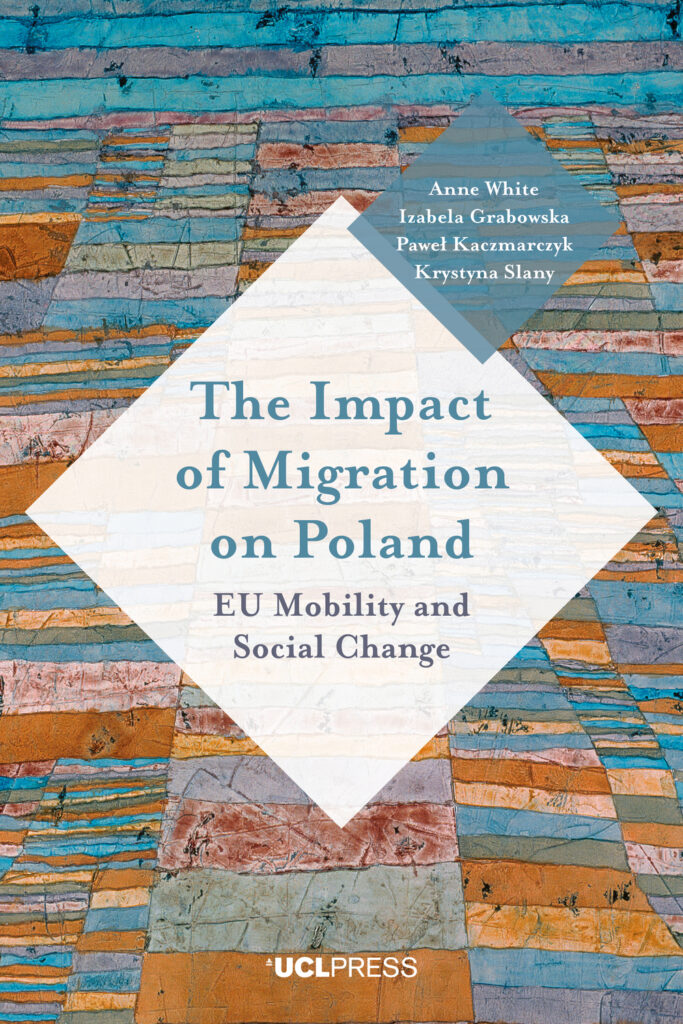
The Impact of Migration on Poland

How has the international mobility of Polish citizens intertwined with other influences to shape society, culture, politics and economics in contemporary Poland?

The Impact of Migration on Poland offers a new approach for understanding how migration affects sending countries and provides a wide-ranging analysis of how Poland has changed, and continues to change, since EU accession in 2004. The authors explore an array of social trends and their causes before using in-depth interview data to illustrate how migration contributes to those causes. They address fundamental questions about whether and how Polish society is becoming more equal and more cosmopolitan, arguing that for particular segments of society migration does make a difference, and can be seen as both leveller and eye-opener. While the book focuses mainly on stayers in Poland, and their multiple contacts with Poles in other countries, Chapter 9 analyses ‘Polish society abroad’, a concept that is a far more accurate description than ‘community’ in countries such as the UK.

The book is written in a lively and accessible style, and will be important reading for anyone interested in the influence of migration on society, as well as students and scholars researching EU mobility, migration theory and methodology, and issues facing contemporary Europe.

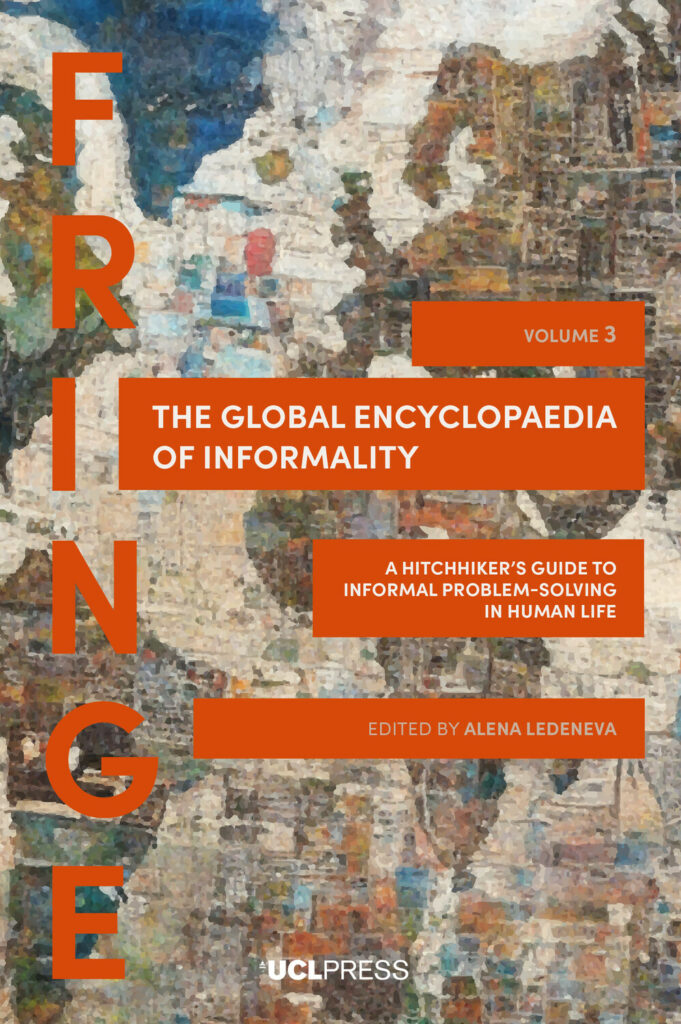
The Global Encyclopaedia of Informality, Volume 3

For a post-human hitchhiker, human life – with its anxiety, ageing, illness and constant need for problem-solving – may look unviable. Yet, for humans, the life struggle is softened by human touch, human emotion and human cooperation.

The Global Encyclopaedia of Informality, Volume 3 continues the journey of the two previous volumes into the world’s open secrets, unwritten rules and hidden practices. It focuses on issues of emotional ambivalence and pressures of the digital age. The informal practices presented in this volume demonstrate the urgency of alleviating tensions between continuity and all-too-rapid change and the need to tackle the central problem of modern societies – uncertainty.

The volume takes a reader on a ‘biographical’ journey through elusive, taken-for-granted or banal ways of getting things done from over 70 countries and world regions. It offers innovative understanding of the significance of fringes, and challenges the assumption that informality is associated exclusively with poverty, underdevelopment, the Global South, oppressive regimes or the former socialist countries of Eastern Europe and Central Asia. It also maps the patterns of informality around the globe; identifies specific informal practices in a context-sensitive way; and documents their ambivalent impact on people engaged in problem-solving, on societies in which these problems arise, and on humanity overall.

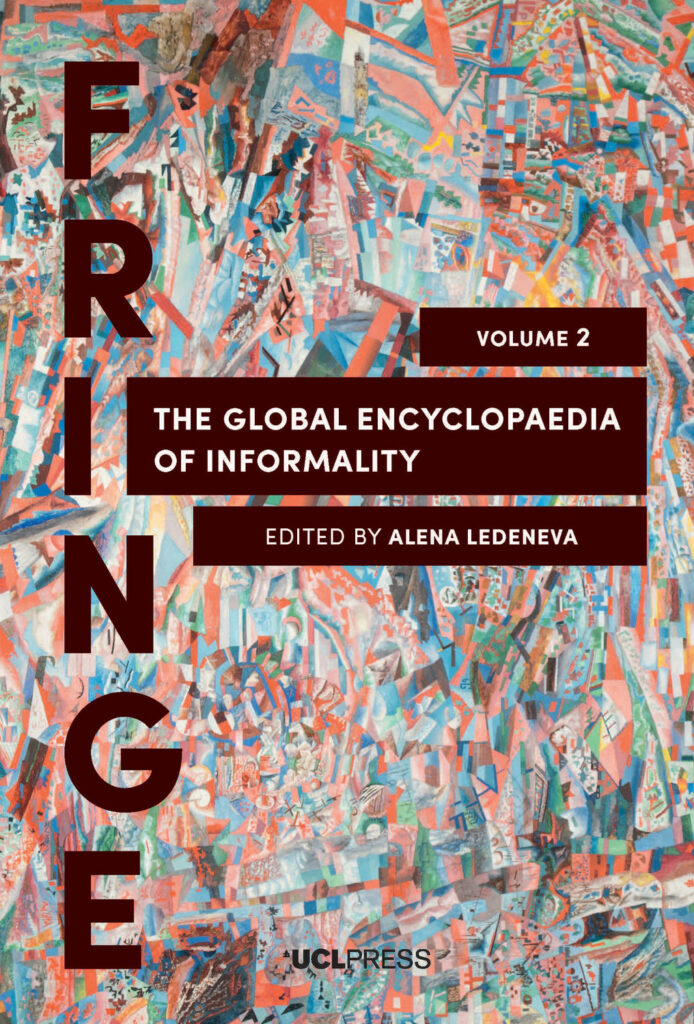
The Global Encyclopaedia of Informality, Volume 2

Alena Ledeneva invites you on a voyage of discovery to explore society’s open secrets, unwritten rules and know-how practices. Broadly defined as ‘ways of getting things done’, these invisible yet powerful informal practices tend to escape articulation in official discourse. They include emotion-driven exchanges of gifts or favours and tributes for services, interest-driven know-how (from informal welfare to informal employment and entrepreneurship), identity-driven practices of solidarity, and power-driven forms of co-optation and control. The paradox, or not, of the invisibility of these informal practices is their ubiquity. Expertly practised by insiders but often hidden from outsiders, informal practices are, as this book shows, deeply rooted all over the world, yet underestimated in policy. Entries from the five continents presented in this volume are samples of the truly global and ever-growing collection, made possible by a remarkable collaboration of over 200 scholars across disciplines and area studies.

By mapping the grey zones, blurred boundaries, types of ambivalence and contexts of complexity, this book creates the first Global Map of Informality. The accompanying database ([www.in-formality.com][1]) is searchable by region, keyword or type of practice, so do explore what works, how, where and why!

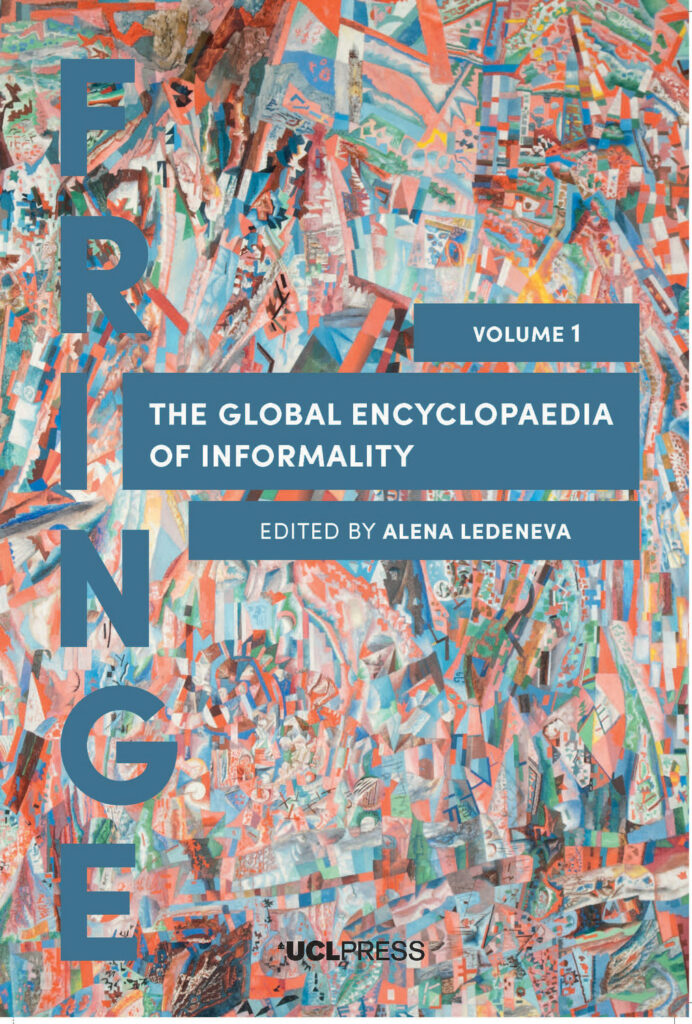
The Global Encyclopaedia of Informality, Volume 1

Alena Ledeneva invites you on a voyage of discovery, to explore society’s open secrets, unwritten rules and know-how practices. Broadly defined as ‘ways of getting things done’, these invisible yet powerful informal practices tend to escape articulation in official discourse. They include emotion-driven exchanges of gifts or favours and tributes for services, interest-driven know-how (from informal welfare to informal employment and entrepreneurship), identity-driven practices of solidarity, and power-driven forms of co-optation and control. The paradox, or not, of the invisibility of these informal practices is their ubiquity. Expertly practised by insiders but often hidden from outsiders, informal practices are, as this book shows, deeply rooted all over the world, yet underestimated in policy. Entries from the five continents featured in this volume are samples of the truly global and ever-growing collection, made possible by a remarkable collaboration of over 200 scholars across disciplines and area studies.

By mapping the grey zones, blurred boundaries, types of ambivalence and contexts of complexity, this book creates the first Global Map of Informality. The accompanying database is searchable by region, keyword or type of practice, so do explore what works, how, where and why!

Sign up to our newsletter

Don't miss out!
Subscribe to the UCL Press newsletter for the latest open access books,
journal CfPs, news and views from our authors and much more!