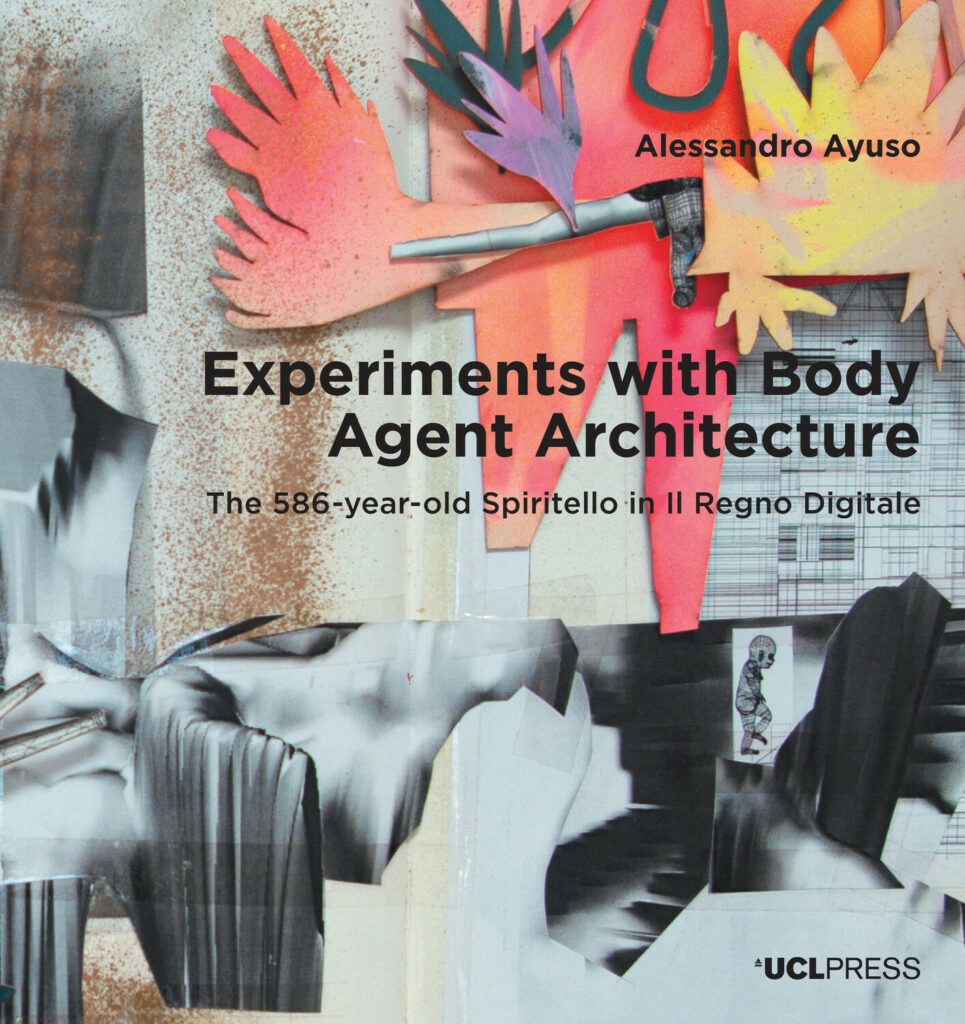
Experiments with Body Agent Architecture

Experiments with Body Agent Architecture puts forward the notion of body agents: non-ideal, animate and highly specific figures integrated with design to enact particular notions of embodied subjectivity in architecture. Body agents present opportunities for architects to increase imaginative and empathic qualities in their designs, particularly amidst a posthuman condition.

Beginning with narrative writing from the viewpoint of a body agent, an estranged ‘quattrocento spiritello’ who finds himself uncomfortably inhabiting a digital milieu (or, as the spiritello calls it, ‘Il Regno Digitale’), the book combines speculative historical fiction and original design experiments. It focuses on the process of creating the multi-media design experiments, moving from the design of the body itself as an original prosthetic to architectural proposals emanating from the body.

A fragmented history of the figure in architecture is charted and woven into the designs, with chapters examining Michelangelo’s enigmatic figures in his drawings for the New Sacristy in the early sixteenth century, Gian Lorenzo Bernini’s physically ephemeral ‘putti’ adorning chapels and churches in the seventeenth century, and Austrian artist-architect Walter Pichler’s personal and prescient figures of the twentieth century.
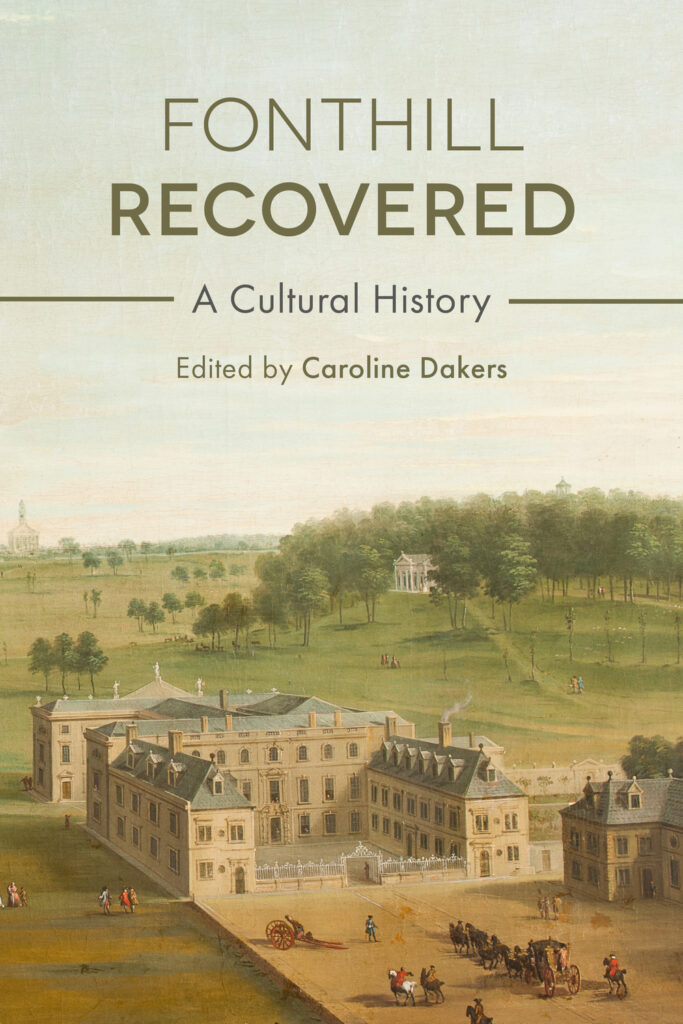
Fonthill Recovered

Fonthill, in Wiltshire, is traditionally associated with the writer and collector William Beckford who built his Gothic fantasy house called Fonthill Abbey at the end of the eighteenth century. The collapse of the Abbey’s tower in 1825 transformed the name Fonthill into a symbol for overarching ambition and folly, a sublime ruin. Fonthill is, however, much more than the story of one man’s excesses. Beckford’s Abbey is only one of several important houses to be built on the estate since the early sixteenth century, all of them eventually consumed by fire or deliberately demolished, and all of them oddly forgotten by historians. Little now remains: a tower, a stable block, a kitchen range, some dressed stone, an indentation in a field.

Fonthill Recovered draws on histories of art and architecture, politics and economics to explore the rich cultural history of this famous Wiltshire estate. The first half of the book traces the occupation of Fonthill from the Bronze Age to the twenty-first century. Some of the owners surpassed Beckford in terms of their wealth, their collections, their political power and even, in one case, their sexual misdemeanours. They include Charles I’s Chancellor of the Exchequer, and the richest commoner in the nineteenth century. The second half of the book consists of essays on specific topics, filling out such crucial areas as the complex history of the designed landscape, the sources of the Beckfords’ wealth and their collections, and one essay that features the most recent appearance of the Abbey in a video game.

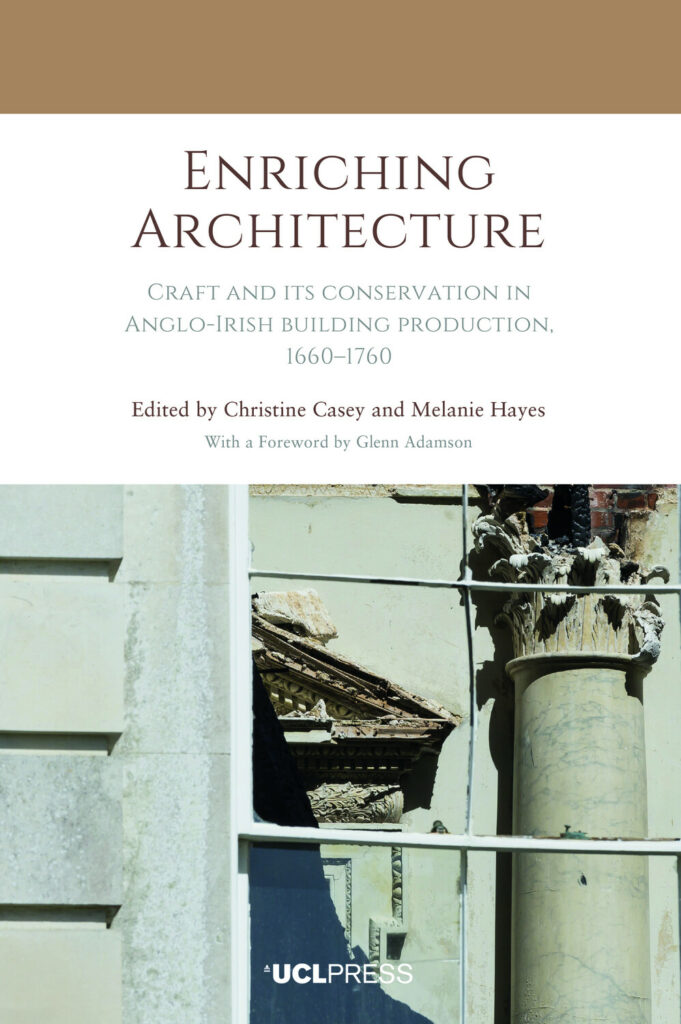
Enriching Architecture

Refinement and enrichment of surfaces in stone, wood and plaster is a fundamental aspect of early modern architecture which has been marginalised by architectural history.

Enriching Architecture aims to retrieve and rehabilitate surface achievement as a vital element of early modern buildings in Britain and Ireland. Rejected by modernism, demeaned by the conceptual ‘turn’ and too often reduced to its representative or social functions, we argue for the historical legitimacy of creative craft skill as a primary agent in architectural production. However, in contrast to the connoisseurial and developmental perspectives of the past, this book is concerned with how surfaces were designed, achieved and experienced.

The contributors draw upon the major rethinking of craft and materials within the wider cultural sphere in recent years to deconstruct traditional, oppositional ways of thinking about architectural production. This is not a craft for craft’s sake argument but an effort to embed the tangible findings of conservation and curatorial research within an evidence-led architectural history that illuminates the processes of early modern craftsmanship. The book explores broad themes of surface treatment such as wainscot, rustication, plasterwork, and staircase embellishment together with chapters focused on virtuoso buildings and set pieces which illuminate these themes.

Sign up to our newsletter

Don't miss out!
Subscribe to the UCL Press newsletter for the latest open access books,
journal CfPs, news and views from our authors and much more!