The Antarcticness of mental health and wellbeing

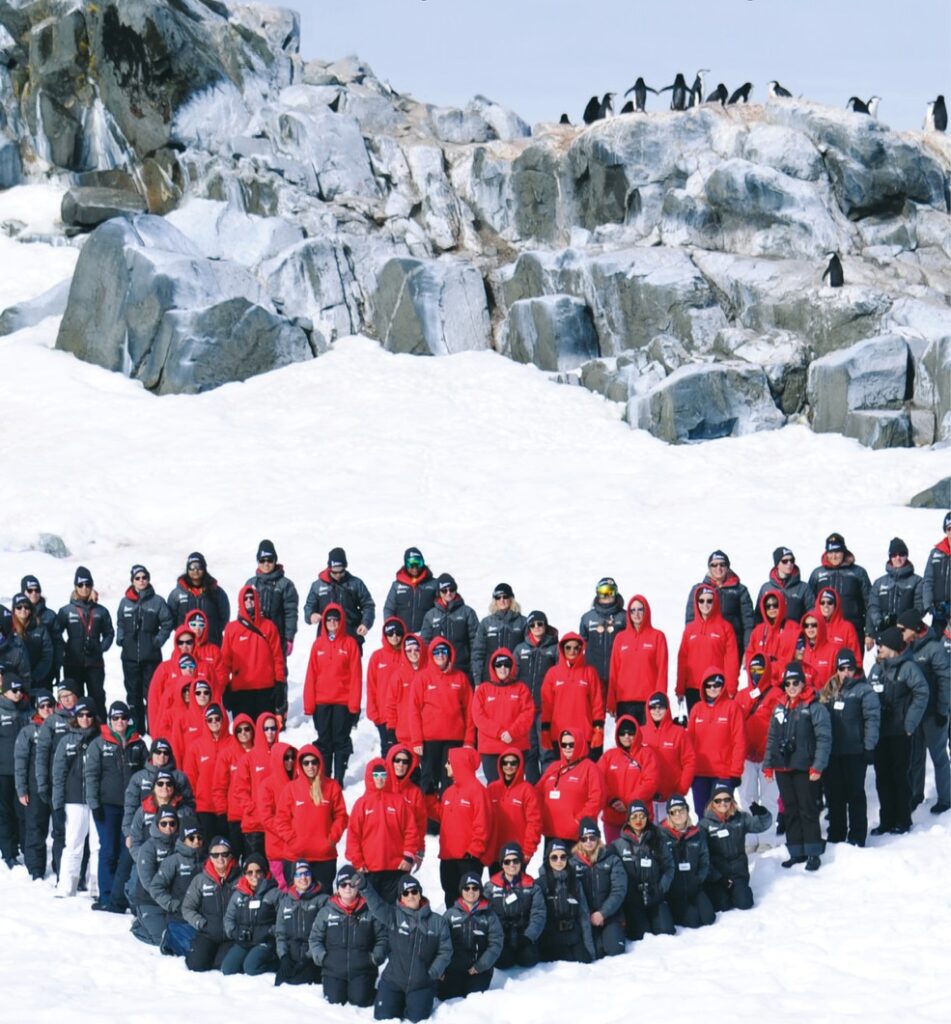
The image depicts a large group of individuals wearing red and black parkas in a heart formation. Those in red parkas are at the centre, and those in black are on the edges. They are gathered on a snowy landscape in front of a rocky area with penguins in the background.

Today’s guest post is by Ilan Kelman, editor of Antarctiness, which published this week. Its companion volume, Arcticness, published in 2017.

The natural environment, we are often told, is good for our mental health and wellbeing. Does this include the remotest, driest, highest, coldest, most isolated, and allegedly most dangerous continent, Antarctica? To try to answer aspects of this question, I edited a new book, Antarcticness: Inspirations and imaginaries, just published by UCL Press and entirely free to download through Open Access!

Antarcticness lessons for survival and caring

Certainly, lessons from Antarctica for mental (and physical) survival emerge clearly.

Jan B. Schmutz led three other co-authors for a chapter on effective teams in an environment where pettiness or slight inattention kills. They lay out the ABCs of being an effective, and surviving, team in Antarctica: anticipation to plan ahead, building social relationships to know and trust each other, and collective reflection to continually examine and resolve concerns and problems.

Then, Andrew J. Avery, describes the culture and perceptions of Antarctic life in UK bases from 1942 to 1982. The Falkland Islands Dependency Survey (FIDS) later became the British Antarctic Survey (BAS), but the volunteer men (only) spending time in Antarctica continued their approach to camaraderie by still calling themselves “Fids”. Avery sums it up with, “The safe place, mentally and emotionally, was on base with your mates”.

Caring emerges in both chapters. Schmutz and colleagues highlight their conclusion’s crux that their work provides “practical advice on caring for their own team”. For Avery, it is the opposite, when he quotes from a “Fids” publication that the Antarctic experience means “caring not for the immense hardships and dangers”. For the Antarcticness of mental health and wellbeing, understandings of caring diverge.

Antarcticness creates fear

Caring is also an element for Wilson (Wai-Yin) Cheung’s chapter on running Antarctic expeditions. He explains the importance of caring for and respecting the people on expeditions and, even more so, the more-than-human of Antarctica given the environment’s conditions. Antarctica’s perils are paramount, given how quickly the weather, or the snow and ice already on the ground, can prove fatal.

Being in and around Antarctica brings home the rhythm and wisdom of nature which, if we miss it, could spell trouble. Cheung describes the risks, the need for awareness, and the potentially serious consequences always keeping expeditioners on edge. Echoing these sentiments, Rosa Jijón, in introducing her art and photo essay, raises “fear of darkness”, “fear of the immense ice”, and “fear of the Other” in relation to Antarcticness.

As Emma Liu writes, “In the Antarctic, there is no margin for error” and perhaps a mentally healthy fear of the environment keeps many people alive there. No matter how gorgeous and majestic the visuals, she accepts that place attachment to Antarctica is always “tempered by apprehension”.

Antarcticness supports mental health and wellbeing

Liu further represents her experiences as “anticipation, exhilaration, distress and finally

triumph”, mirrored by the collective of fifteen authors from the “Homeward Bound” chapter. As a women’s leadership training program, Homeward Bound takes groups to Antarctica to highlight exchange, bonding, stories, and science—all combining to support the enduring Antarcticness theme of caring. Caring for each other and for the Earth.

After Antarctica, one of the Homeward Bound authors explained that “I had become a better version of myself”. Caring for and about oneself must be part of Antarcticness, just as it supports mental health and wellbeing. It succeeds without travel too, as explained by the Homeward Bound group whose trip south has been delayed indefinitely due to the COVID-19 pandemic. Still, “Thinking of Antarctica allows us to believe in a different world, in the road less travelled… a strong sense of togetherness”.

Fear and support thrive side-by-side, overlapping. They can intersect constructively rather than opposing in tension. As I write in the volume’s conclusion, “Emotionalities of Antarcticness sketch the duality of isolation and closeness, both mentally and physically”.

The book Antarcticness will hopefully bring it all to an audience far wider than those privileged travel to the southern limits. Even–or especially–sitting at home, we can learn to survive, to care, to overcome fear, and to support our mental health and well-being through the inspirations and imaginaries of Antarcticness.


About the author

Ilan Kelman is Professor of Disasters and Health at UCL, England, and a Professor II at the University of Agder, Kristiansand, Norway.

UCL Press Open Access Textbooks: Call for Proposals

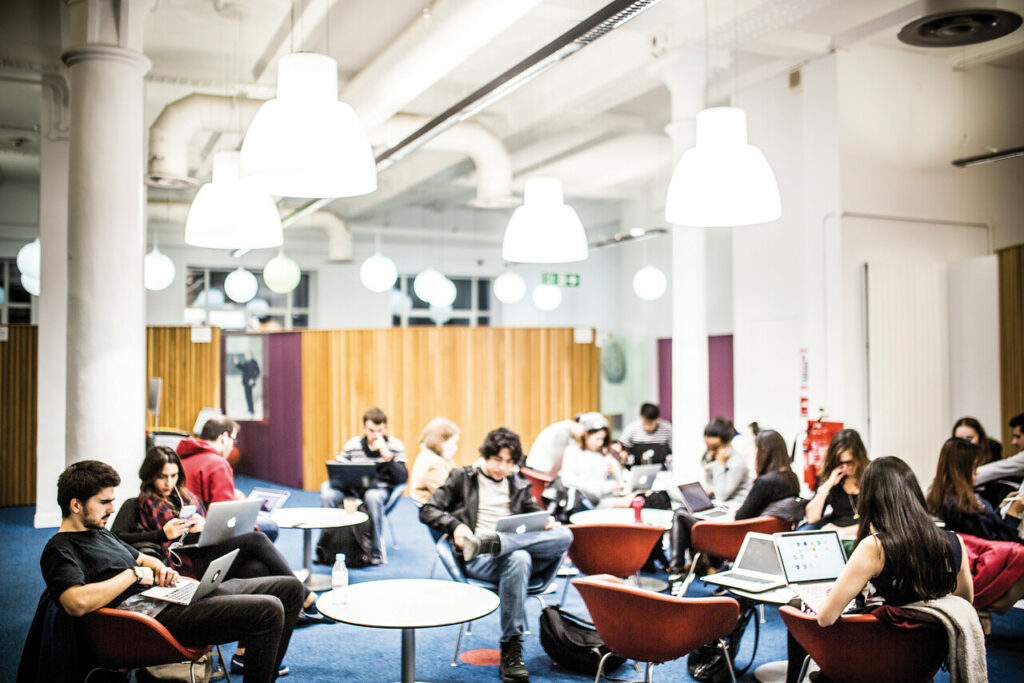
Students Studying in UCL Science Library

Open access presents the opportunity to revolutionise how – and how widely – knowledge is disseminated. By making research outputs and teaching materials freely available online, readers worldwide can engage with them, regardless of their ability to pay.

Following the successful open access publications of Textbook of Plastic and Reconstructive Surgery and Key Concepts in Public Archaeology, UCL Press is expanding its textbook publishing programme. It now invites applications from UCL academics to submit textbook proposals for any discipline taught at UCL at undergraduate or postgraduate level.

The expansion of our textbook programme demonstrates both UCL’s commitment to harnessing a culture of research-based learning through the Connected Curriculum, and to establishing a world-class digital learning environment.

We are particularly interested in proposals for textbooks that meet one or more of the following criteria:

  • Potential to supply large student cohorts for the maximum benefit of the student experience
  • Current provision is very expensive or out-of-date
  • Where there is currently no textbook provision, because a course is very new, for example
  • Potential to create a bespoke textbook tailored to any UCL programme

Multidisciplinary subjects are welcome, as are proposals for textbooks with a digitally innovative approach.

Awards

UCL Press plans to offer 10 awards of £1,500 each to successful applicants. Payment will be on delivery of the final accepted manuscript.

Deadline and evaluation

Please submit a 300-word description of the proposed project by 1 July 2017 to Chris Penfold, UCL Press Commissioning Editor: c.penfold@ucl.ac.uk. Please explain in your description how the project meets the above criteria and what stage the project is at.

UCL Press’s Executive Group (Editorial Board) will evaluate the submissions in the first instance and will then inform authors/editors of the projects it would like to take forward as full proposals. Final acceptance of projects for publication will be dependent on receipt of a full proposal and positive peer review reports.

Production period

Applications are welcome for textbooks that will be ready for manuscript submission between now and July 2019. Publication will follow within approximately 9 months after submission of the final manuscript. Once a textbook has published, the Press will review the potential for updates and new editions where necessary.

UCL Press to host biennial University Press Redux conference

UCL Press is delighted to announce that it will host the next University Press Redux conference, to be held in Spring 2018. 

Following the success of the founding conference, organised by Liverpool University Press (LUP) and held in March 2016, The Association of Learned and Professional Society Publishers (ALPSP) will now be partnering with presses to deliver the event every two years. The first partnership will be with UCL Press. 

The inaugural University Press Redux conference was arranged by LUP in association with the Academic Book of the Future project. More than 150 delegates gathered to discuss the past, present and future of institutional presses. A collection of papers arising from the event was subsequently published in a special open access issue of ALPSP’s journal, Learned Publishing.

Anthony Cond, Director of Liverpool University Press said: ‘There was such strong support for the conference that we immediately saw the potential to continue the conversation.’

Lara Speicher, Publishing Manager at UCL Press added: ‘The Redux conference demonstrates the vitality and potential of university press publishing. We are inspired by what LUP has achieved!’

Audrey McCulloch, Chief Executive of ALPSP continued: ‘The university press sector has undergone a transformation and revitalisation worldwide. Many of our members were involved in the Redux conference and it was an obvious next step to offer administrative support. We are delighted to be involved.’

The 2018 University Press Redux Conference will be curated and hosted by UCL Press with administrative and promotional support provided by ALPSP. Dates will be announced soon. 

About the University Press Redux Conference

The first University Press Redux Conference (#UPRedux) was hosted by Liverpool University Press in association with the Academic Book of the Future project in March 2016. With 150 delegates, representing nearly 40 university presses, the conference benefited from some inspiring presentations exploring the role of presses new and old in the future of scholarly communication. Slides from all the talks are available on the Liverpool University Press site.

About ALPSP

ALPSP is the international membership trade body that supports and represents not-for-profit organizations and institutions that publish scholarly and professional content. With 330 members in 40 countries, membership also includes university presses, as well as those that work with publishers.  ALPSP’s mission is to connect, inform, develop and represent the international scholarly and professional publishing community. Founded in 1972 by 24 societies, ALPSP has grown to become the largest trade association helping scholarly and professional publishers around the world. www.alpsp.org

About Liverpool University Press

Liverpool University Press is the UK’s third oldest university press, with a distinguished history of publishing exceptional research since 1899, including the work of Nobel Prize winners. LUP has rapidly expanded in recent years to become an award-winning academic publisher that produces approximately 100 books a year and 28 journals, specialising in literature, modern languages, history and visual culture. http://liverpooluniversitypress.co.uk/

About UCL Press

UCL Press is the first fully open access university press in the UK. Founded in 2015, it seeks to use modern technologies and 21st century means of publishing and dissemination radically to change the prevailing models for the publication of scholarly research. Grounded in the open science/open scholarship agenda, UCL Press makes its scholarly books and journals available online to a global audience, irrespective of their ability to pay, because UCL believes that this is the best way to tackle grand challenges such as poverty, disease and hunger. www.ucl.ac.uk/ucl-press

The Museum, The Centenary, The Book

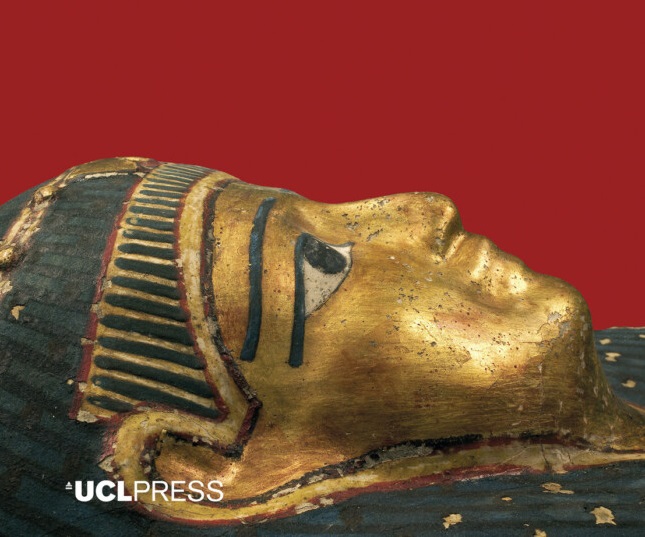
Close-up of an ancient Egyptian artifact depicting a golden sphinx with intricate detailing in black and red against a red background. The sphinx has a human head with pharaonic headcloth and a lion’s body

About a year ago, it dawned on the staff of UCL’s Petrie Museum that the centenary of our opening was not far off. To mark the occasion the team decided that a souvenir publication would be fitting tribute for such an internationally renowned collection. Time to produce such a book, however, was short. Fortunately, UCL Press received the proposal positively and the scramble to pull together the volume began.

With upwards of 80,000 objects in the collection, more than a century of important discoveries and thousands of years of history to engage with, finding suitable content wasn’t hard. Deciding what could fit into 120 pages was. All that we could do was sketch out the contours of the museum’s holdings, from the Stone Age axes to the medieval and Islamic artefacts, and from the smallest trinkets to the largest monuments. We also wanted to challenge assumptions about the nature of the collection because it is far broader than the term ‘Egyptian archaeology’ might popularly suggest: there are objects from Sudan, Korea, China, Greece, Palestine, Syria, India and Iraq for instance. Additionally, we sought to showcase the unusual: artefacts made from extra-terrestrial materials, objects fished out from dark, flooded burial chambers and long-lost things rediscovered in unlikely places.

What really drove the story-telling, however, were the characters whose lives became entangled with the museum’s history. They include the adventurous Flinders Petrie, a man who Lawrence of Arabia once described as ‘enormous fun’ and who Howard Carter credited as turning him into a true excavator; Margaret Murray, an Egyptology lecturer at UCL and a significant influence on the development of Wicca; Gertrude Caton-Thompson, a pioneering archaeologist who went on to prove that Great Zimbabwe was the work of indigenous Africans; and Ali Suefi, Flinders Petrie’s Egyptian right-hand man and discoverer of many of the most prized objects in the museum.

To even attempt to do justice to this eclectic assemblage and history requires many voices and a range of expertise. It is therefore thanks to all of our contributors for swiftly penning their sections, to UCL Press and Media Services for their professionalism and to the Friends of the Petrie Museum for financial support, that this publication has come together in such good shape and on such a tight deadline. And with over 1300 Open Access downloads in the first week, we’re off to a great start!


Alice Stevenson is Curator of The Petrie Museum of Egyptian Archaeology

Sign up to our newsletter

Don't miss out!
Subscribe to the UCL Press newsletter for the latest open access books,
journal CfPs, news and views from our authors and much more!