We are currently upgrading our shopping cart; in the interim all orders are being diverted to Waterstones. If you would like to redeem a promotional code, or are an author wanting to place an order, please email us.

Contact us

1.5 degrees looks to be inevitable in the next few years – weren’t we supposed to stay below it?

How does the media read climate science and present it to the public and consequently to decision-makers? In this guest post, UCL Open: Environment Editor-in-Chief, Prof. Dan Osborn highlights the way scientific climate research is disseminated for public consumption through the media.

Why 1.5°C matters

The BBC recently issued a climate-related story and other media have done likewise. The BBC article is important as it tells readers that, in what looks like a strong El Niño period, humanity might well fail in its ambition, set out in the Paris Agreement on climate change, to keep the global average temperature below 1.5°C above the pre-industrial average. This is serious. Something that decision-makers and the public need to know about if they are to gather the will to make the necessary lifestyle and economic choices to tackle climate change and avoid its worst impacts such as the fatal heatwaves experienced recently all over the world.

Having initially made strong points in the article, the message is diluted by explaining that exceeding 1.5°C may be only temporary. Many scientists might be pleased to see this caution by the BBC providing a balance. But, readers may dismiss the 1.5°C as just another “blip” in the climate, showing again that the climate has always varied and as such there is not too much to be concerned about and, certainly nothing that requires any radical action or changes to lifestyle now. This is not the kind of outcome needed if climate action is to succeed.

Why is 1.5°C important? What’s the context? This means looking at another kind of article: Article 2 of the Paris Agreement. Paragraph 1(a) is clear about what the aim is. It involves:

“Holding the increase in the global average temperature to well below 2 °C above pre-industrial levels and pursuing efforts to limit the temperature increase to 1.5 °C above pre-industrial levels, recognizing that this would significantly reduce the risks and impacts of climate change”.

There is nothing temporary or transitory in Article 2, a major international agreement ratified by almost every government on the planet. There is no time frame to this Article and yet the UNFCC website says that subsequent discussions suggest this is something to aim for by the end of the century, 2100. It is now mid-2023 and we are talking about passing 1.5°C by the end of 2027. It seems to me that 1.5°C might be thought to be the really important figure in the Paris Agreement as it can be argued to be “well below 2°C”. And we might see that threshold passed in just a few years.

The great biogeochemical cycles of the planet in the shape of an El Niño are giving us all a wake-up call. Maybe the IPCC (the Intergovernmental Panel on Climate Change) and the UNFCC COPs need to take more note of these massive physical and biological systems than is already done? People’s behaviour and economic activity is now great enough to change these great cycles in major ways, with serious negative consequences and these cycles, some that play out over geological timescales, some with much shorter time cycles, are the source of our health and wealth (for example, at the extreme, there is no AI without silicon and maybe not enough renewables without certain perovskites).

A Global average may be the wrong kind of figure to focus on

One problem the media and the scientific community face in delivering impactful messages on climate change is that the figures in the Paris Agreement are for the global average. A key issue for an ever-increasing number of populations – often living in poorer countries or environments that are fragile or marginal in different ways – is that their world, their environment, is already warmer than 1.5°C above pre-industrial levels. We can see this happening progressively with data up to 2019 with a static map for 2022 here and in a 30 second video on YouTube with the latest data, freely accessible here.

These areas of warming are spread and are spreading across the globe. The Arctic is warming about three and a half times as fast as the average. 1.5°C in such places is becoming a memory – especially for the Inuit but also for the peoples of the Middle East and parts of Asia. For those living in these areas, 1.5°C already looks like a permanent issue and not a blip that will come and then go around the late 2020s (as per the way the first BBC article I speak about here, tends to imply).

Instead, we should be braver in the way climate change is being covered in the media. There is an audience that wants to know the facts and what needs to change and how to go about it. There is an enthusiasm for “doing your bit” that is not at all difficult to engage with. So, let’s take the international agreements seriously and take 1.5°C as the value not to be exceeded at any time not just by the end of the century. Let’s make it clear that 1.5°C keeps being exceeded in parts of the world where people are struggling to cope already with adverse environmental conditions. The time to act is now.

More radically but usefully perhaps, let’s abandon the focus on the global average and focus instead on what is happening at much more local scales and what the best of the models tell us is likely to happen in the future. For all we know an average of 1.5°C might lead to unacceptable change in one region or even for one population/people. What if the Inuit culture disappeared entirely because of this? Is that not a bad thing? A lot of people get focused on perhaps aspects like polar bears, but what about the people in the environment in which they live? What matters, as Georgina Mace once pointed out, is nature and people, together (Georgina Mace, 2014 https://www.science.org/doi/abs/10.1126/science.1254704).

When it comes to it, no part of the world is immune from climate change and its variables. We all, media and academics alike, need to say clearly that for many people 1.5°C is already here and give the examples. Point out that liveability is becoming an issue for people in some places on Earth and point out that there is no need to continue on the current path (see Peter Schlosser’s piece on that here). Point out that a cleaner world – and climate change essentially is just another form of pollution – is a better world; healthier because there is less pollution and wealthier because of the new technologies that will be deployed; and more sustainable as we are not putting the biogeochemical cycles under so much strain that the planet might start to really “complain”. Maybe we should be keeping an even closer eye on that seasonal pattern of atmospheric carbon dioxide changes at the key observing stations than we already do? In some ways that pattern is the planet “breathing”. Do we want that to stop?

Some people still argue that we don’t need to act now for a whole complex of reasons. Some feel that if climate change were really serious then politicians would change their lifestyles more noticeably and be driving home measures that will help everyone make the necessary adjustments. Others in this camp have vested interests at heart or argue that measures to improve the environment in some ways are some kind of plot to limit freedoms. These kinds of reactions are best tackled by pointing up what the evidence shows and what actions can be taken by people, and that the more we invest in the future, the faster and more positive the payback will be. It is, of course, better to act now rather than delaying and panicking later when much of the damage will have been done and the world may have moved passed Lenton’s Tipping points (e.g. https://www.taylorfrancis.com/chapters/edit/10.4324/9781003331384-17/climate-change-tipping-points-historical-collapse-timothy-lenton) or the limits identified by Rockstrom and colleagues as pointed up in a recent editorial (which, interestingly, with regards to our open review journal UCL Open: Environment, points readers to the many benefits of an open peer review process to improve knowledge exchange and debate).

In all that its worth remembering that climate change, left untackled, will not only be causing its own problems but will be making almost all other problems worse as well. With  impacts of climate change all pervasive, for all our sakes, and that of biodiversity and our food chain, we need to stick to temperatures that are “well-below 2°C” and that means as, Johan Rockstrom has said, not treating 1.5°C as if it is some kind of acceptable target.  It may well be the functional limit we really cannot cross and to avoid that we need to up our game and up the pace of our response. There may be no better place to start than by visiting www.fivetimesfaster.org with Simon Sharpe’s recent book Five Times Faster, a must read for scientists, media, and decision-makers of every kind. The message? Act now; act differently; act much faster.


About the author

Dan Osborn is Emeritus Professor of Earth Sciences at UCL and Editor-in-chief of UCL Open: Environment

About UCL Open: Environment

UCL Open: Environment  is a fully non-commercial, Open Access and Open Science scholarly journal, publishing high impact, multi-disciplinary research, on real world environmental issues, with the overall aim of benefitting humanity. Read more at journals.uclpress.co.uk/ucloe

UCL Open: Environment is seeking submissions from any researcher or professional at knowledge-based universities, institutions, and organisations (including Non-Government Organisations, Think Tanks, Inter-Government Organisations, and the United Nations) broadly across environment-related research, covering climate change, the character and functioning of the environment, Planetary Health (its resources and limits), public health grounded in environmental factors, and the environment in which people live.
Expected or not? The UK’s exceptional record-breaking weather

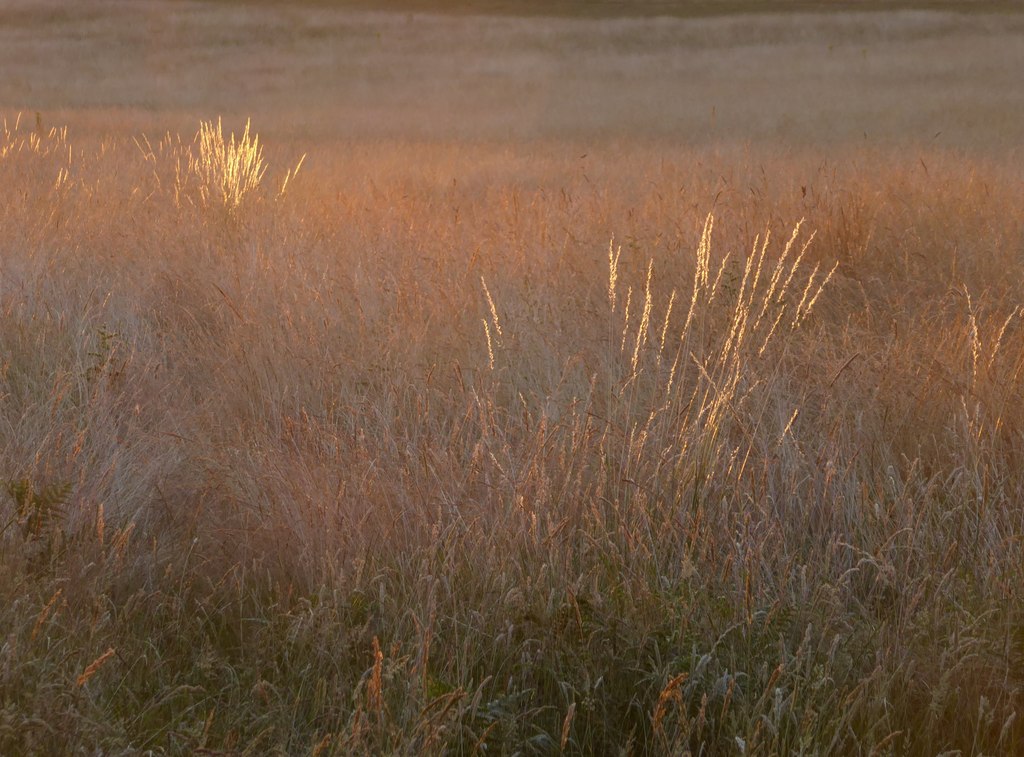
Grassland in a heatwave

Today’s guest post is by Professor Dan Osborn, who is Chair of Human Ecology, Earth Sciences, at UCL (University College London, UK) and Editor-in-Chief of the UCL Press journal UCL Open: Environment

In June 2021, when the evidence report for the 3rd UK climate risk assessment (CCRA3) was released, talk was of southern England summer temperatures over 40°C being experienced sometime “before 2050” (Baroness Brown in launching the evidence report) and in the detail the message of the Technical Report seemed to be that the chances of 40°C before 2040 was small. 

Events have now overtaken these projections. 40°C came to the UK in mid-July 2022, just a year after the launch of the CCRA3 work and 2 years after the UK heatwave of 2020 was linked to over 2,000 excess deaths. Is there some readily available consistent context for this that people can look at so they can have some evidence on which to base their views and decisions? The BBC runs a service for the public to discover how hot it could get in their area of the UK under climate change. It is based on climate modelling. Some of the temperatures recorded in the last few days in the UK don’t feature in the results from the BBC tool even for a world where 4 degrees of warming occurs. The results for Coningsby in Lincolnshire where the new UK record temperature (40.3°C) was provisionally recorded are interesting: warmest summer of past 30 years: 34.9°C; projected figures for the future under 2 degrees of global warming: 37.1°C; and only under 4 degrees of global warming do we get close to what happened a few days ago: 40.2°C. Now, the BBC has a tool for extreme heat vulnerability, and even though this is based on 3 years’ worth of data analysed by a consultancy, it represents an interesting development in public information provision. And so far – on average – the world has warmed a little more than 1°C.

Right now, the UK is reflecting on an event where the previous high temperature record was simply busted by over 1.5 degrees and record temperatures were recorded not just in one place in southern England but in places as far north as North Yorkshire and, in the provisional data, at 39 separate locations. On top of this, night-time temperature records were also broken along with records for Scotland and Wales for both day and night. This was a really very exceptional event. Of course, the UK is not alone in experiencing these high temperatures as the data and mapping from many agencies, including that of the ECMWF (https://www.ecmwf.int). Wildfires across Europe, including in the UK, have led to deaths, injuries and destruction of property and are the most obvious dramatic impact of a European wide heatwave.

The climate model results all point in the right direction – they just did not, it seems as far as readily available public evidence has been concerned, reached the exceptional heights of the temperatures experienced although the weather modelling for the public was remarkably accurate. This is not particularly surprising as near-term projections will almost inevitably be more accurate than ones in the mid to far future. Quite possibly, the high temperatures were in the model outputs but just residing in the extreme tails of the distribution of the results.

So, maybe, more attention is needed to the tails of model projections so that potential extremes can be built into emergency planning, engineering designs, homes and lifestyles and, maybe, even the best climate models need to be improved in the challenging area of the extremes or the way their outputs are communicated. Other improvements to the processes of climate change work might also be needed.

There is, it seems, also a tendency towards conservativism in some climate change work in international and national fora driven by the need to strike that delicate balance between what the science might indicate and what is possible in both the policy and the political arenas. This issue came to the fore most recently when the COP26 agreement included that infamous ill-defined phrase about phasing down unabated coal – which really gets a lot of people off the hook in terms of cutting fossil fuel emissions anytime soon.

Perhaps the balance needs to shift towards the extremes the science points to as well as the long-term trends. Maybe also, the language of average global temperature rises has been in play too long and now is the time to be more local and make clear that people’s local experiences are going to be very different and sometimes very far from the average. Our language, our behaviour and our legal frameworks need to take account of what evidence is on real temperatures, real rainfall (and the lack of), and real-world problems such as new buildings that are just not ‘climate ready’.

Some will say it would be wrong to base actions on just one set of extremes, but the point is that the UK’s recent experience is just one set of extremes amongst many. There is a point at which what was extreme starts to look like an unpleasant norm. The world simply cannot afford the consequences of our changing climate. They are simply not sustainable in social, economic or environmental terms. Some 16 years after the Stern Report these facts must be faced by everyone. Finding a way through the challenges means acting fast and with the urgency evident in much of the CCRA3 reporting on risks that needed to be immediately addressed.


 About the author

Professor Dan Osborn is Chair of Human Ecology, Earth Sciences, at UCL (University College London, UK) and Editor-in-Chief of the journal UCL Open: Environment (https://journals.uclpress.co.uk/ucloe), published by UCL Press.

Is Inclusion an illusion?

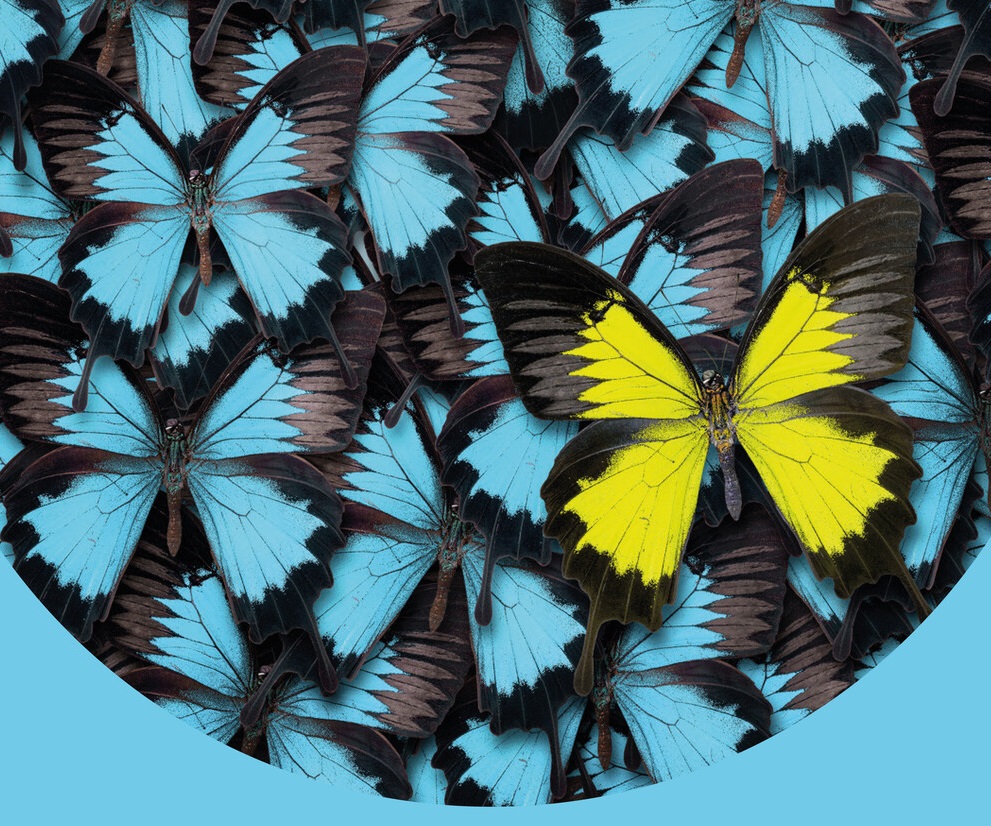
Close up of blue butterflies, with a single yellow butterfly.

This week saw the publication of an important new open access book  for anyone interested in inclusive education: The Inclusion Illusion: How children with special educational needs experience mainstream schools. In an excerpt from the foreword, Professor Paul Croll of the University of Reading, explains why The Inclusion Illusion is vital reading for anyone with an interest in SEND education

This is an important and valuable book which makes a significant contribution to the study of special educational needs and inclusion and has the potential to improve the educational experiences of pupils with significant learning and related difficulties. It combines an insightful account of the many issues and difficulties surrounding inclusion with a rigorous analysis of the outcomes and implications of the large-scale empirical work with which the author is associated. As the book demonstrates, the concept of inclusion has been central to the consideration of special educational needs since the Warnock Report of 1978 and features in all discussions of policy and practice. Over the last decade Rob Webster and colleagues at UCL Institute of Education have conducted a series of large- scale studies focused on the experiences in school of children with Statements of special educational needs and the extent to which these experiences can be regarded as inclusive. This carefully collected and analysed empirical evidence provides a compelling basis for the discussion of the difficulties and limitations of current practice presented here.

The results of these studies show that in the supposedly inclusive setting of mainstream schools, children with Statements often have rather separate educational experiences and less satisfactory pedagogical diets than their peers. Children with Statements may be withdrawn from the mainstream for substantial periods of time and even when they are within the mainstream class their experiences may be heavily mediated by teaching assistants (TAs) who manage their work and their interactions both with teachers and peers. The very heavy reliance on TAs by mainstream schools as a way of coping with the inclusion of children with difficulties emerges strongly from these studies, as does the way it limits these children’s experiences.

The research studies described here are on a very considerable scale. A particular strength is the way in which major quantitative studies based on systematic classroom observations have been combined with insightful interview- based projects. This combination means that very xirobust accounts of classroom contexts and interaction can be related to the detailed description by participants of their classroom experiences. These studies have been well conducted and carefully analysed and reported. Their conclusions about the limitations of inclusion are convincing. There is also extensive reference to other research studies and analyses and the book provides an up-to-date overview of the field of considerable relevance to teachers, educational leaders and policymakers.

The book concludes with an analysis of the policy implications of the research and ways in which inclusion can be made more of a reality. It deals with the limitations of policy and failures of leadership at all levels and ways in which the operation of school inspections and accountability regimes can inhibit inclusive policies. The book is balanced in its view and is careful not to be overcritical of schools and practitioners. The book also recognises what a difficult field this is and how problematic the education of children with serious difficulties can be. It is particularly timely when provision for special needs is being reconsidered and the central importance of inclusion perhaps needs to be restated.


About the Author

This is an except from the introduction of  The Inclusion Illusion: How children with special educational needs experience mainstream schools by Rob Webster., with a foreword by Paul Croll.

Paul Croll is emeritus professor of education at the University of Reading, where he was the first director of the Institute of Education.

A Tribute to Professor Marcelle BouDagher-Fadel

Picture of the late Professor Marcelle Boudagher-Fadel

UCL Press is saddened by the recent death of Professor Marcelle BouDagher-Fadel, whose landmark books Biostratigraphic and Geological Significance of Planktonic Foraminifera and Evolution and Geological Significance of Larger Benthic Foraminifera were published by UCL Press.

Marcelle was a Professorial Research Associate at UCL, where she spent her academic life for over 40 years. She was an internationally recognised expert on foraminifera, microscopic marine organisms that are vital to today’s marine ecosystems.

Marcelle BouDagher-Fadel was a Professorial Research Associate at UCL, where she spent her academic life for over 40 years. She was an internationally recognised expert on foraminifera, microscopic marine organisms that are vital to today’s marine ecosystems. In the fossil record they play a vital role in enabling the reconstruction of past environments and stratigraphic dating.

Marcelle’s virtually unique microscope skills enabled her to identify, at the species level, fossil foraminifera in thin rock sections dating from the Holocene to the Carboniferous. This truly remarkable capability made her a highly sought-after collaborator, and she worked with many research teams from around the world. She authored over 200 scientific outputs, perhaps the most noteworthy being her two open access, definitive monographs on Larger Benthic Foraminifera and on Planktonic Foraminifera, published by UCL Press, which together have currently been downloaded over 67,000 times in more than 150 countries across the world.

Her work was wide-ranging and, for example, provided constraints on the timing of the Himalayan orogeny, the effect of the opening of the Atlantic on the distribution and migration of marine genera, the archaeology of Phoenician ports, and the effect of the opening of the Suez Canal on the Eastern Mediterranean fauna.

Marcelle studied for her first degree in Lebanon and came to the UK in 1980. She studied at UCL for her MSc and graduated from UCL with a PhD in 1986. She then worked for a year as Curator of the Micropalaeontology Collection in the then UCL Department of Geology, before taking a family career break.

In 1993 she was awarded a Royal Society Daphne Jackson Fellowship, which she held at UCL and that allowed her to return to research in a part-time capacity. From 1996 to 2005 she worked in UCL as a post-doctoral research fellow with Professors Alan Lord and Fred Banner. In 2005 she was employed as an Editorial Assistant for Elsevier’s Earth and Planetary Sciences Letters, working with the then Editor, Professor David Price in the UCL Department of Earth Sciences. In 2007 she was appointed as a Senior Research Associate working again with Professor Price in his then Office of the UCL Vice-Provost (Research). Her personally led research activity blossomed, working with industry and collaborators from around the world. She was promoted to Principal Research Associate in 2009, and then to Professorial Research Associate in 2016.

She will be fondly remembered by the UCL Press team for the warmth, kindness and drive towards making her work as accessible as possible to as many as possible. Our thoughts are with her family, friends and collaborators. She will be sorely missed.

UCL Press participates in OpenUP ECR (Early Career Researcher) monograph initiative

Open UP logo: open book above the words 'OPEN UP' in white on a black background.

UCL Press has joined a collaborative pilot project with five other well-established, quality-led University Presses from the UK to seek funding for a number of first books by UK-based early career researchers each year. OpenUP has been approved as a participant in Jisc’s new Open Access Community Framework, which is supporting diamond open access initiatives.

The OpenUP initiative acknowledges the significant barriers that ECRs may face in securing funding to publish OA. This three-year pilot project aims to raise £96,000 per year to fund Open Access publication for 12 books in each period. The first batch of books will publish in 2023. UCL Press will use the fund to publish first books by non-UCL ECRs (UCL authors at all levels are funded by UCL to publish OA). Full details of the scheme can be found in the accompanying press release and more information will be released in due course.

Link: OpenUP ECR Monograph initiative: Open Access Community Framework 2022-2024     

The Antarcticness of mental health and wellbeing

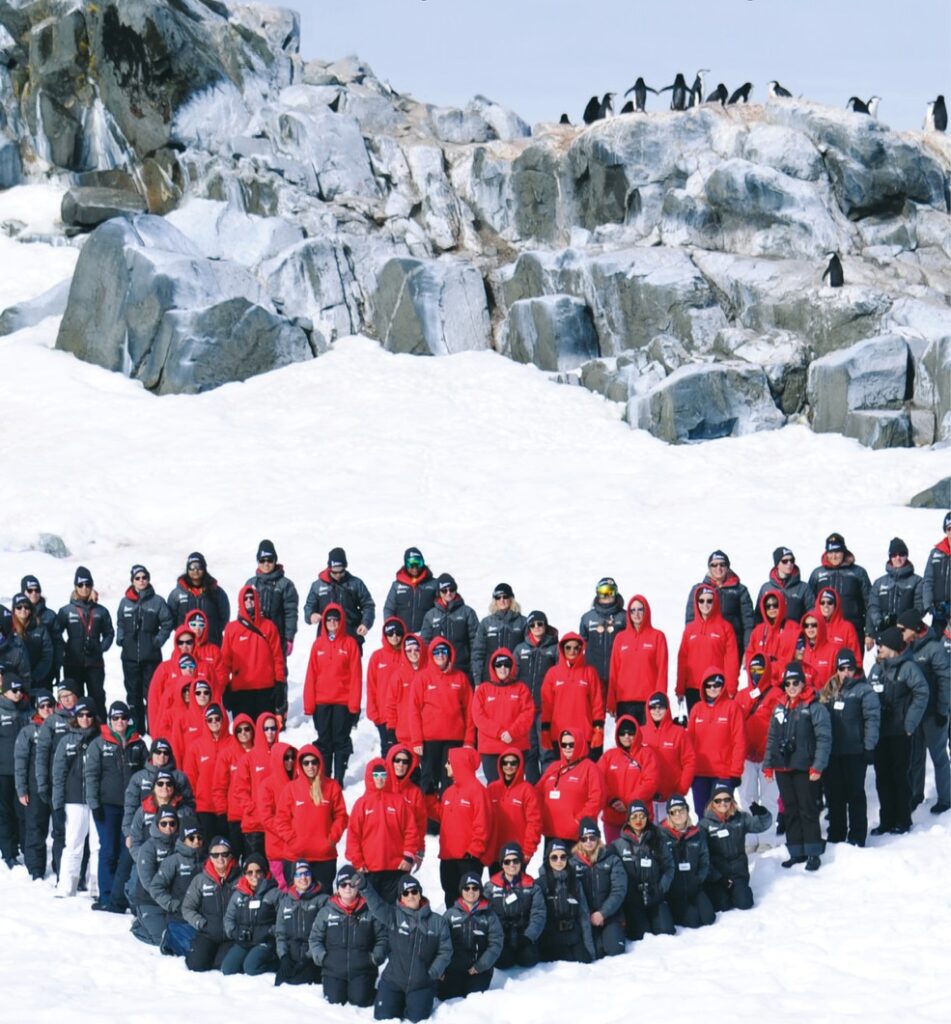
The image depicts a large group of individuals wearing red and black parkas in a heart formation. Those in red parkas are at the centre, and those in black are on the edges. They are gathered on a snowy landscape in front of a rocky area with penguins in the background.

Today’s guest post is by Ilan Kelman, editor of Antarctiness, which published this week. Its companion volume, Arcticness, published in 2017.

The natural environment, we are often told, is good for our mental health and wellbeing. Does this include the remotest, driest, highest, coldest, most isolated, and allegedly most dangerous continent, Antarctica? To try to answer aspects of this question, I edited a new book, Antarcticness: Inspirations and imaginaries, just published by UCL Press and entirely free to download through Open Access!

Antarcticness lessons for survival and caring

Certainly, lessons from Antarctica for mental (and physical) survival emerge clearly.

Jan B. Schmutz led three other co-authors for a chapter on effective teams in an environment where pettiness or slight inattention kills. They lay out the ABCs of being an effective, and surviving, team in Antarctica: anticipation to plan ahead, building social relationships to know and trust each other, and collective reflection to continually examine and resolve concerns and problems.

Then, Andrew J. Avery, describes the culture and perceptions of Antarctic life in UK bases from 1942 to 1982. The Falkland Islands Dependency Survey (FIDS) later became the British Antarctic Survey (BAS), but the volunteer men (only) spending time in Antarctica continued their approach to camaraderie by still calling themselves “Fids”. Avery sums it up with, “The safe place, mentally and emotionally, was on base with your mates”.

Caring emerges in both chapters. Schmutz and colleagues highlight their conclusion’s crux that their work provides “practical advice on caring for their own team”. For Avery, it is the opposite, when he quotes from a “Fids” publication that the Antarctic experience means “caring not for the immense hardships and dangers”. For the Antarcticness of mental health and wellbeing, understandings of caring diverge.

Antarcticness creates fear

Caring is also an element for Wilson (Wai-Yin) Cheung’s chapter on running Antarctic expeditions. He explains the importance of caring for and respecting the people on expeditions and, even more so, the more-than-human of Antarctica given the environment’s conditions. Antarctica’s perils are paramount, given how quickly the weather, or the snow and ice already on the ground, can prove fatal.

Being in and around Antarctica brings home the rhythm and wisdom of nature which, if we miss it, could spell trouble. Cheung describes the risks, the need for awareness, and the potentially serious consequences always keeping expeditioners on edge. Echoing these sentiments, Rosa Jijón, in introducing her art and photo essay, raises “fear of darkness”, “fear of the immense ice”, and “fear of the Other” in relation to Antarcticness.

As Emma Liu writes, “In the Antarctic, there is no margin for error” and perhaps a mentally healthy fear of the environment keeps many people alive there. No matter how gorgeous and majestic the visuals, she accepts that place attachment to Antarctica is always “tempered by apprehension”.

Antarcticness supports mental health and wellbeing

Liu further represents her experiences as “anticipation, exhilaration, distress and finally

triumph”, mirrored by the collective of fifteen authors from the “Homeward Bound” chapter. As a women’s leadership training program, Homeward Bound takes groups to Antarctica to highlight exchange, bonding, stories, and science—all combining to support the enduring Antarcticness theme of caring. Caring for each other and for the Earth.

After Antarctica, one of the Homeward Bound authors explained that “I had become a better version of myself”. Caring for and about oneself must be part of Antarcticness, just as it supports mental health and wellbeing. It succeeds without travel too, as explained by the Homeward Bound group whose trip south has been delayed indefinitely due to the COVID-19 pandemic. Still, “Thinking of Antarctica allows us to believe in a different world, in the road less travelled… a strong sense of togetherness”.

Fear and support thrive side-by-side, overlapping. They can intersect constructively rather than opposing in tension. As I write in the volume’s conclusion, “Emotionalities of Antarcticness sketch the duality of isolation and closeness, both mentally and physically”.

The book Antarcticness will hopefully bring it all to an audience far wider than those privileged travel to the southern limits. Even–or especially–sitting at home, we can learn to survive, to care, to overcome fear, and to support our mental health and well-being through the inspirations and imaginaries of Antarcticness.


About the author

Ilan Kelman is Professor of Disasters and Health at UCL, England, and a Professor II at the University of Agder, Kristiansand, Norway.

UCL Press Open Access Textbooks: Call for Proposals

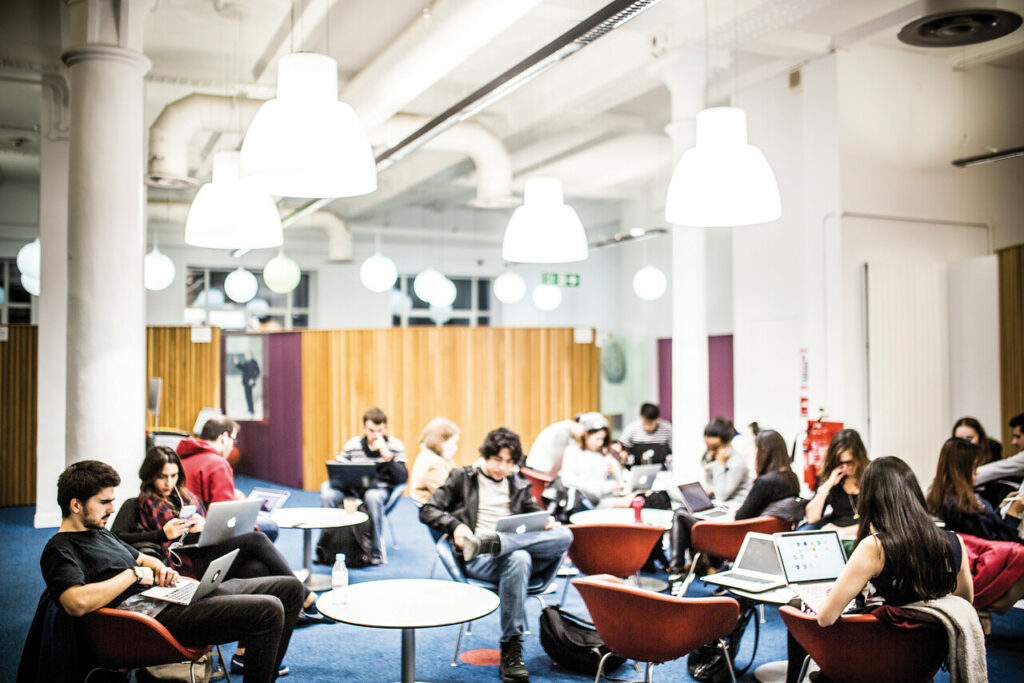
Students Studying in UCL Science Library

Open access presents the opportunity to revolutionise how – and how widely – knowledge is disseminated. By making research outputs and teaching materials freely available online, readers worldwide can engage with them, regardless of their ability to pay.

Following the successful open access publications of Textbook of Plastic and Reconstructive Surgery and Key Concepts in Public Archaeology, UCL Press is expanding its textbook publishing programme. It now invites applications from UCL academics to submit textbook proposals for any discipline taught at UCL at undergraduate or postgraduate level.

The expansion of our textbook programme demonstrates both UCL’s commitment to harnessing a culture of research-based learning through the Connected Curriculum, and to establishing a world-class digital learning environment.

We are particularly interested in proposals for textbooks that meet one or more of the following criteria:

  • Potential to supply large student cohorts for the maximum benefit of the student experience
  • Current provision is very expensive or out-of-date
  • Where there is currently no textbook provision, because a course is very new, for example
  • Potential to create a bespoke textbook tailored to any UCL programme

Multidisciplinary subjects are welcome, as are proposals for textbooks with a digitally innovative approach.

Awards

UCL Press plans to offer 10 awards of £1,500 each to successful applicants. Payment will be on delivery of the final accepted manuscript.

Deadline and evaluation

Please submit a 300-word description of the proposed project by 1 July 2017 to Chris Penfold, UCL Press Commissioning Editor: c.penfold@ucl.ac.uk. Please explain in your description how the project meets the above criteria and what stage the project is at.

UCL Press’s Executive Group (Editorial Board) will evaluate the submissions in the first instance and will then inform authors/editors of the projects it would like to take forward as full proposals. Final acceptance of projects for publication will be dependent on receipt of a full proposal and positive peer review reports.

Production period

Applications are welcome for textbooks that will be ready for manuscript submission between now and July 2019. Publication will follow within approximately 9 months after submission of the final manuscript. Once a textbook has published, the Press will review the potential for updates and new editions where necessary.

UCL Press to host biennial University Press Redux conference

UCL Press is delighted to announce that it will host the next University Press Redux conference, to be held in Spring 2018. 

Following the success of the founding conference, organised by Liverpool University Press (LUP) and held in March 2016, The Association of Learned and Professional Society Publishers (ALPSP) will now be partnering with presses to deliver the event every two years. The first partnership will be with UCL Press. 

The inaugural University Press Redux conference was arranged by LUP in association with the Academic Book of the Future project. More than 150 delegates gathered to discuss the past, present and future of institutional presses. A collection of papers arising from the event was subsequently published in a special open access issue of ALPSP’s journal, Learned Publishing.

Anthony Cond, Director of Liverpool University Press said: ‘There was such strong support for the conference that we immediately saw the potential to continue the conversation.’

Lara Speicher, Publishing Manager at UCL Press added: ‘The Redux conference demonstrates the vitality and potential of university press publishing. We are inspired by what LUP has achieved!’

Audrey McCulloch, Chief Executive of ALPSP continued: ‘The university press sector has undergone a transformation and revitalisation worldwide. Many of our members were involved in the Redux conference and it was an obvious next step to offer administrative support. We are delighted to be involved.’

The 2018 University Press Redux Conference will be curated and hosted by UCL Press with administrative and promotional support provided by ALPSP. Dates will be announced soon. 

About the University Press Redux Conference

The first University Press Redux Conference (#UPRedux) was hosted by Liverpool University Press in association with the Academic Book of the Future project in March 2016. With 150 delegates, representing nearly 40 university presses, the conference benefited from some inspiring presentations exploring the role of presses new and old in the future of scholarly communication. Slides from all the talks are available on the Liverpool University Press site.

About ALPSP

ALPSP is the international membership trade body that supports and represents not-for-profit organizations and institutions that publish scholarly and professional content. With 330 members in 40 countries, membership also includes university presses, as well as those that work with publishers.  ALPSP’s mission is to connect, inform, develop and represent the international scholarly and professional publishing community. Founded in 1972 by 24 societies, ALPSP has grown to become the largest trade association helping scholarly and professional publishers around the world. www.alpsp.org

About Liverpool University Press

Liverpool University Press is the UK’s third oldest university press, with a distinguished history of publishing exceptional research since 1899, including the work of Nobel Prize winners. LUP has rapidly expanded in recent years to become an award-winning academic publisher that produces approximately 100 books a year and 28 journals, specialising in literature, modern languages, history and visual culture. http://liverpooluniversitypress.co.uk/

About UCL Press

UCL Press is the first fully open access university press in the UK. Founded in 2015, it seeks to use modern technologies and 21st century means of publishing and dissemination radically to change the prevailing models for the publication of scholarly research. Grounded in the open science/open scholarship agenda, UCL Press makes its scholarly books and journals available online to a global audience, irrespective of their ability to pay, because UCL believes that this is the best way to tackle grand challenges such as poverty, disease and hunger. www.ucl.ac.uk/ucl-press

The Museum, The Centenary, The Book

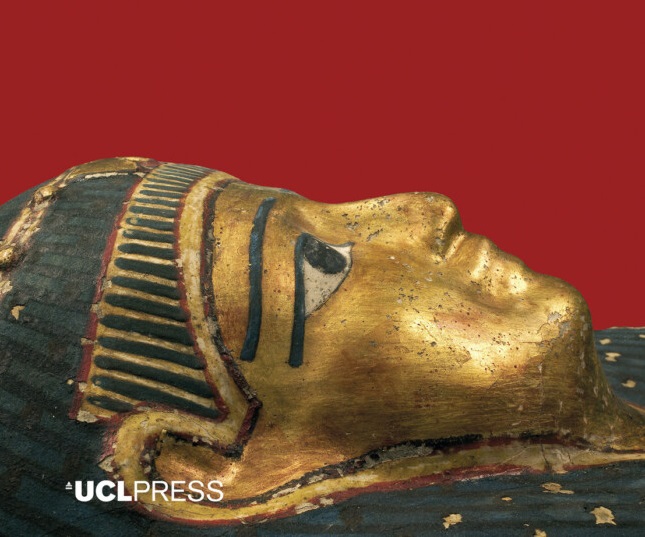
Close-up of an ancient Egyptian artifact depicting a golden sphinx with intricate detailing in black and red against a red background. The sphinx has a human head with pharaonic headcloth and a lion’s body

About a year ago, it dawned on the staff of UCL’s Petrie Museum that the centenary of our opening was not far off. To mark the occasion the team decided that a souvenir publication would be fitting tribute for such an internationally renowned collection. Time to produce such a book, however, was short. Fortunately, UCL Press received the proposal positively and the scramble to pull together the volume began.

With upwards of 80,000 objects in the collection, more than a century of important discoveries and thousands of years of history to engage with, finding suitable content wasn’t hard. Deciding what could fit into 120 pages was. All that we could do was sketch out the contours of the museum’s holdings, from the Stone Age axes to the medieval and Islamic artefacts, and from the smallest trinkets to the largest monuments. We also wanted to challenge assumptions about the nature of the collection because it is far broader than the term ‘Egyptian archaeology’ might popularly suggest: there are objects from Sudan, Korea, China, Greece, Palestine, Syria, India and Iraq for instance. Additionally, we sought to showcase the unusual: artefacts made from extra-terrestrial materials, objects fished out from dark, flooded burial chambers and long-lost things rediscovered in unlikely places.

What really drove the story-telling, however, were the characters whose lives became entangled with the museum’s history. They include the adventurous Flinders Petrie, a man who Lawrence of Arabia once described as ‘enormous fun’ and who Howard Carter credited as turning him into a true excavator; Margaret Murray, an Egyptology lecturer at UCL and a significant influence on the development of Wicca; Gertrude Caton-Thompson, a pioneering archaeologist who went on to prove that Great Zimbabwe was the work of indigenous Africans; and Ali Suefi, Flinders Petrie’s Egyptian right-hand man and discoverer of many of the most prized objects in the museum.

To even attempt to do justice to this eclectic assemblage and history requires many voices and a range of expertise. It is therefore thanks to all of our contributors for swiftly penning their sections, to UCL Press and Media Services for their professionalism and to the Friends of the Petrie Museum for financial support, that this publication has come together in such good shape and on such a tight deadline. And with over 1300 Open Access downloads in the first week, we’re off to a great start!


Alice Stevenson is Curator of The Petrie Museum of Egyptian Archaeology

Sign up to our newsletter

Don't miss out!
Subscribe to the UCL Press newsletter for the latest open access books,
journal CfPs, news and views from our authors and much more!