
Publication date: 2 July 2026
DOI: https://doi.org/10.14324/111.9781806551156
Number of illustrations: 8

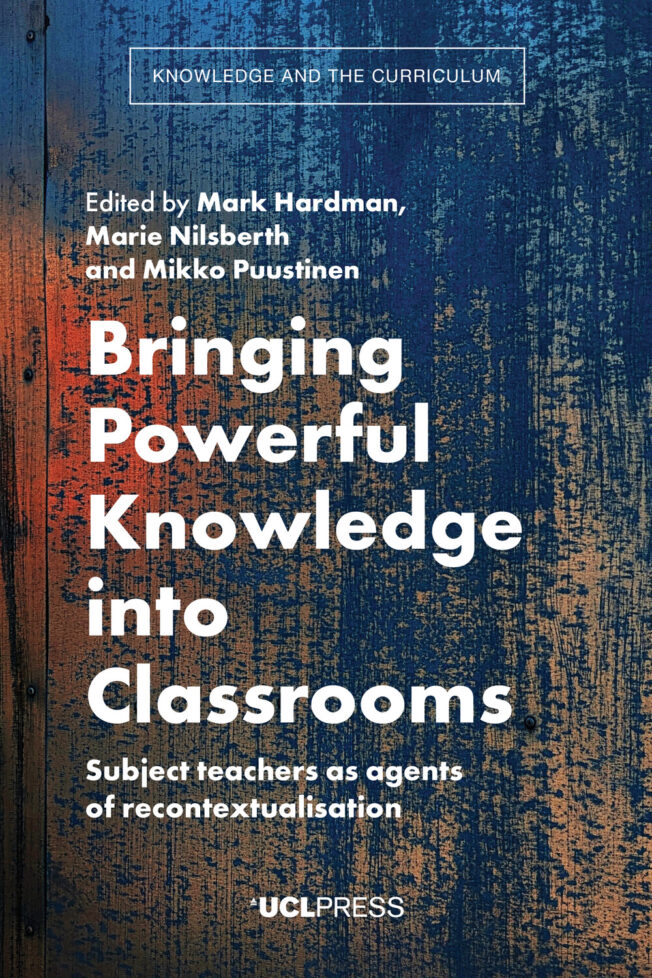
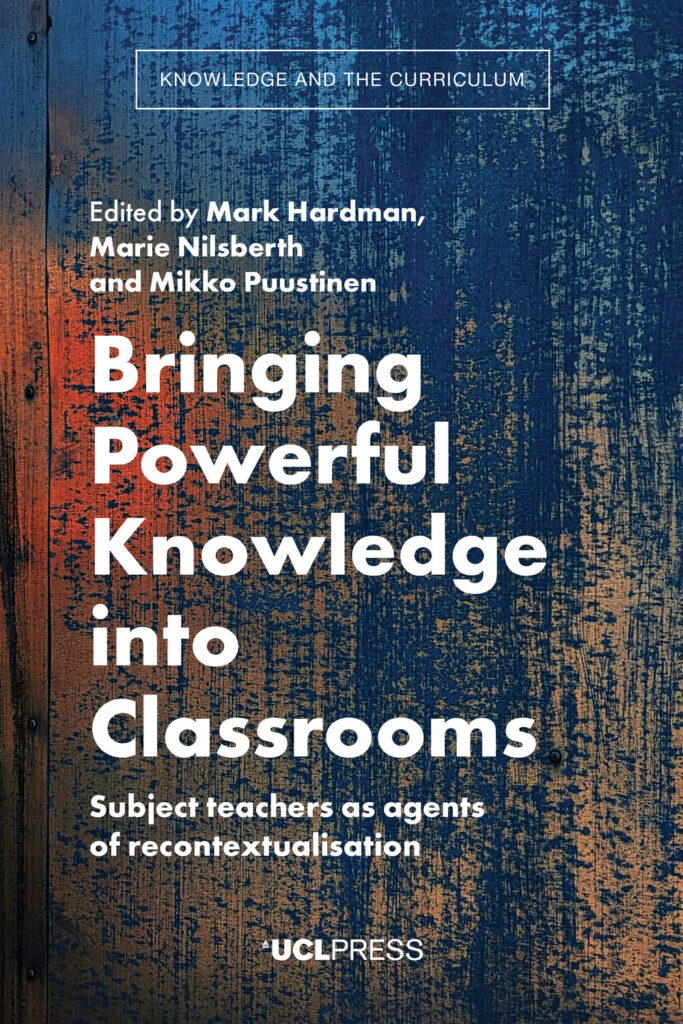
Bringing Powerful Knowledge into Classrooms
Subject teachers as agents of recontextualisation
Mark Hardman (Editor), Marie Nilsberth (Editor), Mikko Puustinen (Editor)
Series: Knowledge and the Curriculum
Powerful knowledge equips students with the capacity to engage with systematic, disciplinary thinking, to imagine futures that are not yet conceived and think what is yet to be thought. Bringing Powerful Knowledge into Classrooms explores how teachers develop such knowledge in classrooms by transforming disciplinary understandings through subject teaching that responds to the educational needs of society.
Drawing on Bernstein’s concept of recontextualisation and theories of teacher agency, the book examines how teachers navigate the boundaries between academic disciplines, school subjects and everyday knowledge. Through empirical case studies from England, Finland and Sweden, it illustrates how teachers’ decisions are shaped by national expectations, institutional frameworks and classroom dynamics. Combining Anglophone and Nordic traditions in subject teaching with curriculum theory and classroom research, the book offers a theoretically grounded yet practical account of how teachers recontextualise knowledge. It develops new insights into teacher agency and recontextualisation which are highly relevant to teacher education, curriculum design and educational policy. By focusing on real-life teaching across a range of subjects, the book deepens our understanding of how powerful knowledge is brought into classrooms and how teachers can be supported in this vital work.
Related titles
Bringing Powerful Knowledge into Classrooms
Subject teachers as agents of recontextualisation
Series: Knowledge and the Curriculum
Publication date: July 2, 2026
Open Access PDF ISBN: 9781806551156
Paperback ISBN: 9781806551149
Hardback ISBN: 9781806551132
Trim size (hardback): 23.4cm x 15.6cm
Trim size (paperback): 23.4cm x 15.6cm
Powerful knowledge equips students with the capacity to engage with systematic, disciplinary thinking, to imagine futures that are not yet conceived and think what is yet to be thought. Bringing Powerful Knowledge into Classrooms explores how teachers develop such knowledge in classrooms by transforming disciplinary understandings through subject teaching that responds to the educational needs of society.
Drawing on Bernstein’s concept of recontextualisation and theories of teacher agency, the book examines how teachers navigate the boundaries between academic disciplines, school subjects and everyday knowledge. Through empirical case studies from England, Finland and Sweden, it illustrates how teachers’ decisions are shaped by national expectations, institutional frameworks and classroom dynamics. Combining Anglophone and Nordic traditions in subject teaching with curriculum theory and classroom research, the book offers a theoretically grounded yet practical account of how teachers recontextualise knowledge. It develops new insights into teacher agency and recontextualisation which are highly relevant to teacher education, curriculum design and educational policy. By focusing on real-life teaching across a range of subjects, the book deepens our understanding of how powerful knowledge is brought into classrooms and how teachers can be supported in this vital work.