
Publication date: 19 January 2026
DOI: https://doi.org/10.14324/111.9781800089174
Number of pages: 898
Number of illustrations: 9

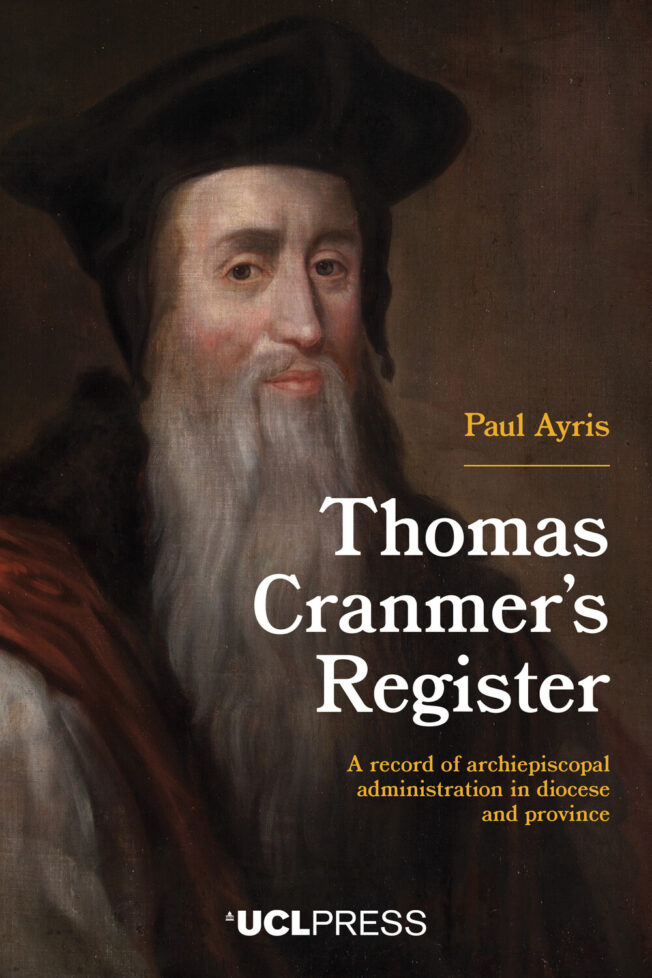
Thomas Cranmer’s Register
A record of archiepiscopal administration in diocese and province
Paul Ayris (Editor), Diarmaid MacCulloch (Foreword)
Thomas Cranmer’s Register records turbulent change in England and Wales between 1533 and 1553. The crown abolished Roman jurisdiction, and the first steps towards the creation of a Protestant state were made. As archbishop of Canterbury, Thomas Cranmer was a seminal figure in these developments, and his register is a key Reformation document.
The physical register at Lambeth Palace has been out of reach for many scholars. Paul Ayris’s extraordinary edition makes more of the text available to readers than ever before, with transcriptions and editorial introductions that illuminate the sometimes cryptic sixteenth-century text. Here, the appointment of Cranmer to Canterbury (at the hands of the papacy) in 1533 is recorded. Commissions and letters reveal how the crown assumed authority over the church and, through Thomas Cromwell as vicegerent in spirituals, supplanted the role of the archbishop as the principal minister of the king’s spiritual jurisdiction. The work suggests a new explanation for the inclusion/exclusion of the stipulation in the 1536 royal Injunctions concerning the Bible in English. Moreover, unpublished records for the diocese of Norwich in 1550 reveal that the order for removing altars in English churches emanated from Thomas Cranmer not, as is usually thought, from the bishop of London, Nicholas Ridley. This edition will be a touchstone reference for global scholars of the Tudor period.
Published in association with the Canterbury and York Society
Related titles
Thomas Cranmer’s Register
A record of archiepiscopal administration in diocese and province

Publication date: January 19, 2026
Open Access PDF ISBN: 9781800089174
Paperback ISBN: 9781806550104
Hardback ISBN: 9781800089150
Trim size (hardback): 23.4cm x 15.6cm
Trim size (paperback): 23.4cm x 15.6cm
Page count (hardback): 898
Thomas Cranmer’s Register records turbulent change in England and Wales between 1533 and 1553. The crown abolished Roman jurisdiction, and the first steps towards the creation of a Protestant state were made. As archbishop of Canterbury, Thomas Cranmer was a seminal figure in these developments, and his register is a key Reformation document.
The physical register at Lambeth Palace has been out of reach for many scholars. Paul Ayris’s extraordinary edition makes more of the text available to readers than ever before, with transcriptions and editorial introductions that illuminate the sometimes cryptic sixteenth-century text. Here, the appointment of Cranmer to Canterbury (at the hands of the papacy) in 1533 is recorded. Commissions and letters reveal how the crown assumed authority over the church and, through Thomas Cromwell as vicegerent in spirituals, supplanted the role of the archbishop as the principal minister of the king’s spiritual jurisdiction. The work suggests a new explanation for the inclusion/exclusion of the stipulation in the 1536 royal Injunctions concerning the Bible in English. Moreover, unpublished records for the diocese of Norwich in 1550 reveal that the order for removing altars in English churches emanated from Thomas Cranmer not, as is usually thought, from the bishop of London, Nicholas Ridley. This edition will be a touchstone reference for global scholars of the Tudor period.
Published in association with the Canterbury and York Society
‘Reformation scholarship owes a great debt to Paul Ayris. With his expertise in the administration of Cranmer’s archdiocese, based on long and close study of the original sources, he is the ideal person to present us with this edition. Only those who have worked in the field and used the original register will appreciate the heroic qualities of persistence which have led to this splendid result. Cranmer, most meticulous of record keepers, will look down on the work of this edition and add his gratitude and approval to that of the historical profession and of all who are fascinated by the strange revolution from above which fuelled England’s Reformation.’
From the Foreword by Diarmaid MacCulloch Kt FSA FRHistS FBA, Emeritus Professor of the History of the Church, Oxford University